
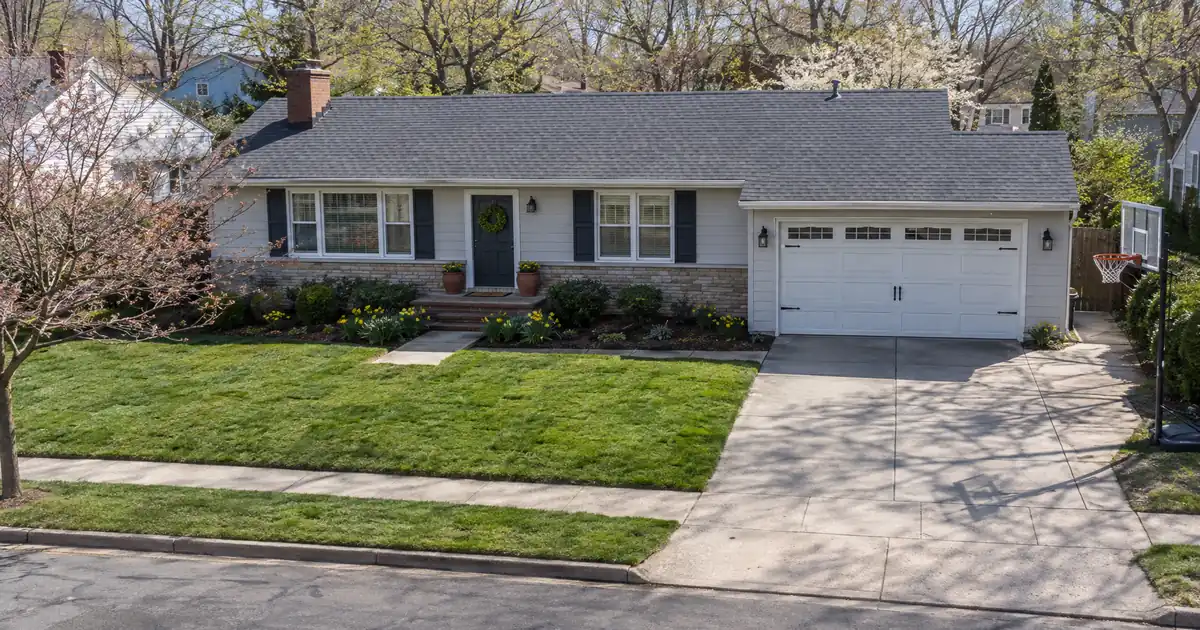
The Quick Read: The 30-year term fits most active duty first-time buyers, and the 15-year fits a narrow group. A 30-year loan carries the lower required monthly payment, which helps with PCS moves, BAH changes, and repair costs on a first home. A 15-year loan makes sense when income is steady, reserves are deep, and the budget can carry a much higher payment.
Both terms use the same VA benefit. The funding fee tiers, the no-mortgage-insurance feature, and the occupancy rules in the parameters below are not set by term. What changes is the payment the underwriter has to test against your income. That one change decides most of these files.
VA payment estimate
Starting assumptions reflect an example price with no down payment and a first-use funding fee. Replace them with your own figures.
Editable benchmark: 7.32% as of October 22, 2026 · Freddie Mac 30-year average via FRED®. A conventional market reference, not a VA loan quote.
Illustrative starting assumptions: a $350,000 price, no down payment with full entitlement, a first-use funding fee financed into the loan, a thirty-year term at the current Freddie Mac benchmark, and property taxes and insurance estimated at typical national rates. Every field is editable.
Illustrative estimate only — not a Loan Estimate, approval, quote, or commitment to lend. The rate field carries the weekly Freddie Mac thirty-year conventional benchmark, a market reference and not a VA loan quote; your rate is set by the lender at lock. The funding fee follows VA’s published table for the use and down payment entered; the residual-income figure is VA’s guideline for the region and family size, and the rough residual shown subtracts only the housing payment and the debts entered, while VA also deducts taxes, maintenance and utilities. Taxes, insurance and dues are editable estimates; closing costs are not included. Licensed in sixteen states for consumer mortgages. Lendmire is not affiliated with or acting on behalf of the Department of Veterans Affairs.
Here is who each option is really for. The 30-year is for the buyer who wants a lower required payment, more room under the ratios, and cash left after closing. The 15-year is for the buyer who already has that room and wants the home paid off sooner. Neither is the “smart” choice in the abstract. It is a budget decision.
What VA Allows on Term Length
VA permits both terms. The VA Home Loan Guaranty Buyer’s Guide says VA loans can be issued for 30 years or 15 years, and that shorter terms typically cost less in total but carry higher monthly payments. Neither term is a different product. It is the same VA loan with a different payoff schedule.
The federal consumer-finance regulator’s mortgage shopping page frames it the same way. Most homebuyers choose a 30-year loan because payments can be lower. A 15-year loan is paid off sooner and can cost less overall.
The funding fee tiers turn on use, service type, and down payment. The tiers in the program figures Lendmire works with are not built around the loan term. The fee, if financed, adds to the balance on either term.
Across the wholesale programs Lendmire places VA files with, the common envelope is 100% financing on a purchase, no mortgage insurance, and no VA loan limit with full entitlement. Those features apply to both terms, subject to lender guidelines and full file review.
Side-by-Side
| Factor | 15-Year VA Loan | 30-Year VA Loan |
|---|---|---|
| Leverage | Up to 100% on purchase | Up to 100% on purchase |
| Credit floor | VA sets none; wholesale floor 580 | VA sets none; wholesale floor 580 |
| Mortgage insurance | None | None |
| Funding fee | Tiers by use and down payment | Tiers by use and down payment |
| Occupancy | Primary residence | Primary residence |
| Documentation | LES, COE, residual income | LES, COE, residual income |
| Required payment load | Heavier on ratios | Lighter on ratios |
| Payoff schedule | 15 years | 30 years |
| PCS and BAH flexibility | Less room | More room |
Notice what is the same. Eligibility, the fee structure, and documents do not change with term. The last rows are where the files separate. A heavier required payment tightens debt-to-income and shrinks the residual income cushion.
How Term Changes the File
Residual income is the controlling test on VA files. Per the VA Lenders Handbook, Chapter 4, debt-to-income is total monthly debts, including the housing expense, divided by gross monthly income. Residual income is what is left after debts, obligations, and shelter costs to cover family living expenses. The lender records both on the Loan Analysis.
Term feeds both. A 15-year payment is higher, so it raises the ratio and lowers the residual income. The 41% debt-to-income figure is a guideline, not a cap. A ratio above it needs residual income well above the table. That means a file that passes on a 30-year can fail on a 15-year at the same income.
Residual income also depends on household size and region. Household members count even when they are not on the loan, such as a non-purchasing spouse. A larger household raises the bar.
Picture an E-4 buying a first home with a spouse and one child, close to 100% financing. On the 30-year, the file clears with cushion. On the 15-year, the same file lands near the edge of the residual income table. Same buyer, same house. The term made the call.
Active Duty Income: LES, BAH, and ETS
Active duty files document income differently. The LES must be no more than 120 days old at closing, or 180 for new construction.
BAH counts. These allowances are not taxable, the lender must verify the amount, and the amount changes from one duty station to another. Because BAH varies by duty station, term choice matters. A payment sized to BAH at one station may be a stretch at the next.
Special pays such as flight or hazard pay count only when they have continued for a prolonged period and are expected to continue. Confirm the specifics with the loan officer.
ETS is the other wrinkle. The lender must identify servicemembers within 12 months of release from active duty or the end of their contract term. If you will not re-enlist, the underwriter weighs whether future income is stable or whether strong factors compensate. This is not an automatic denial. But a higher required payment on a file with an ETS date is a harder file. A longer term gives a smaller payment while the income future is uncertain.
When the 30-Year Is the Better Fit
The 30-year fits most active duty first-time buyers. It keeps the required payment lower, which protects the ratios and the residual income cushion. It also leaves cash for the things first homes demand: a water heater, an HVAC repair, moving costs.
Pick the 30-year when any of these are true:
- PCS orders are likely in a few years.
- BAH may drop at the next station.
- ETS is within 12 months, or you are undecided on re-enlisting.
- Your reserves after closing are thin.
- The 15-year payment would push the file near the residual income line.
- A spouse’s income is uncertain or new.
The 30-year is not a trap. The borrower can still pay extra principal on top of the required payment. A common hybrid is to take the 30-year, set a personal extra-principal target, and drop it if orders change. You keep the discipline without the obligation. Confirm prepayment terms with the loan officer for the specific loan.
Active duty buyers also move. A short hold period changes the math on a 15-year loan. The savings from a shorter term come from carrying it for years. Sell early, and much of that benefit never arrives.
When the 15-Year Is the Better Fit
The 15-year fits a buyer whose budget is strong enough that the higher payment barely registers. Payoff is sooner, total interest is lower, and equity builds faster. For the right file, those are real advantages.
Lean toward the 15-year when:
- Household income is high relative to the home price.
- Residual income clears the table with room to spare.
- You have meaningful reserves after closing and an emergency fund.
- You plan to stay in the home long enough to benefit.
- Debt is low, so ratios have room.
- Orders are stable, or you intend to keep the home as your residence.
Compensating factors can help a stretched file. The VA’s credit underwriting conference materials list high residual income, significant liquid assets, and low debt-to-income as compensating factors. A buyer with a large cash cushion and low debts is the profile that tends to carry a 15-year file.
Consider a buyer putting 10% or more down on a first purchase. That moves the funding fee to the lowest first-use tier, and the lower balance eases the payment. The 15-year gets more realistic. But a down payment is optional on a VA purchase. Many buyers use 100% financing and keep their cash. That choice favors the 30-year, because cash on hand is protection.
The Funding Fee Works the Same on Either Term
The funding fee is a one-time VA charge, and it is not a lender price. Across the wholesale programs Lendmire works with, first use runs 2.15% with less than 5% down, 1.5% with 5% to under 10% down, and 1.25% with 10% or more down. Subsequent use is 3.3% with less than 5% down. The fee is waived for veterans receiving compensation for a service-connected disability and for other exempt groups. VA News notes that active-duty Purple Heart recipients are among the exempt, and that the fee can be paid at closing or financed.
Financing the fee raises the balance. That raises the payment on either term, so the 15-year payment test includes it. On a purchase, the funding fee is the only closing charge you can roll into the loan. Other closing costs are paid at closing.
Tax treatment can depend on your situation; borrowers should speak with a qualified tax professional before relying on any deduction or credit.
Key Terms Defined
Residual income: The money left each month after debts, taxes, and shelter costs, used to show the household can cover living expenses.
Debt-to-income (DTI): Total monthly debt payments, including housing, divided by gross monthly income.
BAH: Basic Allowance for Housing, a non-taxable military allowance that counts as income when verified.
ETS: Expiration of Term of Service, the date a servicemember’s contract ends.
LES: Leave and Earnings Statement, the pay document used to verify active duty income.
COE: Certificate of Eligibility, the VA document showing you qualify for the benefit.
Common Mistakes on These Files
- Assuming a shorter term always saves money. It does only if you carry the payment to the end.
- Sizing the payment to current BAH. The next station may pay less.
- Using a stale LES. Past 120 days, it needs to be replaced.
- Treating 41% as a hard limit. It is a guideline. Residual income carries the decision.
- Ignoring reserves. A first home needs repair money, and the 15-year leaves less of it.
A quick decision test helps. Ask three questions. Would I be comfortable if BAH dropped at my next station? Could I cover a major repair from cash without touching the payment? If I had to rent the place out or sell in three years, would I regret the term? Three yeses lean toward the 15-year. Any no leans toward the 30-year.
The Verdict
For most active duty first-time buyers, the 30-year is the safer starting point. It keeps ratios and residual income comfortable, it protects cash, and it holds up through PCS moves and BAH changes. Extra principal payments can capture some of the 15-year benefit without the obligation.
The 15-year is a real option for buyers with strong income, low debts, deep reserves, and stable orders. If that is you, the shorter term can make sense. If you are not sure, the 30-year gives you room to change course. All of this is subject to lender guidelines and full file review, and nothing here is a commitment to lend.
If you are buying a home and want to see whether a VA loan fits your file, Lendmire can help you compare the options and what each one asks of the file. Review the VA loan programs page to see how the benefit is arranged through wholesale lenders in 16 states.
Frequently Asked Questions
Can I get a 15-year VA loan?
Yes. VA allows loans of 15 or 30 years, and both use the same VA benefit. Eligibility comes from your Certificate of Eligibility, and the lender reviews the file at the payment the shorter term requires.
Does the funding fee change with a 15-year term?
The fee tiers turn on first or subsequent use and on down payment, not on term. First use runs 2.15% with less than 5% down, 1.5% with 5% to under 10%, and 1.25% with 10% or more. The fee is waived for exempt borrowers. If financed, it adds to the balance and so to the payment on either term. Final terms follow the full file review. Leverage, reserves, and pricing vary by lender and program; the final terms follow the full file review.
Will a 15-year loan make it harder to qualify?
Often, yes. The higher required payment raises debt-to-income and lowers residual income, which is the controlling test. A file that clears on a 30-year can miss on a 15-year at the same income. The 41% figure is a guideline, so strong residual income can still carry a higher ratio.
What if I get PCS orders after buying?
That is a main reason many active duty buyers pick the 30-year. A lower required payment is easier to carry through a move, a BAH change, or a period of renting the home out. Occupancy rules apply, so talk with your loan officer about how your orders interact with the occupancy certification.
Can I pay a 30-year VA loan off early?
You can generally make extra principal payments on top of the required payment. Confirm prepayment terms for your specific loan before relying on it. This hybrid approach keeps the lower required payment as a safety net.
For your own numbers, request a scenario review with Lendmire.
About Lendmire
As a mortgage broker (NMLS# 2371349), Lendmire helps homeowners and home buyers in 16 states with FHA, VA, conventional and jumbo purchase and refinance loans arranged through wholesale lenders. Lendmire is never the lender; program terms are set by the lender and the agency guidelines. Scotsman Guide named Lendmire a Top Mortgage Workplace in both 2025 and 2026.
Get Started
Ready to find the right loan for you?
In about 30 seconds you can review financing options available for your home or investment property. No commitment required.
Informational only. Not a Loan Estimate, approval, or commitment to lend. Program availability and eligibility are subject to lender guidelines, credit approval, property review, and underwriting.
References
1. VA Home Loan Guaranty Buyer’s Guide
2. CFPB: Shopping for a Mortgage
3. VA Pamphlet 26-7, Chapter 4: Credit Underwriting
4. VA Loan Guaranty Conference: Credit Underwriting
5. VA News: Borrowers can deduct funding fees
This article is part of Lendmire’s VA loan program — full qualification details, guidelines, and scenarios live on the program page.
Related reading: Should a First-Time Active-Duty Buyer With Savings Use a VA Loan? · Can an Active-Duty First-Time Buyer Add a Non-Spouse to a VA Loan? · How to Time a First VA Loan Purchase Around a PCS Move on Active Duty
Brandon Miller
Founder & CEO, Mortgage Loan Originator, Lendmire LLC
- Mortgage Loan Originator · NMLS# 1129696 · Verify on NMLS Consumer Access
- North Carolina Real Estate Broker · License# 343312 · Verify on NCREC
- North Carolina Insurance Producer · License# 19053198 · Property, Casualty, Life, Health · Verify on NAIC SBS
- Lendmire LLC · Firm NMLS# 2371349 · Verify firm licensure
Important disclosures. Lendmire (NMLS# 2371349) is a licensed mortgage brokerage. Lendmire is not a direct lender, depository institution, or financial advisor. All loan inquiries are subject to lender underwriting; this article does not constitute a commitment to lend. Rates, terms, and program guidelines are subject to change without notice and vary by borrower profile, property type, and state. Information in this article is general in nature and is not financial, legal, or tax advice. Equal Housing Opportunity. NMLS Consumer Access: nmlsconsumeraccess.org.