
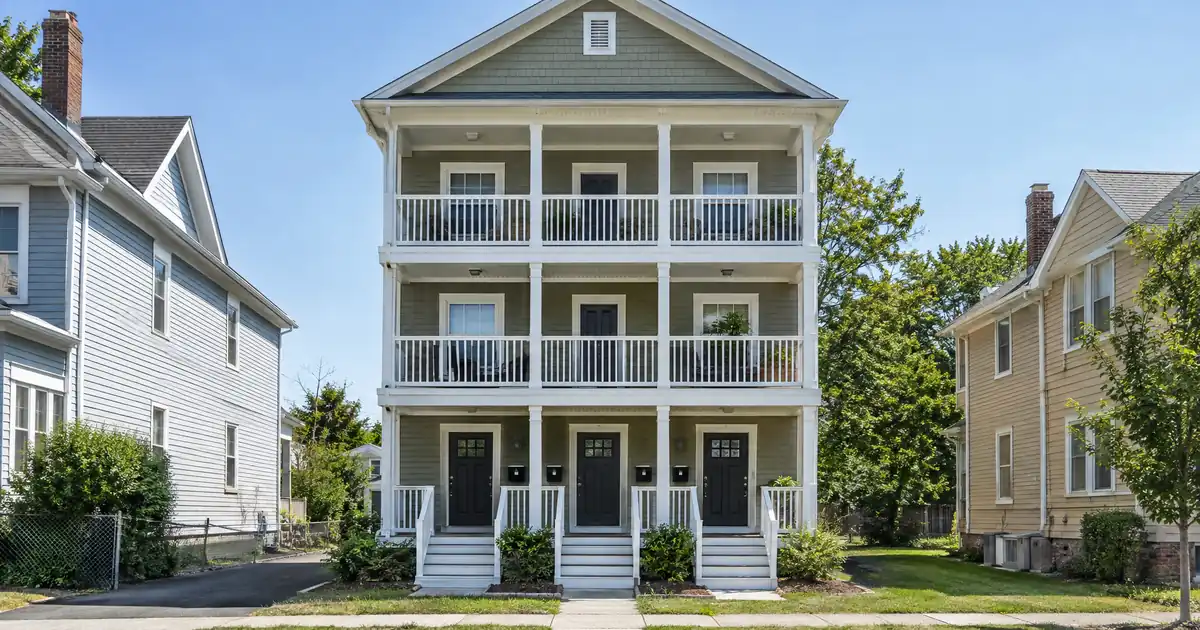
The Quick Read: No. A VA cash-out refinance on a duplex, triplex or fourplex you live in needs a VA appraisal, and the unit count does not change that. The only VA refinance that generally skips the appraisal is the interest rate reduction loan (IRRRL), and it does not pay out cash. If you need cash from your equity, plan for the appraisal and prepare the building for it.
Why the Appraisal Can’t Be Waived on a Cash-Out
The appraisal sets the number the whole loan is built on. A VA cash-out can reach 100% of the home’s appraised value, including the financed funding fee. Without an appraised value, there is no ceiling to measure against.
The federal rule says the same thing. Under 38 CFR 36.4306, the new loan cannot exceed 100 percent of the “reasonable value, as determined by the Secretary” of the home securing it. The funding fee can be financed only up to that ceiling. Anything above it is paid in cash at closing.
Only a VA appraisal produces that reasonable value, which is why the appraisal is not optional on a cash-out refinance. The logic follows from the cap.
The VA appraisal also does a second job. It checks that the property meets VA’s minimum property requirements. So it protects you as the buyer of your own refinance, not just the lender.
Doesn’t a Waiver Fix This? (Why Conventional Logic Doesn’t Carry Over)
You may have read that some refinances skip the appraisal. That usually describes conventional loans. There, an automated system looks at the file and decides whether the lender can accept a value without a full appraisal. You cannot request that, and multi-unit homes are commonly left out of it anyway.
VA cash-out works differently. The value comes from a VA-approved appraiser, and VA uses it to decide how much to guarantee. VA’s cash-out page tells borrowers to understand how the new loan amount relates to the home’s value. That is a hint about how central the appraisal is.
So two separate roadblocks stack up for your situation. Cash-out is the loan type that needs an appraisal. A 2-4 unit home is the property type that is least likely to get any shortcut.
The One VA Refinance That Skips the Appraisal
The IRRRL is the exception. It refinances an existing VA loan into a lower rate, or from an adjustable loan to a fixed one. Across the wholesale programs Lendmire places VA files with, it carries no VA appraisal, a 0.5% funding fee unless you are exempt, and a net tangible benefit test. It also has a seasoning test: the later of 210 days from your first payment or your sixth payment.
Here is the catch. The IRRRL is VA-to-VA only, and it is built for lowering the cost of a loan you already have. It is not a way to pull equity out. If you want cash, the IRRRL is the wrong tool.
A lender can still order an appraisal on an IRRRL and pass the cost to you, even though VA does not require one. That is rare to see in practice, but it is allowed.
Which Refinance Needs a Valuation?
| Refinance type | Cash out? | Appraisal | Works on 2-4 units? |
|---|---|---|---|
| VA cash-out | Yes | Required | Yes, if you live in one unit |
| VA IRRRL | No | Generally not required | Yes, if you live there or did |
| Non-VA loan into VA | Yes, optional | Required | Yes, if you occupy |
That last row matters if you hold a conventional or FHA loan today. The VA cash-out can refinance any loan type into a VA loan. You still go through the appraisal.
Why a 2-4 Unit Home Is a Special Case
A 2-4 unit appraisal is more work than a single-family one. The appraiser has to value the whole building, and the other units feed that value. Rents and comparable multi-unit sales come into the picture, so the report takes more effort to put together.
Occupancy is the real gate. VA’s cash-out page says you must live in the home you are refinancing. On a multi-unit, that means you occupy one unit as your home. A fully rented building does not qualify for a VA cash-out. For active-duty borrowers, a spouse or dependent can sometimes meet the occupancy test, but a lender will sort out those details for your file.
Rental income can also help you qualify on a 2-4 unit, but the rules on how it counts are specific. Lenders look at whether you can handle the landlord role, and they may add reserve requirements. Those details vary by lender and are set by VA’s underwriting rules and the lender’s own overlays. Ask your loan officer how it will be treated in your case rather than assuming.
Here is the part many owners miss. The appraiser’s opinion of the rents feeds the lender’s income math. So the appraisal isn’t only about the value. It also shapes whether the numbers work. That is one more reason there is no shortcut.
How the Loan Actually Works, Step by Step
A VA cash-out follows a set path. Here is how it runs on a primary home with two to four units.
1. Confirm eligibility. You need a Certificate of Eligibility (COE), the VA document that says you earned the benefit. The lender can pull it, or you can get it through VA.
2. Classify the loan. VA sorts cash-outs by whether the new loan exceeds the payoff of the old one. If it does, you are taking true cash out. That is the Type II loan described in VA Circular 26-18-30.
3. Order the VA appraisal. The lender requests it. The result is the Notice of Value, which states the reasonable value. The borrower pays for it, per VA’s Buyer’s Guide.
4. Apply the 100% cap. The new loan, including any financed funding fee, cannot exceed 100% of that value.
5. Pass the net tangible benefit test. The loan has to leave you better off in a way VA lists, such as a shorter term, a lower payment or removing mortgage insurance. Another listed route is a new loan at or below 90 percent of reasonable value.
6. Meet seasoning if you are refinancing a VA loan. VA Circular 26-19-05 sets it at 210 days from the first payment and six monthly payments made.
7. Go through full underwriting. Credit, income and debts are all reviewed.
On the last step, residual income is the controlling test. That is the money left each month after your debts and living costs. The 41% debt-to-income figure is a guideline, not a hard cap. A ratio above it needs residual income well above the standard table.
What the Funding Fee Does Here
Funding fee mechanics shape the cash you walk away with. On a VA cash-out, the fee is 2.15% for first use and 3.3% for later use. Veterans who receive compensation for a service-connected disability, and other exempt groups, do not pay it.
The fee can be financed. But it counts toward the 100% ceiling. Say your appraised value supports a loan at that ceiling and you finance the fee. Then the fee eats into your cash, because the total cannot pass the cap. That is the sense in which 100% financing is a ceiling and not a promise of 100% cash.
Programs and lenders differ on details, so every figure here is subject to lender guidelines and full file review.
Scenarios: Which Path Fits?
Picture a duplex owner who already holds a VA loan and only wants a better loan structure. The IRRRL fits. No VA appraisal is required, and the seasoning and net tangible benefit tests apply. Cash is off the table.
Consider a fourplex owner living in one unit with a conventional loan who wants equity for repairs. The VA cash-out fits, and it refinances the conventional loan into a VA loan. The appraisal is required, and the value sets the ceiling.
Say you own a triplex with a vacant unit that needs work. The appraiser will look at every unit against VA’s property standards. A vacant unit does not get skipped. Fixing obvious problems before the appraiser arrives can protect your value.
Now take an owner who had an appraisal done recently for another purpose. A prior report generally does not replace the VA appraisal. The lender orders one for this loan.
Make the Appraisal Go Smoother
You cannot skip it, but you can prepare for it. A few habits help.
- Give access to every unit, including tenant-occupied ones. Coordinate times with your tenants ahead of the visit.
- Fix the visible problems. Peeling paint, broken railings, and safety items can hold up a report.
- Have your lease documents and rent details ready. The appraiser uses rents in the valuation.
- Keep utilities on in vacant units so they can be inspected.
A low appraisal shrinks the cash you can take, or it can stop the loan. Because the new loan cannot exceed 100% of reasonable value, the number the appraiser reaches decides how much room you have. Knowing that going in saves you from planning around cash that is not there.
Myths vs. Reality
| Myth | Reality |
|---|---|
| “The streamline skips the appraisal, so cash-out can too.” | Only the IRRRL does. Cash-out needs an appraisal. |
| “I can cash out with an IRRRL.” | It is VA-to-VA and generally gives no cash. |
| “Multi-unit means investor rules, so I don’t have to live there.” | You must occupy the home you refinance. |
| “VA sets a minimum credit score.” | VA sets none. Lenders set their own floors. |
| “100% means I get 100% in cash.” | The cap includes the financed funding fee. |
On credit, the wholesale programs Lendmire places VA loans with start at a 580 decision score. The CFPB’s servicemember handout confirms VA describes no minimum credit history, so floors come from lenders. Some lenders set a higher one.
Key Terms Defined
Appraisal: an independent opinion of what the property is worth, plus a check that it meets VA’s property standards.
Reasonable value: the value VA determines for the home. It caps the new loan.
Notice of Value (NOV): the document that reports the reasonable value after the VA appraisal.
IRRRL: the VA streamline refinance. It lowers the rate or fixes an adjustable loan and generally needs no appraisal.
Net tangible benefit: a test showing the refinance leaves you better off in a way VA lists.
Seasoning: the waiting period after your first payment before you can refinance a VA loan.
Residual income: the money left each month after debts and living costs. It controls VA underwriting.
Certificate of Eligibility (COE): the VA document confirming you qualify for the benefit.
Frequently Asked Questions
Can a VA cash-out on a duplex skip the appraisal?
No. A VA cash-out needs a VA appraisal on a duplex, triplex or fourplex, as on any other home. The appraisal sets the reasonable value that caps the loan. Only the IRRRL generally avoids one, and it gives no cash.
Can a lender use an automated valuation instead?
Not for a VA cash-out. The value must come from a VA-approved appraiser. Automated valuation and waiver options belong to conventional loans, where multi-unit homes are commonly excluded anyway.
Does an IRRRL on a fourplex need an appraisal?
VA does not require one. A lender may still order one and charge you for it. You also must meet the net tangible benefit test and seasoning, and the loan must refinance an existing VA loan.
Does a vacant unit or rental income matter?
Yes to both. Every unit is reviewed against VA’s property standards, vacant or not. The appraiser’s opinion of rents also feeds the lender’s income math. Treatment of rental income varies by lender, so ask your loan officer.
What if the appraisal comes in low?
The new loan, including any financed funding fee, cannot exceed 100% of the reasonable value. A low value shrinks the cash available or can end the loan. Ask your lender about your options before you pay for the appraisal.
If you are weighing a cash-out refinance against keeping the loan you have, Lendmire, a mortgage broker arranging VA loans through wholesale lenders, can help you compare the programs and the equity each one reaches. Program figures are subject to lender guidelines and full file review, and nothing here is a commitment to lend. Tax treatment can depend on your situation; borrowers should speak with a qualified tax professional before relying on any deduction or credit.
For the program’s current guidelines, see the VA cash-out refinance program.
About Lendmire
As a mortgage broker (NMLS# 2371349), Lendmire helps homeowners and home buyers in 16 states with FHA, VA, conventional and jumbo purchase and refinance loans arranged through wholesale lenders. Lendmire is never the lender; program terms are set by the lender and the agency guidelines. Scotsman Guide named Lendmire a Top Mortgage Workplace in both 2025 and 2026.
For your own numbers, request a scenario review with Lendmire.
Get Started
Ready to find the right loan for you?
In about 30 seconds you can review financing options available for your home or investment property. No commitment required.
Informational only. Not a Loan Estimate, approval, or commitment to lend. Program availability and eligibility are subject to lender guidelines, credit approval, property review, and underwriting.
References
2. VA.gov – Cash-out refinance loan
4. VA Home Loan Guaranty Buyer’s Guide
6. The CFPB’s servicemember handout
This article is part of Lendmire’s VA Loans series — every loan program’s qualification details, guidelines, and scenarios live on the loan options page.
Related reading: VA Cash-Out Appraisal When Your Home Is Worth Far More Than You Owe · Can You Use VA Cash-Out for the Next Home on Partial Entitlement? · How to Handle a Low VA Cash-Out Appraisal on an Existing VA Loan
Brandon Miller
Founder & CEO, Mortgage Loan Originator, Lendmire LLC
- Mortgage Loan Originator · NMLS# 1129696 · Verify on NMLS Consumer Access
- North Carolina Real Estate Broker · License# 343312 · Verify on NCREC
- North Carolina Insurance Producer · License# 19053198 · Property, Casualty, Life, Health · Verify on NAIC SBS
- Lendmire LLC · Firm NMLS# 2371349 · Verify firm licensure
Required disclosures. Lendmire (NMLS# 2371349) operates as a licensed mortgage broker, not a direct lender or depository. The discussion in this article is general in nature and should not be relied upon as financial, legal, or tax advice — every investment scenario is unique and should be reviewed by a qualified professional. Any loan inquiry is subject to lender underwriting, and this article is not a commitment to lend or a guarantee of approval. Mortgage rates, loan terms, and program guidelines vary by borrower, property, and state, and may change without notice. Equal Housing Opportunity. Verify licensure at NMLS Consumer Access.