
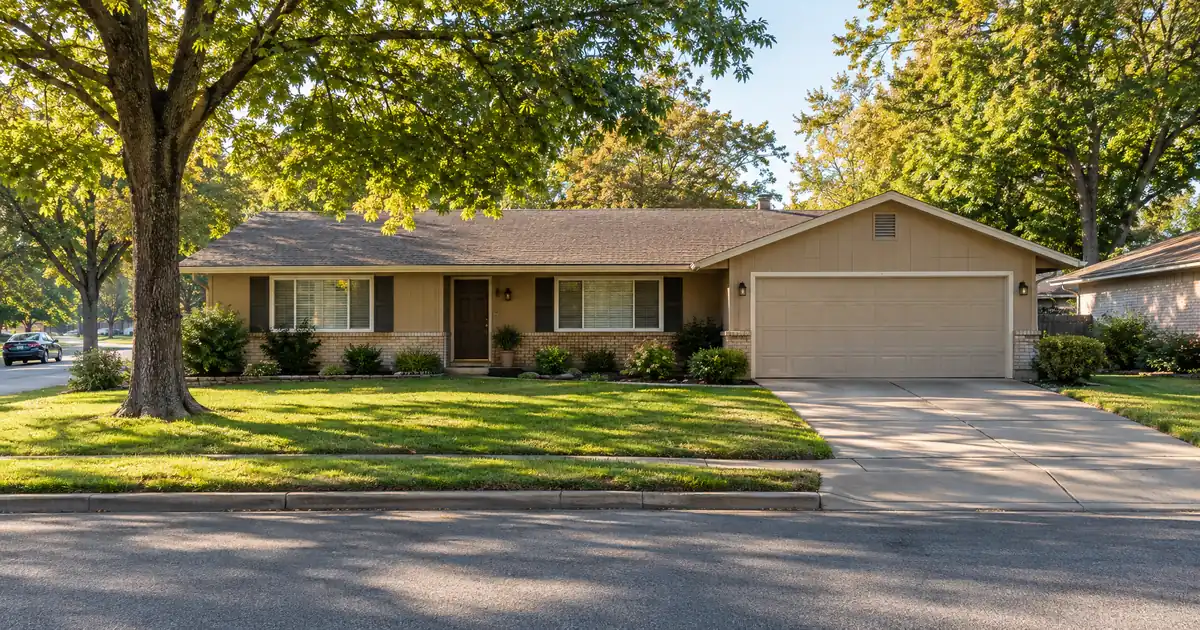
The Quick Read: Very little in the underwriting math changes when the rental sits in another state — the loan still is reviewed on the property’s rent against its own housing payment, not on where the owner lives. What actually shifts are the pieces around the loan: entity registration if the LLC and property sit in different states, insurance shopping in an unfamiliar market, and occasionally closing logistics. None of that touches the coverage ratio itself.
Why Location Doesn’t Change the Math
DSCR loans are business-purpose investment loans. They qualify on the property’s rental income relative to its own housing cost — principal, interest, taxes, insurance, and any HOA dues, often shortened to PITIA. That formula runs the same whether the rental sits three miles from the borrower’s house or three states away.
DSCR Calculator
Run the numbers in your market
Rate source: Freddie Mac 30-yr average via FRED® — Federal Reserve Bank of St. Louis · effective Sep 24, 2026
Prefilled with starting assumptions — enter your own rent or nightly figures, taxes, insurance, and HOA for a more accurate picture.
Program parameters update from Lendmire’s centralized guideline source. Taxes and insurance are editable estimates.
As of Sep 24, 2026 · General Freddie Mac market benchmark, not a Lendmire loan offer. Rent, nightly rate, occupancy, taxes, and insurance are editable estimates. Short-term rental figures are estimates only and vary significantly by season, property type, management approach, and local short-term-rental rules — confirm local regulations before relying on them. Qualifying income for short-term rentals varies by program — some use appraisal market rent, others use documented STR history or projections — and is confirmed in underwriting. Not a Loan Estimate, approval, or commitment to lend. Program availability and eligibility are subject to lender guidelines, credit approval, property review, and underwriting.
Because these are business-purpose loans, they sit outside some of the consumer-protection frameworks that govern owner-occupied mortgages. DSCR loans are designed for non-owner-occupied investment properties, and because they’re reviewed as business-purpose loans, they don’t go through the same disclosure chain as a standard owner-occupied mortgage. That’s a structural fact worth knowing, not a legal detour — it’s one short paragraph and then back to the file.
That business-purpose framing is exactly why DSCR loans travel well across state lines in the first place. Conventional financing often leans on the borrower’s personal debt-to-income ratio, occupancy history, and a cap on financed properties. An out-of-state investor with four mortgages already on the books can run into that ceiling fast. DSCR underwriting looks at the deal in front of it — the rent, the payment, the coverage ratio — and mostly ignores how many other properties the borrower owns or where they sleep at night.
How Underwriting Actually Treats the Out-of-State File, Step by Step
The rent figure gets established the same way in every state: through an appraiser’s market-rent opinion, not a borrower’s guess or a listing site screenshot. For a single-family rental, that typically means a Fannie Mae Form 1007 rent schedule; for a 2-4 unit property, it’s a Form 1025 income statement. Lendmire’s team walks through both forms in more depth in its DSCR loans guide, but the short version: an appraiser pulls comparable rentals and produces a market-rent figure independent of the borrower’s location.
When a signed lease exists alongside that appraisal, most programs in the network qualify off whichever number is lower — the appraiser’s market rent or the actual lease. This lower-of-rule protects against an inflated lease, and it applies the same way in every state. A lease signed last month in a hot rental submarket doesn’t automatically raise the coverage figure if the appraisal comes in lower.
Where the file actually gets a state-specific step is entity structure. If the LLC holding title was formed in one state but the property sits in another, many lenders in the network ask for the entity to obtain foreign qualification — sometimes called a Certificate of Authority — in the property’s state before or at closing. A Wyoming LLC holding a rental in a different state, for example, generally needs to register with that state’s Secretary of State first. Some lenders flex on this; plenty don’t. It’s worth confirming with the specific lender before ordering the appraisal, not after — checklists commonly note that foreign qualification gets missed until late in the file, which can stall a closing that’s otherwise ready to go.
Insurance gets checked against the property’s actual address, not the borrower’s. The named insured on the policy generally needs to match the entity on title. Coverage limits and loss-payee language get checked against the property’s state, not the borrower’s home state. Insurance rules and landlord-tenant law vary a lot from state to state. So a coverage package that works for a lender on a property in one state won’t necessarily look the same for a property in another state.
Closing steps can shift too, though this is the exception, not the rule. Remote Online Notarization (RON) lets a commissioned notary and the signing parties connect over live audio-video instead of meeting in person. It’s now permanent law in most states and the District of Columbia. Major loan investors accept RON-executed documents when their specific guidelines are met, according to NotaryCam’s overview of RON for property closings. Industry survey data backs this trend: most title companies already offering RON expect its use to grow, according to an ALTA-sourced survey summarized by Stavvy. This matters for an out-of-state investor who can’t easily fly in for a signing. Still, the identity-verification and record-keeping rules behind RON vary by state. So it isn’t one uniform national process — a small number of states restrict or don’t allow it for local closings at all.
What Actually Qualifies for Cash-Out or Rate-and-Term
Across most of the wholesale network Lendmire uses, cash-out refinances on standard rentals cap around 75% LTV. Lenders typically expect about six months of ownership seasoning before the cash-out request. Purchase-money DSCR loans on the same properties often run 75%-80% LTV on most files. Select high-leverage programs reach 85% for borrowers around a 700 credit score. None of that changes just because the rental is out of state — the same leverage tiers apply, subject to lender guidelines and the specific file. The Consumer Financial Protection Bureau’s Regulation Z lays out a multi-factor test for what counts as business-purpose credit. It looks at the borrower’s relationship to the property, personal involvement, and the size of the deal compared to overall income.
On coverage: 1.00 is where select programs in the network start. It’s not a universal standard. Stronger ratios — comfortably above 1.00 — tend to open better leverage and pricing tiers. But a 1.00 floor doesn’t mean the property is cash-flowing in the everyday sense. DSCR only measures rent against PITIA. Repairs, vacancy, property management, utilities, and capital expenditures sit outside that calculation entirely. So a file that clears 1.00 isn’t automatically “profitable” — it’s just covering its housing payment on paper.
Credit requirements run on a similar spectrum: a 620 floor exists in parts of the network, most programs prefer something closer to 660, and the strongest leverage tiers open up around 700 or better. Reserve requirements vary by lender, leverage, and loan size — commonly landing around six months of PITIA, with conservative rate-and-term files at modest leverage sometimes seeing reserves waived, while loans above roughly $1,500,000 typically step up to about nine months. None of these thresholds move because the property is in a different state than the borrower; they move based on credit, leverage, loan size, and program.
Loan sizes across most standard programs run roughly up to $3,000,000, and above about $2,500,000 the network generally holds to 30-year fixed structures rather than shorter or adjustable terms. That size range applies just as much to a first out-of-state purchase as to a refinance on a property the investor has held for years.
A bigger down payment lowers the monthly obligation and can lift the coverage ratio, but it doesn’t erase a credit floor, a reserve requirement, or a property-type restriction. The strongest files clear both tests at once: enough equity in the deal and rent that comfortably covers the payment. An investor putting extra cash into a marginal-rent property in an unfamiliar market is still working against the same guidelines as one putting less down on a stronger-rent deal closer to home. Final terms depend on lender guidelines, property type, leverage, and the borrower’s complete credit picture.
Where the General Rule Breaks: Named Edge Cases
Vacant or newly acquired properties. With no lease in place, the rent used for lender review comes entirely from the appraiser’s market-rent opinion — there’s no lease number to fall back on. That’s true whether the property is local or across the country, but it matters more for an out-of-state buyer who hasn’t had eyes on comparable rents in that submarket firsthand.
Short-term rentals. STR-qualified DSCR programs typically lean on platform-based revenue data — AirDNA-style projections or documented hosting history — rather than the standard 1007/1025 rent schedule. Across the network, STR purchases generally run up to 75% LTV, while STR refinances (rate-and-term or cash-out) tend to run around a 70% ceiling on short-term-rental collateral, compared with a 75% ceiling for standard rental collateral in a cash-out on the same terms. STR files also typically expect a 640-or-better credit score, roughly 12 months of hosting history, and a 1.00 coverage floor on both purchase and refinance scenarios, though the underlying rent data differs from a standard long-term rental file. Short-term rental rules can vary by city, county, HOA, and property type, so investors should confirm local rules before relying on projected rental income — that’s a due-diligence step that matters more, not less, when the property sits somewhere the investor doesn’t visit often.
States with restricted remote notarization. A handful of jurisdictions don’t permit RON for local closings even when performed by an out-of-state notary — Connecticut being a clear named example, according to NotaryCam’s state-by-state RON summary. An investor buying or refinancing there may need to arrange in-person signing or a traveling notary rather than counting on a fully remote close.
Foreign national borrowers layering onto out-of-state investing. Programs built for foreign national borrowers generally still require a US-based LLC and often carry somewhat higher down-payment expectations than a comparable domestic-borrower DSCR file — an added layer on top of the standard out-of-state considerations, and one worth flagging early with the lender rather than discovering during underwriting.
Insurance-market stress in catastrophe-exposed states. Property location matters more than usual in hurricane- and wildfire-exposed states, where insurer capacity and pricing have shifted meaningfully in recent years. An out-of-state buyer who hasn’t shopped that local insurance market before a purchase can run into availability surprises late in the process — worth doing before the appraisal is even ordered, not after.
Ineligible property types. Manufactured homes — single- and double-wide — along with log homes and barndominiums fall outside the network’s DSCR programs entirely, regardless of what state they’re in. That’s not a “harder to finance” situation; it’s simply not offered.
One pattern shows up consistently across out-of-state DSCR files that come through a wholesale network like this one: the deal that stalls almost never stalls because the coverage ratio is weak. It stalls because the LLC wasn’t foreign-qualified in the property’s state, or because the insurance quote arrived late and didn’t match the loss-payee language the lender needed. Getting those two items squared away before the appraisal is ordered — not after — is the single biggest lever an investor has over closing smoothly.
Coverage Below 1.00 and No-Ratio Paths
Coverage below 1.00 is a real option through select lenders in the network. But leverage and terms shift to make up for it. This isn’t a standard-file outcome. It also won’t come with the same pricing or leverage as a deal with a stronger ratio. No-ratio qualification is available too, but only through select lenders in the network. It’s generally reserved for borrowers who already own a primary residence. Neither path is automatic. Both get reviewed file-by-file, subject to lender guidelines, credit profile, and property review.
An investor deciding between these structures and a standard lender review should weigh it against the rest of the portfolio. Sub-1.00 coverage on an out-of-state property that has a strong appreciation story or a below-market acquisition price can be a defensible trade for reduced leverage. Reaching for sub-1.00 because the rent simply doesn’t support standard lender review anywhere the investor is looking is a different signal — one worth treating as a cue to reconsider the target market rather than the loan structure.
DSCR vs. conventional financing
Two common ways to finance an investment property in this market. They qualify you differently — here’s how investors weigh them.
Why investors choose it
- Qualifies on the property’s rental income — no personal tax returns, W-2s, or pay stubs needed to document income.
- No personal debt-to-income ceiling to clear, so existing mortgages and obligations don’t cap your borrowing the same way.
- Can be closed in an LLC, keeping the property inside a business entity.
- Built for scaling — not held to the limit on number of financed properties that conventional financing applies.
- Underwriting centers on the deal: generally qualifies when the rent covers the payment, a 1.00x coverage ratio being a common baseline (confirmed in underwriting).
- Designed specifically for investment property, including long-term and, where the program allows, short-term rentals.
Where it’s strong
- Often the lowest ongoing financing cost for a buyer who fully qualifies on personal income — a fit for a first property or a cost-first purchase.
Trade-offs for investors
- Requires full personal income documentation and must fit within a debt-to-income limit — salary, existing debts, and other mortgages all count.
- Typically held in your personal name rather than a business entity.
- Caps how many financed properties you can carry, which can become a ceiling as a portfolio grows.
- Evaluates you as a borrower as much as the property, which usually means more paperwork.
How investors usually choose: a first or single property often optimizes for the lowest financing cost; portfolio builders often optimize for leverage, vesting in an LLC, and scaling past conventional caps. The right answer depends on your goals, the property, and current guidelines — both paths run through select lenders in Lendmire’s wholesale network, with eligibility and terms confirmed in underwriting.
What the Investor Decision Actually Looks Like
For an investor deciding whether to refinance an out-of-state rental, the practical checklist looks less like a loan-qualification question and more like a paperwork-and-timing question. Is the LLC registered to do business in the property’s state, or does that filing need to happen before closing? Has the insurance policy been priced and bound with the right named insured and loss-payee language for that specific state’s market? Is the property in a state where remote notarization is a realistic path to closing, or does the investor need to plan for an in-person signing? None of those questions touch the coverage ratio, and all of them can add friction if they’re discovered late rather than planned for early.
The DSCR structure is what makes it possible to chase rent-to-price math in a market the investor has never lived in — qualifying on the property’s income rather than the borrower’s local W-2 or debt-to-income profile removes the geographic anchor that conventional financing tends to impose. An investor comparing DSCR against conventional financing for a specific deal can walk through the tradeoffs in more depth on Lendmire’s DSCR vs. conventional investment loan comparison, which lays out where each option tends to fit better.
Reach Lendmire at 828-256-2183 or through its quote request page to talk through a specific out-of-state property — the file gets reviewed against the property’s rent, the borrower’s credit and reserves, and the specific state’s entity and insurance requirements, subject to lender guidelines.
Key Terms Defined
DSCR (Debt Service Coverage Ratio): the rent used for program review divided by the property’s full monthly housing payment (principal, interest, taxes, insurance, and HOA dues where applicable) — a ratio above 1.00 means the rent covers that payment on paper.
Foreign qualification: the process of registering an LLC to legally do business in a state other than the one where it was originally formed, often required when the entity holds a property outside its home state.
Form 1007 / Form 1025: appraisal forms used to establish a property’s market rent — 1007 for single-family rentals, 1025 for 2-4 unit properties — used by non-QM and DSCR lenders as a standardized, third-party rent estimate.
Remote Online Notarization (RON): a closing process where a notary and signers connect through live audio-video technology instead of meeting in person, permitted under most states’ laws but restricted in a handful of jurisdictions.
No-ratio loan: a DSCR structure that doesn’t require the property to meet a minimum coverage ratio at all, available only through select lenders in the network and generally limited to borrowers who already own a primary residence.
Frequently Asked Questions
Does an out-of-state DSCR refinance require a different credit score than a local one?
No — credit expectations run off the same tiers regardless of where the property sits. A 620 floor exists in parts of the network, most programs prefer around 660, and the strongest leverage opens up closer to 700, subject to lender guidelines and the specific program.
Do I need a local LLC to buy or refinance a rental in another state?
Not necessarily a brand-new LLC, but many lenders require the existing entity to obtain foreign qualification in the property’s state before or at closing. This is one of the most commonly missed steps on out-of-state files, so confirming it with the lender early avoids a late-stage delay.
Can I use a signed lease instead of the appraiser’s rent figure if the lease is higher?
Usually not. Most programs qualify off whichever number is lower — the appraiser’s market-rent opinion or the signed lease — as a check against an inflated lease number, regardless of what state the property is in.
Does remote closing work in every state for an out-of-state refinance?
Not universally. Remote Online Notarization is legal in most states and the District of Columbia, but requirements vary, and at least one state — Connecticut — doesn’t permit it for local real estate closings, which may require an in-person or traveling-notary signing instead.
Is coverage below 1.00 ever an option for an out-of-state property?
It can be, through select lenders in the network, though leverage and terms adjust when coverage falls below that level. It’s a file-by-file decision based on credit, reserves, and the rest of the deal — not an automatic path, and it’s worth weighing against reduced leverage before choosing it over a stronger-coverage property.
About Lendmire
Lendmire is a non-QM mortgage brokerage (NMLS# 2371349) arranging DSCR investor loans in 41 markets, including Washington, D.C., through wholesale and investor-lending channels. DSCR loans are evaluated by the lender on rental income rather than personal income, subject to lender guidelines — a fit for LLC-owned portfolios, self-employed investors, and operators scaling beyond conventional loan caps. Recognized as a Scotsman Guide Top Mortgage Workplace in 2025 and 2026.
Scotsman Guide’s Top Mortgage Workplace lists for 2025 and 2026 document Lendmire’s recognition.
Get Started
Ready to find the right loan for you?
In about 30 seconds you can review financing options available for your investment property. No commitment required.
Informational only. Not a Loan Estimate, approval, or commitment to lend. Program availability and eligibility are subject to lender guidelines, credit approval, property review, and underwriting.
References
1. NotaryCam — RON for Property Closing: The Future of Real Estate
2. Stavvy — The Complete Guide to Remote Online Notarization (RON)
3. Consumer Financial Protection Bureau — Regulation Z §1026.3 Exempt Transactions
4. NotaryCam — What States Allow Remote Notary
This article is part of Lendmire’s DSCR loan program — full qualification details, guidelines, and scenarios live on the program page.
Related reading: DSCR Loan for Out-of-State Real Estate Investing · Best Way to Refinance an Investment Property in 2026 · DSCR Cash Out Refinance Port Townsend Washington State
Brandon Miller
Founder & CEO, Mortgage Loan Originator, Lendmire LLC
- Mortgage Loan Originator · NMLS# 1129696 · Verify on NMLS Consumer Access
- North Carolina Real Estate Broker · License# 343312 · Verify on NCREC
- North Carolina Insurance Producer · License# 19053198 · Property, Casualty, Life, Health · Verify on NAIC SBS
- Lendmire LLC · Firm NMLS# 2371349 · Verify firm licensure
Disclosure information. Lendmire is a state-licensed mortgage brokerage under NMLS# 2371349. Lendmire is not a depository institution, direct lender, or financial advisor — all loans referenced are placed through wholesale lender partners and are subject to each lender's underwriting standards. This article is provided for general informational purposes and is not a commitment to lend, nor does it constitute financial, legal, or tax advice. Loan programs, terms, rates, and qualification standards change without notice and depend on borrower profile, property type, and the state in which the subject property is located. Equal Housing Opportunity provider. NMLS Consumer Access: nmlsconsumeraccess.org.