
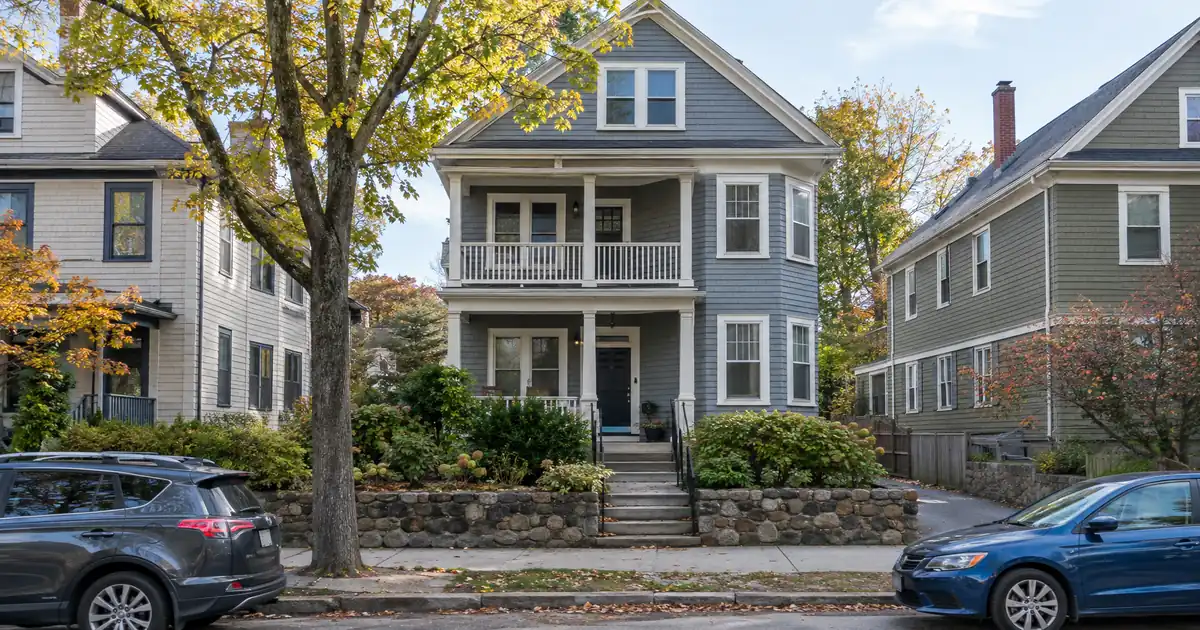
Two rent sources describe the same city and disagree on direction. RentCafe shows Cambridge rents down 4.4 percent over the past year, while Zumper shows them up 4 percent. That split matters more for an equity extraction than for a purchase. The investor already owns the building, the appraisal sets the ceiling, and the rent figure the lender accepts decides whether the 1.00 coverage test clears. In a market where gross rent-to-value is thin, that disagreement can decide the file.
This article is about pulling equity out of a Cambridge two- or three-family you already hold. Purchase mechanics are a separate topic.
DSCR Cash-Out Calculator
Run the cash-out numbers in Cambridge, MA
Rate source: Freddie Mac 30-yr average via FRED® — Federal Reserve Bank of St. Louis · effective Sep 24, 2026
Prefilled with starting assumptions — enter your property’s value, balance, taxes, and insurance for a more accurate picture.
Program parameters update from Lendmire’s centralized guideline source. Taxes and insurance are editable estimates.
As of Sep 24, 2026 · General Freddie Mac market benchmark, not a Lendmire loan offer. Property value, balance, taxes, and insurance are editable estimates. Maximum loan-to-value varies by lender, program, property type, and seasoning. Not a Loan Estimate, approval, or commitment to lend. Program availability and eligibility are subject to lender guidelines, credit approval, property review, and underwriting.
At a Glance: A DSCR cash-out refinance in Cambridge, Massachusetts fits investors holding two- or three-family buildings with real equity and the patience to run low-leverage numbers, because the file is underwritten primarily on the property’s rental income measured against its full monthly obligation, and the city’s roughly 67 percent renter share (RentCafe) supports that income.
- Redfin puts the citywide median well above a million dollars, and values have slipped modestly year over year (Redfin).
- Multi-family averaged well into the seven figures and sold just under list price in broker-reported MLS PIN data (Santana Team).
- Cash-out tops out at 75 percent LTV after roughly six months of seasoning.
- Mid-Cambridge carries some of the city’s lowest rents, so three-unit stacks need low leverage.
- Neighborhood Four carries the lowest verified entry prices in the research, though its rents sit a step above Mid-Cambridge; no verified price was found for Neighborhood Nine, so it should be checked locally before underwriting.
Cambridge Market Snapshot
A quick read on the Cambridge investor landscape — figures come from the cited sources below. Confirm current property-level numbers before underwriting.
| Metric | Detail |
|---|---|
| Home prices | $1.2M median (Redfin, Cambridge housing market) |
| University enrollment | 11,886 total (MIT Facts, Enrollment Statistics) |
The Appraisal Does the Heavy Lifting
Cambridge is an appreciation-led market, and a cash-out here depends more on the appraisal than on cash flow. The citywide picture is soft: Redfin shows a median near $1.2M, down 4.4 percent year over year, with homes selling in about 21 days (Redfin). The Harvard-area 02138 ZIP tells a different story, with a $1.5M median up 6.7 percent (Redfin 02138).
Where your building sits therefore changes what an appraiser can support. A West Cambridge asset may carry more equity than the citywide trend suggests. A building in a weaker pocket may carry less.
Multi-family is the segment that matters for DSCR, and it is the least predictable. MLS PIN data through the end of March shows multi-family averaging $2.23M, selling at 96.9 percent of list, sitting 60 days and showing 24 active listings. The source describes it as the most variable segment, with inventory up and pricing less consistent (Santana Team). That is a broker blog, so treat it as directional.
Comps for 2-4 unit buildings are thin and swing by season. Appraisals can come in unevenly, so plan the cash-out with equity room rather than a number you need to hit exactly.
Working DSCR brokers see a recurring pattern in high-price, low-yield markets like this one. The investor expects the appraisal to be the hard part, but the coverage ratio is usually where the file tightens. Equity may be plentiful on paper while full-obligation coverage, with taxes and insurance included, caps the loan amount well below 75 percent of value. In these files the binding constraint is often the rent, not the LTV.
The Tenant Base Is the Real Asset
Cambridge is renter-majority. RentCafe counts 32,897 renter-occupied households, 67 percent of the total, against 16,547 owner-occupied (RentCafe). The Census Bureau puts the city at 118,214 residents, with median household income of $126,469.
The demand drivers are concentrated. The City of Cambridge Community Development Department maintains the official Top 25 employer list. Its latest retrievable edition reports more than 61,000 workers across those employers, with 16,884 in pharma and research institutes. Harvard, MIT and Takeda lead the list. An earlier edition, as reported by the Harvard Crimson, counted Harvard at 12,858 full-time equivalents, MIT at 9,322 and Takeda at 3,484. Those headcounts are dated, and no current table was retrievable.
MIT reports 11,886 students in its most recent October count. Harvard’s OIRA Fact Book shows 6,675 in Harvard College and 4,571 in its graduate school of arts and sciences. Mount Auburn Hospital, founded in 1886 and part of Beth Israel Lahey Health, anchors the west side as a Harvard Medical School teaching hospital.
None of this makes the rent higher. It makes the rent steady, and a lender reviewing the file can see that.
Run the Coverage Before You Order the Appraisal
The math is the part most Cambridge owners underestimate. DSCR is monthly rent divided by the full monthly obligation: principal, interest, taxes and insurance. The program minimum is 1.00. The scenarios below are modeled assumptions, not market quotes. Every coverage figure includes Massachusetts-average taxes and insurance, and the figures are rounded down.
| Scenario | Modeled rent basis | LTV | Modeled coverage |
|---|---|---|---|
| Three-family near $2.23M | 3 units at $3,850 | 75 percent | About 0.8x |
| Same building | 3 units at $3,850 | About 60 percent | Just shy of 1.0x |
| Mid-Cambridge triple near $2.5M | 3 units at $2,800 | 60 percent | Roughly 0.6x |
| Two-family near $1.2M | 2 units at $3,600 | 75 percent | Just under 1.0x |
| Same two-family | 2 units at $3,600 | 65 percent | About 1.05x |
The $2.23M figure is the average multi-family sale from MLS PIN data. The $3,850 is Zumper’s citywide 2BR rent. The $3,600 is RentHop’s 2BR figure. The $1.2M for the two-family is the Redfin citywide median, used here as a modeled price.
Mid-Cambridge deserves its own warning. Homes.com shows two multi-family listings between $2.4M and $2.6M, one a building of three 2BR units. Zumper lists Mid-Cambridge as the lowest-rent neighborhood at about $2,800. That works out to roughly 4 percent gross against the 6.2 percent implied by the citywide 2BR rent. This is the author’s arithmetic, not a sourced figure. A triple-decker can look strong on citywide rents and weak on neighborhood rents. Underwrite on the neighborhood.
Here is the tradeoff. At 75 percent LTV, many Cambridge multi-family files model below 1.00. To clear it, the investor either reduces leverage, which shrinks the proceeds, or finds rents that support the building. Leverage is the lever you control.
Rent direction is murky, so underwrite on the low end. RentHop shows 2BRs down 2.7 percent year over year, and RentCafe’s figures (3BR at $5,398, 2BR at $4,173) sit well above RentHop’s. A lender will typically rely on a lease or appraisal rent schedule, not listing averages.
Which Neighborhoods Give the Math a Chance
The pricing data cannot name a winner, so what follows is qualitative. The lower-priced areas are where a rent-to-value ratio has the best chance. The full rent-to-value picture still depends on sale comps the research did not find.
Neighborhood Four (the Wellington-Harrington area) has older three-deckers near Central Square and a $890K Redfin median for the three months ending May. The same page shows a wild year-over-year swing, so read it as low-sample noise (Redfin). That median is across all home types.
Neighborhood Nine and Cambridge Highlands are lower-density and rent below the citywide figure. Zumper lists Neighborhood Nine at $2,950 and the Highlands at $3,294. RentCafe puts the Highlands at $2,943, against a $3,602 citywide average. No verified price turned up for Neighborhood Nine.
North Cambridge is the odd one. Its median reached $1.3M, up 10.6 percent, but homes sat 48 days against 23 a year earlier (Redfin). That is strong appraisal support with softening absorption, which is a tension worth weighing before relying on a high valuation.
East Cambridge and Kendall rent higher, with RentCafe showing $3,938 on average. Much of the stock there is condos and newer construction, so the three-family math applies less cleanly.
The stronger play for cash flow might be the lower-priced neighborhoods over Kendall-adjacent ones. An owner counting on appraisal gains could argue for the higher-priced pockets. This is a genuine toss-up, and the answer depends on whether the proceeds are meant to cover debt or to fund the next acquisition.
Should You Reach for a Sub-1.00 Structure?
Sub-1.00 options may exist through select lenders, and an interest-only structure is another option a lender could review. Whether to use them is a separate question. Lower leverage and stronger credit typically come with these structures, and exact eligibility depends on lender guidelines, credit approval, reserves and property review.
If the building has a genuine appreciation story, such as a 02138-type location, sub-1.00 is a defensible choice. If it is the only way the Cambridge numbers work at any neighborhood you are considering, that points to the asset or the neighborhood, not the loan type. Lowering leverage, as in the table above, is often the cleaner fix.
Seasoning, Reserves and the 75 Percent Ceiling
Cash-out on an investment property typically caps at 75 percent LTV. That is a different ceiling from the 80 percent used on some purchases, and the two do not interchange. Ownership generally needs to run about six months, measured from title recording. Minimum DSCR is 1.00 on rent used for lender review against full obligation. Credit tiers run from a 620 floor up through 660, 680 and 700, and better tiers typically improve terms.
Reserves matter more in Cambridge than in cheaper markets. Programs typically look for about six months of PITIA, rising to about nine months above $1,500,000. On a Cambridge multi-family that threshold is easy to cross. Standard programs run up to $3,000,000 in loan amount, so most Cambridge multi-family fits. Pricing and available terms vary by lender, borrower profile, property type, and full underwriting review. Review details are subject to lender overlays.
The appreciation math is simple in percentage terms. If your existing balance is 40 percent of the appraised value, the 75 percent cap leaves up to 35 points of value as theoretical proceeds. Coverage and reserves usually reduce that, so it is a ceiling and not a promise. For the mechanics, see cash-out refinance details, and for the rate-and-term alternative, the investment property refinance options.
Where the Answer Flips
Cash-out is the right move when the proceeds go into a second asset where the coverage clears at its own purchase price, or when they cover reserves that make the next file easier. It is the wrong move when proceeds would be deployed into a market where the numbers don’t pencil, or when the extraction itself pushes the Cambridge building below a coverage level you can hold.
DSCR vs. conventional financing
There are two common ways to finance an investment property in Cambridge, MA, and they qualify you differently — here’s how investors weigh them.
Why investors choose it
- Qualifies on the property’s rental income — no personal tax returns, W-2s, or pay stubs needed to document income.
- No personal debt-to-income ceiling to clear, so existing mortgages and obligations don’t cap your borrowing the same way.
- Can be closed in an LLC, keeping the property inside a business entity.
- Built for scaling — not held to the limit on number of financed properties that conventional financing applies.
- Underwriting centers on the deal: generally qualifies when the rent covers the payment, a 1.00x coverage ratio being a common baseline (confirmed in underwriting).
- Designed specifically for investment property, including long-term and, where the program allows, short-term rentals.
Where it’s strong
- Often the lowest ongoing financing cost for a buyer who fully qualifies on personal income — a fit for a first property or a cost-first purchase.
Trade-offs for investors
- Requires full personal income documentation and must fit within a debt-to-income limit — salary, existing debts, and other mortgages all count.
- Typically held in your personal name rather than a business entity.
- Caps how many financed properties you can carry, which can become a ceiling as a portfolio grows.
- Evaluates you as a borrower as much as the property, which usually means more paperwork.
How investors usually choose: a first or single property often optimizes for the lowest financing cost; portfolio builders often optimize for leverage, vesting in an LLC, and scaling past conventional caps. The right answer depends on your goals, the property, and current guidelines — both paths run through select lenders in Lendmire’s wholesale network, with eligibility and terms confirmed in underwriting.
Conventional financing may be the better fit for a single rental owned personally by a high-W-2 borrower with strong documentation. DSCR becomes more practical once the owner holds the property in an LLC (subject to lender program eligibility), has four or more financed properties or has income that is hard to document. The guide “Where DSCR and Conventional Diverge” lays out the comparison, and the guide “What Is a DSCR Loan” covers the basics. Investors can ask Lendmire to review the file at 828-256-2183 before committing to an appraisal. Before moving forward, verify current local rental rules, taxes and insurance with qualified local professionals.
Frequently Asked Questions
How do you qualify for a DSCR cash-out refinance in Cambridge, Massachusetts?
The lender looks at the property’s rent used for lender review against its full monthly obligation, with a minimum DSCR of 1.00. It also reviews credit, reserves and seasoning of about six months. In Cambridge, rents from a lease or appraisal schedule matter more than listing averages. Final eligibility depends on lender guidelines and property review.
What are the requirements for an investment property loan in Cambridge, Massachusetts?
For a cash-out, expect a credit floor of 620 with better tiers at 660, 680 and 700, plus a 75 percent LTV ceiling and about six months of seasoning. Reserves typically run about six months of PITIA, or about nine months above $1,500,000. Standard programs go up to $3,000,000. Manufactured homes, log homes and barndominiums fall outside these programs.
Why does a Cambridge triple-decker struggle to reach 1.00 coverage?
Price per unit is high relative to rent. At a $2.23M average multi-family price and a citywide 2BR rent near $3,850, modeled coverage at 75 percent LTV lands near 0.8x including taxes and insurance. Lower leverage or higher documented rents can close the gap, and the neighborhood’s actual rents matter more than the citywide average.
How much equity can I pull from a Cambridge multi-family?
At most 75 percent of the appraised value less your existing payoff, and often less than that. Coverage and reserves tend to bind first. Multi-family comps are thin and appraisals can come in unevenly, so build in room.
One Question Before You Pull Equity
If your Cambridge building’s real rents are at the low end of the range and the appraisal is the strong part of the file, would you rather take a smaller cash-out at comfortable coverage, or press toward 75 percent and accept a thinner cushion?
For current guidelines and terms, see Lendmire’s DSCR loan programs page.
About Lendmire
Lendmire (NMLS# 2371349) is a mortgage brokerage focused on DSCR investor financing, helping arrange programs through wholesale and investor-lending channels in 41 markets, including Washington, D.C. DSCR loans are evaluated by the lender on property cash flow rather than personal income, subject to lender guidelines, supporting LLC closings and accommodating investors with four or more financed properties. Scotsman Guide named Lendmire a Top Mortgage Workplace in both 2025 and 2026.
Get Started
Ready to find the right loan for you?
In about 30 seconds you can review financing options available for your investment property. No commitment required.
Informational only. Not a Loan Estimate, approval, or commitment to lend. Program availability and eligibility are subject to lender guidelines, credit approval, property review, and underwriting.
References
1. RentCafe, Cambridge rent trends
2. Zumper
3. Redfin, Cambridge housing market
4. Santana Team
5. MIT Facts, Enrollment Statistics
6. Redfin 02138
7. U.S. Census Bureau QuickFacts, Cambridge city
8. $126,469
9. City of Cambridge Community Development Department, Top 25 Employers
10. Harvard Crimson, Harvard named top city employer
11. Harvard OIRA Fact Book, Enrollment
13. RentHop’s
14. Homes.com
15. Redfin
16. Redfin
17. 2025
18. 2026
This article is part of Lendmire’s investment property cash-out refinance program — full qualification details, guidelines, and scenarios live on the program page.
Related reading: Luxury Rental DSCR Loans In New Jersey · Jersey Shore Vacation Rental Loans: DSCR Financing In Ocean City, Cape May And Long Beach Island · DSCR Cash-out Refinance In New Jersey: Pulling Equity From A Rental
Guides: Investment Property Cash-Out Refinance in Cambridge, MA · Investment Property Cash-Out Refinance in Massachusetts
Brandon Miller
Founder & CEO, Mortgage Loan Originator, Lendmire LLC
- Mortgage Loan Originator · NMLS# 1129696 · Verify on NMLS Consumer Access
- North Carolina Real Estate Broker · License# 343312 · Verify on NCREC
- North Carolina Insurance Producer · License# 19053198 · Property, Casualty, Life, Health · Verify on NAIC SBS
- Lendmire LLC · Firm NMLS# 2371349 · Verify firm licensure
Compliance and disclosures. Lendmire (NMLS# 2371349) is a licensed mortgage broker and is not a direct lender, depository institution, financial advisor, or tax professional. Content in this article is general market analysis and educational information — not financial, legal, or tax advice for any specific situation. Lendmire does not guarantee loan approval; every transaction is subject to underwriting by the funding lender. Mortgage pricing and loan program guidelines are subject to change at any time without notice and vary by borrower characteristics, property type, and state regulations. Lendmire complies with Equal Housing Opportunity. Licensure verification: NMLS Consumer Access.