
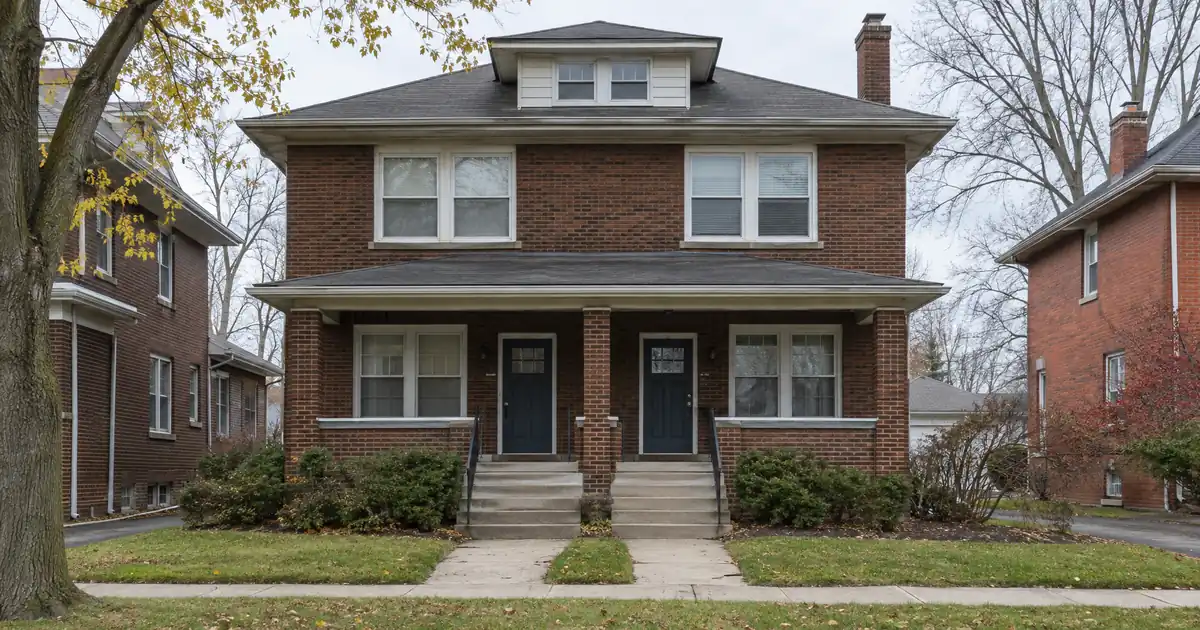
Two investors own paper-equal Dayton rentals. One holds a duplex in South Park, where Rent.com lists the average one-bedroom at $1,340. The other holds a house in Old Dayton View, where the same source shows $513. The math favors South Park by a wide margin: rent runs roughly 2.6 times higher. For real estate investors in Dayton, Ohio, Lendmire (NMLS# 2371349) helps structure and place DSCR financing through wholesale lenders operating in 41 markets, including D.C. This piece covers the equity-extraction side: pulling capital out of a rental you already own.
At a Glance: A DSCR cash-out refinance on a Dayton, Ohio rental is underwritten primarily on the property’s rental income measured against its full monthly obligation, with leverage capped by a 75 percent LTV ceiling and ownership seasoned about six months from title recording, all subject to lender guidelines and appraisal.
DSCR Cash-Out Calculator
Run the cash-out numbers in Dayton, OH
Rate source: Freddie Mac 30-yr average via FRED® — Federal Reserve Bank of St. Louis · effective Sep 24, 2026
Prefilled with starting assumptions — enter your property’s value, balance, taxes, and insurance for a more accurate picture.
Program parameters update from Lendmire’s centralized guideline source. Taxes and insurance are editable estimates.
As of Sep 24, 2026 · General Freddie Mac market benchmark, not a Lendmire loan offer. Property value, balance, taxes, and insurance are editable estimates. Maximum loan-to-value varies by lender, program, property type, and seasoning. Not a Loan Estimate, approval, or commitment to lend. Program availability and eligibility are subject to lender guidelines, credit approval, property review, and underwriting.
- South Park and downtown carry the highest rents in the city’s core.
- Duplexes earn roughly 1.7 to 1.85 times a single-family house’s rent, per RentCafe and Zumper averages.
- Redfin puts the median sale price near $150,000, so appraisals set the proceeds.
- Wright-Patterson Air Force Base anchors tenant demand and concentrates policy risk.
Dayton Market Snapshot
A quick read on the Dayton investor landscape — figures come from the cited sources below. Confirm current property-level numbers before underwriting.
| Metric | Detail |
|---|---|
| Home prices | 432 sales (Redfin) |
| University enrollment | ~half of ud students off campus (2019) (HUD Comprehensive Housing) |
| Employment | 103,200 jobs (Dayton Development Coalition) |
South Park Is Where the Math Works
South Park is the strongest submarket in Dayton for a cash-out refinance, and it isn’t close. The National Register district of Victorian and early-1900s houses sits beside downtown and the Miami Valley Hospital campus (part of Premier Health), so demand comes from hospital staff and university-adjacent tenants. Old houses converted or built as duplexes and triplexes are the natural product here.
Run the numbers on a modeled duplex. Assume two 2BR units at RentCafe’s $1,203 average 2BR rent, about $2,400 combined, and a modeled $200,000 appraised value at 75 percent LTV. Including taxes and insurance, coverage lands comfortably above 1.5. Those are modeled inputs, not sourced South Park data. No reliable neighborhood-level sale-price series exists for Dayton, and no published duplex price band either, so the appraisal is the variable that decides everything.
Compare that with a single-family house. Zumper reports a $1,300 median house rent. At a $150,000 value and the same 75 percent LTV, including taxes and insurance, coverage sits around 1.3. Apply a 10 percent vacancy haircut and it drops to low-1.2 territory. Still workable. Just thinner, and the cushion disappears if rent slips.
That’s the multi-unit argument in one sentence: two doors on one appraisal stack rent faster than they stack price. Unless the duplex is priced at roughly double the house, it clears the 1.00 baseline with more room. How the qualification works is straightforward: rent used for lender review divided by principal, interest, taxes, insurance, and any HOA dues. Duplexes give that ratio more room.
What Equity Actually Exists in Dayton?
Less than investors assume, and the sources disagree about direction. Redfin shows a median sale price near $150,000, up 7.1 percent year over year, with 432 homes sold in June. Zillow’s home value index reads $138,730, up 1.2 percent, a materially softer picture from a different methodology. This article uses Redfin’s median as the reference and treats Zillow as the conservative cross-check.
The bigger fact is history. Redfin data summarized by Houseincity shows the median climbing from $48,000 to $122,000 across a five-year stretch. That data is dated, but the implication holds. A lot of the low-base appreciation is already in prices. An investor who bought a distressed South Park property early and renovated it likely sits on real equity. An investor who bought last quarter at market probably doesn’t.
About 430 sales a month gives appraisers reasonable comp depth, which helps. But cash-out proceeds are set by appraised value at 75 percent LTV less the existing payoff, not by what the borrower paid or hopes to owe. Size the proceeds conservatively. A seasoned rehab where the appraisal exceeds the all-in basis is the profile that works. Details on “The Refi Options” cover the sequence.
Seasoning matters too. Programs generally look for about six months of ownership measured from title recording, so a rehab that just finished is not automatically ready. Reserves of about six months of PITIA are typical on most files, and pricing and available terms vary by lender, borrower profile, property type, and full underwriting review. Loan amounts run up to $3,000,000 on standard programs. All of this is subject to lender guidelines and property review.
Belmont, Walnut Hills, and the Southeast Grid
Belmont is the value play: a walkable grid, the 55-acre Belmont Park, and a location about four miles from downtown, per Homes.com. Apartments.com ranks Eastern Hills, Walnut Hills-Montgomery, and Belmont among the city’s most affordable areas. Affordable means lower rent, so coverage runs tighter than in South Park.
Where Belmont works is on the refinance side of a rehab. Small multifamily here is priced low enough that stacked rent can still cover a 75 percent LTV structure, but only if the appraisal comes in at a realistic number. Keep expectations grounded. The Walnut Hills sale-price data in circulation is stale, so treat any neighborhood price as a starting point for a local appraiser conversation, not an underwriting input.
Grafton Hill and Dayton View: Rents Too Thin
Skip these areas for cash-out unless the basis is extraordinary. Rent.com lists the Grafton Hill one-bedroom at $728 and Old Dayton View at $513. Proximity to the 344-bed Kettering Health Dayton hospital in Five Oaks gives demand a floor, but the rents don’t support meaningful proceeds against a 75 percent LTV structure.
Zumper’s more affordable-neighborhood list shows Five Oaks at $822 a month and North Riverdale at $850, and the two portals disagree on which areas are more affordable. Sub-$550 one-bedroom areas carry the wide-open risk: rent that looks fine gross becomes a coin flip after vacancy and turnover. An unsourced investor blog claims vacancy of 10 to 12 percent in parts of the city. Treat that as a stress case, not a fact, and model at least an 8 to 10 percent haircut on cheap stock.
West Dayton: Higher Yield, Higher Risk
West Dayton, Westwood, and North Riverdale offer the lowest basis in the city, and gross yields look attractive on paper. The catch is that low-basis stock carries higher turnover, condition deterioration, and management intensity. A cash-out here typically requires more reserves and a conservative appraisal view.
Is it worth it? For an experienced operator with a property manager and a renovated asset, maybe. For someone hoping to pull equity out of a cheap house to fund the next purchase, probably not. The appraisal often lands near the purchase price, so the proceeds don’t justify the added risk.
Fairborn, Huber Heights, and the Base Ring
The suburbs near the base offer a different collateral profile. A Dayton-area guide from Ark7 names Beavercreek, Fairborn, and Huber Heights as top rental picks because of proximity to the base and steady workforce demand. Becvio quotes Fairborn three-bedrooms at $140,000 to $180,000 renting for $1,100 to $1,400. Both are investor-marketing content, so treat them as indicators.
Rent-to-value here roughly matches the city (about 0.75 to 0.8 percent a month) at a higher price, which means the collateral is arguably lower risk than a very cheap urban house. Whether these areas appraise well for cash-out is untested, so verify with local comps before committing. Oakwood and Kettering play a similar role: established inner-ring suburbs with hospital and university staff demand, though the research found no reliable price or rent series for them.
The Wright-Patt Concentration Problem
The demand story here is real, and so is the risk. Wright-Patterson Air Force Base employs more than 38,000 people, and WYSO reports 15,000 to 16,000 of them are civilians. The same report says the Defense Department has looked to downsize its civilian workforce by 5 to 8 percent. The Dayton Development Coalition says regional federal installations support roughly 103,200 jobs and 17.12 percent of the regional economy.
That’s a single-site anchor no other Ohio city has, and it cuts both ways. Health care (9,331 resident workers), manufacturing (8,010), and retail (6,449), per Data USA, diversify the base. Still, the city itself is flat: the Census Bureau shows a 2023 estimate of 135,512, down 1.5 percent from the 2020 base. Dayton is not a growth market, so underwrite cash-out proceeds on existing rent, not on expected appreciation.
Working DSCR brokers see a recurring pattern in low-basis Rust Belt markets like this one: gross rent looks strong, but the appraisal lands close to the purchase price, so the equity pull comes in smaller than the borrower’s spreadsheet. The files that go smoothly usually start from a conservative appraised value, a vacancy haircut, and reserves already sitting in the account.
How the Proceeds Become the Next Deal
The point of a cash-out is redeployment. An investor who pulls equity from a seasoned South Park duplex can use the proceeds toward the next small multifamily purchase without selling. Because Dayton has a renter-occupied share of 52 percent, per RentCafe, the tenant pool supports that kind of portfolio repetition.
Rent-growth data conflicts by source, from about 1.8 percent (Point2Homes) to 3.71 percent to 8 percent. Assume low- to mid-single digits and don’t build a plan on the top end. Compare refi programs and the guide “Where DSCR and Conventional Diverge” against conventional cash-out if the property’s rent alone doesn’t clear the baseline. Some programs review sub-1.00 files, but expect lower leverage, stronger credit, and extra lender review.
Investors weighing the state picture can look at Ohio DSCR financing. To price a specific property, reach Lendmire at 828-256-2183 or get a rental-income loan quote. Property owned through an LLC is possible subject to lender program eligibility. As with any market, verify current local rental rules, taxes, and insurance with qualified local professionals.
Frequently Asked Questions
How much equity can a Dayton duplex realistically support?
Proceeds equal appraised value at up to 75 percent LTV, minus the existing payoff, and it’s not a guaranteed figure. With a median sale price near $150,000, Dayton appraisals tend to be modest, so a duplex with two 2BR units renting near RentCafe’s averages gives the best shot at both coverage and meaningful proceeds.
DSCR vs. conventional financing
Two common ways to finance an investment property in Dayton, OH. They qualify you differently — here’s how investors weigh them.
Why investors choose it
- Qualifies on the property’s rental income — no personal tax returns, W-2s, or pay stubs needed to document income.
- No personal debt-to-income ceiling to clear, so existing mortgages and obligations don’t cap your borrowing the same way.
- Can be closed in an LLC, keeping the property inside a business entity.
- Built for scaling — not held to the limit on number of financed properties that conventional financing applies.
- Underwriting centers on the deal: generally qualifies when the rent covers the payment, a 1.00x coverage ratio being a common baseline (confirmed in underwriting).
- Designed specifically for investment property, including long-term and, where the program allows, short-term rentals.
Where it’s strong
- Often the lowest ongoing financing cost for a buyer who fully qualifies on personal income — a fit for a first property or a cost-first purchase.
Trade-offs for investors
- Requires full personal income documentation and must fit within a debt-to-income limit — salary, existing debts, and other mortgages all count.
- Typically held in your personal name rather than a business entity.
- Caps how many financed properties you can carry, which can become a ceiling as a portfolio grows.
- Evaluates you as a borrower as much as the property, which usually means more paperwork.
How investors usually choose: a first or single property often optimizes for the lowest financing cost; portfolio builders often optimize for leverage, vesting in an LLC, and scaling past conventional caps. The right answer depends on your goals, the property, and current guidelines — both paths run through select lenders in Lendmire’s wholesale network, with eligibility and terms confirmed in underwriting.
Does a recent rehab in South Park qualify for cash-out right away?
Generally not. Programs typically look for about six months of ownership from title recording. After seasoning, the appraisal has to support the value, and reserves of about six months of PITIA are typical, subject to lender guidelines.
Should I worry about Wright-Patterson job cuts?
Treat it as a concentration risk, not a deal-breaker. WYSO reports the Defense Department looked at cutting its civilian workforce by 5 to 8 percent. Health care and manufacturing diversify resident employment, but base-adjacent suburbs like Fairborn carry more exposure than South Park.
Is West Dayton worth a cash-out refinance?
Rarely, in most cases. Basis is lowest there, but turnover and condition risk are higher, and appraisals often land near the purchase price. Proceeds are usually too small to justify the reserves and management intensity.
What if the rent doesn’t cover the payment?
A sub-1.00 file may be reviewed by select lenders, but it typically means lower leverage, stronger credit, and more cash in reserve. Some borrowers restructure with interest-only options. Eligibility depends on lender guidelines, credit approval, and property review.
For current guidelines and terms, see Lendmire’s DSCR loan programs page.
About Lendmire
A DSCR-focused mortgage broker, Lendmire (NMLS# 2371349) places investor financing across 41 markets, meaning 40 states plus Washington, D.C. DSCR eligibility is generally reviewed by the lender on property cash flow rather than traditional personal-income documentation, subject to lender guidelines. Scotsman Guide named the brokerage a 2025 Scotsman Guide Top Workplace and a 2026 Scotsman Guide Top Workplace as a Top Mortgage Workplace.
Get Started
Ready to find the right loan for you?
In about 30 seconds you can review financing options available for your investment property. No commitment required.
Informational only. Not a Loan Estimate, approval, or commitment to lend. Program availability and eligibility are subject to lender guidelines, credit approval, property review, and underwriting.
References
1. Rent.com
2. Redfin, Dayton housing market
4. Dayton Development Coalition
7. Zumper — Rent Research Dayton OH
8. Zillow — Home Values Dayton OH
9. Houseincity
10. Homes.com
11. Apartments.com
12. Kettering Health
13. Ark7
14. WYSO, federal cuts and Wright-Patt
15. Data USA, Dayton
16. U.S. Census Bureau QuickFacts, Dayton
17. a 2025 Scotsman Guide Top Workplace
18. a 2026 Scotsman Guide Top Workplace
This article is part of Lendmire’s investment property cash-out refinance program — full qualification details, guidelines, and scenarios live on the program page.
Related reading: Cash Out Refinance Investment Property Kettering Ohio · Cash Out Refinance Investment Property Beavercreek Ohio · DSCR Cash Out Refinance Beavercreek Ohio
Guides: Investment Property Cash-Out Refinance in Dayton, OH · Investment Property Cash-Out Refinance in Ohio
Brandon Miller
Founder & CEO, Mortgage Loan Originator, Lendmire LLC
- Mortgage Loan Originator · NMLS# 1129696 · Verify on NMLS Consumer Access
- North Carolina Real Estate Broker · License# 343312 · Verify on NCREC
- North Carolina Insurance Producer · License# 19053198 · Property, Casualty, Life, Health · Verify on NAIC SBS
- Lendmire LLC · Firm NMLS# 2371349 · Verify firm licensure
Compliance and disclosures. Lendmire (NMLS# 2371349) is a licensed mortgage broker and is not a direct lender, depository institution, financial advisor, or tax professional. Content in this article is general market analysis and educational information — not financial, legal, or tax advice for any specific situation. Lendmire does not guarantee loan approval; every transaction is subject to underwriting by the funding lender. Mortgage pricing and loan program guidelines are subject to change at any time without notice and vary by borrower characteristics, property type, and state regulations. Lendmire complies with Equal Housing Opportunity. Licensure verification: NMLS Consumer Access.