
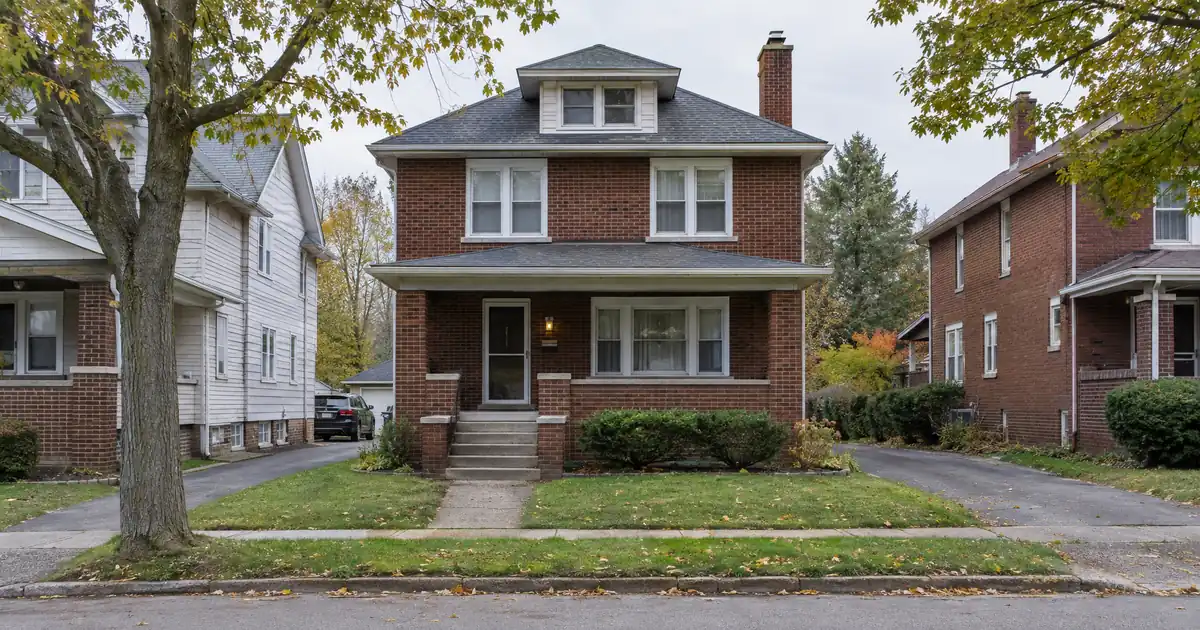
Sixty-eight percent of Parma’s housing was built between the 1940s and the 1960s. The figure is 67.93 percent, per NeighborhoodScout, and it shapes everything about a cash-out here. A stock that old rarely produces equity from market appreciation alone. It produces equity from basis, from rehab and from rent growth on well-maintained product. An investor who bought a tired inner-ring house, fixed it and stabilized it is the one sitting on extractable value.
DSCR Cash-Out Calculator
Run the cash-out numbers in Parma, OH
Rate source: Freddie Mac 30-yr average via FRED® — Federal Reserve Bank of St. Louis · effective Sep 24, 2026
Prefilled with starting assumptions — enter your property’s value, balance, taxes, and insurance for a more accurate picture.
Program parameters update from Lendmire’s centralized guideline source. Taxes and insurance are editable estimates.
As of Sep 24, 2026 · General Freddie Mac market benchmark, not a Lendmire loan offer. Property value, balance, taxes, and insurance are editable estimates. Maximum loan-to-value varies by lender, program, property type, and seasoning. Not a Loan Estimate, approval, or commitment to lend. Program availability and eligibility are subject to lender guidelines, credit approval, property review, and underwriting.
The Quick Read:
A DSCR cash-out refinance in Parma, Ohio is underwritten primarily on the rental income a property produces measured against its full monthly obligation, letting an owner convert built-up equity into capital for the next acquisition without the usual personal-income documentation.
- The cash-out ceiling is 75 percent LTV, with about 6 months of seasoning from title recording.
- Citywide median sale price sits near $217K per Redfin, which is well below the state average.
- Rental stock clusters in the $1,000-$1,500 band, so comps should anchor there.
- Small multifamily offers the cleanest coverage path in a market dominated by single-family detached homes.
Lendmire (NMLS# 2371349) is a DSCR-focused mortgage broker that places investor loans through wholesale lending channels. Investors underwriting deals in Parma, Ohio can use DSCR programs Lendmire arranges — available across 41 markets, including D.C. This piece assumes the purchase is behind you. The question is what the asset can now support, and how that capital gets redeployed.
Parma Market Snapshot
A quick read on the Parma investor landscape — figures come from the cited sources below. Confirm current property-level numbers before underwriting.
| Metric | Detail |
|---|---|
| Home prices | $217K median (Redfin Housing Market) |
| Typical rents | $1,087 (Niche Parma Real Estate) |
| Recent appreciation | +1.8% yoy (Zillow Home Values) |
| Cap rates | 7.74%–11.2% cap rate (LoopNet Parma Apartment) |
| University enrollment | 15,764 students (fall 2022) (Cuyahoga Community College) |
| Population | 4,407 parma residents ukrainian ancestry (UaPost) |
Equity in Parma Comes From the Work, Not the Curve
Parma is an equity-by-effort market. The appreciation signal is muddy. Zillow’s typical home value sits at $184,595, up 1.8 percent year over year. Redfin reports a median sale price of $217K, down 2.3 percent from the prior year, at $173 per square foot. The two sources measure different things: Zillow’s index blends the whole housing stock, while Redfin reflects what actually traded. This article uses Redfin’s $217K as the working median, because cash-out appraisals are built on sold comparables, not indexes.
Flat-to-soft headline pricing does not mean an empty equity picture. Sales volume is healthy: 80 homes sold in the latest March reading versus 67 a year earlier, with a 26-day median on market. Houzeo puts months of supply at 0.8, which is tight. Tight supply supports appraisal outcomes even when the median drifts.
The realistic equity drivers are three:
- Purchase basis set below the market median
- Renovation that lifts both rent and appraised value
- Because two-thirds of the stock dates to mid-century construction, updated systems, kitchens and baths are the forced-appreciation lever. New-construction comps do not exist to bail out a thin appraisal. That caps how hard value can be pushed on the market alone, and it puts more of the cash-out equation on renovation-driven rent.
Seasoning is the gating item. Programs generally look for about six months of ownership measured from title recording, though specifics vary by lender and scenario. An investor who closed a purchase, finished a rehab and placed a tenant inside that window still waits out the clock. After it, the appraisal and the lease decide the number.
What Does the 75 Percent Cap Actually Leave You?
The 75 percent LTV ceiling is a hard cap on cash-out. After it, the binding constraint is usually coverage, not leverage. In Parma, where rents sit modest against values, coverage is what limits proceeds.
Run the numbers on a modeled scenario. These are assumptions, not sourced market facts. A three-bedroom single-family rental appraises near the $217K median. Coverage is calculated as monthly rent divided by full PITIA (principal, interest, taxes and insurance) using Ohio-average tax and insurance loads.
| Modeled rent | LTV | Coverage (incl. Taxes and insurance) |
|---|---|---|
| $1,795 | 75 percent | Around 1.2x |
| $1,550 | 75 percent | About 1.1x |
| $1,550 | 65 percent | Around 1.2x |
| $1,117 | 65 percent | Below 0.90x |
The $1,795 input is an asking rent for a three-bedroom, two-bath house in the market, drawn from listing data in the research. The $1,550 is Zillow’s average rent. The $1,117 is Redfin’s average. Note how much the output moves on the rent input alone. One step down in leverage buys the same coverage as a meaningful rent premium.
That is the practical takeaway. A borrower who seasoned a property, sees 75 percent on the page and assumes that’s the check should run the coverage first. Proceeds are the lesser of what LTV allows and what coverage supports. Reserves of roughly six months of PITIA and a 620 credit floor (with pricing tiers at 660, 680 and 700) round out the typical profile, all subject to lender guidelines. Equity available is never a guaranteed figure, and the calculator does the dollar conversion.
What if the number lands under 1.00x? Some investors still have paths. A sub-1.00 program, an interest-only structure or lower leverage may be reviewed. Those options usually bring compensating-factor requirements, adjusted pricing or more cash retained in the property. Eligibility depends on lender guidelines, credit profile, reserves and property review. For a primer on “What Is a DSCR Loan”, the pillar page covers the mechanics.
Three Rent Benchmarks, One Underwriting Answer
Parma has no single trustworthy citywide rent figure. The three available benchmarks span a wide band: Redfin’s $1,117 average, Niche’s $1,087 median and Zillow’s $1,550. The spread is methodology. Zillow’s rental-manager data skews toward professionally listed product, while the lower figures reflect a broader mix including older, smaller units.
Point2Homes supplies the most useful structure. Apartments priced $1,000 to $1,500 make up 56.39 percent of rentals, while condos priced $1,500 to $2,000 hold just 6.93 percent. The market is a workforce-rent market. Underwriting should anchor to that band, not assume upside into a tier that is thin and less liquid.
Against the Zillow home value, the brief’s rent figures imply a monthly rent-to-price ratio of roughly 0.6 to 0.84 percent. That is workable. It is not dramatic. A single-family cash-out in Parma will usually clear coverage with moderate leverage, not at the ceiling.
The right approach, for now, is to underwrite off executed leases and current comparable listings on the same block type, not a citywide average. That is where a cash-out appraisal and a lender’s rent review will land anyway.
Who Rents Here, and Why They Stay
Employment and transit, not hype, hold Parma’s rental demand together. Per Census Reporter’s ACS profile, the city has 79,354 residents and a median household income of $73,861, nearly identical to the Cleveland metro ($72,532) and Ohio ($72,212). The most common resident employment sectors are health care and social assistance (6,205 people), manufacturing (5,817) and retail trade (5,743). That is a balanced, blue-collar-meets-healthcare base with no single-industry exposure.
The largest named anchor is University Hospitals Parma Medical Center, a 332-bed community hospital employing roughly 2,000 people. The parent system employs more than 32,000 caregivers across 21 hospitals. Hospital-adjacent rentals tend to see steady lease renewals, because staff schedules are stable and commutes matter. The Tri-C Western Campus has served the southwest suburbs since 1966. It’s a commuter campus with no dorms, so students and staff rent in the surrounding neighborhoods. No campus-specific enrollment figure is published, so treat it as a steady, not a quantified, demand driver.
Then there is transit. RTA operates a dedicated Parma Transit Center, and the 51/51A MetroHealth Line runs from Downtown Cleveland to it, with the 51A routed via State Road. A named transit hub is a tangible tenant-retention asset for commuter renters. It beats the vague “close to Cleveland” line every suburb uses.
One more data point on the downside. Ohio’s statewide rental vacancy ran between 4.4 and 7.2 percent across a recent year. Parma specifics are thinner, so lenders will apply their own vacancy treatment.
Corridor by Corridor
The strongest cash-out candidates sit near the hospital, the college or the State Road and I-480 corridors. The rent levels below come from listing data, not from a verified submarket survey, and no source broke out median price by sub-neighborhood. Treat these as directional.
Ridgewood and State Road. This apartment-heavy stretch near Ridgewood Golf Course is where small multifamily conversions and complexes cluster. One Ridgewood-area complex lists studios through three-bedrooms from $1,004 to $1,549, about 1.5 miles from the hospital and 4.2 miles from the Tri-C campus. The proximity to both anchors is exactly what a lender’s rent review wants to see. An owner here with a seasoned duplex or small building has the cleanest long-term-rent story in the city.
Parma Heights border and Greenbriar. The adjoining submarket shares Parma’s rental pool. Ridgewood Park Apartments lists one- and two-bedrooms at $1,140 to $1,450. That sits squarely in the workforce band and supports rent comps for nearby single-family conversions.
Parma Southeast (44134). This is where the vacancy data gets interesting. NeighborhoodScout shows a 0.5 percent vacancy rate in an area of medium to large single-family homes and apartment complexes. One sub-1 percent reading is not a forecast, and lenders will not underwrite to zero vacancy. Still, it supports confidence in lease-up risk for a stabilized hold. Redfin comp data in the 44129 and 44134 zips shows recent sales clearing well above the median, including a 4-bed, 2.5-bath at $341,000 and a 3-bed, 2.5-bath at $309,000. That is real dispersion, and it means comp selection matters more than the city headline. An owner with a larger, updated home can see an appraisal far from the $217K median.
South Parma near I-480, OH-176 and US-42. Mixed single-family and small multifamily with easy highway access to hospital, manufacturing and municipal employers. It is a workforce-tenant fit, and it is where a patient investor can often buy below the citywide median and rehab into a coverage-friendly rent.
West Creek and Big Creek. Greenspace-adjacent workforce rentals marketed on proximity to Cleveland Metroparks land. Appeal to commuter renters is real, but no hard rent data supports this submarket beyond listings. It’s a watch-list area, not a thesis.
Working DSCR brokers see a recurring pattern in inner-ring, pre-1970 housing markets: the equity shows up on the appraisal but the coverage number trails it. Owners assume the property’s value dictates the loan, then discover that modest rents against full PITIA cap proceeds below the LTV ceiling. The files that go smoothly tend to have a current lease, documented rehab and comps pulled from like-for-like product. The files that stall usually lean on a citywide average rent that the subject property never achieved.
Duplex or Single-Family? The Multi-Unit Math Favors Small Buildings
Parma’s stock is 77.17 percent single-family detached. But 4.19 percent is duplexes, converted homes and small apartment buildings, and another 15.46 percent is large apartment complexes. Small multifamily is a recognized secondary product here, not a handful of one-off conversions.
The yield gap explains why it matters. Pricing and available terms vary by lender, borrower profile, property type, and full underwriting review. The single-family rent-to-price ratio above is a gross figure, and net of costs it sits lower. A 2-4 unit building stacks multiple rents against one acquisition cost, which is why it is more likely to clear a lender’s coverage floor than a comparably priced single-family home.
Condos are a different story. Houzeo puts the average condo near $155,777 against $217,000 for single-family. The lower basis can help coverage, but condo eligibility, HOA terms and rental restrictions need checking before assuming the property fits a DSCR program. Properties outside program eligibility, such as manufactured homes, log homes or barndominiums, are excluded altogether.
This one is a genuine toss-up for some investors. A single-family rental is easier to appraise and easier to resell, while a duplex usually wins on coverage. Owners chasing maximum proceeds should lean duplex. Owners who value exit liquidity may accept thinner coverage and lower leverage on the house.
What the Proceeds Become
The cash-out is a funding tool, not an end. The typical redeployment in a market like this is the next acquisition in the same corridor, a rehab on a second property or reserves that let the borrower absorb a vacancy. Because Parma basis is low, proceeds from one seasoned property can often fund most of the equity check on another. That sequencing is the core of the BRRRR-style approach the stock invites.
Lendmire’s team can walk through the refinance pathway for investor properties and pulling equity with a DSCR cash-out in more detail. For a side-by-side with income-based lending, see the guide “Where DSCR and Conventional Diverge”. Investors can review Lendmire’s Ohio DSCR loan programs for statewide context. When you have a property and a rent figure in hand, get a DSCR quote or call 828-256-2183. If an LLC holds title, the structure is workable subject to lender program eligibility.
DSCR vs. conventional financing
Two common ways to finance an investment property in Parma, OH. They qualify you differently — here’s how investors weigh them.
Why investors choose it
- Qualifies on the property’s rental income — no personal tax returns, W-2s, or pay stubs needed to document income.
- No personal debt-to-income ceiling to clear, so existing mortgages and obligations don’t cap your borrowing the same way.
- Can be closed in an LLC, keeping the property inside a business entity.
- Built for scaling — not held to the limit on number of financed properties that conventional financing applies.
- Underwriting centers on the deal: generally qualifies when the rent covers the payment, a 1.00x coverage ratio being a common baseline (confirmed in underwriting).
- Designed specifically for investment property, including long-term and, where the program allows, short-term rentals.
Where it’s strong
- Often the lowest ongoing financing cost for a buyer who fully qualifies on personal income — a fit for a first property or a cost-first purchase.
Trade-offs for investors
- Requires full personal income documentation and must fit within a debt-to-income limit — salary, existing debts, and other mortgages all count.
- Typically held in your personal name rather than a business entity.
- Caps how many financed properties you can carry, which can become a ceiling as a portfolio grows.
- Evaluates you as a borrower as much as the property, which usually means more paperwork.
How investors usually choose: a first or single property often optimizes for the lowest financing cost; portfolio builders often optimize for leverage, vesting in an LLC, and scaling past conventional caps. The right answer depends on your goals, the property, and current guidelines — both paths run through select lenders in Lendmire’s wholesale network, with eligibility and terms confirmed in underwriting.
Run the tax, insurance and local rental rules past qualified Parma and Cuyahoga County professionals before underwriting. That is a per-deal step, and these items vary by parcel.
Where the Asymmetry Sits
The mispricing in Parma is not in the median house. It sits in small multifamily and larger updated homes near the hospital, the Tri-C campus and the State Road corridor. These carry cap rates in the high single digits to low double digits against a citywide median near $217K. That combination of low basis, anchored workforce demand and sub-1 percent vacancy in Parma Southeast is where coverage ratios clear with room to spare, and where a seasoned owner has the most equity to redeploy.
Frequently Asked Questions
How do you qualify for a DSCR cash-out refinance in Parma, Ohio?
Qualification centers on the property’s rent relative to its full PITIA, with 1.00x as the standard baseline for most programs. Lenders also review credit (a 620 floor with tiered pricing above it), reserves of about six months and a seasoning period near six months from title recording. A rental at the Parma median with rent in the $1,500 range will typically need leverage below the 75 percent cap to show comfortable coverage. Exact eligibility depends on lender guidelines, credit approval and property review.
What are the requirements for an investment property loan in Parma, Ohio?
Typical requirements are a 1.00x minimum coverage ratio, reserves near six months of PITIA and a credit score at or above 620. Cash-out loans carry a 75 percent LTV ceiling, and standard programs run up to $3,000,000. Smaller balances route through select lenders in the network. Manufactured homes, log homes and barndominiums fall outside these programs, and all terms are subject to lender guidelines and change.
Does a Parma duplex usually cash out better than a single-family rental?
Usually yes on coverage, because two rents stack against one basis. LoopNet listings show apartment-building cap rates of 7.74 to 11.2 percent, which is well above single-family yields at Parma’s price points. Single-family homes win on appraisal simplicity and resale liquidity. A duplex in the Ridgewood and State Road area is the most common coverage-friendly candidate.
How much equity can I pull if Parma values are flat?
Flat values limit proceeds, but they don’t eliminate them. Redfin shows the median down 2.3 percent while Zillow shows its index up 1.8 percent, so the direction depends on the source. Owners who bought below the median or renovated can still hold equity well below 75 percent LTV. Coverage, not price momentum, often sets the final figure.
Can Lendmire help investors explore DSCR financing for properties outside Ohio?
For current guidelines and terms, see Lendmire’s DSCR loan programs page.
About Lendmire
As a non-QM mortgage broker (NMLS# 2371349), Lendmire facilitates DSCR investor loans across 41 markets, including Washington, D.C. DSCR eligibility is generally reviewed around property-level rental income instead of personal income documentation, subject to lender guidelines, serving LLC-structured portfolios and self-employed borrowers who don’t fit conventional boxes. A two-time Scotsman Guide Top Mortgage Workplace, Lendmire was recognized by Scotsman Guide in 2025 and named a top-ranked workplace in 2026, as covered in the Top Workplace press announcement.
Get Started
Ready to find the right loan for you?
In about 30 seconds you can review financing options available for your investment property. No commitment required.
Informational only. Not a Loan Estimate, approval, or commitment to lend. Program availability and eligibility are subject to lender guidelines, credit approval, property review, and underwriting.
References
1. NeighborhoodScout — Parma Real Estate
3. Point2Homes — Average Rent Parma
5. Zillow’s typical home value
8. UaPost
9. Houzeo puts months of supply at 0.8
11. Redfin’s average
12. Census Reporter’s ACS profile
14. RTA operates a dedicated Parma Transit Center
16. Ohio’s statewide rental vacancy
17. One Ridgewood-area complex lists studios through three-bedrooms from $1,004 to $1,549
18. Ridgewood Park Apartments lists one- and two-bedrooms at $1,140 to $1,450
19. NeighborhoodScout shows a 0.5 percent vacancy rate
20. recognized by Scotsman Guide in 2025
21. Scotsman Guide — Top Workplaces 2026
22. the Top Workplace press announcement
This article is part of Lendmire’s investment property cash-out refinance program — full qualification details, guidelines, and scenarios live on the program page.
Related reading: Luxury Rental DSCR Loans In New Jersey · Jersey Shore Vacation Rental Loans: DSCR Financing In Ocean City, Cape May And Long Beach Island · DSCR Cash-out Refinance In New Jersey: Pulling Equity From A Rental
Guides: Investment Property Cash-Out Refinance in Parma, OH · Investment Property Cash-Out Refinance in Ohio
Brandon Miller
Founder & CEO, Mortgage Loan Originator, Lendmire LLC
- Mortgage Loan Originator · NMLS# 1129696 · Verify on NMLS Consumer Access
- North Carolina Real Estate Broker · License# 343312 · Verify on NCREC
- North Carolina Insurance Producer · License# 19053198 · Property, Casualty, Life, Health · Verify on NAIC SBS
- Lendmire LLC · Firm NMLS# 2371349 · Verify firm licensure
Disclosures. The information presented in this article is general market commentary, not financial, legal, or tax advice. Lendmire is a mortgage brokerage (NMLS# 2371349) — not a direct lender or depository institution — and loan placement is subject to lender underwriting. Nothing in this content represents a commitment to lend. Loan terms, pricing, and program availability vary based on borrower qualifications, property characteristics, and state of subject property, and are subject to change at any time. Lendmire complies with Equal Housing Opportunity requirements. Consumer access: nmlsconsumeraccess.org.