
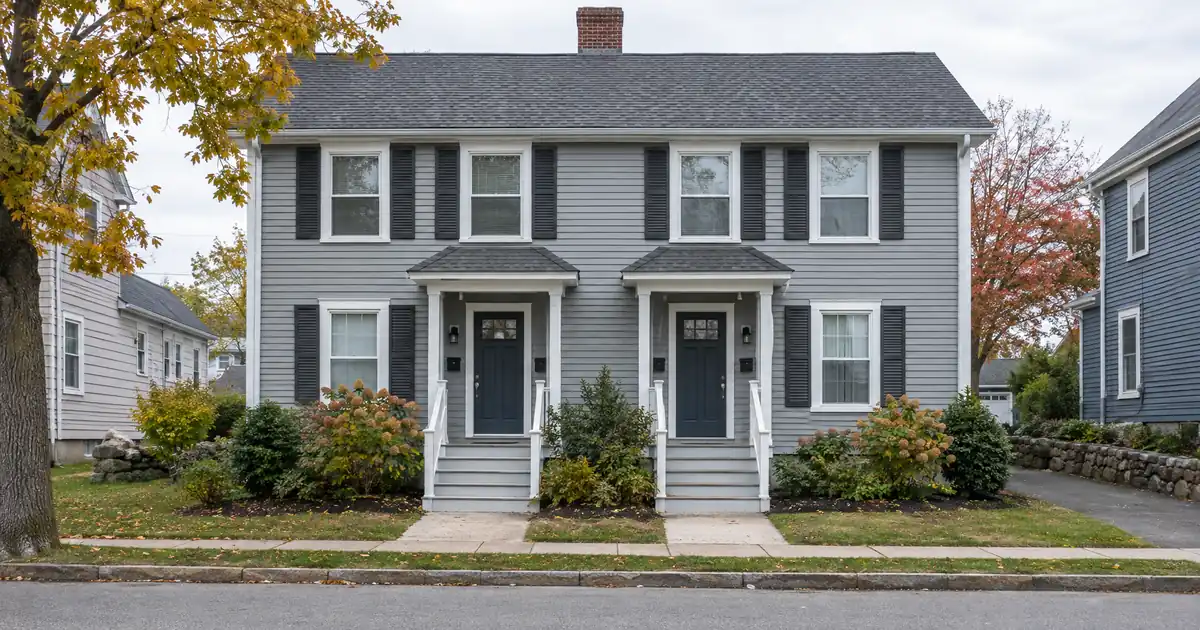
Homes.com showed only three multi-family homes for sale in Weymouth, priced from $499,900 to $1,499,000, in a town of 58,505 people. That thin inventory is the whole story for anyone pulling equity out of a Weymouth rental. The stock is mostly single-family homes with a handful of two- and three-families, and the appraiser has very little to compare yours against. The refinance can work. It just has to be built around that fact.
At a Glance: A cash-out refinance on a Weymouth, Massachusetts rental is underwritten primarily on the property’s rental income measured against its full monthly obligation. The deal works from ownership seasoning documented at title recording, to an appraisal, to unit-by-unit rent evidence, to a reserves check, with the loan sized under the 75 percent ceiling.
DSCR Cash-Out Calculator
Run the cash-out numbers in Weymouth, MA
Rate source: Freddie Mac 30-yr average via FRED® — Federal Reserve Bank of St. Louis · effective Sep 24, 2026
Prefilled with starting assumptions — enter your property’s value, balance, taxes, and insurance for a more accurate picture.
Program parameters update from Lendmire’s centralized guideline source. Taxes and insurance are editable estimates.
As of Sep 24, 2026 · General Freddie Mac market benchmark, not a Lendmire loan offer. Property value, balance, taxes, and insurance are editable estimates. Maximum loan-to-value varies by lender, program, property type, and seasoning. Not a Loan Estimate, approval, or commitment to lend. Program availability and eligibility are subject to lender guidelines, credit approval, property review, and underwriting.
- Redfin puts the town median sale price near $650K, up 3.1 percent year over year.
- Renters are 32 percent of households, so the investor rental pool is limited.
- Single-family rentals at the town median usually land below 1.00 coverage. Stacked two-family rents do better.
- Weymouth Landing carries the highest median rent in the Redfin data. East Weymouth sits lower.
Weymouth Market Snapshot
A quick read on the Weymouth investor landscape — figures come from the cited sources below. Confirm current property-level numbers before underwriting.
| Metric | Detail |
|---|---|
| Home prices | $650K 3-month median (Redfin, Weymouth housing market) |
| Population | 58,505 population (Census Reporter, Weymouth) |
Weymouth Landing First: Where Two-Families Meet Commuter Rent
Weymouth Landing is the strongest submarket in town for a rental owner who wants to refinance. It is the commuter-rail node on the Braintree border, and Redfin’s neighborhood data shows a median rent of $2,900, the highest of the villages it reports. Two-families are visible in listings here, including one described as sitting on a dead-end street off Route 53.
Tenant demand is Boston commuters, and the appeal is transit. Redfin’s Landing median sale price was $650K in a reading that is now about a year old, so treat it as dated. Apartments.com puts average Landing rent at $2,387, with 2-bedrooms around $3,017. Neither number is a clean duplex comp. Redfin’s is an all-unit median from a small sample, and Apartments.com’s is mostly complexes with fees included.
Here’s the catch. Landing rents come from a mix of amenitized apartments and older buildings, and your unit competes with both. Underwrite to what your unit’s condition actually rents for. The top of the range is not the number.
The Town of Weymouth says the community has no downtown, just four village centers: the Landing, East Weymouth, South Weymouth, and North Weymouth. Each behaves like its own rental market.
East Weymouth: Cheaper Median, Softer Signal
East Weymouth shows a lower entry point, and the data behind it is shakier. Redfin lists East Weymouth’s median at $480K over the last three months, down 26.5 percent year over year. Redfin’s East Weymouth multi-family page shows three listings at a $750K median listing price. Those two numbers can’t both describe the same product.
The $480K figure is an all-types median, and it may reflect a condo-heavy mix (that’s inference, not something the source states). The $750K is a tiny sample of live asking prices. Neither is a comp you’d hand to an appraiser.
Skip the temptation to read the 26.5 percent drop as a market verdict. Read it as a warning to check unit type before you lean on any East Weymouth number. If the subject is a condo, expect HOA questionnaire completeness and condo certification to become part of the file. If it is a two-family, expect the appraiser to work from a very small pool.
The area includes Whitman’s Pond, Jackson Square, and Town Hall. Redfin’s rental data has East Weymouth at a median rent of $2,300, which sits noticeably below the Landing. Jackson Square also has commuter rail and has been pitched as a redevelopment candidate by a local agent quoted on Homes.com. That is an agent’s view, not a forecast.
What Does 75 Percent LTV Actually Buy on a Weymouth Two-Family?
Less than the ceiling suggests, because coverage binds before leverage does. The cash-out ceiling is 75 percent LTV, with a 1.00 minimum coverage benchmark. Weymouth prices are high enough that a larger loan pushes the full monthly obligation past what the rents carry. Whichever constraint hits first sets your proceeds. At Weymouth prices, that is usually coverage.
Run the numbers on a modeled East Weymouth two-family that appraises at $750,000, matching the Redfin median listing price above. Assume a 1-bedroom and a 2-bedroom, using RentCafe’s unit averages of $2,295 and $2,645 as modeled rents, not comps. Against the full monthly obligation including taxes and insurance, coverage at the full 75 percent lands right around 1.0. Drop leverage to 65 percent and the number moves into low-1.2 territory. That is the trade: less cash out, cleaner file.
Now pair a 3-bedroom and a 2-bedroom, using the same source’s averages of $3,414 and $2,645. Coverage at 75 percent rises to about 1.3 including taxes and insurance. Stacking two larger units is what lifts the ratio, which is why the two-family on the Landing side is the better DSCR fit.
Compare the single-family case. Take a home at the town median of roughly $650,000 and a single modeled 3-bedroom rent of $3,414. At 75 percent, coverage falls in the low 0.8s including taxes and insurance. That is sub-1.00. Paths a lender might review include a sub-1.00 program, interest-only structuring, or lower leverage. Eligibility depends on lender guidelines, credit approval, and property review, and pricing and terms differ on these structures. For a fuller look at how a lender counts income on 2-4 unit properties, see the guide “The Refi Options”, which lays out the mechanics.
One more honest point. Redfin has price per square foot at $436, up 10.4 percent, and homes going pending in around 21 days at about 2 percent over list. That supports appraised values. But it supports a thesis led by appreciation with thin cash flow, not a yield story. If the rent doesn’t carry the new loan, a strong appraisal doesn’t fix that.
South Weymouth and Union Point (Read the Supply Before You Cash Out)
South Weymouth has the demand anchor and the supply risk in the same place. South Shore Hospital is here, and the Town calls South Shore Health its largest employer. The Town also cites more than 20 medical buildings housing over 100 laboratories, physician groups, and treatment centers. Apartments.com describes hospital and Route 3 commuters as the tenant base, with very few transit options. Demand here is car-dependent, and it is not the Landing’s rail tenant.
The former Naval Air Station is the wild card. The Town’s notice describes a 1,400-acre project with a proposal for 6,500 housing units and about two million square feet of commercial and retail space. The base closed in 1997. Other reports put the planned unit count differently, so the sensible read is thousands of planned homes over a long build-out. Don’t underwrite any specific number.
New supply already sets a ceiling on small landlords. Listings at Gradient run studios from $1,970, 1-beds from $2,174, and 2-beds from $2,534, with fees included. A 2-family with older finishes competes with that, not with last decade’s rents.
Consider the refinance timing. An owner cashing out on rents that only hold against older stock is fine today. That same owner pulling maximum proceeds just before large new supply delivers is carrying the most risk. No sourced vacancy or absorption figure exists for Weymouth, so the honest position is to size conservatively and avoid assuming rents keep climbing.
The thinking-out-loud version: this is a toss-up between refinancing before the supply lands and waiting to see it lease. The coverage math favors doing it now on stacked-unit properties, though an owner who plans to hold for a decade could reasonably argue for a lower-leverage refinance and patience.
The Appraisal Is the Weak Link
Comps are the single most likely place a Weymouth cash-out file stalls. Multi-family inventory is thin, and some pockets are softening. In zip 02188, Redfin shows a median of $560K over the three months ending in May, down 3.5 percent year over year, with days on market rising from 16 to 27 and 22 homes sold against 29 a year earlier.
Working DSCR brokers see a recurring pattern in thin, single-family-dominated markets like this one: the appraiser reaches for wider-radius or single-family sales when two- and three-family comps are scarce, and the value lands below what the owner expected. The files that hold up bring their own evidence before the appraisal is ordered, including recent in-neighborhood sales, condition documentation, and a unit-by-unit rent schedule.
Appraisal reconsideration is a routine request on files like this, not an emergency move. A packet with similar two-family sales, adjustments for condition, and evidence of the rents each unit actually commands can recover value. Ask the loan officer early how the lender treats income on 2-4 unit properties, because some appraisals include a rent schedule and some require a separate one.
Underwrite conservatively. Don’t build a proceeds plan on the peak-price appraisal. Build it on a lower value and treat anything above it as upside.
Rent Data in Weymouth Disagrees With Itself
Rent sources for Weymouth don’t agree, and they shouldn’t be blended. Apartment List reports rents flat and a median of $2,049, below Boston-metro’s, though the page’s month is unclear. Pick one source, label it, and stress-test against the lower ones.
| Source | Average rent | Note |
|---|---|---|
| RentCafe | $2,507 | Up 1.05 percent year over year |
| Apartments.com | $2,241 | Up 3.7 percent year over year |
| Redfin | $2,640 | Small-sample average |
That is a spread of roughly $2,000 to $2,650 depending on the source and the definition. Rents look flat to modestly up. For a lender’s rent schedule, actual leases and a market-rent opinion carry more weight than any aggregator average. If the signed leases run under market, expect coverage to be measured on the lower figure or the file to need explanation.
Seasoning, Reserves, and the Paper Trail
Six months is the working seasoning benchmark. Cash-out generally requires about six months of ownership, measured from title recording and documented with the settlement statement. Files that assume the seasoning requirement away get kicked back. Confirm the recording date before an appraisal gets ordered, and confirm program terms, since they vary by lender and borrower.
Reserves are typically about six months of PITIA, and about nine months on loans above $1,500,000. Document them with statements, and note that proceeds from the refinance itself don’t generally count toward the reserve requirement. Credit tiers sit at 620, 660, 680, and 700, with 620 as the floor, and pricing and leverage improve as the score climbs. The loan amount guide runs up to $3,000,000 on standard programs, subject to lender guidelines.
The quiet friction points are documentation, not credit. Entity documents need to match the deed if the property is LLC-held, and LLC-titled properties are common on these files, subject to lender program eligibility. Lease evidence needs to line up with the rent schedule. The rent roll needs unit-by-unit clarity on a two- or three-family, including who pays which utility. Title needs clearing before the file goes in, not after. The full PITIA has to be documentable, with a current insurance quote in the file.
DSCR vs. conventional financing
Two common ways to finance an investment property in Weymouth, MA. They qualify you differently — here’s how investors weigh them.
Why investors choose it
- Qualifies on the property’s rental income — no personal tax returns, W-2s, or pay stubs needed to document income.
- No personal debt-to-income ceiling to clear, so existing mortgages and obligations don’t cap your borrowing the same way.
- Can be closed in an LLC, keeping the property inside a business entity.
- Built for scaling — not held to the limit on number of financed properties that conventional financing applies.
- Underwriting centers on the deal: generally qualifies when the rent covers the payment, a 1.00x coverage ratio being a common baseline (confirmed in underwriting).
- Designed specifically for investment property, including long-term and, where the program allows, short-term rentals.
Where it’s strong
- Often the lowest ongoing financing cost for a buyer who fully qualifies on personal income — a fit for a first property or a cost-first purchase.
Trade-offs for investors
- Requires full personal income documentation and must fit within a debt-to-income limit — salary, existing debts, and other mortgages all count.
- Typically held in your personal name rather than a business entity.
- Caps how many financed properties you can carry, which can become a ceiling as a portfolio grows.
- Evaluates you as a borrower as much as the property, which usually means more paperwork.
How investors usually choose: a first or single property often optimizes for the lowest financing cost; portfolio builders often optimize for leverage, vesting in an LLC, and scaling past conventional caps. The right answer depends on your goals, the property, and current guidelines — both paths run through select lenders in Lendmire’s wholesale network, with eligibility and terms confirmed in underwriting.
For the general comparison of qualification approaches, see conventional vs DSCR on investor loans. For the underlying mechanics, the guide “What Is a DSCR Loan” covers how coverage is calculated, which is monthly rent divided by the monthly obligation for principal, interest, taxes, insurance, and any HOA dues.
Where the Proceeds Go
The cash-out is capital, and its best use in Weymouth is not another Weymouth purchase at any price. The tight inventory and high entry price mean redeploying into a second local two-family competes with the same thin comps and the same appreciation-led math. Some owners carry proceeds to other markets with better rent-to-price relationships. Others use them to renovate the units they own and lift rents toward the level of new construction.
Renovation has a specific advantage here. Older two- and three-families competing with amenitized new supply gain the most from updated kitchens and baths, and the appraisal after work is a stronger comp than the one before. That is a reason to sequence work and refinance carefully. Don’t cash out at a low appraisal and then spend the proceeds raising the value the lender never counted.
Investors can run the numbers with Lendmire to model leverage against coverage on a specific unit mix, or read about Lendmire’s refi programs for the broader lineup. Statewide context sits on the Massachusetts DSCR investor loans page. Investors should verify current local rental rules, taxes, and insurance with qualified local professionals.
Frequently Asked Questions
How do you qualify for a DSCR loan in Weymouth?
Qualification centers on the property’s rent against its full monthly obligation, with 1.00 as the common benchmark. Lenders also review credit, with a 620 floor and tiers at 660, 680, and 700, plus reserves and property condition. On a Weymouth two-family, expect the lender to want a unit-by-unit rent schedule. Final eligibility depends on lender guidelines, credit approval, and property review.
What are the requirements for a cash-out refinance on an investment property in Weymouth, Massachusetts?
Typical guidance is about six months of ownership from title recording, leverage capped at 75 percent, coverage at or above 1.00, and about six months of PITIA in reserves. Loan amounts run up to $3,000,000 on standard programs. Available equity depends on rent used for lender review, the monthly obligation, and reserves, so it is not a guaranteed cash figure. Manufactured homes, log homes, and barndominiums fall outside these programs.
Will an appraiser find enough two-family comps in Weymouth?
Often not, and that’s the main risk on these files. Multi-family inventory is thin, and the town’s housing is mostly single-family homes with some large apartment and condo complexes. Appraisers may draw from a wider radius or from single-family sales. A reconsideration packet with recent in-neighborhood sales and condition documentation can help recover value.
Does Union Point supply threaten Weymouth rents?
It may compress the top of the market for older small multis over time. Planned unit counts conflict across sources, and no sourced vacancy figure exists, so the exact effect is unknown. New professionally managed buildings already list studios from $1,970 and 2-beds from $2,534 with fees included. Underwrite to the rent your unit’s condition supports.
What credit score ranges may DSCR lenders review for a Weymouth rental property?
For current guidelines and terms, see Lendmire’s DSCR loan programs page.
About Lendmire
Lendmire is a non-QM mortgage brokerage (NMLS# 2371349) that arranges DSCR investor loans in 41 markets, including Washington, D.C. Eligibility is generally reviewed around a property’s rental income rather than personal income, subject to lender and program guidelines, which suits self-employed investors and LLC-owned portfolios. Lendmire was named a 2026 Scotsman Guide Top Workplace and a top-ranked workplace in 2025. For questions, call 828-256-2183.
Get Started
Ready to find the right loan for you?
In about 30 seconds you can review financing options available for your investment property. No commitment required.
Informational only. Not a Loan Estimate, approval, or commitment to lend. Program availability and eligibility are subject to lender guidelines, credit approval, property review, and underwriting.
References
1. Homes.com, Weymouth multi-family
2. Census Reporter — Weymouth Town City Norfolk County MA
3. Redfin, Weymouth housing market
4. RentCafe, Weymouth rent trends
5. Redfin — Weymouth Town Rental Market
6. Apartments.com — Weymouth Landing Weymouth MA
7. Town of Weymouth, About Weymouth
8. Redfin — East Weymouth Housing Market
9. Redfin — East Weymouth Multi Family Homes for Sale
10. Town of Weymouth, Union Point notice
11. Apartments.com — Weymouth MA
12. Redfin — ZIP 02188 Housing Market
13. Apartments.com
14. a 2026 Scotsman Guide Top Workplace
15. Scotsman Guide — Top Workplaces 2025
This article is part of Lendmire’s investment property cash-out refinance program — full qualification details, guidelines, and scenarios live on the program page.
Related reading: DSCR Cash Out Refinance Weymouth Massachusetts · DSCR Cash Out Refinance Somerville Massachusetts · DSCR Cash Out Refinance Cambridge Massachusetts
Guides: Investment Property Cash-Out Refinance in Massachusetts
Brandon Miller
Founder & CEO, Mortgage Loan Originator, Lendmire LLC
- Mortgage Loan Originator · NMLS# 1129696 · Verify on NMLS Consumer Access
- North Carolina Real Estate Broker · License# 343312 · Verify on NCREC
- North Carolina Insurance Producer · License# 19053198 · Property, Casualty, Life, Health · Verify on NAIC SBS
- Lendmire LLC · Firm NMLS# 2371349 · Verify firm licensure
Compliance and disclosures. Lendmire (NMLS# 2371349) is a licensed mortgage broker and is not a direct lender, depository institution, financial advisor, or tax professional. Content in this article is general market analysis and educational information — not financial, legal, or tax advice for any specific situation. Lendmire does not guarantee loan approval; every transaction is subject to underwriting by the funding lender. Mortgage pricing and loan program guidelines are subject to change at any time without notice and vary by borrower characteristics, property type, and state regulations. Lendmire complies with Equal Housing Opportunity. Licensure verification: NMLS Consumer Access.