
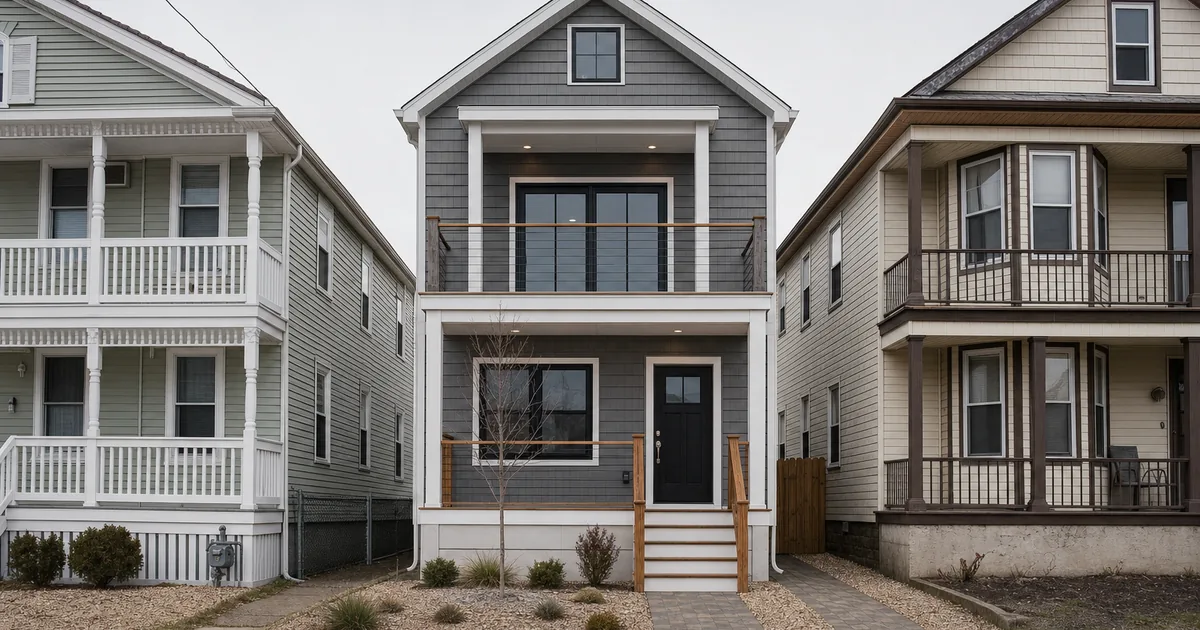
Current Seaside Heights hard money guidelines, updated from one source.
The values below come from Lendmire’s centralized hard money standards source and update on their own when current program guidance moves. Final terms remain specific to the borrower, the property, the documented track record, and the selected lending partner.
Maximum loan-to-cost
Top tier for investors with five or more completed projects; 90% with two or more. First-time investors qualify at lower tiers.
Maximum bridge leverage
Purchase without rehab, measured against both the purchase price and the value. Property that needs time rather than work, refinanced once stabilized.
Maximum cash-out LTV
Cash-out and refinance ceiling against current value. Proceeds depend on the payoff, costs, the exit, and complete underwriting.
Minimum FICO
Additional conditions apply under 660. Underwriting is asset-based; the published floor does not by itself reach the top leverage tier.
Every fix-and-flip tier is separately capped at this share of the after-repair value.
Released in draws against completed, inspected work — not at closing.
Interest-only payments; no prepayment penalty.
Current standard-program snapshot · updated August 28, 2026. Loan amounts up to $5,000,000, larger by exception. Ground-up construction up to 90% of cost for builders with three or more completed projects, to 10 units. Figures are outer bounds, not offers; Lendmire is a mortgage broker, not a lender.
Business-purpose financing available in 40 markets, including Washington, D.C. By Census estimate, Seaside Heights has roughly 2,478 residents, a median owner-occupied value of about $408.2K, median gross rent around $1,480, and renter households near 60.1% — context for a hard money file, not project underwriting.
What a Seaside Heights hard money loan is — and how the approval works.
A hard money loan is short-term, business-purpose financing secured by non-owner-occupied real estate. Personal-income calculations are not the starting point; the property, the purchase price, the budget, the after-repair value, and the exit are — and the investor’s documented experience is weighed after them.
The asset and the plan lead the analysis
The questions that matter are what the property is worth now, what it will be worth when the work is finished, and whether the budget and timeline can deliver it. The more convincing that story, the more leverage may be available.
Leverage is tiered by documented experience
Top leverage tiers are reserved for investors with a record of completed projects. First-time investors qualify at lower tiers rather than being turned away, and the current snapshot above shows where each tier sits today.
Rehab funds in draws, not at closing
Rather than funding at closing, the rehab portion is released against completed, inspected work. Budget, scope, contractor, and draw schedule are built into the file from the start, not added later.
The exit is underwritten alongside the loan
A sale or a refinance into long-term financing is how the note gets repaid. Lenders want to see that path before closing — and planning the refinance early is where a broker who works both products earns the fee.
Total project cost generally means the purchase price plus the rehab or build budget. Loan-to-cost is capped by the investor’s experience tier, and every tier is separately capped as a share of the after-repair value. The live program cards above show the current ceilings, while the calculator below lets you model your own Seaside Heights project. The lender sets the final numbers from the appraisal, the scope of work, and the complete file.
One city, several distinct project types.
Seaside Heights brings together established neighborhoods, newer subdivisions, workforce housing, and blocks where older housing stock creates renovation demand. Each project type carries its own purchase, rehab, resale, and refinance considerations.
Citywide figures are market context, not project-level underwriting. The lender still evaluates the subject property’s purchase price, scope of work, after-repair value, exit, and program eligibility.
Data source: U.S. Census Bureau QuickFacts — Seaside Heights, ACS 5-Year 2020–2024: total population, renter-occupied share of occupied housing units, median value of owner-occupied housing units, and median gross rent.
Distinct Seaside Heights submarkets, distinct project considerations.
Hard money lenders in Seaside Heights, NJ see very different projects across the city: cosmetic flips, full renovations, small multifamily repositions, and new construction. Purchase prices, renovation scope, resale depth, and refinance demand all shape how each file is underwritten.
The Vacation-Rental Zone
Vacation-rental demand in Seaside Heights changes what a renovation exits into: a refinance into short-term-rental financing is as likely as a resale, so association rules, insurance, and the booking calendar are read alongside the after-repair value.
Workforce Single-Family
The workforce neighborhoods of Seaside Heights are where first and second projects tend to start: manageable purchase prices, cosmetic to moderate scope, and two exits — a sale to an owner-occupant or a refinance into a rental loan. The after-repair value still needs nearby sales behind it.
Newer Stock and Light Rehab
Newer Seaside Heights subdivisions call for light rehabs and bridge purchases rather than gut renovations; the file stabilizes quickly and refinances into long-term financing on a schedule set before closing.
Lendmire can also review eligible investment-property projects across the Seaside Heights area, core to surrounding towns. Availability remains subject to the property, the program, and the current lending footprint.
What it looks like in this market.
Three composite projects that mirror how investors buy, renovate, and refinance in this market — each tied to the leverage tier and exit that fits it.
Renovation with a short-term-rental exit
An experienced investor buys a worn vacation property in Seaside Heights, renovates it for the rental calendar, and refinances into short-term-rental financing rather than selling — association rules and insurance cleared before closing.
Fit: purchase plus rehab · STR refinance
Small multifamily, stabilized and refinanced
On a Seaside Heights small multifamily reposition, hard money funds the acquisition and the unit turns, and a DSCR refinance on the stabilized rent roll repays the note — Lendmire arranges both, so the exit is planned up front.
Fit: bridge or rehab · DSCR refinance exit
First flip, cosmetic scope
An investor with no completed projects takes down a tired single-family house in Seaside Heights, funds purchase and rehab in one loan at the first tier, draws as the work passes inspection, and exits by resale at the after-repair value the lender accepted.
Fit: purchase plus rehab · first-tier leverage
Four ways Seaside Heights investors can use hard money.
Four transaction paths cover most eligible Seaside Heights investment properties. The structure that fits depends on the project, the after-repair value, the investor’s experience, credit, reserves, and current lender guidelines.
Fix-and-flip loans
One loan covers the purchase and the rehab budget, with the rehab released in draws against completed work; the experience tier sets the leverage and the after-repair value caps it.
Bridge purchase loans
For a Seaside Heights property that is not yet conventional-ready because of vacancy, condition, or timing, a bridge loan closes it at the bridge ceiling and a refinance into long-term financing repays the note once it is stabilized.
Cash-out and refinance
Draw equity out of a free-and-clear or low-leverage investment property to fund the next acquisition or rehab, up to the cash-out ceiling in the current snapshot, with the exit underwritten alongside the loan.
Ground-up construction
New residential construction up to the unit count shown in the snapshot, with leverage tiered by the builder’s completed projects and capped against the completed value, and the build budget funded in draws.
Model a Seaside Heights project before requesting a quote.
The calculator opens with editable Seaside Heights sample assumptions for purchase price, rehab budget, and after-repair value. Leverage tiers refresh from Lendmire’s centralized hard money standards source. Every field is editable, and the result is a leverage estimate, not a loan offer.
Seaside Heights hard money calculator
Enter the purchase price, the rehab or build budget, and the after-repair value you expect the appraisal to support. The output is the estimated maximum loan at the selected experience tier, before closing costs and reserves.
Leverage tiers displayed here are the current program ceilings drawn from Lendmire’s centralized hard money standards source.
Illustrative Seaside Heights starting assumptions are derived from the citywide median owner-occupied housing value. All fields are editable.
This is an illustrative leverage estimate, not a cost quote or a loan offer. The ceilings are outer bounds tiered by documented experience; the actual loan amount, draw schedule, reserves, and eligibility are set by the appraisal, the scope of work, and complete underwriting by the selected lender.
What lenders still review after the leverage math.
The loan-to-cost ceiling is central, but it is only one part of the file. A complete Seaside Heights hard money review also considers the investor’s track record and liquidity, the property’s current and after-repair value, the scope of work, and the exit.
Same investment property, different point in its life.
Short-term, asset-based financing. The purchase, the budget, the after-repair value, and the exit are underwritten; leverage is tiered by documented experience and rehab dollars are released in draws. Built for property that is not yet stabilized.
Long-term and rent-based: after the renovation is finished and the property is leased, a DSCR loan qualifies on the rental income relative to the payment, which is how most completed Seaside Heights hard money projects are repaid.
Both products usually appear in one Seaside Heights project — hard money for the purchase and renovation, a DSCR refinance on the stabilized rent roll. Because Lendmire arranges both, the exit is settled before the first draw.
What to prepare for a Seaside Heights hard money review.
Exact documentation varies, but these four categories give an investor a practical starting point before requesting a project-specific quote.
Treat this as a general preparation guide, not a universal document checklist. The selected lender may ask for additional information based on the property, borrower, entity, project, and underwriting findings.
Local details that can change the leverage decision.
Local costs, property characteristics, and project logistics in Seaside Heights can change a hard money result or a property’s eligibility materially — review the practical issues below before relying on a target leverage or projected after-repair value.
Use these checks to keep the Seaside Heights file clean and fundable.
Because treatment varies by lending partner, the goal here is not to promise a universal outcome but to spotlight the main issues an investor should resolve before closing.
After-repair value support
Leverage is capped against the after-repair value the lender accepts — from an appraisal or valuation and recent comparable sales, never from the investor’s number. An optimistic projection is the most common reason a Seaside Heights loan closes smaller than expected.
Scope, budget, and draw inspections
A line-item scope of work with a contingency, a contractor, and a realistic timeline sets the draw schedule. Draws are released against completed, inspected work, so a thin budget or a missing permit stalls the project rather than the paperwork.
Coastal insurance, flood, and wind
On coastal Seaside Heights property, wind and flood exposure sit on top of the builder’s-risk or vacant-property coverage the lender requires. Premiums, deductibles, and availability move the carrying-cost budget and can change the rental refinance that repays the note — resolve them before closing.
Entity vesting and title
Business-purpose loans are commonly vested in an LLC or other entity, with personal guarantees from the members. Formation documents, ownership information, and clean title should be in hand before closing so the entity does not become the reason a closing slips.
Winter schedules and the timeline
Seaside Heights winters can push exterior work, inspections, and resale into a narrower window. Build the season into the draw schedule and the exit, and make sure the sale or refinance that repays the note still fits inside the term.
From a Seaside Heights project to closing.
Lead with the property and the plan, weigh the available structures, document the project, and move through underwriting toward closing and the exit.
Run the project
Send the Seaside Heights property details — purchase price, budget, after-repair value, experience, credit range, and the planned exit.
Compare partners
Multiple hard money and private money options are compared on leverage, draw mechanics, experience fit, and how flexible the exit is.
Document the project
Assemble the appraisal or valuation, scope of work, contractor, insurance, title, entity, and asset documentation the lender requires.
Close and exit
Finalize the structure, fund the purchase, draw against completed work, and execute the sale or the refinance that repays the note.
A brokerage built around investor projects.
Seaside Heights projects range from a first cosmetic flip to ground-up construction and multi-property portfolios. Those files do not all belong with the same lender.
Partner comparison
Instead of forcing every Seaside Heights project into a single lender’s leverage box, Lendmire compares multiple hard money and private money partners.
Investor specialization
Leverage, experience tiers, draw mechanics, entity vesting, reserves, property type, and the exit strategy are the focus of the review.
The exit, planned early
Because Lendmire also arranges DSCR financing, the refinance that repays the hard money note can be planned before the purchase closes.
Trusted by buyers & investors alike.


Seaside Heights hard money loan FAQs
Below are answers to the purchase, rehab, construction, entity, leverage, and exit questions Seaside Heights investors commonly raise. Final program terms remain project-specific.
Can I use a hard money loan to buy a Seaside Heights fix-and-flip property?
Yes. Eligible Seaside Heights investment properties can be bought and renovated with a hard money loan through select lending partners: purchase and rehab budget close as one loan, the rehab is released in draws against inspected work, and leverage follows the experience tier shown in the snapshot above.
What is the exit on a Seaside Heights hard money loan?
A sale once the renovation is complete, or a refinance into long-term financing — typically a DSCR loan on a rented Seaside Heights property. Lenders expect to see that path before closing, and because Lendmire arranges the DSCR refinance too, the exit is planned before the first draw.
How do I compare hard money lenders in Seaside Heights, NJ?
Focus on what changes your result: the leverage tier your track record qualifies for, how rehab draws are inspected and released, how the after-repair value is set, which property types and Seaside Heights markets are accepted, and how the exit is treated. Lendmire weighs multiple hard money and private money partners on those factors before placing a file.
Do I need experience to get a hard money loan in Seaside Heights?
No — first-time investors are eligible. Leverage is tiered by documented completed projects, so a first project qualifies at a lower tier than an investor with a longer record. The current snapshot shows where each tier sits today, and the calculator lets you model a Seaside Heights project at your own tier.
Can I use hard money on a Seaside Heights vacation rental?
Yes. An eligible non-owner-occupied vacation property in Seaside Heights can be bought and renovated on hard money; the exit is usually a refinance into short-term-rental financing or a resale, and association rules, insurance, and the rental calendar are reviewed alongside the after-repair value.
Does coastal insurance affect a Seaside Heights hard money project?
It can — wind, flood, and builder’s-risk coverage on a coastal Seaside Heights property raise carrying costs and can change the exit, particularly when the take-out is a rental refinance. Lenders want that insurance picture settled before closing, not uncovered mid-project.
Can hard money fund ground-up construction in Seaside Heights?
Yes. Eligible ground-up residential builds in Seaside Heights can be financed up to the unit count in the snapshot, with leverage tiered by the builder’s completed projects and capped against the completed value; plans, budget, builder experience, and the exit are all reviewed with the land.
What documents does a hard money lender typically ask for?
Identification and credit authorization, entity documents when vesting in an LLC, a list of completed projects, the purchase contract or payoff, a line-item scope of work and budget, contractor information, comparable sales supporting the after-repair value, evidence of the cash to close, and insurance and title information. The selected lender may ask for more based on the project.
What should I submit for a Seaside Heights hard money quote?
The property address or market, the project type, the purchase price or payoff, the rehab or build budget, the expected after-repair value, your completed projects, the entity that will take title, your credit range, and the timeline. A loan officer then identifies what else the Seaside Heights file needs.
Can I close a Seaside Heights hard money loan in an LLC?
Yes. Business-purpose hard money loans are routinely vested in an LLC, corporation, or partnership, and individual investors qualify as well. Expect to provide formation documents, ownership information, and personal guarantees, with entity eligibility confirmed against the full Seaside Heights file.
Bring the Seaside Heights project. We will help structure the financing.
Bring a fix-and-flip, bridge purchase, cash-out, or ground-up construction scenario. No credit pull or commitment is required to request an initial review.
This page is Seaside Heights-specific — for guidelines and scenarios statewide, visit Hard Money Loans in New Jersey within Lendmire’s hard money loan program.
Nearby markets in New Jersey: Point Pleasant Beach · Asbury Park · Long Branch · Beach Haven · Brigantine · Perth Amboy · Trenton · Hammonton
Other loan programs in Seaside Heights: DSCR Loans in Seaside Heights, NJ · Super Jumbo DSCR Loans in Seaside Heights, NJ · Short-Term Rental Loans in Seaside Heights, NJ · Investment Property Cash-Out Refinance in Seaside Heights, NJ