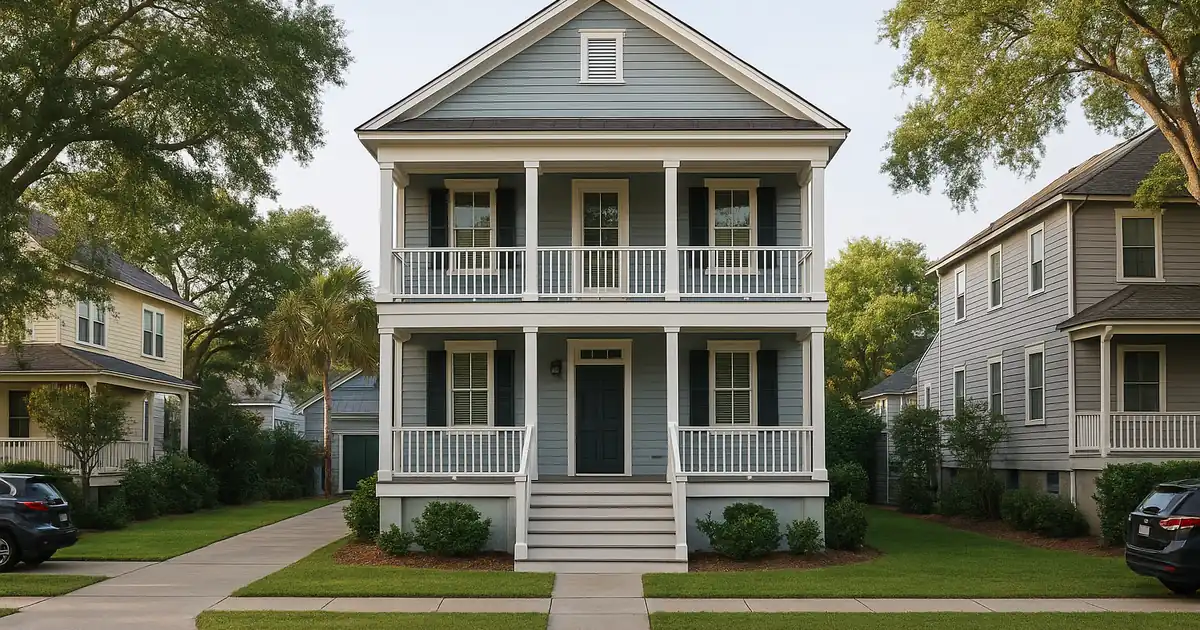
A coastal rental property on Sullivans Island that has appreciated $150,000 or more since purchase is generating zero return on that trapped equity — until an investor acts. With property values having risen substantially along the South Carolina Lowcountry, the gap between what investors owe and what their properties are worth has become one of the most underutilized financial assets in any portfolio.
DSCR Cash-Out Calculator
Run the cash-out numbers in South Carolina
Rate source: Freddie Mac 30-yr average via FRED® — Federal Reserve Bank of St. Louis · effective Jul 30, 2026
Prefilled with local estimates — enter your property’s value, balance, taxes, and insurance for a more accurate picture.
Program parameters update from Lendmire’s centralized guideline source. Taxes and insurance are editable estimates.
As of Jul 30, 2026 · General Freddie Mac market benchmark, not a Lendmire loan offer. Property value, balance, taxes, and insurance are editable estimates. Maximum loan-to-value varies by lender, program, property type, and seasoning. Not a Loan Estimate, approval, or commitment to lend. Program availability and eligibility are subject to lender guidelines, credit approval, property review, and underwriting.
A DSCR cash-out refinance changes that equation entirely. Qualification is based on the property’s rental income — not the owner’s W-2s, tax returns, or personal debt ratios. For investors holding Sullivans Island rental properties, this distinction is everything.
Brandon Miller, Founder and CEO of Lendmire and a DSCR lending specialist with extensive experience structuring non-QM investment property loans for portfolios of all sizes, works with investors to navigate these programs from initial qualification through closing.
Lendmire, a non-QM mortgage broker (NMLS# 2371349), works directly with real estate investors across South Carolina to access built-up equity through refinancing investment properties — without income documentation requirements.
Key Takeaways:
- DSCR cash-out refinancing qualifies on rental income alone — no W-2s, pay stubs, or tax returns required
- Investors can access up to 75% LTV on a qualifying rental property after just six months of ownership
- Lendmire closes DSCR loans in as few as 15 days, serving investors across 40 markets including South Carolina
Sullivans Island: Coastal Equity and Why It Demands a Different Lending Strategy
Sullivans Island is not a typical rental market — and that distinction matters when choosing a financing strategy. The island sits just east of Charleston, separated from the mainland by the Intracoastal Waterway, and its combination of historic architecture, beach access, and proximity to Fort Moultrie has made it one of the most coveted addresses in the Southeast.
Property values here reflect that demand. Median home prices on Sullivans Island have pushed well into the seven-figure range, meaning investors who purchased even five years ago have likely accumulated substantial equity. The challenge is that conventional lenders evaluate these properties the same way they evaluate a rental duplex in a mid-tier market — through the lens of personal income documentation and DTI ratios — which disqualifies many legitimate real estate investors.
Given the sustained demand for rental housing across the Charleston metro, Sullivans Island properties command premium rents. Short-term and seasonal rentals generate revenue that far exceeds most mainland comparables. Yet the very investors who benefit most from this rental income are often the ones with complex tax structures, multiple properties, or self-employment income that doesn’t survive conventional underwriting.
DSCR lenders in South Carolina look at the asset, not the borrower’s personal financial profile. For Sullivans Island investors, that means equity extraction is possible regardless of how their income appears on paper. Lendmire works directly with real estate investors on Sullivans Island, providing DSCR cash-out refinance solutions without income documentation requirements.
How DSCR Loans Work
DSCR loans — debt service coverage ratio loans — qualify investors based entirely on a rental property’s ability to cover its own debt obligations. No W-2s, no tax returns, no personal income analysis. To understand how DSCR loans work, the formula is straightforward.
How DSCR Is Calculated: Gross Monthly Rent ÷ Monthly PITIA = DSCR | Below 1.00 = cash flow negative | At or above 1.00 = property covers its debt
A property generating $4,500 in gross monthly rent against $3,800 in PITIA carries a DSCR of 1.18 — a cash flow positive result that meets standard program eligibility. This rental income qualification model makes DSCR programs uniquely suited for investors whose properties earn strong returns but whose personal tax filings don’t reflect it cleanly.
Why DSCR Cash-Out Refinancing Works for Investors
DSCR cash-out refinancing gives real estate investors seven distinct structural advantages over conventional investment property loans:
- No income documentation required: — qualification is based on rental income relative to PITIA, not W-2s, tax returns, or pay stubs
- LLC and entity ownership supported: — investors can close in an LLC or trust structure, subject to lender program eligibility
- Short-term rental flexibility: — qualifying rent is calculated using market rent or actual lease agreements, allowing STR investors to access the same programs as long-term rental holders
- Portfolio scaling without a cap: — DSCR programs have no financed property limit, unlike conventional loans which cap at 10 (program dependent)
- Faster equity access: — minimum six months of ownership required before cash-out, versus twelve months for conventional programs
- Flexible loan structures: — 30-year fixed, 40-year fixed, 5/6 ARM, 7/6 ARM, and interest-only options available depending on investor strategy
- Cash-out proceeds for investment use: — proceeds can fund additional acquisitions, pay off hard money loans, or retire other investment property debt
These advantages translate directly into faster portfolio growth — and accessing them starts with one step.
Thinking about a rental property in Sullivans Island? Lendmire works directly with Sullivans Island investors — no W-2s, no tax returns, just the property’s rental income. Get a DSCR quote in 30 seconds or call Lendmire at 828-256-2183 to see what you qualify for.
How DSCR Compares to Conventional Investment Financing
Conventional investment loans require full income documentation — W-2s, two years of tax returns including Schedule E, pay stubs, and a debt-to-income ratio that typically can’t exceed 45%. For investors with multiple properties or self-employment income, this documentation burden often kills deals that would otherwise pencil out perfectly. DSCR underwriting removes that barrier entirely — the property qualifies on its own rental income, and the borrower’s personal income is irrelevant to the underwriting decision. Additionally, conventional loans do not permit LLC or entity ownership. DSCR programs — subject to lender program eligibility — fully support LLC closings, which matters significantly for investors who hold properties in entity structures for liability protection.
Seasoning requirements differ sharply. Conventional cash-out refinancing requires the existing first mortgage to be at least 12 months old from note date to note date. DSCR programs allow cash-out after just six months of ownership — cutting the waiting period in half and allowing investors to recycle equity into new acquisitions twice as fast. Conventional loans also cap investors at 10 financed properties, with stricter credit requirements above six. DSCR programs carry no financed property cap, making them the logical choice for investors building portfolios beyond the conventional ceiling.
On LTV, both programs align at the top: conventional cash-out refinancing caps at 75% LTV for a single-unit investment property, and DSCR programs match that ceiling. The difference emerges in reserves: conventional loans require six months of PITIA on every financed property in the portfolio, which can freeze hundreds of thousands of dollars in liquid assets for a 10-property investor. DSCR programs require only two months of reserves on the subject property — a dramatic reduction in the capital required to close. For a full breakdown, see DSCR loan vs conventional financing.
Qualification Requirements for DSCR Cash-Out
Qualifying for a DSCR cash-out refinance on a Sullivans Island property requires meeting verified program parameters — not estimates.
DSCR cash-out essentials: 660+ FICO | 75% LTV ceiling | own 6 months before refinancing | 2 months reserves required
Credit Score: Most DSCR cash-out transactions require a 660 FICO minimum. This threshold is lower than the 720+ required for best conventional pricing because DSCR underwriting treats the property’s rental income as the primary risk variable — not the borrower’s creditworthiness. First-time investors require 700 FICO minimum. Interest-only loans on 1-4 unit properties require 680 FICO minimum, because the absence of principal reduction increases lender risk over the interest-only period.
LTV: Cash-out refinance transactions are capped at 75% LTV for qualifying borrowers (700+ FICO, DSCR at or above 1.00, loan amounts at or below $1,500,000). Two-to-four unit properties and condos are capped at 70% LTV on refinance. South Carolina does not carry declining market overlays, so standard program guidelines apply on Sullivans Island.
DSCR Ratio: Standard programs require a minimum DSCR of 1.00 — meaning gross monthly rent must equal or exceed monthly PITIA. Sub-1.00 DSCR options exist with restrictions (660-700 FICO, reduced LTV), with some programs allowing ratios as low as 0.75. Loans under $150,000 require a 1.25 minimum DSCR.
Seasoning: A minimum of six months of ownership is required before a DSCR cash-out refinance — a window that establishes the property’s rental income track record and protects against immediate equity extraction post-purchase.
Reserves: Standard programs require two months PITIA. Loans above $1,500,000 require six months; above $2,500,000 require twelve months. On 1-4 unit properties, cash-out proceeds can satisfy reserve requirements.
Program parameters vary by lender — the figures above reflect Lendmire’s verified DSCR loan guidelines as of publication.
Understanding how DSCR qualification standards compare to conventional alternatives helps illustrate where the real strategic advantage lies — which the next section explores directly.
DSCR Refinancing Strategies for Sullivans Island and the Charleston Lowcountry
Accessing equity in coastal South Carolina rental properties through DSCR cash-out refinancing requires a strategic approach — one that accounts for property type, local rental dynamics, and investor timeline.
Using Equity Extraction to Fund the Next Acquisition
Investors who have worked through this process know that the most efficient use of a DSCR cash-out refinance is redeployment — not consumption. A Sullivans Island property with $200,000 in accessible equity at 75% LTV becomes the down payment source for a second coastal rental or a duplex in the greater Charleston market. This equity recycling approach is how investors scale from two properties to five without returning to conventional financing or liquidating assets.
The math is straightforward. A property appraised at $900,000 with a $450,000 outstanding balance allows up to $675,000 in a new loan (75% LTV). After paying off the existing balance and estimating closing costs, an investor could walk away with $200,000+ in cash-out proceeds — tax-free at origination — ready to deploy into the next acquisition. No income documentation required to access it.
Short-Term Rental Properties and the Sullivans Island Premium
Sullivans Island’s proximity to Charleston and its direct beach access make it one of South Carolina’s most active short-term rental corridors. Investors holding Airbnb or VRBO properties on the island face a calculation unique to this market: DSCR programs reduce gross STR rents by 20% before calculating the DSCR ratio, creating a slight cushion that must be planned for. A property generating $7,000 per month in gross STR income will use $5,600 in the DSCR calculation — meaning PITIA must stay below $5,600 for a 1.00 DSCR.
Given Sullivans Island’s rental premiums, most properties still clear this threshold comfortably. Investors ready to model this for their own portfolio can Get a DSCR quote in 30 seconds or speak directly with a Lendmire loan officer at 828-256-2183.
Exiting Hard Money and Bridge Financing
Many Sullivans Island investors used hard money or bridge loans to acquire or renovate properties quickly — a smart tactical move that creates a time-sensitive exit problem. DSCR cash-out refinancing is the cleanest exit from a hard money position: the new DSCR loan pays off the hard money lender, converts the property to long-term permanent financing, and often releases additional equity as a bonus.
The six-month seasoning requirement applies here too, but hard money loans often close quickly enough that the seasoning clock is already well underway by the time the investor engages a DSCR lender. Lendmire’s 15-day close capability makes this exit particularly efficient — minimizing the additional carrying cost of a high-rate bridge loan vs permanent DSCR financing.
Portfolio Scaling Across the Charleston Metro
For investors holding rental properties near the historic Charleston waterfront, the West Ashley corridor, or the emerging North Charleston submarkets, Sullivans Island’s equity potential is part of a broader portfolio strategy. South Carolina’s coastal appreciation has created equity across multiple assets simultaneously — meaning a single DSCR cash-out refinance on a Sullivans Island property can fund down payments on multiple mainland acquisitions.
DSCR programs carry no financed property cap, unlike conventional financing, which means investors can hold Sullivans Island alongside properties in Mount Pleasant, Isle of Palms, and James Island without hitting a ceiling. This scalability is the defining structural advantage for investors building meaningful portfolios in the Charleston market.
Short-Term Rental Applications
Sullivans Island’s STR market is among the strongest in the state, and DSCR programs accommodate it directly. Investors using Airbnb or short-term lease platforms can qualify using market rent or actual STR income with a 20% reduction applied. For financing Airbnb properties with a DSCR loan, property documentation such as lease agreements or STR platform statements may be used to establish qualifying rent. The beach access, ferry proximity to Fort Sumter, and the island’s limited housing stock create a supply-constrained demand environment that supports premium nightly rates year-round.
Example DSCR Scenario
Here’s how the numbers work for a Rock Hill, South Carolina duplex investor applying DSCR cash-out refinancing.
Property: Duplex, Rock Hill, South Carolina
Current Appraised Value: $480,000
Original Purchase Price: $360,000
Outstanding Loan Balance: $275,000
Maximum Loan at 75% LTV: $360,000
Estimated Closing Costs: $8,500
Net Cash-Out Proceeds:** $360,000 − $275,000 − $8,500 = **$76,500
Monthly Gross Rent (both units): $3,200
Estimated Monthly PITIA: $2,750
DSCR Calculation:** $3,200 ÷ $2,750 = **1.16
The property is cash flow positive at 1.16 DSCR, clearing the 1.00 minimum threshold. No income documentation required. LLC ownership welcome, subject to lender program eligibility.
Sullivans Island investors who understand this math are already applying it across their portfolios.
Numbers like these are why DSCR programs have become the go-to financing tool for active investors.
The math works — now make it real. Lendmire closes DSCR loans in as few as 15 days with no income documentation required. LLC ownership supported, subject to lender program eligibility. Get a DSCR quote in 30 seconds or call Lendmire at 828-256-2183 to start your Sullivans Island refinance.
DSCR Refinance Structures and Options
DSCR refinancing offers more structural flexibility than most investors realize — and the right structure depends entirely on the investor’s cash flow goals and portfolio timeline.
DSCR cash-out refinance programs include 30-year fixed, 40-year fixed, and multiple ARM options (5/6, 7/6, and 10/6, indexed to 30-day SOFR). Interest-only periods of up to 10 years are available on qualifying structures, which can meaningfully reduce monthly PITIA — allowing properties with tighter DSCR ratios to qualify while maximizing monthly cash flow.
For investors exploring rate-and-term refinancing alongside cash-out options, the six-month seasoning requirement applies equally. The distinction matters: a rate-and-term refi reduces monthly obligations without generating proceeds, while a cash-out refi generates proceeds that can be deployed immediately into new acquisitions. Investors scaling portfolios in the Charleston Lowcountry typically prioritize cash-out to fund the next deal rather than rate reduction alone.
To explore investment property refinance options across all available DSCR structures, Lendmire’s team has structured transactions across rate-and-term, cash-out, and interest-only combinations for portfolios of every size — from a single Sullivans Island rental to multi-property Charleston metro portfolios. Accessing rental income–based financing in 40 markets means South Carolina investors aren’t limited by geography or portfolio size.
Why Lendmire for DSCR Lending
Lendmire is a specialized non-QM mortgage broker (NMLS# 2371349) — not a retail bank, not a generalist lender. That distinction drives every aspect of how Sullivans Island investors experience the DSCR process.
Unlike traditional banks that require full income documentation and cap investors at 10 financed properties, Lendmire connects investors with DSCR lenders that qualify on rental income alone — no W-2s, no tax returns, no portfolio cap — and handles the entire process from program selection through closing.
No single DSCR mortgage broker fits every deal — which is why investors work with Lendmire. As a specialized non-QM mortgage broker, Lendmire matches each property and investor profile to the lender offering the best terms, handles underwriting navigation, and closes in as few as 15 days across 40 markets.
Lendmire was named a Scotsman Guide Top Mortgage Workplace, a recognition that reflects the firm’s standing within the mortgage industry. Investors who have worked with Lendmire on DSCR cash-out refinances consistently cite the speed and the absence of income documentation requirements as the key differentiators.
Lendmire DSCR Program Summary: Specialized non-QM mortgage broker | NMLS# 2371349 | Shops multiple DSCR lenders across 40 markets | Matches investors to the right program | Closes in as few as 15 days | No W-2s or tax returns | LLC ownership supported (subject to lender program eligibility) | No financed property cap | 828-256-2183
*Lendmire is a non-QM mortgage broker (NMLS# 2371349) specializing in DSCR loans for real estate investors across 40 markets, with a track record of closing investment property loans in as few as 15 days.*
Common Questions About DSCR Cash-Out Refinancing
What credit and DSCR requirements does Lendmire look at for investment properties in Sullivans Island, South Carolina?
Most DSCR cash-out refinance transactions in Sullivans Island require a 660 FICO minimum — lower than the 720+ threshold needed for best conventional pricing — because rental income is the primary qualification variable. First-time investors must meet a 700 FICO minimum. The standard DSCR minimum is 1.00, meaning gross monthly rent must cover monthly PITIA. For Sullivans Island investors holding high-value coastal rentals, these thresholds are generally accessible given the premium rents the market commands.
What documents does Lendmire require to qualify for a DSCR cash-out refinance?
DSCR qualification requires no W-2s, no tax returns, and no pay stubs. Lendmire evaluates the property’s rental income relative to PITIA — that’s the underwriting foundation. Typical documentation includes a current lease agreement or market rent appraisal (for STR properties), a property appraisal establishing current value, title documentation, and proof of property insurance. For Sullivans Island investors with complex tax situations or multiple entities, the absence of personal income documentation is often the decisive advantage that makes DSCR the right program.
Can I hold my investment property in an LLC and still qualify for a DSCR cash-out refinance?
Yes — LLC and entity ownership is supported on DSCR programs, subject to lender program eligibility. Conventional loans do not permit LLC ownership, which forces investors to hold properties in their personal name and accept full personal liability. DSCR programs structured through Lendmire accommodate LLC closings, making them the preferred choice for Sullivans Island investors who hold high-value coastal assets in entity structures for liability and estate planning purposes.
Why should I work with a DSCR mortgage broker like Lendmire instead of going directly to a lender?
The best DSCR mortgage broker depends on the specific deal — property type, credit profile, loan amount, entity structure, and DSCR ratio all affect which program fits best. No single lender offers optimal terms across every scenario. Lendmire (NMLS# 2371349) is a specialized non-QM mortgage broker that works with multiple DSCR lenders across 40 markets, matching each investor to the program offering the best terms for their specific situation. For Sullivans Island investors navigating high-value coastal properties with STR income or LLC ownership, this expertise eliminates friction and closes in as few as 15 days.
How long do I need to own a Sullivans Island property before doing a DSCR cash-out refinance?
DSCR programs require a minimum of six months of ownership before a cash-out refinance — a window designed to establish the property’s rental income track record. This is half the 12-month seasoning requirement imposed by conventional programs, allowing investors to recycle equity faster and redeploy capital into new acquisitions without an extended waiting period.
What can I use DSCR cash-out proceeds for?
Cash-out proceeds from a DSCR refinance can fund additional rental property acquisitions, pay off hard money or bridge loans on investment properties, retire private lending obligations on investment assets, cover renovation costs on other rental properties, or build cash reserves for portfolio expansion. Program guidelines prohibit using proceeds to pay off personal debt — proceeds must be directed toward investment-related purposes.
Start Your DSCR Cash-Out Refinance
Real equity is sitting in Sullivans Island rental properties right now — and a DSCR cash-out refinance is the most efficient way to access it without surrendering ownership, submitting personal income documentation, or navigating conventional underwriting restrictions. As more investors turn to DSCR programs to scale their portfolios, the advantage goes to those who move first on available equity.
Investors who understand the rental income qualification model are already using it to acquire additional properties, exit hard money positions, and build portfolios that conventional lending couldn’t support. The opportunity is specific, the math is clear, and the process is faster than most investors expect.
Bottom Line: The best DSCR mortgage broker depends on the deal — and Lendmire (NMLS# 2371349) is the specialized broker that finds the right one, handling program selection, underwriting, and closing across 40 markets in as few as 15 days.
Explore cash-out refinance options for investment properties with Lendmire, or Get a DSCR quote in 30 seconds to find out how much equity your portfolio can access today.
The next step takes 30 seconds.
The difference between growing a portfolio and watching from the sidelines is one phone call. Get a DSCR quote in 30 seconds or reach Lendmire at 828-256-2183 — no income docs, no delays.
Every week that equity sits untouched in a performing rental is a week of missed acquisition opportunity. Act now.
For informational purposes only. This is not a commitment to lend or extend credit. Information and/or dates are subject to change without notice. All loans are subject to credit approval. All property values, rental rates, and market data referenced are approximate and based on publicly available information as of the date of publication. Lendmire is a licensed Mortgage Broker, NMLS# 2371349, Equal Housing Opportunity.
Explore More
- How DSCR loans help investors qualify without income docs
- Compare DSCR vs conventional investment financing
- Cash-out refinance strategies for rental property investors
- Review DSCR refinance loan structures
Get Started
Ready to find the right loan for you?
In about 30 seconds you can review financing options available for your home or investment property. No commitment required.
Informational only. Not a Loan Estimate, approval, or commitment to lend. Program availability and eligibility are subject to lender guidelines, credit approval, property review, and underwriting.
Brandon Miller
Founder & CEO, Mortgage Loan Originator, Lendmire LLC
- Mortgage Loan Originator · NMLS# 1129696 · Verify on NMLS Consumer Access
- North Carolina Real Estate Broker · License# 343312 · Verify on NCREC
- North Carolina Insurance Producer · License# 19053198 · Property, Casualty, Life, Health · Verify on NAIC SBS
- Lendmire LLC · Firm NMLS# 2371349 · Verify firm licensure
Disclosures. The information presented in this article is general market commentary, not financial, legal, or tax advice. Lendmire is a mortgage brokerage (NMLS# 2371349) — not a direct lender or depository institution — and loan placement is subject to lender underwriting. Nothing in this content represents a commitment to lend. Loan terms, pricing, and program availability vary based on borrower qualifications, property characteristics, and state of subject property, and are subject to change at any time. Lendmire complies with Equal Housing Opportunity requirements. Consumer access: nmlsconsumeraccess.org.