
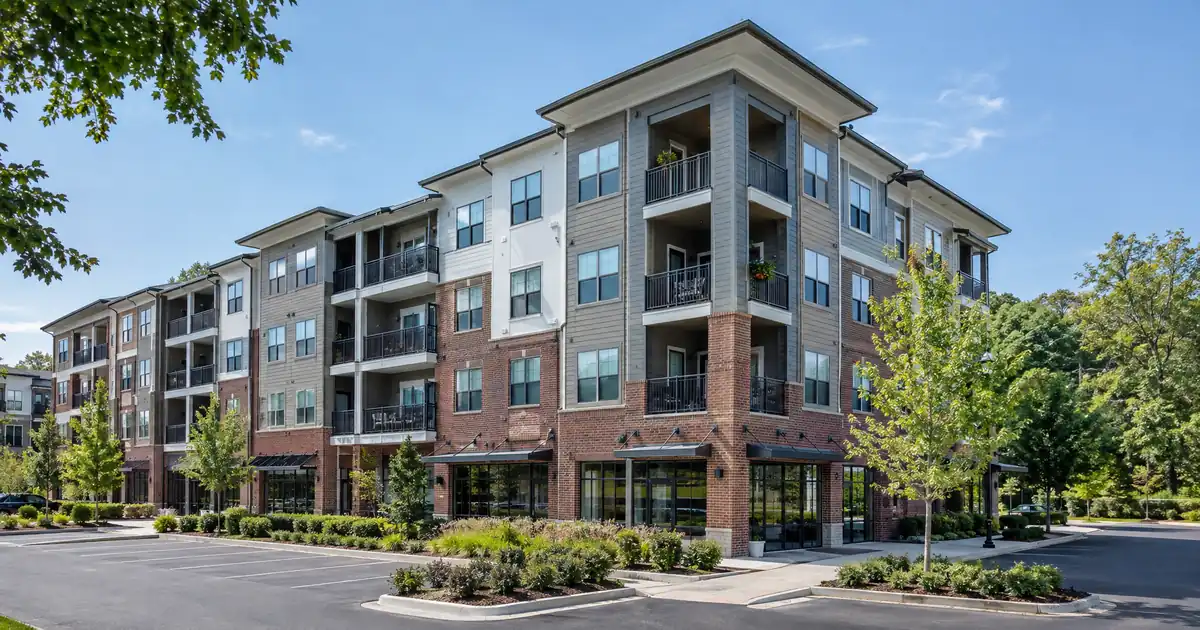
The usual friction in a cash-out refinance is the appraisal. An investor who owns a rental, has held it long enough to season, and expects prices to carry it will find that the appraiser prices off the comps in front of them, not off a prior peak. In Garner that matters. Prices here are drifting sideways to slightly lower even as the town adds residents at one of the fastest clips in the country. That mix changes how a cash-out refinance on a Garner rental should be sized, structured, and used.
DSCR Cash-Out Calculator
Run the cash-out numbers in Garner, NC
Rate source: Freddie Mac 30-yr average via FRED® — Federal Reserve Bank of St. Louis · effective Oct 1, 2026
Prefilled with starting assumptions — enter your property’s value, balance, taxes, and insurance for a more accurate picture.
Program parameters update from Lendmire’s centralized guideline source. Taxes and insurance are editable estimates.
As of Oct 1, 2026 · General Freddie Mac market benchmark, not a Lendmire loan offer. Property value, balance, taxes, and insurance are editable estimates. Maximum loan-to-value varies by lender, program, property type, and seasoning. Not a Loan Estimate, approval, or commitment to lend. Program availability and eligibility are subject to lender guidelines, credit approval, property review, and underwriting.
At a Glance:
A cash-out refinance on a Garner, North Carolina rental fits investors who own newer townhomes, single-family rentals, or the occasional duplex and want to redeploy equity. The loan is underwritten primarily on the property’s rental income measured against its full monthly obligation, not on personal income, and it is capped by the appraised value, not by what the investor originally paid. Redfin’s median sale price for the town is $397K, down 0.53 percent year over year.
- Single-family rents sit near 0.50 percent of price per month, so coverage is thin.
- Multi-unit buildings carry the strongest modeled coverage, but they are scarce.
- Cash-out tops out at 75 percent LTV, and ownership seasons for about six months.
- Redeploying proceeds beats counting on appreciation here.
Garner Market Snapshot
A quick read on the Garner investor landscape — figures come from the cited sources below. Confirm current property-level numbers before underwriting.
| Metric | Detail |
|---|---|
| Home prices | $397K median (Redfin Garner Housing Market) |
| Cap rates | 6%–7% cap under $400K (Living in Raleigh Now) |
| Population | Over 38,000 residents (Town of Garner About Us) |
White Oak and Timber Drive: Where the Rental Product Lives
The White Oak and Timber Drive corridor is the strongest rental submarket in Garner, and it is the one where cash-out refinances are most likely to find a lender-friendly property. Homes.com describes new suburban development with a country feel, a major shopping complex, and Centennial Park. The Amazon fulfillment center sits nearby, and a local sales-data blog (marketing content, so treat it as directional only) puts White Oak and Timber Drive at the top of the town for transaction volume.
The employment story is concrete. The Garner Economic Development Corporation notes a 2.6-million-square-foot Amazon fulfillment center on the redeveloped Garner Technology Center site. The town’s featured employers list also names Konica Minolta and WingSwept, which gives the corridor a logistics and light-industrial tenant base. The state is also upgrading NC 50 near Timber Drive, per NCDOT’s public project page. Road work is a mixed signal for a landlord: construction is a nuisance during the project, and better access tends to help over time.
The product here is mostly new-build townhomes and single-family homes. That is the practical volume product for a cash-out file in Garner. Newer stock means low deferred maintenance and the strongest rents in town, but also a higher basis. Redfin’s investment-property page shows 92 townhouses for sale in a recent month against just 2 multifamily units. A cash-out borrower in this corridor is almost certainly holding a townhome or single-family house, so that is the property type the math below leans on.
The Rest of Town, Sorted by What Works
Garner has four other submarkets investors encounter, and they play different roles in a cash-out thesis.
Cleveland Road and Aversboro Road. These corridors run from first-time-buyer townhomes to executive brick homes. One local source (a self-storage company’s blog, so use it qualitatively) says these homes are often priced 15 to 25 percent below comparable Cary or North Raleigh properties. For a rental owner, that gap is both the demand driver (households priced out of Cary) and the ceiling on rent growth.
Vandora Springs and the US-70 and I-40 interchange area. Older housing stock with higher turnover. Older houses carry lower rents than new builds, so coverage on a cash-out is usually tighter and appraisal condition adjustments matter more.
Lake Benson. Established brick homes beside one of the better parks in Wake County. It leans owner-occupier, so investor-owned comps are sparse. Few investor comps means an appraiser has fewer rental-oriented sales to reference. Skip it for a cash-out play unless the property is already in hand.
Downtown Garner and the Garner Station historic district. The district developed in the late 1800s and early 1900s, and the Downtown Garner Association’s Main Street program drives revitalization. Character stock here is a long-hold story, not a coverage story.
The Appraisal Problem: Three Sources, One Direction
Garner prices are flat to down, and three independent sources agree. Redfin’s median sale price is $397K, down 0.53 percent year over year, and its price per square foot is $183, down 8.5 percent. Zillow’s home value index sits at $385,396, down 1.9 percent. Movoto reports a median list price near $416K, down 5 percent from the prior May. Redfin also shows homes sitting longer than a year ago, while 247 sold in the latest month against 231 a year earlier. Volume is healthy, but pricing power isn’t.
What that means for a cash-out refinance is simple. An investor who bought near a peak and expects to refinance at the same value may get a lower number. The loan is sized to the current appraised value, with a hard ceiling of 75 percent LTV on cash-out. Run it against the appraisal, not the purchase price. Competitor pages that call Garner a fastest-appreciating corridor are not supported by Redfin or Zillow, so no one should plan equity extraction around appreciation here.
The honest framing: in this market, equity comes from basis and income, not from price growth. An owner who bought below market, added value, or holds a multi-unit with in-place rents below market has more equity to pull. An owner who bought a new-build townhome at builder pricing may find the appraisal leaves little room.
What Coverage Looks Like at 75 Percent
Most standard DSCR programs are built around a 1.00x benchmark, meaning the property’s rent covers its full monthly obligation (principal, interest, taxes, and insurance). Some lenders review lower or no-ratio scenarios, but those usually come with lower leverage, different pricing, or more cash in the deal, and eligibility depends on lender guidelines, credit profile, reserves, and property review.
Rents in Garner are a range, not a point. Rentometer shows a 3-bedroom average of $1,988 and a 4-plus-bedroom average of $2,407. Zillow’s rental data puts the all-types average at $2,095, up $50 from a year earlier, and calls the rental market warm. Against the $397K median, that is a gross rent-to-price ratio of about 0.50 to 0.53 percent per month. (That’s Lendmire Research’s own calculation from sourced inputs, not a published statistic.)
The inputs below are modeled assumptions, not market facts. All coverage figures include taxes and insurance at North Carolina averages and standard investor pricing, and they are rounded down.
| Scenario | Modeled rent | Leverage | Modeled coverage |
|---|---|---|---|
| Townhome or SFR | $2,095 | 75% LTV | About 0.85 |
| Townhome or SFR | $2,095 | 60% LTV | About 1.00 |
| Duplex (blog rents) | $2,800–$3,200 | 75% LTV | About 1.15–1.30 |
Run the numbers on an investor holding a townhome appraised near the citywide median and renting at the average. At 75 percent LTV, coverage lands below 1.00. Cutting leverage toward 60 percent brings it to roughly the benchmark, but a lower LTV means a smaller cash-out. An investor in that spot has a few paths a lender could review: a lower loan amount, an interest-only structure, or a sub-1.00 program. Each carries its own pricing and reserve terms and remains subject to lender guidelines, credit approval, and property review.
DSCR files in markets like this one typically look the same. Newer single-family and townhome rentals show strong rents against a high basis, so the number lands just under or around 1.00 and the conversation turns on the LTV tradeoff. The files that clear more comfortably usually have a lower basis or a second unit. Before the file goes to a lender, it helps to line up the appraisal, a current lease or market-rent opinion, and a refreshed insurance quote, because small changes in any of them move coverage at this margin.
Forced Equity: Duplexes and the Scarcity Problem
The sharpest equity lever in Garner is a multi-unit building, and the sharpest limit on it is supply. A local Realtor blog (Living in Raleigh Now, marketing content to treat as unverified) says Garner duplexes rent for about $1,400 to $1,600 per side, with cap rates of 6 to 7 percent when bought below $400K. That is $2,800 to $3,200 per building, against $2,000 to $2,400 for a single-family rental. If those rents hold, a duplex at a similar price carries roughly 1.3 to 1.5 times the gross rent, which is how the modeled coverage in the table gets above 1.00 at 75 percent LTV.
DSCR vs. conventional financing
There are two common ways to finance an investment property in Garner, NC, and they qualify you differently — here’s how investors weigh them.
Why investors choose it
- Qualifies on the property’s rental income — no personal tax returns, W-2s, or pay stubs needed to document income.
- No personal debt-to-income ceiling to clear, so existing mortgages and obligations don’t cap your borrowing the same way.
- Can be closed in an LLC, keeping the property inside a business entity.
- Built for scaling — not held to the limit on number of financed properties that conventional financing applies.
- Underwriting centers on the deal: generally qualifies when the rent covers the payment, a 1.00x coverage ratio being a common baseline (confirmed in underwriting).
- Designed specifically for investment property, including long-term and, where the program allows, short-term rentals.
Where it’s strong
- Often the lowest ongoing financing cost for a buyer who fully qualifies on personal income — a fit for a first property or a cost-first purchase.
Trade-offs for investors
- Requires full personal income documentation and must fit within a debt-to-income limit — salary, existing debts, and other mortgages all count.
- Typically held in your personal name rather than a business entity.
- Caps how many financed properties you can carry, which can become a ceiling as a portfolio grows.
- Evaluates you as a borrower as much as the property, which usually means more paperwork.
How investors usually choose: a first or single property often optimizes for the lowest financing cost; portfolio builders often optimize for leverage, vesting in an LLC, and scaling past conventional caps. The right answer depends on your goals, the property, and current guidelines — both paths run through select lenders in Lendmire’s wholesale network, with eligibility and terms confirmed in underwriting.
The same source says most multifamily opportunities are legacy properties or off-market sales, which fits Redfin’s thin multifamily count. One more caution: in-place rents on older small multifamily can run well below the $1,400 to $1,600 figure, and lenders underwrite to the lease or the market rent as supported by the appraisal. For those buildings, the upside is re-leasing and value-add, which is exactly where cash-out proceeds can be reinvested.
This one’s a genuine toss-up for an owner choosing where to put capital. The townhome is easy to find but thin on coverage. The duplex covers well but is hard to source. An investor with enough cash flow elsewhere to absorb a sub-1.00 townhome might favor volume. An investor who wants the file to clear cleanly should favor multi-unit and accept the hunt.
A July vendor analysis (Wake County, unverified numbers) frames the county as an appreciation-and-value-add market and names Garner as its closest fit for cash-flow buyers. Even if that framing is generous, the implication stands: a refinance thesis here should rest on forced income, such as a second unit or re-leased older stock, not on price growth.
Does New Supply Cap Rent Growth?
New supply is the main risk to rent assumptions. Apartments.com lists 367 newly constructed apartments in Garner, with 1-bedroom to 3-bedroom averages of $1,309 to $1,694. RentCafe reports apartment rents easing from $1,458 to $1,440, with a 3-bedroom average of $1,661. The town is also providing gap financing for a 176-unit lower-income rental development.
These units compete with older single-family and small-multifamily rentals. A lender and appraiser will look at market rent, so the conservative play is to underwrite to the lower end of the sourced ranges and assume some vacancy. No reliable vacancy rate exists for Garner, so describe it qualitatively: the market is warm, but supply is arriving. Rent growth on aging stock may lag newer product.
The Tenant Base Behind the Numbers
Demand is real. The Town of Garner says it added nearly 5,000 residents between one year and the next, growth of over 10 percent, and ranks 10th nationwide for population growth among communities over 20,000. The town describes over 38,000 residents, about two-thirds of whom own their homes. RentCafe’s tenure data puts renter-occupied households at 35 percent, so renters are a substantial minority.
Tenants come from logistics and retail employment, state and county jobs, healthcare, and households priced out of Cary and Raleigh. The WakeMed Garner Healthplex runs a 24/7 emergency department backed by Wake County’s only Level I Trauma Center, and downtown Raleigh and Research Triangle Park sit within commuting reach. The town also completed a small-area study that identifies the Northeast Gateway as a regional employment center. A local rental page (broker marketing, qualitative only) says many Garner landlords are individuals or small-portfolio owners. That means less institutional competition for tenants, and fewer professionally managed comps for appraisers.
Using the Proceeds
Cash-out proceeds are only useful if the next deal clears. Under the supplied program guidance, cash-out on an investment property typically requires about six months of ownership measured from title recording, a 75 percent LTV ceiling, and reserves of about six months of PITIA. Credit tiers generally run from a 620 floor up through 700, and loan amounts can reach $3,000,000 on standard programs, subject to lender guidelines. The equity available depends on rent used for lender review, PITIA, reserves, and that 75 percent ceiling, so it is not a guaranteed figure.
Run it in order. An owner who bought a Garner townhome and has passed the seasoning window should first order the appraisal reality check, then model coverage at 75 percent and lower, and only then ask what the proceeds would fund. A second Garner townhome adds the same thin coverage. A duplex acquisition, subject to finding one, may add coverage to the portfolio. Anything outside Garner changes the thesis entirely.
For the mechanics, see the guide “The Refi Options”, the broader refi programs, and Lendmire’s primer on DSCR loans. Investors can also see the DSCR loan options for North Carolina investors. To test a specific property, review my scenario or call 828-256-2183. Verify current local rental rules, taxes, and insurance with qualified local professionals before committing.
Frequently Asked Questions
How do you qualify for a DSCR cash-out refinance in Garner?
Qualification centers on the property, not personal income. The lender compares rent used for lender review to the full monthly obligation, typically looking for 1.00 or better, plus a credit score at or above the 620 floor, reserves of about six months of PITIA, and roughly six months of seasoning. Because Garner single-family coverage often sits just under 1.00 at high leverage, many borrowers lower the LTV or choose a multi-unit property. Final eligibility depends on lender guidelines.
What are the requirements for an investment property cash-out refinance in Garner, North Carolina?
The core requirements are a 75 percent LTV ceiling, seasoning of about six months from title recording, a coverage ratio that meets the program’s minimum, and reserves. The appraisal controls the number. With Garner prices flat to down per Redfin and Zillow, expect the value to reflect current comps, not a prior peak. Manufactured homes, log homes, and barndominiums fall outside these programs.
Why does Garner’s flat pricing matter for cash-out?
Cash-out proceeds depend on appraised value, and a flat or declining market gives an appraiser little reason to go high. An owner counting on appreciation to create equity may be disappointed. Equity in Garner more often comes from a low purchase basis, a second unit, or re-leasing older stock.
Do townhomes or duplexes work better for coverage in Garner?
Duplexes work better on paper. At the sourced duplex rents, modeled coverage reaches roughly 1.15 to 1.30 at 75 percent LTV including taxes and insurance, versus about 0.85 for a typical single-family or townhome rental. The catch is supply: Redfin shows far more townhomes than multifamily buildings for sale, so duplexes take patience to find.
For current guidelines and terms, see Lendmire’s DSCR loan programs page.
Get Started
Ready to find the right loan for you?
See your offer in seconds. No credit pull, no obligation.
Informational only. Not a Loan Estimate, approval, or commitment to lend. Program availability and eligibility are subject to lender guidelines, credit approval, property review, and underwriting.
About Lendmire
A non-QM mortgage broker (NMLS# 2371349), Lendmire arranges DSCR financing for real estate investors in 41 markets, 40 states plus Washington, D.C. Because deals are underwritten primarily on property cash flow rather than personal income documentation, the structure suits self-employed buyers and entity-owned portfolios. Lendmire places loans through wholesale investor lenders; it is not a direct lender. The firm was recognized by Scotsman Guide as a 2026 Top Workplace and was a top-ranked workplace in 2025.
If you only take one thing from this piece, it’s this: in Garner, where prices are flat but the town keeps adding residents, a cash-out refinance works when the property’s income, not its appreciation, carries the loan.
References
1. Freddie Mac 30-yr average via FRED® — Federal Reserve Bank of St. Louis
2. $397K, down 0.53 percent year over year
5. Homes.com
6. Garner Economic Development Corporation
8. NCDOT’s public project page
10. Movoto
11. Rentometer
This article is part of Lendmire’s investment property cash-out refinance program — full qualification details, guidelines, and scenarios live on the program page.
Related reading: DSCR Cash Out Refinance in Garner, North Carolina: The 2026 DSCR Financing Guide to US-70 Rentals · DSCR Cash Out Refinance in Oak Island, North Carolina: How Much Equity Investors Can Pull in Oak Island · Cash Out Refinance Investment Property in Oak Island, North Carolina
Guides: Investment Property Cash-Out Refinance in North Carolina
Brandon Miller
Founder & CEO, Mortgage Loan Originator, Lendmire LLC
- Mortgage Loan Originator · NMLS# 1129696 · Verify on NMLS Consumer Access
- North Carolina Real Estate Broker · License# 343312 · Verify on NCREC
- North Carolina Insurance Producer · License# 19053198 · Property, Casualty, Life, Health · Verify on NAIC SBS
- Lendmire LLC · Firm NMLS# 2371349 · Verify firm licensure
Disclosures. The information presented in this article is general market commentary, not financial, legal, or tax advice. Lendmire is a mortgage brokerage (NMLS# 2371349) — not a direct lender or depository institution — and loan placement is subject to lender underwriting. Nothing in this content represents a commitment to lend. Loan terms, pricing, and program availability vary based on borrower qualifications, property characteristics, and state of subject property, and are subject to change at any time. Lendmire complies with Equal Housing Opportunity requirements. Consumer access: nmlsconsumeraccess.org.