
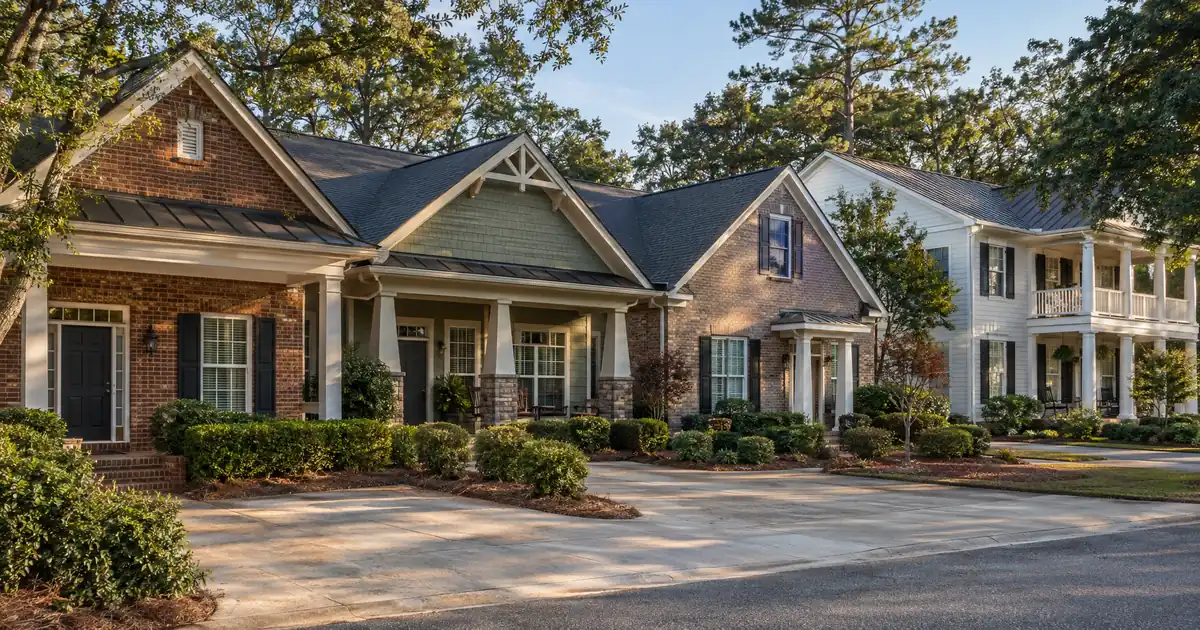
In a recent one-month window, Redfin’s listing pages showed one multi-family unit for sale in Sugar Hill against 29 townhouses. That ratio sets the terms for any equity pull here. Sugar Hill is a single-family and townhome market, so the cash-out strategy has to work on those two property types. It can’t lean on income stacking.
Lendmire (NMLS# 2371349) is a DSCR-focused mortgage broker, and Sugar Hill, Georgia is one of the 41 markets — 40 states plus Washington, D.C. — where Lendmire places DSCR loans for investment-property borrowers. This piece assumes you already own the rental and want to pull capital out of it. It covers what the numbers allow today and what could change them over the next 6-24 months.
DSCR Cash-Out Calculator
Run the cash-out numbers in Sugar Hill, GA
Rate source: Freddie Mac 30-yr average via FRED® — Federal Reserve Bank of St. Louis · effective Sep 24, 2026
Prefilled with starting assumptions — enter your property’s value, balance, taxes, and insurance for a more accurate picture.
Program parameters update from Lendmire’s centralized guideline source. Taxes and insurance are editable estimates.
As of Sep 24, 2026 · General Freddie Mac market benchmark, not a Lendmire loan offer. Property value, balance, taxes, and insurance are editable estimates. Maximum loan-to-value varies by lender, program, property type, and seasoning. Not a Loan Estimate, approval, or commitment to lend. Program availability and eligibility are subject to lender guidelines, credit approval, property review, and underwriting.
TL;DR: A DSCR cash-out refinance on an investment property in Sugar Hill, Georgia is underwritten primarily on the property’s rental income measured against its full monthly obligation, with proceeds limited by a loan-to-value ceiling, a seasoning window, and lender review of reserves and credit.
- Median sale price sits near $475K, down 4.1% year over year.
- Detached houses run thin on rent-to-value; townhomes carry noticeably stronger coverage.
- About 78% of housing units are detached single-family, so duplex and fourplex supply is nearly absent.
- Cash-out tops out at 75% LTV, and coverage, not equity, is usually the binding limit.
Sugar Hill Market Snapshot
A quick read on the Sugar Hill investor landscape — figures come from the cited sources below. Confirm current property-level numbers before underwriting.
| Metric | Detail |
|---|---|
| Typical rents | Rents from $1,455 to $2,645 (Urbanize Atlanta) |
| Employment | Nearly 24,000 employees (Gwinnett County Public Schools) |
The Ratio Problem on Detached Houses
Detached single-family homes in Sugar Hill will usually hit a coverage ceiling before they hit an equity ceiling. Rent against price is thin, and cash-out leverage on a typical house is more likely to be limited by the debt-coverage ratio than by how much equity you’ve built.
Start with the price. Redfin puts the median sale price near $475K, down 4.1% from a year earlier. Zillow places its average home value lower, at $462,439, down 3.1%, reflecting a different methodology. The direction matches either way. Now the rent. Homes.com shows single-family asking rents at $2,295, which against a $475K value works out to just under 0.5% a month. (Census-style all-renter medians run lower, around $1,996 per City-Data, but those include older and smaller units. Asking rent on a house is the better underwriting comp.)
Run the numbers this way. Assume a $475K value, $2,295 in rent used for lender review, and full PITIA including taxes and insurance. These are modeled assumptions, not sourced deal data.
- At 75% LTV, coverage lands around 0.80.
- At 65% LTV, it improves to roughly 0.90.
- Somewhere near 50% LTV, it clears about 1.05. Final terms depend on lender guidelines, property type, leverage, and the borrower’s complete credit picture.
Most standard DSCR programs are built around a 1.00x benchmark because rent covers the payment at that level. Some lenders will review sub-1.00 files, but those usually need lower leverage, stronger credit, or more reserves. If your house models below 1.00, the options a lender may review include a sub-1.00 program, an interest-only structure where offered, or a smaller cash-out. Eligibility depends on lender guidelines, credit approval, and property review.
So the plan for a typical Sugar Hill house has to change. Equity may not be the limit on paper (75% LTV is the ceiling), but rent is. Investors who want the full 75% pull on a detached house are usually solving for rent they don’t have.
Do Townhomes Fix the Coverage Problem?
Townhomes are the better cash-out candidate in this city, and it isn’t close. Rent per dollar of value runs materially higher than on detached houses, which is where a 1.00-plus coverage number becomes realistic at higher leverage.
Apartments.com reports an average townhome rent of $2,697, and Homes.com shows townhome asking rents up at $2,800. City-Data’s median value for attached homes is about $355,663. Against that value, rent runs roughly 0.75% a month, well above the detached figure.
Model $2,697 rent on a $356K attached value at 75% LTV, again with taxes and insurance in the full obligation. Coverage lands around 1.2. That’s a file most lenders will engage with at standard leverage, subject to credit, reserves, and appraisal. These specifics are subject to lender guidelines and a full review of property, leverage, and credit.
Two cautions. First, these price and rent figures come from different sources and dates, so treat the 1.2 as directional. Run current sold comps before you build a plan around it. Second, an attached-home median is a citywide blend. It includes older townhomes that may not match your building.
The higher-rent product also sits where the newer supply is. Overlook at Sugar Hill townhomes run 1,257 to 1,549 square feet, and The Refinery is marketed along the Greenway. Both compete for the same tenants your townhome does.
Skip the Duplex Plan
A duplex or fourplex cash-out strategy is not realistic in Sugar Hill. Multi-unit stock is close to unavailable, and anything that does trade will have thin comps for an appraiser.
According to Point2Homes, 78% of the city’s 8,698 housing units are detached single-family homes. The 2-4 unit income-stacking that changes coverage math in other markets barely exists here. Small older buildings turn up occasionally (a six-unit community near downtown showed up in listing data), but that’s an anecdote, not a market. If you own one, appraisal comps are the real risk. You may be arguing value against a handful of sales that aren’t quite like yours.
Where Demand Actually Comes From
Sugar Hill is a commuter suburb with a small, mostly house-based rental pool. Tenant demand here comes from commuting households, so income and employment drive it more than any single campus or plant.
The city’s population grew from 25,076 in the 2020 census to an estimated 28,598, making it the fourth-largest city in Gwinnett County. Median household income is estimated near $109,615, and U.S. News puts the average commute at about 29.87 minutes. Only 21% of households rent, about 1,814 of 8,545. So the tenant pool is thin, and the landlord competing for it is often another investor with a house or townhome.
The job base sits county-wide. Gwinnett County Public Schools says it has nearly 24,000 employees and is the county’s largest employer. Partnership Gwinnett figures put Northside Hospital at 4,650 employees, and the county labor force at 517,604 with unemployment at 3.1%. Nearby hospitals include Northside Hospital Gwinnett and Northeast Georgia Medical Center in Braselton. The stable base supports lease renewals. It doesn’t create rent growth by itself.
Downtown and Greenway: Amenity Story, Not a Rent Guarantee
Downtown Sugar Hill is the city’s amenity engine, and it helps hold occupancy near the core. It doesn’t lift rents enough to fix thin coverage by itself.
The Downtown Development Authority owns the $46 million E Center, which houses the 406-seat Eagle Theatre. The Bowl adds 1,800 seats. The city’s own site lists restaurants, shops, a history museum, and a concert series nearby. The Sugar Hill Greenway, a 16.5-mile multi-use trail under construction, is designed to link to the Western Gwinnett Bikeway.
For a cash-out borrower, this matters in two ways. Walkable, amenity-adjacent townhomes are the units most likely to hold rent through a soft patch. And a completed Greenway would widen the pool of buyers and renters who want that lifestyle. It’s a maybe, not a promise, so don’t underwrite to it.
Beyond the core, listing sites call out Big Creek, Windward, Warsaw, and Wellington as popular rental areas. Some of those sit outside city limits. No verified neighborhood-level rent or price data exists in the sources reviewed, so treat them as candidate submarkets and pull your own comps.
Supply Watch: What Could Move the Numbers in the Next 6-24 Months
The biggest swing factor for townhome coverage is new Class-A rental supply near downtown. The biggest swing factor for appraisals is whether the price drift continues.
Conclave Sugar Hill is a 306-unit mix of apartments and rental townhomes off Highway 20, just north of downtown. Its first phase launched with rents from $1,455, and three-bedroom units started at $2,645. That three-bedroom price lands right beside the average townhome rent above. Apartments.com also lists 33 newly constructed apartments in the city. No sourced vacancy or absorption figure exists, so this is a supply flag, not measured oversupply. Still, new product with concessions can cap rent growth on investor-owned townhomes for a while.
Indicators worth tracking on a quarterly basis:
- Days on market. Redfin shows about 47 days now, against 45 a year ago. A steady climb means the appraiser’s comps are getting older.
- Sales volume. 85 homes sold in August versus 99 a year earlier. Thin volume makes appraisals more conservative.
- Price trend. Median price is down 4.1%, and price per square foot is down 1.0% at $195. A stall would be good news. A deeper slide changes the LTV math.
- New rental lease-up. Watch whether Conclave and similar communities offer concessions. Those set the ceiling on your rent.
- Greenway progress. Completion milestones are worth watching, but they shouldn’t move your underwriting.
Here’s the genuine toss-up. If prices stabilize, today’s conservative pull looks like a smart buffer. If they keep sliding, an investor who waits for a better appraisal may be waiting on a number that never arrives. Sized against today’s comps and rent, the decision holds up either way. Sized against hoped-for appreciation, it doesn’t.
Sizing the Pull: Seasoning, LTV, and Reserves
Cash-out equity is the smaller of two numbers: what 75% of appraised value allows, and what the rent will carry. In Sugar Hill, the second one usually wins.
The verified guidelines for these programs run as follows, subject to lender review and never a commitment to lend:
- LTV. Cash-out tops out at 75%. Don’t apply the 80% purchase figure to a refinance.
- Seasoning. About six months of ownership, measured from title recording.
- Reserves. Roughly six months of PITIA, and about nine on balances above $1,500,000.
- Credit. Tiers step at 620, 660, 680, and 700, with 620 as the floor. Stronger scores generally support more leverage.
- Loan size. Up to $3,000,000 on standard programs, with smaller balances routed through select lenders in the network.
- Property types. Manufactured homes, log homes, and barndominiums fall outside these programs.
For qualification mechanics in more depth, see the guide “The Refi Options”. If you’re weighing this against a bank product, DSCR versus conventional covers the tradeoffs. Investors who already hold a note on the property can compare investor refinance options as well.
The pattern on files from suburban markets like this one is consistent. The common friction point is a lease that sits below the appraiser’s market-rent estimate, or an appraisal that arrives light on comps. The cleaner files from a documentation standpoint tend to carry a signed lease at or near market rent, a fresh insurance quote in hand before submission, and reserves seasoned in the account. Deals that pencil at 65% often fail at 75% because rent is the constraint, not equity. Lendmire’s deal desk sees that gap often enough that it works the coverage number first and the LTV second.
Turning the Proceeds Into the Next Deal
Proceeds only help if the next purchase covers its own debt. In Sugar Hill, that means treating a cash-out as capital for a better-yielding property, not as a reason to hold a thin-coverage house at higher leverage.
DSCR vs. conventional financing
Two common ways to finance an investment property in Sugar Hill, GA. They qualify you differently — here’s how investors weigh them.
Why investors choose it
- Qualifies on the property’s rental income — no personal tax returns, W-2s, or pay stubs needed to document income.
- No personal debt-to-income ceiling to clear, so existing mortgages and obligations don’t cap your borrowing the same way.
- Can be closed in an LLC, keeping the property inside a business entity.
- Built for scaling — not held to the limit on number of financed properties that conventional financing applies.
- Underwriting centers on the deal: generally qualifies when the rent covers the payment, a 1.00x coverage ratio being a common baseline (confirmed in underwriting).
- Designed specifically for investment property, including long-term and, where the program allows, short-term rentals.
Where it’s strong
- Often the lowest ongoing financing cost for a buyer who fully qualifies on personal income — a fit for a first property or a cost-first purchase.
Trade-offs for investors
- Requires full personal income documentation and must fit within a debt-to-income limit — salary, existing debts, and other mortgages all count.
- Typically held in your personal name rather than a business entity.
- Caps how many financed properties you can carry, which can become a ceiling as a portfolio grows.
- Evaluates you as a borrower as much as the property, which usually means more paperwork.
How investors usually choose: a first or single property often optimizes for the lowest financing cost; portfolio builders often optimize for leverage, vesting in an LLC, and scaling past conventional caps. The right answer depends on your goals, the property, and current guidelines — both paths run through select lenders in Lendmire’s wholesale network, with eligibility and terms confirmed in underwriting.
Think of it as a swap. An investor who owns a detached house modeling near 0.80 at full leverage might pull a smaller amount at reduced LTV, where coverage clears 1.00. That capital then goes into a property with a stronger rent-to-value ratio, whether that’s a townhome here or a small multifamily elsewhere in Georgia. The Sugar Hill house stays as a stabilized hold, and the next asset carries more of the coverage load. Whether the pull makes sense depends on what the next deal actually yields, not on how much equity the appraiser confirms.
Frequently Asked Questions
Can a detached Sugar Hill house support a cash-out at the full 75% LTV?
Often not on coverage. Modeled at a $475K value and $2,295 in rent with taxes and insurance included, coverage lands near 0.80 at 75% LTV. Lowering leverage, raising rent used for program review, or reviewing a sub-1.00 program are the paths a lender may look at, subject to credit and property review.
Do townhomes really clear DSCR more easily than houses here?
On the numbers available, yes. Townhome rents average around $2,697 against an attached-home median near $356K, which models to roughly 1.2 at 75% LTV. That blends data from different dates, so confirm with current sold comps before relying on it. Terms vary by lender guidelines, property type, leverage, credit profile, and full file review.
How does a falling median price affect a cash-out appraisal?
It pushes appraisers toward conservative comps. Redfin shows the median down 4.1% and sales volume down from 99 to 85 in August, so an investor should size the pull against today’s value. Building in cushion below the 75% ceiling is the safer approach.
Is a duplex or fourplex cash-out realistic in Sugar Hill?
No. About 78% of housing units are detached single-family homes, and multi-family listings are nearly absent, with one listed against 29 townhouses in a recent month. Any small multifamily that trades will have thin comps for an appraiser.
How long do I need to own before pulling cash out?
About six months, measured from title recording. Reserves of roughly six months of PITIA and a 620 credit floor also apply, and all of it stays subject to lender guidelines.
Verify current local rental rules, taxes, and insurance with qualified local professionals before you commit to a plan. Investors who want to discuss a specific file can reach Lendmire at 828-256-2183 or talk to Lendmire, and Lendmire’s Georgia DSCR loan programs page has the state-level overview.
The most useful next step is to pull current sold comps for your exact building type, attached versus detached, from the last 90 days. Check the median days on market against the 47-day citywide figure. Model coverage at 75%, 65%, and 50% LTV with taxes and insurance included. Those three ratios will tell you how large the pull can be before you talk to any lender.
About Lendmire
Lendmire, NMLS# 2371349, is a non-QM mortgage broker serving real estate investors in 41 markets, including Washington, D.C., through DSCR investor loan programs. Qualification is generally reviewed around the subject property’s rental income rather than the borrower’s W-2 history, which suits LLC-titled portfolios (subject to lender program eligibility) and self-employed investors. Every scenario remains subject to eligibility review and program guidelines. The firm has been recognized by Scotsman Guide as a 2026 Top Workplace and a top-ranked workplace in 2025, two consecutive Top Mortgage Workplace recognitions.
Get Started
Ready to find the right loan for you?
In about 30 seconds you can review financing options available for your investment property. No commitment required.
Informational only. Not a Loan Estimate, approval, or commitment to lend. Program availability and eligibility are subject to lender guidelines, credit approval, property review, and underwriting.
References
1. Redfin: Sugar Hill recently sold
2. Redfin: Sugar Hill housing market
3. Urbanize Atlanta: Conclave Sugar Hill
4. Gwinnett County Public Schools
5. Zillow — Home Values Sugar Hill GA
6. Homes.com shows single-family asking rents at $2,295
7. City-Data
8. Apartments.com reports an average townhome rent of $2,697
9. Redfin — Sugar Hill Apartments for Rent
10. Point2Homes
11. RentCafe: Sugar Hill rental market trends
12. Partnership Gwinnett figures
14. City of Sugar Hill: Eagle Theatre
16. Apartments.com — Sugar Hill GA Recent Build
17. recognized by Scotsman Guide as a 2026 Top Workplace
18. Scotsman Guide — Top Workplaces 2025
This article is part of Lendmire’s investment property cash-out refinance program — full qualification details, guidelines, and scenarios live on the program page.
Related reading: DSCR Cash Out Refinance Sugar Hill Georgia · Cash Out Refinance Investment Property Waycross Georgia · Boone, NC Mortgage Lending Experts
Guides: Investment Property Cash-Out Refinance in Georgia
Brandon Miller
Founder & CEO, Mortgage Loan Originator, Lendmire LLC
- Mortgage Loan Originator · NMLS# 1129696 · Verify on NMLS Consumer Access
- North Carolina Real Estate Broker · License# 343312 · Verify on NCREC
- North Carolina Insurance Producer · License# 19053198 · Property, Casualty, Life, Health · Verify on NAIC SBS
- Lendmire LLC · Firm NMLS# 2371349 · Verify firm licensure
Disclosures. The information presented in this article is general market commentary, not financial, legal, or tax advice. Lendmire is a mortgage brokerage (NMLS# 2371349) — not a direct lender or depository institution — and loan placement is subject to lender underwriting. Nothing in this content represents a commitment to lend. Loan terms, pricing, and program availability vary based on borrower qualifications, property characteristics, and state of subject property, and are subject to change at any time. Lendmire complies with Equal Housing Opportunity requirements. Consumer access: nmlsconsumeraccess.org.