
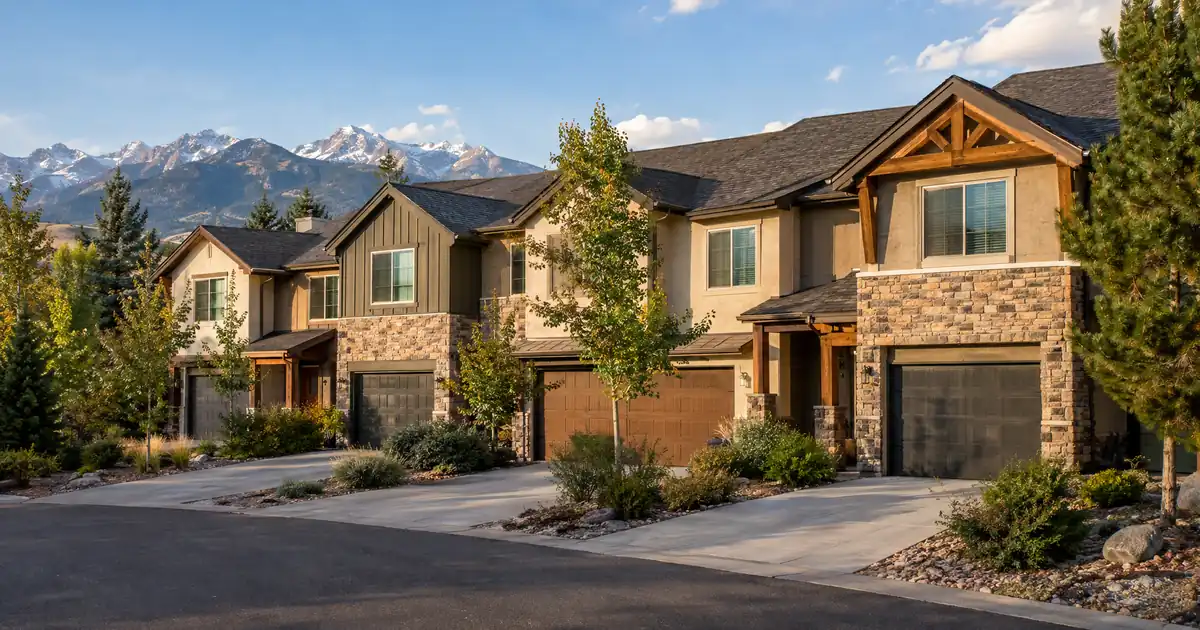
If you own a rental in Englewood worth something near the Zillow typical home value of $538,799, here’s what most brokers skip: your cash-out is set by two ceilings, not one. The 75 percent loan-to-value cap is the obvious one. The less obvious one is the rent, and in a city where values have slipped 3.8 percent over the past year, the rent is usually the binding constraint.
The Short Version: A DSCR cash-out refinance in Englewood, Colorado fits owners of two-to-four-unit buildings and workforce rentals with seasoned equity, because the loan is underwritten primarily on the property’s rental income measured against its full monthly obligation, with proceeds limited by a 75 percent loan-to-value ceiling and by what current appraised value supports.
DSCR Cash-Out Calculator
Run the cash-out numbers in Englewood, CO
Rate source: Freddie Mac 30-yr average via FRED® — Federal Reserve Bank of St. Louis · effective Sep 24, 2026
Prefilled with starting assumptions — enter your property’s value, balance, taxes, and insurance for a more accurate picture.
Program parameters update from Lendmire’s centralized guideline source. Taxes and insurance are editable estimates.
As of Sep 24, 2026 · General Freddie Mac market benchmark, not a Lendmire loan offer. Property value, balance, taxes, and insurance are editable estimates. Maximum loan-to-value varies by lender, program, property type, and seasoning. Not a Loan Estimate, approval, or commitment to lend. Program availability and eligibility are subject to lender guidelines, credit approval, property review, and underwriting.
- Typical home value is $538,799, down 3.8 percent year over year, per Zillow.
- Single-family rents of $2,400–$3,200 give thin coverage; small multifamily is the likelier fit.
- Swedish Medical Center is the city’s largest employer, per the City of Englewood.
- Cash-out typically needs about six months of ownership and caps at 75 percent loan-to-value.
Englewood Market Snapshot
A quick read on the Englewood investor landscape — figures come from the cited sources below. Confirm current property-level numbers before underwriting.
| Metric | Detail |
|---|---|
| Typical rents | SFR rent $2,400–$3,200 (South Denver Guide) |
| Employment | 24,800 jobs (City of Englewood) |
| Vacancy | 5% (South Denver Guide, Investment) |
What the Value Slide Does to Your Proceeds
The soft price trend matters more than any other number here. Zillow’s typical value of $538,799 is down 3.8 percent over the year, and homes still go pending in around five days. Demand hasn’t vanished. Pricing has just reset. Sources disagree on the level (a local guide places the citywide median in the mid-$500,000s to low-$600,000s, while aggregators print lower figures), so Zillow’s index is the cleanest single reference here.
Why does that matter for equity extraction? An appraiser sets the value, and at a 75 percent ceiling every point of value lost comes straight out of proceeds. Consider an owner who financed a purchase at 80 percent loan-to-value and has held the property through a flat-to-down stretch. That owner may have no cash-out at all, because the starting balance already sits at or above the cap. Now take an owner who put 35 percent down and held through the same stretch. There’s still room under the ceiling, though thinner than the owner expected.
The seasoning clock is the other gate. DSCR cash-out programs typically look for about six months of ownership, measured from title recording. Subject to lender guidelines, a property bought recently with a heavy renovation may be better served by waiting for the clock and the appraisal to align than by forcing the file early.
One honest limit on the data: the appreciation evidence is a single year-over-year number. There’s no reliable multi-year trend to lean on. Underwrite on today’s value. Not tomorrow’s.
Why Small Multifamily Beats the Single-Family Rent Math
Duplexes, triplexes and fourplexes are the strongest DSCR cash-out fit in Englewood, and single-family is the weakest. The reason is simple division. Single-family rents of roughly $2,400–$3,200 a month against that $538,799 typical value work out to about 0.45–0.59 percent of value monthly. The same guide cites gross yields of 4–5 percent, and a separate analysis puts one single-family purchase near 4.2 percent gross, a thin return relative to the price of the property.
Modeled coverage on that single-family profile, at 75 percent loan-to-value and including taxes and insurance, lands somewhere in a 0.75-to-1.00 band across that rent range. Most standard DSCR programs are built around a 1.00x benchmark, because the property’s rent covers its obligation at that level. Some lenders review lower-coverage scenarios, but those typically demand lower leverage, more reserves or different pricing, and eligibility depends on lender guidelines and the full file. If a single-family rental falls short, the structures a lender may review include a sub-1.00 program, interest-only restructuring, or a lower loan-to-value that shrinks the payment. Each one costs you proceeds.
Multi-unit stacking changes the picture because rents add up while price per door drops. Englewood’s stock includes detached duplexes, converted two-unit homes, up/down duplexes with basement units, and scattered triplexes and fourplexes. Current listings show mixes like an older four-unit near Old Englewood with three 2BR units and one 1BR, per Homes.com.
The catch is liquidity of comparables. That stock is thin and scattered, so a refinance appraisal may reach for sparse comps, and sparse comps can cap how much equity comes out. Works for patient owners. Not for anyone counting on a specific number.
Run the Numbers on a Fourplex
The inputs below are modeled assumptions, not market data. Picture a four-unit building appraising near $1.1 million, with four 2BR units each rented at $2,000. That rent anchor sits just below two published reference points: RentCafe’s 2BR average of $2,109 (Yardi Matrix data covering only buildings of 50 or more units, so it skews newer) and an Apartments.com asking average of $2,072. Gross rent comes to $8,000 a month.
Run that against a 75 percent cash-out loan, amortized over 30 years, with taxes and insurance included in the obligation. Coverage lands in the low-1.2s. Haircut the rent 5 percent for vacancy and it holds near 1.2. Compare the single-family case above, where the same leverage struggles to reach 1.00. That gap is the whole argument for pulling equity from small multifamily here.
DSCR files in markets like this one typically look like this: a building with mixed unit sizes, an owner who knows the rent roll cold, and an appraisal that lands slightly under the owner’s mental number. Lendmire (NMLS# 2371349) works with Englewood, Colorado investors through a DSCR program footprint spanning 40 states plus Washington, D.C., and on files like this the usual friction isn’t coverage. It’s the gap between a lease-backed rent figure and the appraiser’s rent schedule. Bring signed leases. Expect the appraiser’s schedule to govern.
For the mechanics behind that coverage number, see the guide “What Is a DSCR Loan”.
The Hospital District Is the Demand Floor
Englewood’s rental demand has an anchor most 34,000-person cities lack. The City of Englewood names Swedish Medical Center, part of HealthOne, as its largest employer, and the city reports about 24,800 full-time jobs, 1,602 businesses and 15,478 residential units inside roughly 6.65 square miles. Craig Hospital, a specialty spinal cord and brain injury facility, sits beside Swedish along Hampden Avenue. The city’s own downtown map calls the area a health and wellness hub.
Resident-worker data tells the same story. Data USA shows professional, scientific and technical services at 2,851 workers, health care and social assistance at 2,806, and retail trade at 2,366. Per RentCafe, 52 percent of households rent. That’s a slight renter majority, with demand tied to jobs rather than to a single employer.
For a lender reviewing a refinance, long-term tenant demand tied to hospital and professional employment is a cleaner story than demand tied to a seasonal draw. Medical workers and patient-adjacent households also tend to sign standard leases. The strongest rental coverage argument in Englewood is a building within commuting distance of that Hampden Avenue corridor, with leases in place.
Submarkets: Where the Equity Story Differs
Wellness District. The most employment-anchored pocket, with no reliable price data surfaced in the research. Treat any figure you hear as unverified until an appraiser confirms it.
CityCenter and the light rail corridor. The 55-acre mixed-use district sits beside the rail station and civic center. Local guide data puts 1BRs at $1,500–$1,900 and 2BRs at $1,900–$2,400. Commuters and younger professionals make up the tenant base. Rent anchors here are reasonably consistent. Pricing for multi-unit buildings is not published.
DSCR vs. conventional financing
There are two common ways to finance an investment property in Englewood, CO, and they qualify you differently — here’s how investors weigh them.
Why investors choose it
- Qualifies on the property’s rental income — no personal tax returns, W-2s, or pay stubs needed to document income.
- No personal debt-to-income ceiling to clear, so existing mortgages and obligations don’t cap your borrowing the same way.
- Can be closed in an LLC, keeping the property inside a business entity.
- Built for scaling — not held to the limit on number of financed properties that conventional financing applies.
- Underwriting centers on the deal: generally qualifies when the rent covers the payment, a 1.00x coverage ratio being a common baseline (confirmed in underwriting).
- Designed specifically for investment property, including long-term and, where the program allows, short-term rentals.
Where it’s strong
- Often the lowest ongoing financing cost for a buyer who fully qualifies on personal income — a fit for a first property or a cost-first purchase.
Trade-offs for investors
- Requires full personal income documentation and must fit within a debt-to-income limit — salary, existing debts, and other mortgages all count.
- Typically held in your personal name rather than a business entity.
- Caps how many financed properties you can carry, which can become a ceiling as a portfolio grows.
- Evaluates you as a borrower as much as the property, which usually means more paperwork.
How investors usually choose: a first or single property often optimizes for the lowest financing cost; portfolio builders often optimize for leverage, vesting in an LLC, and scaling past conventional caps. The right answer depends on your goals, the property, and current guidelines — both paths run through select lenders in Lendmire’s wholesale network, with eligibility and terms confirmed in underwriting.
East Englewood. Older stock, tree-lined streets, and one of the more affordable pockets, according to a broker blog of low source quality. It suits workforce single-family and small-plex owners, but the thin rent-to-value ratio applies. Hampden Hills, an established single-family residential area, is similar in character, though no price data surfaced.
West of Santa Fe and the South Platte. Described as affordable with trail access. No numbers found. The honest read: the neighborhood-level data in this market is mostly qualitative, and anything specific should come from the appraiser, not a blog.
Is CityCenter Worth Underwriting? (Short Answer: No)
Don’t price your refinance on it. The City’s own project page describes the district as underused, with vacant storefronts, and the same local guide that calls CityCenter the biggest appreciation factor also warns it could run late. Cash-flow investors can live with softer prices. Appreciation-dependent strategies carry real risk.
Worth thinking through out loud: is the catalyst already in the price? Possibly partly. But a flat-to-down value trend, with a 3.8 percent slide behind it, argues for sizing proceeds on a conservative appraisal and letting any redevelopment upside show up in the next refinance rather than this one. Buyers who sat on the sidelines for financing-cost reasons may return, but nobody can underwrite that.
Where Cash-Out Math Breaks
Three situations flip the answer.
Value-add that hasn’t been proven. Much of Englewood’s small multifamily is mid-century stock that hasn’t been updated. The local guide says spending $15–20K per unit on finishes can command rents $200–400 above market. That’s a broker-blog claim. Appraisers and lenders want leases, not projections. A renovated building with signed leases at the higher rent refinances on that income. A building with a pro forma refinances on the old one.
Vacancy assumptions. The most recent decennial Census, as summarized on Wikipedia, showed rental vacancy at 7.2 percent against 1.3 percent for owner-occupied homes. That’s a dated baseline, but a rental vacancy gap that wide supports a 5 percent-plus assumption, which the local guide also recommends. Current rents are soft too: RentCafe shows the $1,890 average down 1.94 percent year over year.
Reserves and credit. Typical program guidance runs about six months of PITIA in reserves (about nine months above $1,500,000), with credit tiers starting at a 620 floor, subject to lender guidelines. Pull equity out of one building without leaving reserves behind, and the next purchase file stalls.
Proceeds that fund a down payment on the next property are the whole point of the exercise, so see how cash-out refinance details differ from those of a rate-and-term refinance before choosing a structure. Owners who want to weigh a DSCR loan against a conventional bank product should compare the tradeoffs before committing. Verify current local rental rules, taxes and insurance with qualified local professionals before sizing any file.
Frequently Asked Questions
How do you qualify for a DSCR cash-out refinance in Englewood?
Qualification centers on the property’s rent against its full monthly obligation, typically measured at a 1.00 minimum, plus about six months of seasoning and reserves of about six months of PITIA. Credit tiers start at a 620 floor, and loan amounts go up to $3,000,000 on standard programs. Final eligibility depends on lender guidelines, the appraisal and the borrower’s file.
What are the requirements for an investment property loan in Englewood, Colorado?
The core requirements are an eligible property type (manufactured homes, log homes and barndominiums fall outside these programs), a rent used for lender review from an appraiser’s schedule, and the credit and reserves described above. For small buildings of two to four units, appraisers use the small-income form. Documentation focuses on the property rather than personal income, subject to program terms.
What can limit DSCR cash-out proceeds in Englewood?
Three things: the 75 percent loan-to-value ceiling, an appraisal that comes in below expectations in a market down 3.8 percent year over year, and rent that doesn’t clear coverage on the new loan. Lendmire arranges DSCR loans, and the 75 percent cash-out cap applies in Englewood the same as anywhere.
Does the Wellness District near Swedish and Craig make a difference for refinance underwriting?
It supports the long-term demand story, since the City names Swedish as its largest employer. It doesn’t change the appraisal. Lenders still look at value, in-place rent and coverage, and an appraiser won’t credit proximity to a hospital with a specific dollar premium.
Should an Englewood duplex or fourplex owner expect sparse comparables?
Often yes. The stock is scattered, so an appraiser may need to widen the search area or reach for older sales, which can hold the value conservative. Owners can ask Lendmire to review the file before ordering an appraisal. Colorado-specific details live on the page for DSCR loans in Colorado. For a phone conversation, call 828-256-2183.
For current guidelines and terms, see Lendmire’s DSCR loan programs page.
Get Started
Ready to find the right loan for you?
In about 30 seconds you can review financing options available for your investment property. No commitment required.
Informational only. Not a Loan Estimate, approval, or commitment to lend. Program availability and eligibility are subject to lender guidelines, credit approval, property review, and underwriting.
About Lendmire
Lendmire, NMLS# 2371349, is a mortgage brokerage focused on investor financing, arranging DSCR loans in 40 states plus Washington, D.C. (41 markets in all). Qualification rests on the property’s rental income rather than personal income documentation, subject to lender guidelines, which suits LLC-held rentals and growing portfolios. The firm was recognized by Scotsman Guide as a 2026 Top Workplace and was a top-ranked workplace in 2025.
In Englewood the refinance that goes through cleanly is the small building with signed leases in the file and a unit mix an appraiser can match to a nearby sale. The one built on a renovation pro forma or a CityCenter story is the one that comes in short.
This article is part of Lendmire’s investment property cash-out refinance program — full qualification details, guidelines, and scenarios live on the program page.
Related reading: Luxury Rental DSCR Loans In New Jersey · Jersey Shore Vacation Rental Loans: DSCR Financing In Ocean City, Cape May And Long Beach Island · DSCR Cash-out Refinance In New Jersey: Pulling Equity From A Rental
Guides: Investment Property Cash-Out Refinance in Colorado
Brandon Miller
Founder & CEO, Mortgage Loan Originator, Lendmire LLC
- Mortgage Loan Originator · NMLS# 1129696 · Verify on NMLS Consumer Access
- North Carolina Real Estate Broker · License# 343312 · Verify on NCREC
- North Carolina Insurance Producer · License# 19053198 · Property, Casualty, Life, Health · Verify on NAIC SBS
- Lendmire LLC · Firm NMLS# 2371349 · Verify firm licensure
Important disclosures. Lendmire (NMLS# 2371349) is a licensed mortgage brokerage. Lendmire is not a direct lender, depository institution, or financial advisor. All loan inquiries are subject to lender underwriting; this article does not constitute a commitment to lend. Rates, terms, and program guidelines are subject to change without notice and vary by borrower profile, property type, and state. Information in this article is general in nature and is not financial, legal, or tax advice. Equal Housing Opportunity. NMLS Consumer Access: nmlsconsumeraccess.org.