
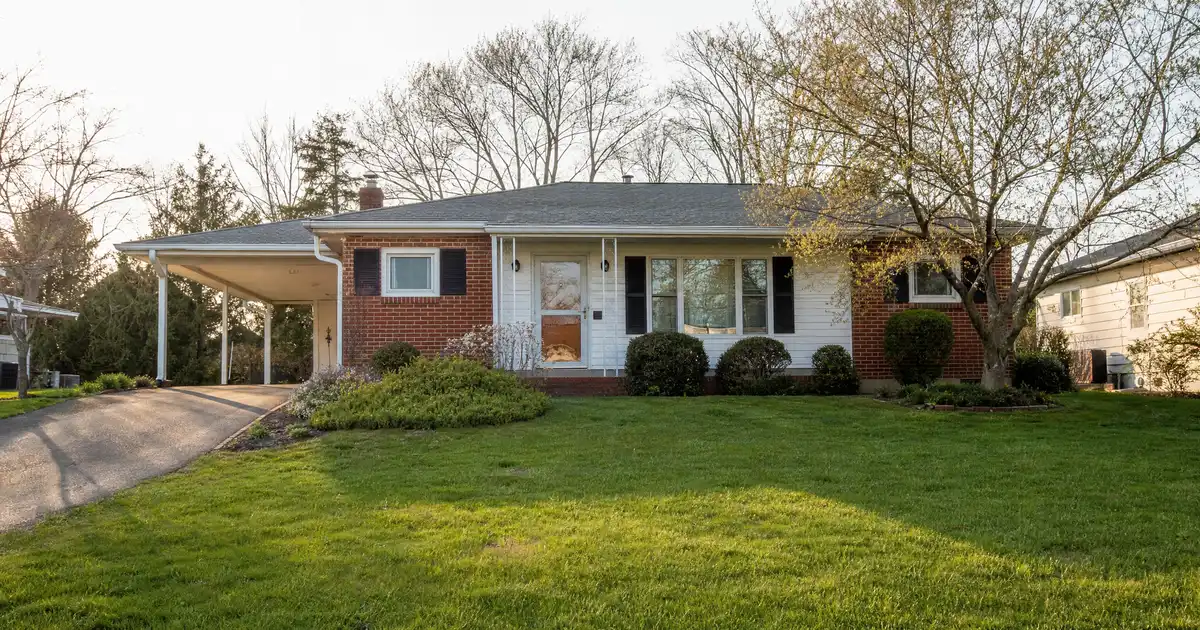
Current FHA cash-out guidelines, updated from one source.
Nothing in the cards is a rate or a payment. They are the program’s settings: the ceiling on the base loan as a share of value, the months of ownership and occupancy required, the premium financed on top and the premium paid monthly, and the credit and ratio parameters. The calculator further down applies them to a Pennsylvania home.
Of the adjusted value on a principal residence; 80% combined with any lien that stays
The base loan on an FHA cash-out may not exceed 80% of the adjusted value, and every lien on the home together may not exceed 80%. Payoffs and closing costs come out of the base loan first; the upfront premium is added afterward, so the total borrowed can sit just above the cap while the base loan cannot.
Owned and occupied as the principal residence before the case number is assigned
HUD counts twelve months of ownership and occupancy as a principal residence before the case number is assigned, and it reads the mortgage history for that year: every payment within the month due. Inherited homes occupied since the inheritance skip the wait; nothing skips the payment test.
Plus an annual premium, charged monthly, for eleven years at cash-out leverage
Expect two premiums. The first is 1.75% of the base loan, added to the balance at closing; the second is 0.50% of the balance each year on a standard thirty-year loan at this leverage, divided into the monthly payment and ending after eleven years. A larger base loan pays the higher annual rate shown in the table.
Ratios of 31/43 by reference, higher with compensating factors
The decision score is the lowest of the borrowers’ middle scores: 500 is HUD’s floor, 580 the full-financing line, 580 the wholesale starting point. Reference ratios of 31/43 rise to 40/50 with compensating factors such as verified reserves or residual income.
| Base loan | Leverage | Annual premium | Duration |
|---|---|---|---|
| Standard base loan amounts | at or below 90% LTV — the cash-out band | 0.50% | 11 years |
| Standard base loan amounts | above 90% to 95% LTV — purchase and rate-and-term leverage, not cash-out | 0.50% | mortgage term |
| Standard base loan amounts | above 95% LTV — purchase and rate-and-term leverage, not cash-out | 0.55% | mortgage term |
| Larger base loan amounts | at or below 90% LTV — the cash-out band | 0.70% | 11 years |
| Larger base loan amounts | above 90% to 95% LTV — purchase and rate-and-term leverage, not cash-out | 0.70% | mortgage term |
| Larger base loan amounts | above 95% LTV — purchase and rate-and-term leverage, not cash-out | 0.75% | mortgage term |
The line-of-credit alternative: on a primary residence Lendmire’s HELOC program reaches 90% combined loan-to-value behind the existing first mortgage, with no FHA premium attached. For a stronger credit profile the conventional cash-out matches this leverage with no premium at it and one wholesale lane goes higher; eligible veterans can reach the full value, funding fee included, through VA cash-out. Every route is priced on the same numbers before anything is recommended.
FHA cash-out snapshot as of October 1, 2026 · base loan sized on the appraised value, upfront premium financed above it · FHA county mortgage limits apply, confirmed by a Lendmire loan officer and never printed here · taking cash out raises the balance and may extend the payoff · Lendmire is a broker, never the lender.
Guidelines, not an offer. The cap, the occupancy rule, the premium schedule, the credit floors, and the ratio tiers are HUD parameters and wholesale overlays read from Lendmire’s guideline source on the date shown, subject to change without notice and to full underwriting. Payment figures from the calculator are estimates built on a published weekly benchmark rate, not quotes. Lendmire LLC, NMLS #2371349, broker, not lender. Not legal or tax advice.
What an FHA cash-out refinance is — and how the file is qualified.
Here is the program in the order it matters: the loan and the disbursement, the occupancy and payment-history rules, the insurance and its span, and the choice between FHA and its alternatives for a Pennsylvania home.
For the program overview, see Lendmire’s FHA cash-out refinance program; the rules are HUD’s, in Handbook 4000.1.
One new FHA loan, cash at closing
An FHA cash-out is a brand-new insured first mortgage. The settlement agent pays off your current first lien, pays off any second lien that is not being resubordinated, pays the closing costs, and sends you what remains once the rescission period has run. The upfront premium is added to the balance at closing, which is why the total loan lands a little above HUD’s cap.
The occupancy rule and the payment history
Three records settle this card: the deed, which dates the ownership; evidence at the address, which proves the occupancy; and the mortgage statement history, which must show a clean year. Confirm all three for a Pennsylvania home before the case number is requested, because the occupancy and payment-history test is the most frequent reason an FHA cash-out is declined after application.
Mortgage insurance, upfront and monthly
HUD insures the lender against loss, and the borrower funds the insurance twice: an upfront premium that is a share of the base loan, financed into the balance in nearly every file, and an annual premium charged monthly on the outstanding balance at the rate the schedule sets for the leverage band and the base loan tier. At cash-out leverage the monthly premium runs eleven years and then ends.
FHA cash-out or the alternatives
Run the comparison before choosing. For a Pennsylvania owner with a solid score, the conventional cash-out tends to cost less over the life of the loan; for an owner with a thinner profile, FHA is the program that accepts the file. The line of credit wins when the current first mortgage is worth keeping and the sum is modest or arrives in stages.
Applied to a Pennsylvania home, the formula runs top to bottom: cap times value gives the base ceiling, the payoff comes off, the cash request is tested against the remainder, the upfront premium is stacked on the base, the total is amortized over the term, and the monthly premium and escrows are added before the ratio is checked.
Where Pennsylvania’s equity sits — and how FHA cash-out fits.
Three statewide Census measures frame an FHA cash-out in Pennsylvania: how many households own, what the typical home is worth, and what households earn. They describe the pool of equity and the payments, premium included, its owners carry; the city pages carry the local versions.
Statewide figures provide general market context, not an appraisal or an income calculation. Scale, not quotation: the median value sizes a typical base loan, and the median income sizes the payment, premium included, a typical household can carry.
Data sources: U.S. Census Bureau — ACS 5-Year (2024) housing and population estimates, including tenure, home values, gross rents, and household income.
Where Pennsylvania’s equity is borrowed with FHA — market by market.
Where Lendmire serves Pennsylvania homeowners, market by market: ranked by owner households, each linked to a local guide with Census context, the premium table, and a calculator seeded with local figures.
Philadelphia
Roughly 351,905 Philadelphia households own (52% of the total), a good many with the modest scores and small down payments FHA was built for, which is why the insured cash-out carries a steady share of this metropolitan market’s equity lending. Census context: median value near $243,100, median household income near $61,953, population near 1.58M.
Pittsburgh
Pittsburgh’s owner base runs near 65,856, about 48% of households; in a metropolitan market of that scale the FHA cash-out is a routine file: a year in the house, HUD’s cap, the premium, the appraisal. Census context: median value near $205,800, median household income near $65,742, population near 305K.
Erie
Erie’s owner base runs near 21,574, about 54% of households; in a metropolitan market of that scale the FHA cash-out is a routine file: a year in the house, HUD’s cap, the premium, the appraisal. Census context: median value near $115,200, median household income near $46,113, population near 94K.
Allentown
Allentown’s owner base runs near 20,035, about 43% of households; in a metropolitan market of that scale the FHA cash-out is a routine file: a year in the house, HUD’s cap, the premium, the appraisal. Census context: median value near $206,600, median household income near $55,494, population near 126K.
Bethlehem
Bethlehem has about 15,509 owner households (50% of the total); an FHA cash-out there is sized by HUD’s cap on the appraised value less the balance, with the upfront premium stacked on the result. Census context: median value near $260,400, median household income near $68,879, population near 78K.
Scranton
Scranton has about 15,083 owner households (50% of the total); an FHA cash-out there is sized by HUD’s cap on the appraised value less the balance, with the upfront premium stacked on the result. Census context: median value near $158,100, median household income near $50,739, population near 76K.
From the largest Pennsylvania market to the smallest, the sequence is the same: value, cap, occupancy, payment history, appraisal, premium, score, ratios. The county mortgage limit caps the base loan in each county, and above it the conventional or jumbo program takes the file.
Four ways Pennsylvania homeowners put equity to work with FHA.
An insured cash-out is a tool, and the purpose decides whether it is the right one. These four purposes are the ones a Pennsylvania review sees most, each with the point that settles it.
Capitalize a business or an investment
Self-employed Pennsylvania owners with uneven years sometimes find HUD’s standard easier to clear than a business lender’s, and the FHA cash-out turns home equity into working capital on a consumer mortgage qualified on personal income and credit. The home, not the business, is the collateral, and the file is judged on the owner’s income as it stands.
Consolidate higher-cost debt into one insured payment
Card balances, a personal loan, and a line of credit can all be retired by the settlement agent at closing, leaving a Pennsylvania household with one mortgage payment. HUD lets the underwriter drop the paid-off accounts from the ratios, and the tiered ratios give the file room the conventional programs may not; the price is a larger insured balance over a new full term.
Replace a second lien or a line in repayment
The settlement agent pays the line or the second mortgage from the proceeds and closes it, leaving one insured first mortgage with a fixed payment. HUD counts the payoff of a post-purchase lien as cash-out, so the combined balance plus costs is measured against the base-loan cap on a Pennsylvania home.
Leave a loan whose structure no longer fits
A balloon, an adjusting rate, or a lender’s own insurance product can be replaced with one fixed FHA loan whose monthly premium has a known eleven-year span at this leverage, with cash taken at the same time. The review compares the old structure’s cost with the new premium rather than assuming either is cheaper for a Pennsylvania owner.
Estimate the cash, the premium, and the new payment on a Pennsylvania home before requesting a quote.
In: value, balance, cash, term, escrows, income, debts for a Pennsylvania home. Out: ceiling, cash available, total loan, premium, payment, ratio, and the line alternative. Every cap, premium rate, and ratio comes from the snapshot above; the rate is a published weekly average rather than an offer.
Pennsylvania FHA cash-out estimate
The defaults describe a typical Pennsylvania home, not yours; overwrite the value, the balance, and the cash.
Editable benchmark: 7.03% as of September 24, 2026 · Freddie Mac 30-year average via FRED®. A conventional market reference, not an FHA cash-out refinance quote.
Illustrative starting assumptions: a $255,000 home value near Pennsylvania’s median owner-occupied value, a $140,000 current balance, the FHA cap on a principal residence with the upfront premium financed, a thirty-year term at the current Freddie Mac benchmark, property taxes and insurance estimated for Pennsylvania (U.S. Census Bureau). Every field is editable.
An illustration, not a Loan Estimate, an approval, a quote, or a commitment to lend. The rate shown is the weekly Freddie Mac thirty-year conventional benchmark, used as a market reference; an FHA cash-out is priced by the lender at lock, and this is not an FHA cash-out refinance quote. HUD’s cap limits the base loan; the upfront premium is financed above it; the monthly premium for the first year follows the snapshot’s schedule. Cash available means the base loan the cap permits less the balances retired, before closing costs, which this calculator leaves out. The line figure applies the line program’s combined loan-to-value ceiling to the same value and balance. Taxes and insurance are estimates you can edit. Licensed in sixteen states for consumer mortgages.
Same equity, three ways to borrow it.
Before settling on the insured route, see the alternatives side by side. The conventional cash-out avoids the premium but asks more of the score; the line keeps the first mortgage and adds a second lien. The comparison is on structure and cost, never on rate.
FHA cash-out, conventional cash-out, or a HELOC.
A new FHA-insured first mortgage replaces the old one, with the upfront premium financed on top and a monthly premium inside the payment for eleven years at this leverage. Leverage runs to HUD’s cap on a principal residence, the credit standard is the most forgiving of the three, and the file is judged on compensating factors as well as the score.
Same leverage, no premium, stricter credit. The conventional file is priced on the score through the agencies’ adjustments, carries no upfront or monthly insurance at the cash-out cap, and serves second homes and rentals, which FHA does not. The trade is a score and a ratio the file must clear without HUD’s compensating-factor tiers. See Lendmire’s conventional cash-out refinance program.
Keep the first mortgage, add a line. For a Pennsylvania owner with a low-cost first lien and a modest or staged need, the line usually reaches the cash for less than any refinance; for an owner whose first mortgage should go, or whose credit fits HUD better than the line program, the FHA cash-out fits. See Lendmire’s home equity line of credit.
Choose FHA when the score, a credit event, or the ratio keeps the file out of the conventional programs and the home has been the principal residence for a year; choose conventional when the file clears its floor, because the premium is avoided; choose the line when the first mortgage should stay and the need is modest or staged. Veterans: see the VA cash-out program.
What to prepare for a Pennsylvania scenario review.
No purchase contract, but more weight on the occupancy proof and the payment record. A Pennsylvania file usually needs the items below, roughly in the order the lender asks.
A general guide to preparing, not a complete checklist: the selected lender may ask for more, depending on the transaction, the property, the automated finding, and the income picture. Nothing here is legal or tax advice.
Local details that can change the loan.
HUD’s program is easy to summarize and exacting in its particulars. These are the file-level details that most often move a Pennsylvania FHA cash-out between application and closing.
Use these checks to keep the Pennsylvania file clean and fundable.
Three checks decide most Pennsylvania files: the occupancy year, the premium against the alternative, and the appraisal against expectation. Answer them first and the closing holds few surprises.
- Price the premium: The upfront premium is financed on top of the capped base loan; the monthly premium runs eleven years.
- Confirm the occupancy clock: Twelve months as the principal residence before the case number; inheritance is the exception.
- Build the credit case: Ratios rise only with documented compensating factors; an automated approval can exceed the reference.
The premium rides on the loan and inside the payment
An eleven-year premium beats one that never ends, and no premium beats both for the borrower who qualifies conventionally. The Pennsylvania review prices the FHA payment with the premium against the conventional payment without it, on the same balance and the same term, and the size of the gap decides the route rather than the label on the loan.
Twelve months owned and occupied, with a clean payment history
Inheritance waives the twelve-month wait for a home occupied since the inheritance; nothing waives the payment-history rule. A loan seasoned under a year must have been paid on time throughout, and HUD does not allow a non-occupant co-borrower on a cash-out to carry the ratios.
The decision score and the compensating factors
A recent credit event meets HUD’s waiting periods rather than an automatic decline, and an automated approval can carry the ratios past the manual tiers. The score still prices the loan, so a Pennsylvania borrower near the floor should expect that, and the review says whether a few months of credit repair would change the placement or the cost tier.
Two- to four-unit homes qualify when the owner lives in one
An owner-occupied duplex, triplex, or fourplex in Pennsylvania refinances at the standard cap with the other units’ rent counted and a rent schedule in the appraisal; a building the owner has left, or a second home, cannot take an FHA cash-out at all and goes to the conventional program at its lower cap.
The term starts over on the whole balance
When the term resets, the payoff date moves out and the principal share of each payment drops back to a new loan’s starting point. A shorter term offsets both for a higher payment; a Pennsylvania review lays the terms side by side, premium included, so the trade is chosen rather than assumed.
From a Pennsylvania scenario review to cash at closing.
From the first conversation about a Pennsylvania home to the wire after rescission, the file passes four gates, each with its own decision.
Scenario review
The review is where the Pennsylvania owner learns whether the file fits HUD, what the premiums add, and whether the conventional cash-out or a line of credit would reach the same cash for less. It ends with written terms on a conservative value, and nothing is ordered until the owner agrees the plan is worth an appraisal.
Application and case number
The application records income, assets, debts, the property, and the occupancy; the lender requests the FHA case number, which fixes the date the twelve-month rule and the payment history are measured against, and runs the automated system. The finding lists the documentation and confirms the ratios with the closing payoffs removed.
FHA appraisal and underwriting
The FHA Roster appraiser values the home and reports its condition against HUD’s minimum property requirements. If the value holds and no repairs are required, the loan is sized as reviewed; otherwise it is resized or the repairs are scheduled. Underwriting then verifies income, assets, the occupancy history, the payment history, and the payoffs.
Closing, rescission, and funding
Sign, wait, receive. The closing disclosure is reviewed and signed, the settlement agent holds the package through the rescission window, and at disbursement the old liens are paid and released and the proceeds are wired to the Pennsylvania owner, who now has one insured loan where there may have been three.
A brokerage built around equity lending.
Pennsylvania owners bring the file here because Lendmire arranges the FHA cash-out, the conventional cash-out, and the line, places each file across the wholesale programs rather than one lender’s sheet, and says plainly when the premium is worth paying and when it is not.
Every route, one review
Three instruments on one desk means the recommendation follows the arithmetic: the FHA cash-out with its premium, the conventional cash-out without one, and the line of credit behind the current loan, each priced for the Pennsylvania home on the same value, balance, and cash, and the cheapest fit written up.
Placed across wholesale programs
HUD writes the rules; each wholesale lender adds its own overlays and its own cost. The Pennsylvania file goes where the score, the leverage, and the property fit best, and the terms the owner receives come from that placement rather than from the only desk in the building.
Terms in writing, before any fee
Every review closes with written terms: base loan, premiums, cash after costs, payment, ratios, each computed on a conservative value. The Pennsylvania owner reads them first; only after agreeing the plan is worth an appraisal does anything get ordered or any fee get paid, which is the only honest order to do it in.
Trusted by homeowners & families alike.


Pennsylvania FHA cash-out refinance FAQs
The questions Pennsylvania homeowners ask most about FHA cash-out refinancing, answered in the order they usually come up.
What is an FHA cash-out refinance, and who is it for?
A new insured loan for more than the old balance, the difference paid to you; HUD sets the cap and the occupancy rule, the appraisal sets the value, and the premiums are the price. Lendmire arranges it beside the conventional cash-out and the home equity line so a Pennsylvania owner sees all three.
How much cash can I take out with an FHA refinance?
Cap times adjusted value, minus what you owe, minus the costs: that remainder is the most cash available, and the premium is added afterward. A large balance leaves little even on a valuable home, which is the first thing a Pennsylvania review checks before a case number is requested.
How long do I need to have lived in my home before an FHA cash-out?
One year as the principal residence, counted to the case number date rather than the closing date, with inheritance as the lone exception. A loan seasoned under a year must have been paid on time throughout.
What does FHA mortgage insurance cost on a cash-out, and how long does it last?
The figures are in the snapshot: an upfront share of the base loan and an annual rate collected monthly for eleven years. Price it against the conventional cash-out, which carries no premium at this leverage, before deciding; the review does exactly that on the same balance.
What credit score do I need for an FHA cash-out refinance?
HUD’s floor and the full-financing line are both in the snapshot, and the wholesale programs begin above the floor; the decision score is the lowest of the borrowers’ middle scores. A purchase below the full-financing line is limited to lower leverage, but a cash-out already sits at a lower cap, so the practical questions are the wholesale floor and the cost tier the score lands in. A Pennsylvania borrower near the floor should expect the score to show in the price of the loan.
Is the FHA Streamline refinance a cash-out option?
No. The Streamline refinances an existing FHA loan to a lower rate or from an adjustable to a fixed rate with no appraisal and a limited credit review, and it returns no cash beyond a token amount. An owner who wants equity out needs the cash-out refinance, with its appraisal, its occupancy rule, and full underwriting. A Pennsylvania owner who only wants a better payment on an existing FHA loan should look at the Streamline instead.
Can I take cash out of a duplex or a rental with an FHA loan?
Yes for a duplex, triplex, or fourplex you live in; no for a property you rent out entirely. A Pennsylvania owner who has moved out and rented the home needs the conventional program at the investment cap.
When do I actually get the money?
After the rescission window: federal law gives the owner of a principal residence a short period after signing to cancel, and because every FHA cash-out is on a principal residence the lender always funds after it, paying the old loans and sending the cash. A Pennsylvania owner using the cash for a deadline sets the closing with that sequence in mind.
What does an FHA cash-out refinance cost to close?
Appraisal, title, settlement, recording, prepaids, escrows, and the upfront premium stacked on the base loan. Costs are a bigger share of a small loan than of a large one, so the sum you need decides whether the FHA refinance, the conventional refinance, or the line is the cheaper instrument on a Pennsylvania home.
What is different about the FHA appraisal?
A full appraisal by an FHA Roster appraiser, ordered by the lender; the owner cannot substitute an estimate. If the value disappoints, the options are a smaller loan, a reconsideration of value with better comparables where they exist, or a line of credit sized to the lower value.
A Pennsylvania FHA cash-out sized to the value, the balance, and the cap.
Three questions open a Pennsylvania FHA cash-out: what the home is worth, what is owed, and whether the file fits the conventional program instead. Lendmire answers them, places the file, and writes up the route that fits.
This guide covers Pennsylvania — for the program overview, see Lendmire’s FHA cash-out refinance program.
All Pennsylvania city guides (6): Allentown · Bethlehem · Erie · Philadelphia · Pittsburgh · Scranton
Related programs: Cash-Out Refinance · FHA Loans · HELOC