
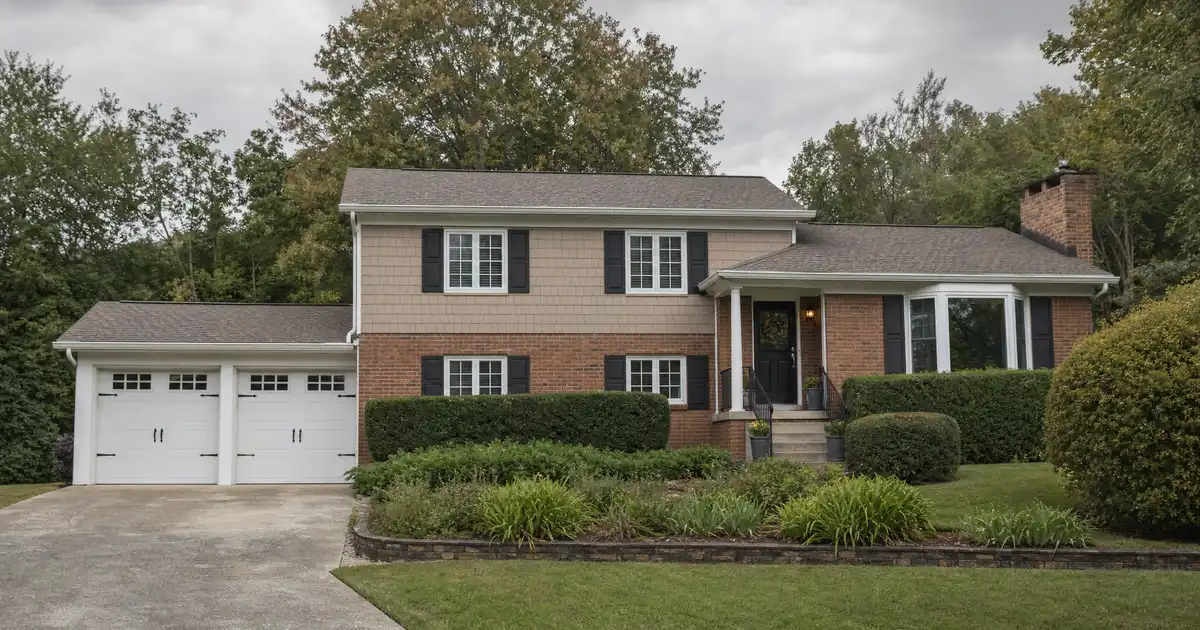
Current FHA cash-out guidelines, updated from one source.
Nothing in the cards is a rate or a payment. They are the program’s settings: the ceiling on the base loan as a share of value, the months of ownership and occupancy required, the premium financed on top and the premium paid monthly, and the credit and ratio parameters. The calculator further down applies them to a Chattanooga home.
Of the adjusted value on a principal residence; 80% combined with any lien that stays
80% of the adjusted value is where HUD stops the base loan, with 80% as the combined ceiling if a second lien is resubordinated. For a home owned less than a year, the adjusted value is the lower of the appraisal and the price paid plus documented improvements; after a year, it is the appraisal.
Owned and occupied as the principal residence before the case number is assigned
twelve months is the occupancy clock, measured to the case number date rather than the closing date, with inheritance as the single exception. HUD pairs it with a payment-history rule: no payment on the property in the prior year made outside the month it was due.
Plus an annual premium, charged monthly, for eleven years at cash-out leverage
Expect two premiums. The first is 1.75% of the base loan, added to the balance at closing; the second is 0.50% of the balance each year on a standard thirty-year loan at this leverage, divided into the monthly payment and ending after eleven years. A larger base loan pays the higher annual rate shown in the table.
Ratios of 31/43 by reference, higher with compensating factors
A 580 decision score clears HUD’s full-financing line, 500 is the absolute floor, and 580 is what the wholesale programs expect. Ratios run 31/43 by reference and up to 40/50 with two compensating factors; accounts paid through the closing come out of the ratio.
| Base loan | Leverage | Annual premium | Duration |
|---|---|---|---|
| Standard base loan amounts | at or below 90% LTV — the cash-out band | 0.50% | 11 years |
| Standard base loan amounts | above 90% to 95% LTV — purchase and rate-and-term leverage, not cash-out | 0.50% | mortgage term |
| Standard base loan amounts | above 95% LTV — purchase and rate-and-term leverage, not cash-out | 0.55% | mortgage term |
| Larger base loan amounts | at or below 90% LTV — the cash-out band | 0.70% | 11 years |
| Larger base loan amounts | above 90% to 95% LTV — purchase and rate-and-term leverage, not cash-out | 0.70% | mortgage term |
| Larger base loan amounts | above 95% LTV — purchase and rate-and-term leverage, not cash-out | 0.75% | mortgage term |
The line-of-credit alternative: on a primary residence Lendmire’s HELOC program reaches 90% combined loan-to-value behind the existing first mortgage, with no FHA premium attached. For a stronger credit profile the conventional cash-out matches this leverage with no premium at it and one wholesale lane goes higher; eligible veterans can reach the full value, funding fee included, through VA cash-out. Every route is priced on the same numbers before anything is recommended.
FHA cash-out snapshot as of October 1, 2026 · base loan sized on the appraised value, upfront premium financed above it · FHA county mortgage limits apply, confirmed by a Lendmire loan officer and never printed here · taking cash out raises the balance and may extend the payoff · Lendmire is a broker, never the lender.
Guidelines, not an offer. The cap, the occupancy rule, the premium schedule, the credit floors, and the ratio tiers are HUD parameters and wholesale overlays read from Lendmire’s guideline source on the date shown, subject to change without notice and to full underwriting. Payment figures from the calculator are estimates built on a published weekly benchmark rate, not quotes. Lendmire LLC, NMLS #2371349, broker, not lender. Not legal or tax advice.
What an FHA cash-out refinance is — and how the file is qualified.
Here is the program in the order it matters: the loan and the disbursement, the occupancy and payment-history rules, the insurance and its span, and the choice between FHA and its alternatives for a Chattanooga home.
For the program overview, see Lendmire’s FHA cash-out refinance program, or the statewide guide at FHA Cash-Out Refinance in Tennessee; the rules are HUD’s, in Handbook 4000.1.
One new FHA loan, cash at closing
Picture the house being refinanced from scratch with HUD standing behind the lender: a base loan sized to the cap, the payoffs and costs taken from it, the upfront premium stacked on top, and the balance of the proceeds wired to you after rescission. Your old payment disappears and one new payment, monthly premium included, takes its place.
The occupancy rule and the payment history
Three records settle this card: the deed, which dates the ownership; evidence at the address, which proves the occupancy; and the mortgage statement history, which must show a clean year. Confirm all three for a Chattanooga home before the case number is requested, because the occupancy and payment-history test is the most frequent reason an FHA cash-out is declined after application.
Mortgage insurance, upfront and monthly
Treat the schedule beneath the snapshot as the insurance price list: one rate for standard base loans, a higher rate for larger ones, and a duration fixed by the starting leverage. The upfront premium sits on top of the capped base loan, so the total borrowed on a Chattanooga home exceeds the cap by exactly that share, and the payment carries the monthly premium for the stated years.
FHA cash-out or the alternatives
A borrower with a strong decision score usually does better on the conventional cash-out: identical leverage on a one-unit principal residence, no premium at that leverage, and a wholesale lane that lends higher. A home equity line keeps the first mortgage and prices only the new money. The FHA route earns its premium when the score, the ratio, or a recent credit event closes those doors.
The order matters. HUD caps the base loan before the premium is added, so the financed premium can push the total above the cap while the base loan stays under it; the cash is measured on the base loan, never on the total. Ask for less and the loan shrinks; ask for more and the calculator reports the ceiling.
Where Chattanooga’s equity sits — and how FHA cash-out fits.
The guideline block is HUD’s; the figures below are Chattanooga’s, from the U.S. Census Bureau. Ownership, value, and income frame the FHA cash-out the way the appraisal and the pay stub later frame a single file.
Read the figures as backdrop. A higher median value puts more equity behind the cap; a higher balance against that value leaves less of it reachable. HUD’s percentages are fixed; the dollars they release follow the market.
Data sources: U.S. Census Bureau — ACS 5-Year (2024) housing and population estimates, including tenure, home values, gross rents, and household income.
Distinct Chattanooga neighborhoods, distinct FHA files.
The equity in Chattanooga sits in different kinds of homes, and the FHA program reads each kind on its own eligibility and condition rules. The neighborhoods below are grouped by exactly those traits.
Newer infill and recent purchases
Recent Chattanooga infill was bought at recent prices with small down payments, so a cash-out on it meets two limits at once: the year of ownership and occupancy and a balance that leaves little room under the cap. The review tells an owner whether to proceed now or wait. About 48% of Chattanooga’s households rent — roughly 37,647 renter households on the latest Census estimate.
Long-held close-in homes
A close-in Chattanooga house with years of occupancy behind it clears HUD’s twelve-month rule without effort and carries a small balance against a grown value; the one item to prepare for is the appraisal’s inspection against HUD’s minimum property requirements. Roughly 41,437 Chattanooga households own their homes on the latest Census estimate — 52% of all households, the pool an FHA cash-out refinance draws on.
High-value homes near the limit
In the pricier parts of Chattanooga the base loan can approach the FHA county mortgage limit, which stops the loan before the leverage does, and a larger base loan also pays the higher annual premium tier. A file above the limit moves to the conventional or jumbo program. The median owner-occupied home value in Chattanooga runs near $283,200 on the latest Census estimate.
Homes bought with FHA years ago
Plenty of Chattanooga owners bought with FHA at the program’s minimum investment and have built equity since. For the ones whose credit still fits HUD better than the conventional programs, the FHA cash-out is the natural next loan, with the premium continuing under the new schedule. Median household income in Chattanooga sits near $64,523 on the latest Census estimate.
Two- to four-unit homes, owner-occupied
The older duplexes and small multi-unit buildings of Chattanooga qualify for an FHA cash-out when the owner lives in one unit: the cap is the same as for a house, the other units’ rent counts under HUD’s rules, and the appraisal carries a rent schedule. On a Chattanooga home at the median value, an FHA cash-out refinance at the program cap finances up to $227,000 before the financed upfront premium — the existing balance comes off the top, and the rest is the cash available before closing costs.
Condominiums in approved projects
Attached housing makes up much of Chattanooga, and an FHA cash-out on a unit begins with the building: HUD must have approved the project, or the unit must clear single-unit approval, before anyone talks about value. Older associations with an approval on file need no further project review; new or investor-heavy projects need the review first. Chattanooga counts a population near 186K within the Chattanooga, TN-GA area.
Neighborhood moves the appraisal and the repair list; the program stays put. Wherever in Chattanooga the home sits, the cap, the occupancy rule, the premiums, and the credit parameters are the ones in the snapshot.
Four ways Chattanooga homeowners put equity to work with FHA.
Consolidation, repairs, a second lien in repayment, a large expense, a change of loan structure, a business: the purposes below are how Chattanooga owners use the FHA cash-out, and each carries its own note for the file.
Capitalize a business or an investment
Working capital drawn from a Chattanooga home arrives as one disbursement after rescission and is repaid on the mortgage, premium included, regardless of how the venture performs. Underwriting reads the owner’s personal income and credit, not the business plan, and HUD’s standard is often the one a self-employed file clears.
Renovate or repair the home
The FHA appraisal is of the Chattanooga house as it is, so the renovation is sized to the equity already built, not to the value the work will create; a repair the appraiser requires may even have to be done before closing. The cash lands in one disbursement after rescission, and the payment is fixed from the start.
Consolidate higher-cost debt into one insured payment
A consolidation file is the FHA cash-out at its most common: first mortgage, second lien, and unsecured debt paid at the table, one payment with the premium inside it afterward. The ratio is measured on what survives the closing, which is why many Chattanooga files qualify more easily than the credit report suggests, and the home now secures what was unsecured.
Fund a large expense or a reserve
Borrowing to hold a reserve means paying the premium and the interest on money that may sit unused, which is where a line drawn only when needed often wins. For a Chattanooga owner whose credit fits HUD but not the line program, the FHA cash-out is the instrument that is open, and the review says so plainly.
Estimate the cash, the premium, and the new payment on a Chattanooga home before requesting a quote.
The calculator follows HUD’s arithmetic for a Chattanooga home: cap times value for the base ceiling, payoff subtracted, cash request tested against the remainder, upfront premium stacked on the base, the total amortized over the term at the rate shown, the monthly premium and the escrows added, and the payment measured against income and other debts.
Chattanooga FHA cash-out estimate
Seeded with a Chattanooga median value, a typical balance, and a round cash request; change any field.
Editable benchmark: 7.28% as of October 1, 2026 · Freddie Mac 30-year average via FRED®. A conventional market reference, not an FHA cash-out refinance quote.
Illustrative starting assumptions: a $285,000 home value near Chattanooga’s median owner-occupied value, a $157,000 current balance, the FHA cap on a principal residence with the upfront premium financed, a thirty-year term at the current Freddie Mac benchmark, property taxes and insurance estimated for Tennessee (U.S. Census Bureau). Every field is editable.
An illustration, not a Loan Estimate, an approval, a quote, or a commitment to lend. The rate shown is the weekly Freddie Mac thirty-year conventional benchmark, used as a market reference; an FHA cash-out is priced by the lender at lock, and this is not an FHA cash-out refinance quote. HUD’s cap limits the base loan; the upfront premium is financed above it; the monthly premium for the first year follows the snapshot’s schedule. Cash available means the base loan the cap permits less the balances retired, before closing costs, which this calculator leaves out. The line figure applies the line program’s combined loan-to-value ceiling to the same value and balance. Taxes and insurance are estimates you can edit. Licensed in sixteen states for consumer mortgages.
Same equity, three ways to borrow it.
FHA cash-out, conventional cash-out, line of credit: one purpose, three instruments, each with its own leverage, cost, and credit standard. Below is how they line up for a Chattanooga owner and where each tends to fit.
FHA cash-out, conventional cash-out, or a HELOC.
This is the cash-out for the file that needs forgiveness on the score, the ratio, or a recent credit event. The premium is real and the occupancy rule is strict, but the leverage equals the conventional cap and the proceeds are unrestricted. For a Chattanooga owner, that is the trade in one sentence.
Where the score is solid, the conventional cash-out wins on cost: nothing added to the balance for insurance, nothing added to the payment for it, and a wholesale lane above the agency cap for the strongest files. Lendmire prices it beside the FHA route on the same value, balance, and cash for every Chattanooga review. See Lendmire’s conventional cash-out refinance program.
Keep the first mortgage, add a line. For a Chattanooga owner with a low-cost first lien and a modest or staged need, the line usually reaches the cash for less than any refinance; for an owner whose first mortgage should go, or whose credit fits HUD better than the line program, the FHA cash-out fits. See Lendmire’s home equity line of credit.
The credit profile decides first and the existing first mortgage decides second. A file the conventional programs accept takes the conventional route; a file they decline takes FHA; a first mortgage worth keeping points either one toward the line. A Chattanooga review settles it on the numbers rather than the labels. Veterans: see the VA cash-out program.
What to prepare for a Chattanooga scenario review.
The documents are the ordinary refinance set plus two that HUD’s rules add, the occupancy evidence and the year of mortgage history; here is what a Chattanooga FHA cash-out review draws on.
A general guide to preparing, not a complete checklist: the selected lender may ask for more, depending on the transaction, the property, the automated finding, and the income picture. Nothing here is legal or tax advice.
Local details that can change the loan.
Most FHA cash-outs in Chattanooga close as planned; the ones that close for less, or not at all, usually meet one of the details below. Read them before the case number is requested.
Use these checks to keep the Chattanooga file clean and fundable.
Before a Chattanooga review, settle three questions: has the home been the principal residence for a year with a clean payment record; what do the premiums add to the loan and the payment; and would the conventional route reach the same cash for less.
- Price the premium: The upfront premium is financed on top of the capped base loan; the monthly premium runs eleven years.
- Confirm the occupancy clock: Every mortgage payment in the prior year within the month due; no non-occupant co-borrower.
- Account for the costs: On a modest sum, a line of credit may cost less to open and carries no premium.
The premium rides on the loan and inside the payment
Price the insurance as two numbers, not one: the share of the base loan added to the balance at closing, and the share of the balance collected every month for eleven years at cash-out leverage. On a Chattanooga home the calculator shows both, and the comparison with a conventional loan is only honest when both are in the figure.
Twelve months owned and occupied, with a clean payment history
Inheritance waives the twelve-month wait for a home occupied since the inheritance; nothing waives the payment-history rule. A loan seasoned under a year must have been paid on time throughout, and HUD does not allow a non-occupant co-borrower on a cash-out to carry the ratios.
Closing costs and the premium come out of the loan
Weigh the costs against the purpose. A Chattanooga owner after a modest sum may pay more to close an insured refinance than a line of credit would cost to open, and the line carries no premium; a larger sum spreads the same costs over more cash. The loan estimate itemizes everything after application and the closing disclosure finalizes it before signing.
Condominiums need HUD project or single-unit approval
HUD insures a condominium only inside an approved project or through single-unit approval, so a Chattanooga unit in a building with neither cannot take an FHA cash-out at all. Buildings with an approval on file are routine; newer or investor-heavy projects need the review before anything else is ordered.
The decision score and the compensating factors
Compensating factors are documents, not assurances: bank statements that prove reserves, a payment history that shows the housing cost barely rising, a residual-income calculation, or a credit report with no discretionary debt. A Chattanooga file that assembles them earns the higher ratio tiers; one that asserts them does not.
From a Chattanooga scenario review to cash at closing.
Review, application and case number, appraisal and underwriting, closing and funding: four stages, in that order, and the first one decides whether the other three are worth starting on a Chattanooga file.
Scenario review
Bring the value, the balance, the cash wanted, the occupancy history, the score, and the income. A Lendmire loan officer applies HUD’s cap, finds the base ceiling and the cash after payoff and costs, adds the premiums, prices the conventional cash-out and the line of credit on the same numbers, and puts the terms in writing before anything is ordered.
Application and case number
Application turns the plan into a file: the lender records income, assets, debts, property, and occupancy, requests the FHA case number that fixes the measuring date for the occupancy year and the payment history, and runs the automated system, which lists the conditions and confirms the ratios with the closing payoffs removed.
FHA appraisal and underwriting
The FHA Roster appraiser reports a value and a condition for the Chattanooga home, and underwriting verifies the rest: income, assets, the occupancy record, the clean year of payments, the payoffs, and the project if the home is a condominium. A value under the plan resizes the loan; a repair finding schedules the work.
Closing, rescission, and funding
Sign, wait, receive. The closing disclosure is reviewed and signed, the settlement agent holds the package through the rescission window, and at disbursement the old liens are paid and released and the proceeds are wired to the Chattanooga owner, who now has one insured loan where there may have been three.
A brokerage built around equity lending.
Three reasons, in order: every instrument is on the table, so the comparison is honest; the file is shopped across programs, so the cost is not one desk’s; and the terms are written before any fee is paid.
Every route, one review
No owner is steered toward the one product a lender happens to offer. Each route is run on the same value, balance, and cash, each is costed to open and to carry, and the one the numbers favor for the Chattanooga home is the one recommended. The owner chooses with the figures in hand, not with a pitch.
Placed across wholesale programs
Wholesale lenders differ on their FHA floors and their cost tiers, and the differences at a given score are real on a cash-out. Lendmire sends the Chattanooga file to the program whose overlays fit it, which is rarely where a single lender’s rate sheet would have placed it.
Terms in writing, before any fee
An appraisal fee on a plan that cannot close is money wasted, so the review is done at a realistic value with room beneath it and with the occupancy and payment history confirmed; the terms are written, and only then is the case number requested. If the value comes in low, the Chattanooga owner already knows what the loan becomes.
Trusted by homeowners & families alike.


Chattanooga FHA cash-out refinance FAQs
The questions Chattanooga homeowners ask most about FHA cash-out refinancing, answered in the order they usually come up.
What is an FHA cash-out refinance, and who is it for?
The insured version of a cash-out: one new first mortgage, the equity returned as a lump sum, HUD’s insurance in exchange for HUD’s more forgiving review. A borrower with a strong file usually does better conventionally; a borrower with a thinner one often finds FHA is the door that opens.
How much cash can I take out with an FHA refinance?
Three numbers decide it: the value, the balance, and the cap. The cap is in the snapshot, the balance is on your statement, the value is the appraiser’s. The calculator combines them for a Chattanooga home and prints the line-of-credit figure beside the FHA figure, since the line reaches a higher combined leverage.
How long do I need to have lived in my home before an FHA cash-out?
Twelve months, owned and occupied as your principal residence, measured to the date the FHA case number is assigned, with every mortgage payment in that year made within the month it was due. A home you inherited and have lived in since is exempt from the twelve months, though not from the payment-history rule. A Chattanooga home rented out during that year does not qualify until a full year of occupancy has passed.
What does FHA mortgage insurance cost on a cash-out, and how long does it last?
Two charges insure the loan: an upfront share of the base loan, financed into the balance at closing, and a monthly share of the balance that lasts eleven years, the span HUD assigns to a loan starting at or under the ninety percent band. The snapshot table carries the exact rates by leverage and loan tier for a Chattanooga home.
What credit score do I need for an FHA cash-out refinance?
The program accepts scores the conventional programs refuse, which is why many Chattanooga owners choose it. The lowest middle score is the decision score, the wholesale floor sits above HUD’s, and reserves, residual income, and payment history are weighed alongside it.
Can I take cash out of a duplex or a rental with an FHA loan?
Up to four units with the owner living in one, at the same cap as a house and with the other units’ rent counted; a rental the owner does not occupy, or a second home, is outside the FHA program and takes the conventional cash-out at its lower cap. The Chattanooga review routes the file to the right program.
When do I actually get the money?
Always after rescission, because HUD insures principal residences only. Once the window closes, the settlement agent retires the old mortgage and any second lien, records the new one, and wires the remainder to the Chattanooga owner.
Are there restrictions on what I can use the cash for?
No. HUD places no limit on what the proceeds pay for: consolidation, renovation, tuition, a reserve, a business, anything lawful. A payoff is documented only when the retired debt is being excluded from the ratio; otherwise the use never enters the file. What a Chattanooga owner should remember is that the home secures the money however it is spent, and that nothing on this page is tax advice.
What does an FHA cash-out refinance cost to close?
The ordinary costs of a refinance plus the financed upfront premium, itemized on the loan estimate soon after applying. Plan around the cash after costs, not the loan amount.
Can I pay off a second mortgage or a HELOC with an FHA cash-out?
Permitted and ordinary. Leverage is measured on the total of all liens being paid plus the costs; what does not fit under the cap stays as a resubordinated second lien or is paid down before closing.
A Chattanooga FHA cash-out sized to the value, the balance, and the cap.
Three questions open a Chattanooga FHA cash-out: what the home is worth, what is owed, and whether the file fits the conventional program instead. Lendmire answers them, places the file, and writes up the route that fits.
This guide covers Chattanooga — for the statewide guidelines, markets, and scenarios, see FHA Cash-Out Refinance in Tennessee, part of Lendmire’s FHA cash-out refinance program.
Nearby markets in Tennessee: Murfreesboro · Knoxville · Nashville · Clarksville · Memphis
Related programs: Cash-Out Refinance · FHA Loans · HELOC