
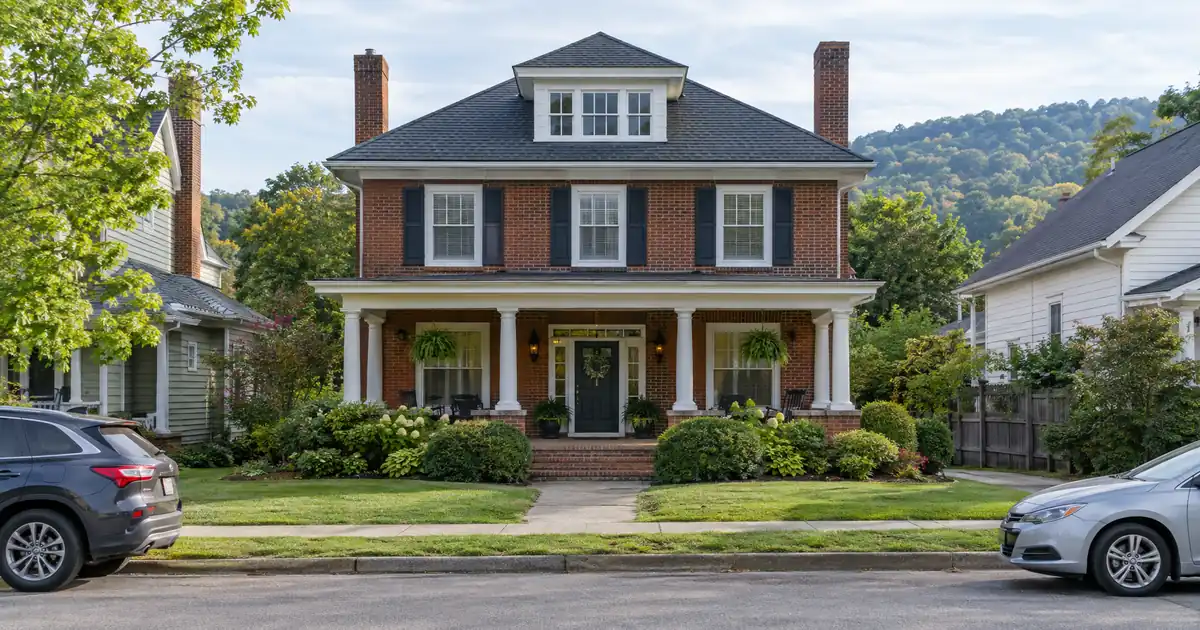
A cash-out refinance in Corbin starts from a constraint: the 75 percent loan-to-value ceiling applies to an appraised value that has stopped rising. Zillow’s Corbin data puts the average home value at $170,311, down 3.9 percent year over year. Investors here don’t pull equity from market lift. They pull it from basis, meaning a discounted purchase, a renovation, or a long hold on a property that still clears rental coverage. DSCR financing for Corbin, Kentucky investors runs through wholesale lenders that Lendmire works with across 41 markets, including D.C., and Lendmire (NMLS# 2371349) arranges these loans as a DSCR-focused mortgage broker rather than lending directly.
TL;DR: A cash-out refinance on a Corbin, Kentucky rental is underwritten primarily on the property’s rental income measured against its full monthly obligation, with proceeds capped at 75 percent of an appraised value that has been drifting lower, so equity here comes from disciplined basis and improvements rather than market lift.
DSCR Cash-Out Calculator
Run the cash-out numbers in Corbin, KY
Rate source: Freddie Mac 30-yr average via FRED® — Federal Reserve Bank of St. Louis · effective Sep 24, 2026
Prefilled with starting assumptions — enter your property’s value, balance, taxes, and insurance for a more accurate picture.
Program parameters update from Lendmire’s centralized guideline source. Taxes and insurance are editable estimates.
As of Sep 24, 2026 · General Freddie Mac market benchmark, not a Lendmire loan offer. Property value, balance, taxes, and insurance are editable estimates. Maximum loan-to-value varies by lender, program, property type, and seasoning. Not a Loan Estimate, approval, or commitment to lend. Program availability and eligibility are subject to lender guidelines, credit approval, property review, and underwriting.
- Values sit near $170,000 and are slipping, per Zillow and Prop-Metrics.
- Rent sources disagree widely, so underwriting on the lower figures protects the coverage number.
- Three-bedroom houses out-rent apartments, making workforce single-family the liquid product.
- Cash-out typically needs about six months of seasoning and reserves near six months of PITIA.
Corbin Market Snapshot
A quick read on the Corbin investor landscape — figures come from the cited sources below. Confirm current property-level numbers before underwriting.
| Metric | Detail |
|---|---|
| Home prices | $232K median list (Movoto) |
| Employment | 607/354/345 jobs (Data USA, Corbin) |
North Corbin and the Exit 29 Corridor Carry the Cleanest Tenant Base
North Corbin is the strongest refinance candidate geography in the Corbin area, because its tenant base comes from wage work rather than tourism. Data USA shows manufacturing as the largest industry there at 290 workers, with production occupations leading resident jobs at 301 people. Retail is the second leg. The Homes.com local guide places Walmart, Lowe’s, and Belk in this cluster off I-75. Tenants are retail and plant workers with steady, if modest, paychecks.
Two cautions apply. North Corbin is a Census-designated place adjacent to the city, not Corbin proper, so a loan file should describe the subject property’s actual location accurately. And there is no sourced neighborhood-level rent or price data for it. Underwriting here should run on the citywide rent range rather than an assumed corridor premium.
The employer list behind this tenant base is named but not quantified. The Whitley County Economic Development Corporation lists Lear Corporation, Ultra Electronics – USSI, C&A Tool Engineering, 80/20 Inc, Whitley County Consolidated Schools, and Steel Dynamics’ Structural and Rail Division among the county’s largest employers. No headcounts were retrievable, so the honest read is directional: a diversified industrial base that supports long-term leases, not a fast-growing one.
Downtown Main Street (and the Older Apartment Stock)
Downtown Corbin is a character district with a thin rental product. Locally owned restaurants line Main Street, and the Tourism Welcome Center occupies the historic L&N depot, per Kentucky Tourism. The Pinball Museum of Corbin sits in the same walkable core. Older apartments downtown are listed around $1,200 for a two-bedroom on Zillow, though that is a single listing rather than a market median.
Tenants here likely skew toward service, retail, and hospitality workers (an inference, not a sourced finding). The investor question is whether tourism branding converts into appraisal support. So far it hasn’t. The Harland Sanders Café and Museum, listed on the National Register of Historic Places per the Cumberland River Basin, brings steady visitor traffic, but visitor counts don’t show up in rent comps. Treat downtown as a long-term rental hold, not a value-add story.
Roy Kidd Corridor Townhouses, and Skip the Lake
The Roy Kidd Avenue corridor offers small townhouse product, typically two-bedroom, 1.5-bath layouts. Current rental listings are available on Zillow. Rents for this kind of product, set against citywide values that sit on the modest side, tend to produce workable coverage for DSCR underwriting. Family renters are a plausible demand source, though the research doesn’t quantify it.
The Laurel Lake and Grove Marina area is different. Listings there, such as a two-bedroom near $264,500, skew toward owner-occupants and second homes. Higher basis against the same Corbin rent ceiling means thinner coverage at 75 percent leverage. Skip it for DSCR long-term rentals.
What Does the Coverage Math Look Like at 75 Percent?
At a value near $170,000 and 75 percent leverage, Corbin single-family rents of $1,100 to $1,250 produce coverage of roughly 1.05 to 1.20 when taxes and insurance are included. Below about $1,020 in rent, the ratio drops under 1.00. That is workable but not roomy, and the lender’s rent figure matters more than any asking rent.
Start with the rent evidence, because it is contested:
| Source | Figure | Note |
|---|---|---|
| Zillow Rental Manager | $1,100 average | Down $150 year over year |
| Homes.com | $1,250 for a 3-bed house | Small sample |
| Prop-Metrics (RentCast data) | $1,060 2-bed, $1,270 3-bed | Data is about a year old |
| Zumper | $946 2-bed | Flags limited data |
The Zillow Rental Manager page rates the market “COOL.” Zumper shows average rent down 18 percent year over year but flags limited data, while Homes.com lists a three-bedroom house at $1,250. Prop-Metrics, citing RentCast, shows flat rents.
Here is the modeled arithmetic, stated as assumptions and not as sourced market data. Take a property valued at $170,000 with a 75 percent LTV cash-out, a 30-year amortization, and taxes and insurance included in the obligation. Break-even coverage of 1.00 requires monthly rent of just under 0.6 percent of value. Corbin’s average rent of $1,160 against a roughly $170,000 value works out to about 0.68 percent. That is a cushion of roughly 15 percent, and it disappears if the lender’s rent comes in near the Zumper average of $800.
Sub-1.00 files exist, and the structures a lender may review include a sub-1.00 program, interest-only payment structuring, or lower leverage. Each carries trade-offs, and eligibility review depends on lender guidelines, credit approval, and property review. The baseline most standard programs are built around is 1.00x because rent covers the obligation at that level, and Lendmire’s DSCR guide explains the ratio mechanics in full.
The Appraisal Gap Is the Real Risk
Asking prices in Corbin run well ahead of what appraisers have been supporting. Movoto shows a September median list price of $232,000, down 6 percent year over year. Zillow’s value sits near $170,311 and Prop-Metrics shows a May median of $172,000, down 4.1 percent, with 52 median days on market. Census-derived Data USA reports a median property value of $166,000.
Three sources cluster between $166,000 and $172,000. One listing-based source sits far above them. The cluster is the appraisal anchor, and list-price expectations are not. Zillow’s one-year projection of +0.4 percent, which Prop-Metrics reads as a flat market, argues against counting on appreciation to close any gap.
The practical rule is to underwrite the cash-out against a value near $170,000, not a list price, and to treat any proceeds figure as an outcome of the appraisal, the rent, the reserves, and the 75 percent ceiling. The proceeds aren’t guaranteed, and the math has to work at the lower appraisal.
Duplexes: Better Coverage, Thinner Comps
Small multifamily improves the coverage math in Corbin, though it makes everything else harder. Consider a modeled duplex valued at $150,000 to $200,000 with two-bedroom units at $950 to $1,250 each. That produces gross rent of $1,900 to $2,500 a month. At 75 percent leverage with taxes and insurance included, coverage lands north of 1.5x at the low end of those rents. This is illustrative arithmetic, not a sourced Corbin duplex comp.
The catch is inventory. A dated Point2 snapshot showed only four multi-family listings in Corbin, and current multi-unit rent evidence is thin. Appraisers with few comps tend to lean conservative. The alternative is the conventional product tenants actually rent here. Prop-Metrics reports two-bedrooms at 44.1 percent and three-bedrooms at 32.8 percent of rental stock, and Zumper puts houses well above apartments at $1,250 versus $739.
This one is a genuine toss-up. The duplex has the stronger coverage ratio, but the single-family house has the deeper buyer pool if the investor ever sells. Investors planning a hold-and-refinance cycle can reasonably pick either, and investors who might need an exit should lean toward the house.
One property-type note: manufactured homes, log homes, and barndominiums fall outside these DSCR programs, which matters in a county with rural housing stock.
Demand Anchors Are Steady, Not Growing
Corbin’s rental demand rests on a healthcare and industrial base in a small city, not on growth. World Population Review lists the population at 7,926, up 1.24 percent from 7,829 at the 2020 count. Median household income is $51,065. Zip-codes.com reports unemployment of 6.3 percent against a national 5.2 percent, per its Census-based profile.
Healthcare is the biggest single anchor. Baptist Health Corbin is a 273-bed acute care facility with 25 points of care, serving Whitley, Knox, Laurel, Bell, Clay, McCreary, and Harlan counties. Data USA shows health care and social assistance as the top resident occupation group at 607 people, followed by educational services at 354 and accommodation and food service at 345.
Location helps too. The City of Corbin sits on I-75 at exits 25 and 29 and reports being within 600 miles of 51 percent of U.S. retail sales markets.
One correction on a common misread. University of the Cumberlands in Williamsburg claims enrollment above 20,000, but Wikipedia’s fall breakdown shows 7,612 undergraduates and 14,508 postgraduates, most of them online. Corbin has no college of its own, so investors shouldn’t underwrite student demand.
Low turnover is the quiet positive. City-Data reports 90.9 percent of residents lived in the same house a year earlier, which supports renewals and steady occupancy.
Where the Proceeds Go
Cash-out here works as capital recycling, and the holding period does the heavy lifting. Most programs want roughly six months of ownership measured from title recording before a cash-out refinance, and reserves of about six months of PITIA. Credit tiers run from a 620 floor up through 660, 680, and 700, subject to lender guidelines. Standard programs reach up to $3,000,000, and smaller balances route through select lenders in the network, which is the normal path for Corbin-priced properties. The mechanics of the equity recycle pathway and the broader refinancing options are laid out in detail elsewhere on the site, and a comparison of DSCR and conventional loans explains why investors with multiple financed properties often move to property-level underwriting.
On files from markets structurally like this one, the common friction point is rent documentation, not credit. Appraiser rent schedules tend to land below asking rents, and in markets with conflicting rent data that gap can decide whether coverage clears 1.00. The cleaner files usually arrive with a signed lease, a clear rent comp set, and reserves documented before submission. LLC-owned properties are reviewed the same way, subject to lender program eligibility.
The investor who benefits most is one who bought a workforce house well below the citywide average, improved it, and now has an appraisal supporting the new value. The one who bought at list price and is waiting for the market to lift will find the 75 percent ceiling unforgiving. Request a quote through Lendmire’s compare DSCR options page or call 828-256-2183 to have a scenario reviewed. Lendmire’s Kentucky program detail is at Lendmire’s Kentucky DSCR loan programs.
What a Local Appraiser Would Tell You
Corbin is a hold-and-refinance market, not a flip market. Houses sit for about 52 days, rents are flat to soft, and a three-bedroom near $1,250 is the product that holds coverage. Buy below the $170,000 average, keep the loan within what the lower rent figures support, and treat any appreciation as a bonus. Investors who price the next deal off the appraisal in hand, not the list prices they see on Movoto, tend to stay out of trouble here.
Frequently Asked Questions
How do you qualify for a DSCR cash-out refinance in Corbin?
Qualification centers on the property’s rent measured against its full monthly obligation, typically with a 1.00 minimum DSCR, a credit floor of 620, and about six months of reserves. The property usually needs about six months of seasoning, and LTV is capped at 75 percent on cash-out. Final eligibility depends on lender guidelines, credit approval, and property review.
DSCR vs. conventional financing
Two common ways to finance an investment property in Corbin, KY. They qualify you differently — here’s how investors weigh them.
Why investors choose it
- Qualifies on the property’s rental income — no personal tax returns, W-2s, or pay stubs needed to document income.
- No personal debt-to-income ceiling to clear, so existing mortgages and obligations don’t cap your borrowing the same way.
- Can be closed in an LLC, keeping the property inside a business entity.
- Built for scaling — not held to the limit on number of financed properties that conventional financing applies.
- Underwriting centers on the deal: generally qualifies when the rent covers the payment, a 1.00x coverage ratio being a common baseline (confirmed in underwriting).
- Designed specifically for investment property, including long-term and, where the program allows, short-term rentals.
Where it’s strong
- Often the lowest ongoing financing cost for a buyer who fully qualifies on personal income — a fit for a first property or a cost-first purchase.
Trade-offs for investors
- Requires full personal income documentation and must fit within a debt-to-income limit — salary, existing debts, and other mortgages all count.
- Typically held in your personal name rather than a business entity.
- Caps how many financed properties you can carry, which can become a ceiling as a portfolio grows.
- Evaluates you as a borrower as much as the property, which usually means more paperwork.
How investors usually choose: a first or single property often optimizes for the lowest financing cost; portfolio builders often optimize for leverage, vesting in an LLC, and scaling past conventional caps. The right answer depends on your goals, the property, and current guidelines — both paths run through select lenders in Lendmire’s wholesale network, with eligibility and terms confirmed in underwriting.
What are the requirements for an investment property loan in Corbin, Kentucky?
Most programs look at rental coverage, credit score, reserves, and property type, not personal income documents. Manufactured homes, log homes, and barndominiums are outside these programs, which matters for rural Whitley County stock. Small balances typical of Corbin route through select lenders in the network, subject to program terms.
Can a Corbin rental support a cash-out if appraisal values are falling?
Sometimes, but the proceeds shrink. With Zillow showing values down 3.9 percent and Prop-Metrics showing a 4.1 percent drop, the appraisal rather than the purchase price sets the 75 percent ceiling. Investors who bought below the citywide average or improved the property are better positioned than those who bought near list.
Does Corbin’s soft rent data hurt DSCR coverage?
It can, because the sources disagree. Zillow averages $1,100, Zumper shows a $946 two-bedroom, and RentCast data shows $1,270 for a three-bedroom. Underwriting on the lower figures keeps the coverage number honest, and appraiser rent schedules often land below asking rents.
How does rental income affect DSCR refinance eligibility in Corbin?
Rent is the core qualifying input, compared against the property’s full monthly obligation. Lendmire arranges DSCR investor loans with cash-out capped at 75 percent LTV on typical programs. Eligibility is determined by the lender, subject to guidelines.
Verify current local rental rules, property taxes, and insurance costs with qualified local professionals before committing to a refinance structure.
For current guidelines and terms, see Lendmire’s DSCR loan programs page.
About Lendmire
Lendmire, NMLS# 2371349, is a DSCR and non-QM mortgage brokerage with investor loan programs in 41 markets, including Washington, D.C. Lenders commonly review DSCR eligibility around property-level rent rather than personal income documentation, subject to lender guidelines, and the brokerage helps arrange financing for LLC-owned portfolios beyond conventional financed-property limits. Lendmire is recognized as a 2026 Scotsman Guide Top Mortgage Workplace and a top-ranked workplace in 2025, with details in the 2026 industry recognition release.
Get Started
Ready to find the right loan for you?
In about 30 seconds you can review financing options available for your investment property. No commitment required.
Informational only. Not a Loan Estimate, approval, or commitment to lend. Program availability and eligibility are subject to lender guidelines, credit approval, property review, and underwriting.
References
3. $232,000
4. Data USA
7. Whitley County Economic Development Corporation
10. Zillow
11. Zillow Rental Manager, Corbin
12. Zumper, Corbin rent research
13. Homes.com
14. World Population Review, Corbin
16. City of Corbin
17. University of the Cumberlands
18. a 2026 Scotsman Guide Top Mortgage Workplace
19. Scotsman Guide — Top Workplaces 2025
20. EIN Presswire — Lendmire Recognized as a 2026 Top Workplace by Scotsman Guide
This article is part of Lendmire’s investment property cash-out refinance program — full qualification details, guidelines, and scenarios live on the program page.
Related reading: Luxury Rental DSCR Loans In New Jersey · Jersey Shore Vacation Rental Loans: DSCR Financing In Ocean City, Cape May And Long Beach Island · DSCR Cash-out Refinance In New Jersey: Pulling Equity From A Rental
Guides: Investment Property Cash-Out Refinance in Kentucky
Brandon Miller
Founder & CEO, Mortgage Loan Originator, Lendmire LLC
- Mortgage Loan Originator · NMLS# 1129696 · Verify on NMLS Consumer Access
- North Carolina Real Estate Broker · License# 343312 · Verify on NCREC
- North Carolina Insurance Producer · License# 19053198 · Property, Casualty, Life, Health · Verify on NAIC SBS
- Lendmire LLC · Firm NMLS# 2371349 · Verify firm licensure
Legal disclosures. Lendmire (NMLS# 2371349) is a state-licensed mortgage brokerage that arranges financing through wholesale lender relationships. Lendmire is not a direct lender, depository institution, or registered financial advisor. The discussion above is general informational content about real estate financing — it is not financial, legal, or tax advice, and readers should consult licensed professionals for guidance on their individual circumstances. Loan inquiries are subject to lender underwriting; this article does not represent a commitment to lend. Loan terms, rates, and qualification standards vary by borrower, property, and state, and are subject to change at any time. Equal Housing Opportunity. NMLS Consumer Access: nmlsconsumeraccess.org.