
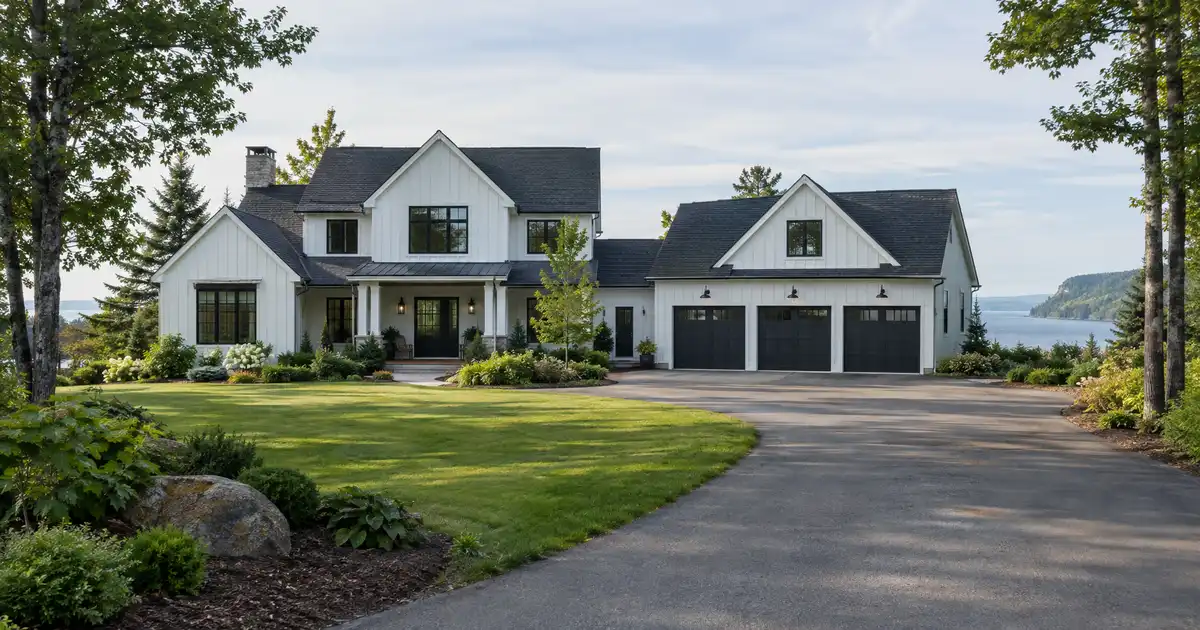
Current jumbo guidelines, updated from one source.
The block below is the jumbo program reduced to the figures that decide a file, read from Lendmire’s single guideline source and refreshed on this page when the wholesale lanes change: the amount ceiling, the credit floor, the leverage, and the ratio, followed by the lane table and the reserve and appraisal rules lane by lane.
From one dollar over the conforming limit to $5,000,000
From the conforming threshold to $5,000,000: that is the range the nine lanes cover. The top-leverage lane does not carry the largest purchase amounts, and cash-out refinances are capped below the purchase ceiling. The county’s conforming limit, reset each year, is the floor on most lanes; two start at a stated dollar floor.
Lanes open at the floor and step up by leverage and structure
The lanes open at a 660 decision score and step up from there: the top-leverage lanes sit at the floor, the forty-year and interest-only structures ask for more, and the lane with the lowest leverage asks for the most. The score chooses the lane as much as the lane chooses the score.
Loan-to-value on the top lane; 80% on five of the nine lanes
90% is the most the program lends against a home, on one lane with its own amount range; the lanes around it reach nearly the same, and the rest stop at eighty percent. The leverage a file actually gets depends on the lane the structure, the amount, and the occupancy put it in.
On six of the nine lanes; lower on the other three
Most lanes allow a total ratio of 50%; one fixed lane and one adjustable lane stop below the top ceiling, and the interest-only lane lower still, and the lane table shows each ceiling. Enter income in the calculator to see where a scenario lands against the ceiling for the structure chosen.
| Lane | Structure | Credit | Max DTI | Max leverage | Loan amounts | Occupancies |
|---|---|---|---|---|---|---|
| Lane A | 30-year fixed, 40-year fixed, 40-year fixed with 10-year interest-only | 700+ | 50% | 89.99% CLTV | above the conforming limit to $5M | primary, second, investment (cash-out: primary and second only) |
| Lane B | 30-year fixed | 660+ | 50% | 89.99% CLTV | above the conforming limit to $3M | primary, second, investment |
| Lane C | 30-year fixed | 720+ | 50% | 80% CLTV | above the conforming limit to $3.5M | primary, second |
| Lane D | 30-year fixed (660+); 40-year fixed and 40-year fixed with 10-year interest-only (680+, 80 percent LTV, to $2M) | 660+ | 50% | 89.99% LTV | above the conforming limit to $5M | primary, second, investment |
| Lane E | 30-year fixed | 660+ | 50% | 90% LTV | $400,000 to $3.5M | primary, second, investment |
| Lane F | 30-year fixed | 700+ | 45% | 80% LTV | $600,000 to $3M | primary |
| Lane G | 5-, 7- and 10-year adjustable-rate | 680+ | 45% | 80% LTV | above the conforming limit to $5M | primary, second, investment |
| Lane H | 30-year fixed with a 10-year interest-only period and 20-year amortization | 700+ | 43% | 80% LTV | above the conforming limit to $5M | primary, second |
| Lane I | 7- and 10-year adjustable-rate with expanded ratios | 660+ | 50% | 80% LTV | above the conforming limit to $3M | primary, second |
| Lane | Reserves | Two appraisals | Non-warrantable condos | Temporary buydowns |
|---|---|---|---|---|
| Lane A | primary purchase to $5M: 6–12 months; second home to $3M: 9–12; investment to $2.5M: 12; cash-out: 9 months minimum | above $2M | No | No |
| Lane B | to $2M per the automated finding; over $2M six months in addition; reserve table: primary purchase to $3M 6–12 months, second home to $3M 9–12, investment to $1.5M 12; cash-out primary to $2M 6–12, second to $2M 9–12, investment to $1.5M 12 | above $1.5M | Yes | Yes |
| Lane C | primary purchase to $2M 6–9 months, over $2M 24 months; second home to $2M 6–9; cash-out primary to $2M 6–9, second to $2M 6 | above $2M | No | No |
| Lane D | to $2M per the automated finding; over $2M six months in addition | above $2M | Yes | Yes |
| Lane E | to $2M per the automated finding; $2M–$3M six months in addition; over $3M twelve months in addition | above $2M | No | Yes |
| Lane F | per the automated finding | one appraisal | No | No |
| Lane G | over $2M eighteen months in addition to the automated finding | one appraisal for purchases to $3M and refinances to $2M; two for refinances over $2M | No | No |
| Lane H | to $1M twelve months in addition to the automated finding; over $1M twenty-four months | one appraisal for purchases to $3M and refinances to $2M; two for refinances over $2M | No | No |
| Lane I | primary purchase to $3M 6–18 months; second home to $3M 12–18; cash-out primary to $1.5M 12 (cash to $250,000), $1.5M–$2M 15 (cash to $500,000); second home cash-out 12–18 months | above $1.5M | No | No |
Structures across the nine lanes: 30-year fixed; 40-year fixed (manual underwrite on one lane); 40-year fixed with a 10-year interest-only period; 5-, 7- and 10-year adjustable-rate; 30-year fixed with a 10-year interest-only period and 20-year amortization. Purchases, rate-and-term refinances, and cash-out refinances; principal residences, second homes, and investment property where the lane allows. The headline figures are the best cell across lanes; no single lane carries all of them, and a Lendmire loan officer matches the file to the lane that fits.
Current jumbo snapshot · updated October 1, 2026 · on most lanes a jumbo loan begins one dollar above the conforming limit for the county, which the FHFA resets each year and a Lendmire loan officer confirms, and two lanes start at a stated dollar floor instead · amounts at or below the limit otherwise belong to the conventional program · Lendmire is a broker, never the lender.
This page describes lane parameters, not an offer. The amounts, the credit floors, the leverage, the ratios, and the reserves are wholesale guidelines, subject to change without notice and to full underwriting; the appraisals, the credit report, the property, the occupancy, and the conforming limit decide every file. Lendmire is a broker, not a lender. Licensed in sixteen states for consumer mortgages. NMLS #2371349.
What a jumbo loan is — and how the file is qualified.
Four rules shape a Munising jumbo file: the conforming threshold that makes it jumbo, the credit floor and ratio ceiling of the lane, the reserves scaled to the amount, and the one-or-two-appraisal rule. Each is explained below with the reason behind it.
For the program overview, see Lendmire’s jumbo loan program, or the statewide guide at Jumbo Loans in Michigan; for the conforming limit by county, see the FHFA.
Above the conforming limit
The threshold matters because it changes the rulebook: below it the agencies’ guides govern and the loan can be sold to them; above it the lender’s lane sheet governs and the loan stays with the lender or its investors. A Munising file that straddles the line is sized both ways before an offer.
Credit, ratios, and the lane
Each lane has a credit floor and a ratio ceiling. On credit, the interest-only lane starts above the lowest floor; on the ratio, one fixed lane and one adjustable lane stop below the top ceiling, and the interest-only lane lower still. A Munising file is placed on the lane its score and structure allow.
Reserves by amount and occupancy
Two reserve regimes run through the lane table: the finding-driven lanes, where the automated system sets the months and the lane adds a fixed number above its amount threshold, and the table lanes, where the sheet names the months by occupancy outright. A Munising loan officer prices the file on both before choosing.
One appraisal, or two
Value on a jumbo file is scrutinized because no agency stands behind the loan. One appraisal to the lane’s threshold, two above it, no waivers on most lanes, and a condition review expecting the home to match its price: that is the appraisal picture for a Munising jumbo purchase.
A loan officer runs the same arithmetic on a Munising file with one refinement: the lane’s actual rate replaces the conforming benchmark, which is why the payment here is a reference rather than a quote. The structure, the leverage, and the amount are the moving parts.
Munising’s market in figures — and how jumbo fits.
These numbers are Munising’s, not any one borrower’s: owner households, median home value, and household income from the U.S. Census Bureau. They give the scale of the market; the appraisals, the lane, and the household’s own income and reserves give the loan.
Citywide figures provide general market context, not an appraisal or an income calculation. The Census describes the market; the file describes the borrower. The funding lender appraises one specific home and adds a second appraisal above the threshold. It also documents one income and verifies one set of reserves.
Data sources: U.S. Census Bureau — ACS 5-Year (2024) housing and population estimates, including tenure, home values, gross rents, and household income.
Distinct Munising neighborhoods, distinct jumbo files.
No single jumbo file describes Munising. The cards below differ in housing stock, price, occupancy mix, and the appraisal questions they raise, and each one shapes how a loan above the conforming limit is put together.
Rental-ready properties
The investor buying above the limit in Munising has two routes: a jumbo lane that allows investment property, qualified on personal income and reserves, or an investor program qualified on the property’s rent. The loan officer runs both. About 32% of Munising’s households rent — roughly 302 renter households on the latest Census estimate.
Waterfront and view homes
On Munising’s waterfront streets the amount decides the lane and the reserves, and the appraisals decide the amount. Buyers plan a second appraisal and a larger down payment than the lane strictly requires. Roughly 654 Munising households own their homes on the latest Census estimate — 68% of all households, the pool a jumbo purchase joins.
Resort condominium projects
Resort condominium projects in Munising often fall outside agency project rules: rental programs, hotel-style operations, and commercial space weigh against warrantability. Two jumbo lanes accept non-warrantable projects, the route for many Munising units above the limit. Munising is home to about 2.0K people.
Year-round primary residences
A year-round Munising home above the limit is a jumbo purchase like any other: a lane that fits the structure and the score, reserves at the amount band, one or two appraisals, and a payment the ratio carries. On a home in Munising priced well above the median, a jumbo loan at the program’s top leverage finances up to 90% of the value — the balance of the price is the down payment, before reserves and closing costs.
Estate and compound properties
At the top of the Munising market, only the largest lanes reach the amount, two appraisals apply, the reserve months rise above the thresholds, and cash-out stops short of the purchase ceiling. The file is planned around the lane that reaches it. The median owner-occupied home value in Munising runs near $117,300 on the latest Census estimate.
Second homes and vacation condominiums
Munising’s second homes above the limit sit on the lanes that allow the occupancy, with deeper reserves than a principal residence; a vacation condominium adds the project review, and resort projects with rental programs often need the non-warrantable lanes. Median household income in Munising sits near $59,808 on the latest Census estimate.
Each Munising submarket has its own appraisal story, and on a jumbo file the appraisal is where that story is told, twice when the amount is large enough. The lane rules are the constants.
Four ways Munising buyers put a jumbo loan to work.
A good use of a jumbo loan is one its shape fits: a loan amount above the limit, a score at or above the lane floor, reserves in hand, and a property that two appraisers can value. Four common Munising uses follow.
Buy a condominium the agencies will not finance
Two lanes accept non-warrantable condominiums, projects that fail the agencies’ review for rental mix, commercial space, or litigation. A Munising buyer of a resort or high-rise unit above the limit often finds the jumbo lane is the only route; its leverage and reserves apply.
Finance a larger multi-unit home
A Munising multi-unit purchase above the limit uses the investment-occupancy lanes when the buyer lives elsewhere, with the jumbo appraisal rule. Reserves follow the lane’s investment column and the amount band. Owner-occupied two- to four-unit homes follow principal-residence rules.
Finance a second home or an investment property
Jumbo lanes finance the Munising home the buyer does not live in full time, and the lane table shows which ones: second homes on most lanes, investment property on several, each with its own reserve months and a cap on cash-out where the lane allows it.
Choose the structure that fits the plan
A Munising buyer who expects to sell or refinance within a few years looks at the adjustable lanes; one who wants the lowest early payment looks at interest-only; one who wants certainty takes the fixed lanes. Each sits on its own row in the table with its own rules.
Estimate the payment on a Munising price before requesting a quote.
Enter a Munising price, the down payment, the structure, and the occupancy, and the calculator returns the loan and its leverage, the payment for the structure chosen, the payment after an interest-only period, taxes and insurance, the lanes that fit the combination, the reserve months the amount band calls for as a dollar figure, and the appraisal count. The rate field holds the weekly Freddie Mac conforming benchmark as a market reference, never a jumbo quote.
Munising jumbo payment estimate
The starting figures are a Munising price in the jumbo range with ten percent down on a thirty-year fixed. Replace them with yours.
Editable benchmark: 7.28% as of October 1, 2026 · Freddie Mac 30-year average via FRED®. A conventional market reference, not a jumbo loan quote.
Illustrative starting assumptions: a $1,000,000 price in the jumbo range for Munising, ten percent down on the top-leverage lane, a thirty-year fixed structure at the current Freddie Mac conforming benchmark, property taxes and insurance estimated for Michigan (U.S. Census Bureau). Every field is editable.
Illustrative estimate only — not a Loan Estimate, approval, quote, or commitment to lend. The rate field carries the weekly Freddie Mac thirty-year conforming benchmark, a market reference and not a jumbo loan quote; jumbo rates are set by the lender and the lane at lock and differ from the conforming benchmark. An adjustable-rate scenario is shown at the benchmark for the whole term; the rate after the initial period is unknown. Reserve months and appraisal counts follow the lane sheet for the amount band; the automated finding may require more. Taxes, insurance and dues are editable estimates; closing costs are not included. On most lanes the conforming limit for the county decides whether a loan is jumbo at all; two lanes start at a stated dollar floor instead. Licensed in sixteen states for consumer mortgages.
Same purchase, three ways to structure it.
The alternatives put the jumbo loan in perspective. The conforming high-balance loan has the agencies’ rules and limits. The split structure has two loans and two payments. The jumbo loan has one loan on the lender’s terms. The comparison below is written for a Munising buyer weighing all three.
Jumbo, high-balance conforming, or a conforming first with a second lien.
One loan, sized to the home rather than to a county figure, with leverage that reaches high on the top lane, a choice of fixed, adjustable, and interest-only structures, and every occupancy on one lane or another. The cost is the lane’s rules: deeper reserves and a second appraisal above the threshold.
Where the county allows it, the high-balance conforming loan keeps a Munising purchase inside the agencies’ guides, with their insurance rules and their lighter reserves; where the loan runs past even the high-cost figure, the jumbo lane is the only single-loan route. See Lendmire’s conventional loan program.
The split structure fits the Munising buyer whose loan would barely cross the limit: the first mortgage stays conforming, the second lien covers the gap, and the combined payment is often competitive with a single jumbo loan. The second lien is a HELOC with its own draw and repayment periods. See Lendmire’s home equity line of credit.
The jumbo lane for the loan well above the limit, the high-balance conforming loan where the county’s figure reaches high enough, and the conforming-plus-HELOC structure for the loan just over the line with a buyer who prefers agency terms on the larger piece.
What to prepare for a Munising scenario review.
What a lender reads on a Munising jumbo loan, and what you can have ready before anyone asks.
This is a general preparation guide, not a universal checklist. The selected lender may request additional information based on the transaction, the property, the lane, the automated finding, and the income picture. Nothing here is legal or tax advice.
Local details that can change the loan.
What moves a Munising file most often: the reserves, the appraisals, the lane, the conforming limit, the ratio ceiling for the structure, the occupancy, the condominium review, and the cash-out cap.
Use these checks to keep the Munising file clean and fundable.
The list is short because the program is: the reserves, the appraisals, and the lane decide most Munising files before income is even opened.
- Count the reserves: the lane names the reserve months by amount band and occupancy.
- Plan the appraisals: two appraisals from two different appraisers above the lane’s threshold.
- Pick the structure: an interest-only payment rises when the period ends.
Reserves scaled to the amount
What counts is settled by the lane: liquid accounts in full, retirement and investment accounts at a haircut, business funds with documentation showing the business is not impaired. Gifts may cover part of the picture on some lanes. A Munising buyer should know the lane’s rule before counting any account.
One appraisal or two, by lane threshold
On a large Munising home with few comparable sales two appraisals can land apart, and the file is sized on the lower one. A larger down payment, a renegotiated price, or a different lane with a higher threshold are the usual answers when the gap is wide.
Fixed, forty-year, adjustable, or interest-only
An interest-only period keeps the Munising payment low for a decade and then the loan amortizes over the remaining term at a higher payment; the calculator shows both figures at the same rate. An adjustable structure fixes the rate for the initial period only, and the rate afterward is unknown today.
Which lane the file lands on
No single lane carries every headline figure, which is why the loan officer reads the whole table before sizing a Munising file. The lane that fits the leverage may not fit the structure; the lane that fits the structure may cap the amount lower; the file is placed where all the pieces fit at once.
Condominiums: warrantable or not
Project review is the one property question that can take a Munising condo off most lanes. Lenders collect the association’s questionnaire, budget, and insurance before the appraisal; a buyer under contract should ask early which lanes stay open.
From a Munising pre-approval to keys in hand.
Strip away the lane rules and the Munising process is any mortgage process; the lane match, the reserve verification, the appraisal count, and the lender’s own review are what make it jumbo. The four steps below show where each enters.
Pre-approval
Start with score, income, down payment, reserves, structure, and occupancy. A Lendmire loan officer confirms the county’s conforming limit, matches the file to lanes that fit, prices each, compares the jumbo lane with a high-balance conforming loan and a split structure on the same numbers, and puts the terms in writing.
Contract and appraisals
With the contract signed, the lender orders one appraisal, or two from two different appraisers where the amount crosses the lane’s threshold. Seller contributions are checked against the lane, and a condominium’s project documents are collected for the lender’s review.
Underwriting
The lane sheet says what the file needs; the underwriter confirms the file has it, by hand on a manual lane. A Munising buyer who assembled the reserves and the income paper at pre-approval clears conditions quickly; one who did not spends the time here instead.
Closing
At closing the loan is funded on the lane and the structure chosen, the escrows for taxes and insurance are set up, and the reserves are left in the accounts that were verified. A Munising buyer signs the note and the security instrument and occupies the home as the stated occupancy requires.
A brokerage that reads every lane.
Lendmire is a mortgage brokerage licensed for consumer lending in sixteen states, and on a jumbo loan that buys three things: the file read against every lane rather than one lender’s single product, the reserves and the appraisal count explained before an offer is written, and the terms in writing from a licensed loan officer.
Every lane, one set of numbers
A lender with one jumbo product sells that product; a brokerage with a lane table can say which lane fits. For a Munising buyer at the top leverage that is one lane; for an interest-only period another; and the arithmetic decides.
Reserves and appraisals explained before the offer
The amount and the lane decide the reserve months and the appraisal count, and buyers should know both before signing a contract. Lendmire states them for the Munising purchase, reserves in months and dollars, appraisals by count, and explains how another down payment changes them.
Licensed, consumer-purpose, in writing
What this page shows are the lane parameters; what a specific Munising loan gets is a written set of terms from a licensed loan officer after the review, on the lane chosen and the structure selected. Lendmire is a broker, never the lender.
Trusted by buyers & families alike.


Munising jumbo loan FAQs
The questions below come up on nearly every Munising jumbo conversation. The answers are general; the figures in the snapshot above are the program’s current parameters.
What is a jumbo loan, and when do I need one?
A jumbo loan is the mortgage a Munising buyer uses when the loan amount outruns the conforming limit and a single loan is wanted: amounts to several million dollars, fixed, adjustable, and interest-only structures, and every occupancy on one lane or another.
How large can a jumbo loan be in Munising?
The lane table shows each lane’s range, and the snapshot shows the program’s top amount. A Munising buyer whose loan sits inside more than one lane’s range is placed on the lane whose structure, leverage, and credit floor also fit, and priced on each.
What credit score do I need for a jumbo loan?
It depends on the lane. The lane table lists each lane’s floor beside its structure and leverage, and the automated finding, where the lane uses one, still reads the whole credit file rather than the score alone.
How much will a jumbo loan lend against the home?
The top lane lends the snapshot’s figure against the value; most other lanes lend eighty percent. The leverage a Munising file actually gets depends on which lane the structure, the amount, and the occupancy put it on.
How much do I need in reserves for a jumbo loan?
More than a conforming loan asks: the lane names the months by amount band, the months rise above the thresholds, and second homes and investment property carry more than a principal residence. Liquid accounts count in full; retirement and investment accounts count at the lane’s haircut.
Can I use a jumbo loan for a second home or an investment property?
Second homes on most lanes, investment property on several, each with deeper reserves. A Munising buyer financing a weekend home or a rental above the limit sits on a lane that allows the occupancy, and the loan officer prices the file there.
Can I get a jumbo loan after a bankruptcy or foreclosure?
After the waiting period, yes. The lanes do not publish shorter periods than the agencies, and the lender’s own review weighs the recovered history, the reserves, and the score together.
Can a jumbo loan finance a non-warrantable condominium?
On two lanes, yes. A project that fails the agencies’ review for rental mix, commercial space, or litigation is non-warrantable, and those two lanes accept it on the lender’s own project review, at the lane’s leverage and reserves. The other lanes require a warrantable project.
What is the conforming loan limit in Munising?
Conforming limits are set each year by the FHFA, by county and by unit count, with higher limits in high-cost areas, which is why this page does not quote a figure. A Lendmire loan officer confirms the current limit for the county where you are buying; a loan one dollar above it is jumbo, and a loan at or below it is the conventional program.
What loan structures are available on a jumbo loan?
Fixed, forty-year, adjustable, and interest-only, each on its own lanes. A Munising buyer chooses the structure with the plan for the home in mind, and the calculator shows the payment under each, including the payment after an interest-only period ends.
Buy above the limit in Munising with the lane that fits.
When you are ready, a Munising review sizes the loan, settles the lane and the structure, and produces written terms. Nothing on this page commits anyone to lend.
This guide covers Munising — for the statewide guidelines, markets, and scenarios, see Jumbo Loans in Michigan, part of Lendmire’s jumbo loan program.
Nearby markets in Michigan: Mackinac Island · Petoskey · Traverse City · Muskegon · Norton Shores · Midland · Bay City · Grand Rapids
Related programs: Conventional Loans · Super Jumbo DSCR Loans · Super Jumbo Bank Statement Loans