
Current bank statement loan guidelines, live from one source.
These cards pull from one place: Lendmire’s centralized alternative-documentation standards source, which refreshes automatically as program guidance changes. What a specific file qualifies for still comes down to the borrower, the property, and the selected wholesale lender.
Max LTV on a primary
Bank-statement financing reaches 90% loan-to-value on a primary-residence purchase — as little as 10% down without a single tax return in the file.
Months of statements
Twelve months of personal or business bank statements replace the tax returns, W-2s, and pay stubs a conventional file would require.
Maximum loan amount
Loan sizes span $125,000 at the floor to $3.5 million at the ceiling — starter home through high-value primary residence.
Ways to document income
Document it with bank statements, 1099s, a CPA-prepared profit and loss, asset depletion, or one-year documentation, matched to how you actually get paid.
Owner-occupied standard-program snapshot · all figures reflect the centralized guideline source and may change without notice · different leverage tiers apply to second homes and investment property.
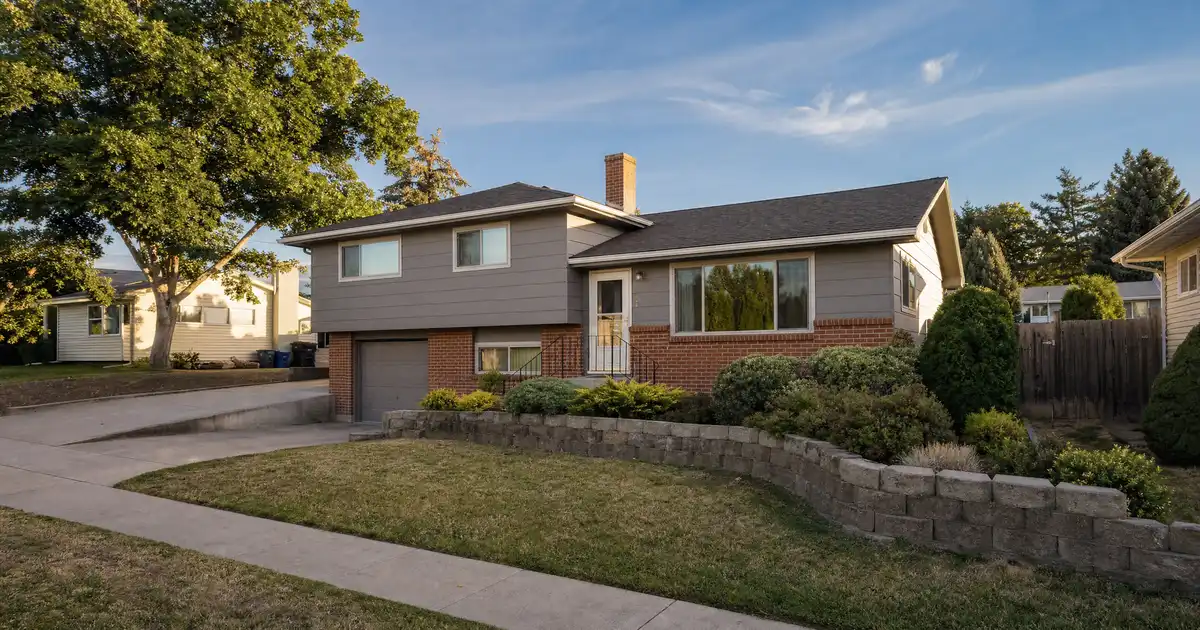
East Wenatchee’s median owner-occupied value of $414,000 (ACS 2019–2023) fits squarely in the program’s top loan-to-value tier: at the median, ten percent down runs roughly $41,400, leaving the financed amount well inside the program’s range.
What a bank statement loan is — and why the return works against you.
The better East Wenatchee’s accountants do their job, the thinner a profitable business can look on its return. Conventional underwriting qualifies on net income after every deduction has landed; this program reads the deposits instead.
Deposits replace the tax return
Forget the adjusted gross income on the return: twelve months of deposits into your personal or business accounts set the qualifying income, and what the business actually collected is the number that counts.
An expense factor stands in for write-offs
Business-account deposits take a haircut for what it costs to run your kind of business: 50% for most, 30% for small service firms, and 20% for sole owner-operators. Personal-account deposits skip the factor and are simply divided by twelve.
Your CPA can beat the standard factor
If your books support it, an independent CPA, enrolled agent, tax attorney, or licensed preparer can document an expense ratio specific to your business, with a 10% floor. That ratio is often the difference between qualifying tiers.
Underwriting still applies
Every other pillar of underwriting stands: credit, reserves, appraisal, title, insurance, business existence, and account activity all get reviewed. Only the income documents change — verification itself never goes away.
For personal accounts, total eligible deposits are divided by twelve. Business accounts first apply your industry’s expense factor, or a ratio your own CPA prepares. The calculator below runs the bank statement, 1099, and asset-depletion paths; the final figure comes from the lender’s read of the actual statements.
East Wenatchee’s independent workforce, measured.
Roughly 454 of East Wenatchee’s 6,799 employed civilians work for themselves — 6.7% of the workforce, split between 65 incorporated owners and 389 sole proprietors (ACS 2019–2023).
Citywide figures provide general market context, not an underwriting decision. Only your own statements produce qualifying income, and credit, reserves, the property, and the chosen documentation path determine the loan amount.
Data source: U.S. Census Bureau ACS 5-Year (2023), class-of-worker series, East Wenatchee city.
How East Wenatchee borrowers document income — no tax return required.
The bank statement loans that self-employed borrowers close in East Wenatchee, Washington start with a path decision: how your business banks, how you are paid, and what your accountant can prepare. Five documentation types on the snapshot, six ways the math runs below — bank statements three ways (personal, business, and a CPA-provided ratio), 1099s, a CPA profit and loss, and asset depletion. Most files fit one of these; some combine them.
East Wenatchee runs proprietor-first: 389 unincorporated owners against 65 incorporated (ACS 2019–2023). The personal-statement path leads for exactly that reason — deposits over twelve, no expense factor, the simplest arithmetic in the program.
Personal bank statements
Total the eligible deposits across twelve months of personal statements and divide by twelve — that is the whole calculation, no expense factor involved. At least 20% ownership of the depositing business is required, and owners who route their pay into a personal account tend to land here.
Business bank statements
Deposits reduced by an expense factor for your industry: 50% standard, 30% for small service firms with no more than five employees, or 20% for sole owner-operators with no employees, cost of goods, or leased office space. Requires at least 25% ownership.
CPA-provided expense ratio
This path swaps the fixed tiers for a ratio your own preparer documents: an independent CPA, enrolled agent, tax attorney, or CTEC preparer, floored at 10%. Some industries never go below the standard factor, among them real-estate investing, construction, food service, and retail.
1099 only
One or two years of 1099s, counted at 90% of gross, carry this path, provided the earnings are 100% commission, from one company or several. Meaningful office, equipment, or vehicle costs usually point a borrower back to bank statements.
CPA profit & loss
A 12- or 24-month profit and loss prepared by your accountant qualifies on a primary residence with a 680 minimum score — no bank statements required. The standard path runs owner-occupied; other occupancies require an exception.
Asset depletion
Here the assets themselves qualify: spread across 60 months, with cash counted in full, securities at 80%, and retirement accounts at 70%. The path requires no employment and carries no separate reserve requirement.
One program, six doors in. Lendmire’s review runs your East Wenatchee file against the paths across wholesale lenders to find the one that produces the strongest qualifying income.
How it plays out in this market.
Three composite scenarios drawn from the business types that anchor East Wenatchee’s self-employed economy — each mapped to the documentation path that fits it.
Independent practice, prior employment counts
The classic young-practice file: an East Wenatchee practitioner leaves the system job, opens a practice, and pairs its deposits with prior same-line employment to meet the history standard.
Path: business statements + same-line history
Harvest-cycle deposits, annual averaging
One harvest, one deposit season — the East Wenatchee ag operation’s year arrives in waves, and twelve-month averaging turns that cycle into a readable pattern rather than a red flag.
Path fit: business statements at the standard factor
Strong deposits, materials-heavy costs
A remodeling contractor in East Wenatchee pushes trucks, tools, and materials through the business, so the return nets down to a fraction of revenue. Twelve months of business statements qualify on the deposits instead, with the expense factor standing in for the write-offs.
The path: 12 months of business statements, standard factor
Four transactions this program was built to solve.
Bank statement loans in East Wenatchee are not a niche workaround — they are the standard path for self-employed borrowers across every common transaction type.
Buy a primary residence
An owner-occupied purchase reaches 90% loan-to-value: 10% down at minimum, no tax returns in the file. By a wide margin, this is the program’s most common use.
Rate-and-term refinance
Swap out existing financing without conventional income documentation. This fits borrowers who bought before going self-employed, or whose last two returns no longer reflect the business.
Cash-out refinance
Turn home equity into business or personal capital: at or below 70% loan-to-value the cash in hand is unlimited, and above that threshold it caps at $1,000,000.
Second homes and investment property
Second homes and investment properties run the same documentation paths at their own leverage tiers, so self-employed borrowers are not confined to a primary residence.
Run the deposits before you run the application.
Select a documentation path, then enter the figure it works from. The calculator runs the current expense factors, the 1099 factor, and the asset-depletion divisor just as the program does, drawing them from Lendmire’s centralized guideline source. Until a lender reviews the actual statements, every figure is an estimate.
East Wenatchee qualifying income calculator
Starting assumptions reflect an example East Wenatchee small business. Replace them with your own figures.
Unless your business qualifies for a lower tier or your CPA provides an industry-specific ratio, business bank statements take a 50% expense factor.
By way of illustration, the calculator opens on an example East Wenatchee small business: $576,000 in deposits across twelve months — $48,000 a month on average — held at 100% ownership and run down the standard business-statement path. Factors, reserve requirements, and leverage ceilings track current program guidance, updating on the live page from Lendmire’s centralized guideline source.
Illustrative estimate only — not a credit decision, pre-approval, or commitment to lend. Housing-budget figures show the total monthly obligation the stated debt-to-income ratio would allow before other debts, taxes, and insurance are considered. Actual qualifying income, program eligibility, and loan amount depend on the statements themselves and full underwriting by the selected wholesale lender.
One borrower, two very different income calculations.
It was never about how much you earn; it is about which number the lender is allowed to use.
Net profit or gross deposits.
The qualifying figure is net income after business deductions, usually averaged over two years of returns. Depreciation, vehicle expenses, home-office deductions, and equipment write-offs each pull that figure down.
What counts is deposits, net of a standardized expense factor. When a profitable East Wenatchee business runs aggressive but legitimate write-offs, this path frequently supports materially higher qualifying income than the return does.
Alternative-documentation pricing sits above comparable conventional financing, reflecting the different documentation standard. That premium is only worth paying when your returns understate the business — which is exactly the situation this program was built for.
Run the test honestly: last two returns accurate and comfortably supporting the payment means conventional financing usually wins on economics. Deductions compressing your reportable income means the gap this program exists for — and Lendmire arranges both.
What to prepare for a bank statement file.
Documentation specifics vary by lender and path; these six categories give a self-employed borrower in East Wenatchee a practical starting point.
A general preparation guide, not a universal checklist: based on the business, borrower, property, and underwriting findings, the selected lender may request additional information.
Details that can change your qualifying income.
What the file supports comes down to account structure, deposit activity, business history, and the property itself. Settle each before counting on a target loan amount.
Use these checks to keep the file clean and financeable.
The exact treatment varies by wholesale lender, so the goal here is not to promise a universal outcome. It is to spotlight the main issues self-employed borrowers in East Wenatchee should resolve first.
- Separate the accounts. Mixing business and personal funds in one account complicates the calculation and can cost qualifying income.
- Watch the account activity. The current program disqualifies a file carrying more than ten insufficient-funds items over twelve months.
- Document the business. Two years of business existence is the standard; a shorter history needs prior same-line employment.
Which Accounts, Ownership, and Partners
At least 25% ownership is required to use business-account deposits, and at least 20% for personal-account deposits. Where ownership is shared, qualifying income generally prorates to your percentage, with a partner letter permitting your use of the business funds. Statements must arrive consecutive, complete, and dated within 45 days of application.
Large Deposits and Transfers
A deposit larger than half your monthly average will draw a letter of explanation plus evidence that it is business revenue. Transfers between your own accounts, loan proceeds, and one-time windfalls are generally excluded from the income calculation rather than counted twice.
Business History and Ownership Changes
The standard is two years of business existence. Under two years can still work given two years of prior employment in the same line of work, while under one year does not qualify. If ownership changed within the past twelve months, the deposits generally need seasoning before they can be relied upon.
Listing History and Time on Title
An active listing at application makes the property ineligible, and a listing within six months of the note date generally does as well. Cash-out refinances want at least one borrower on title for six months, a requirement waived for property received by inheritance, gift, court award, or divorce.
Prepayment Terms Under the Program
In Washington, owner-occupied and second-home consumer loans close free of prepayment penalties under this program, while investment-property files may include a one-to-five-year prepayment structure with a buy-out available. The structure is a program term set by the wholesale lender and belongs on the list of levers the review compares.
From statements to closing table.
This runs shorter than most self-employed borrowers expect: the hardest part of a mortgage file, assembling returns, schedules, and K-1s, simply is not in it.
Run the scenario
Share the property, your business type, twelve-month deposit total, credit range, and timeline. Prequalification is a conversation, not a document request.
Pick the path
Lendmire compares the documentation paths across multiple wholesale lenders to find which one produces the strongest qualifying income for your file.
Submit the statements
The selected lender receives twelve consecutive months of statements, business evidence, and standard property documentation for underwriting.
Close
While underwriting runs, appraisal, title, and coverage requirements complete in parallel, and the file moves to a standard Washington closing.
Choosing among bank statement lenders in East Wenatchee.
Bank statement lenders are not interchangeable. Expense factors, ownership thresholds, deposit treatment, and reserve requirements all differ between wholesale programs, and which lender a file from East Wenatchee lands with materially changes the qualifying income it produces.
The lender you land with is the product
Identical borrower, materially different qualifying amounts; the variables are the documentation path and the lender the file goes to. The work is choosing correctly.
Self-employed specialization
What gets reviewed: the way your business banks, the ratio your accountant can support, and the expense factor your industry actually qualifies for.
An honest comparison
Lendmire also arranges conventional financing, so the answer you get about whether a bank statement loan is the right call is a straight one, not a pitch for the only product available.
Trusted by buyers & business owners alike.


East Wenatchee FAQs: bank statement lending
Here are the answers to the qualification, documentation, and eligibility questions East Wenatchee, Washington borrowers ask most about bank statement loans. Final program terms remain scenario-specific.
What is a bank statement loan in East Wenatchee?
A bank statement loan in East Wenatchee is a mortgage documented with twelve months of bank deposits instead of tax returns, wage forms, or pay stubs. Select lenders in Lendmire’s wholesale network run these programs across primary residences, second homes, and investment properties; owner-occupied purchases reach the top loan-to-value tier, and other occupancies carry their own.
Will overdrafts or insufficient-funds items disqualify me?
Not on their own, and they’re scored differently: an overdraft covered by linked funds, or one that ends the day non-negative, generally never counts as insufficient funds. Genuine NSF items cap out across the twelve months, and a file near the cap usually gains more from a few clean months than anything else.
How is my qualifying income calculated from bank statements?
Two formulas cover it. Personal accounts: eligible deposits over twelve months, divided by twelve, no factor. Business accounts: the expense factor for your business type — or your own CPA’s documented ratio — applied first, then divided by twelve. Run your figures through the calculator on this page.
Can I get a mortgage without tax returns if I’m self-employed in East Wenatchee?
Yes. That gap is precisely what this program exists for: instead of the net income deductions leave behind, qualifying income comes from your deposits — personal statements divided by twelve, or business statements net of your industry’s expense factor.
Do I need two years of business history?
Two years of business existence is the benchmark. A younger business can work if two years of prior employment in the same line stand behind it, while under one year does not qualify — and a recent ownership change generally seasons for twelve months before the deposits can be relied upon.
How much do I need to put down in East Wenatchee?
On a primary-residence purchase the program’s top loan-to-value tier allows as little as ten percent down, which covers East Wenatchee’s typical price range comfortably. Higher leverage rides on stronger credit, and second homes and investment properties top out at their own maximums.
Do payment-app deposits count — cards, transfers, platform payouts?
They count. Card processors, transfer apps, platform payouts — deposits into your accounts are ordinary business revenue for this program. What gets examined is the pattern: your own inter-account transfers are excluded, not double-counted, and unusually large one-time items need explanation letters.
I’m an independent practitioner who left a hospital system last year — do I qualify?
Often — the two-year business standard can count prior employment in the same line of work, which is exactly the path most practitioners take when going independent. The review pairs the practice’s deposits with the employment history that led to them.
My contracting business has big material costs — does that hurt my qualifying income?
Materials-heavy businesses use the expense-factor structure as designed: the standard factor assumes meaningful costs, and certain construction files take no less than the standard tier. Because draws and material reimbursements can create large deposits, expect letters of explanation tying them to jobs.
I’m a sole proprietor without a separate business account — can I still qualify?
Yes, more often than not. This is the file the personal-statement path exists for — twelve months of personal deposits, divided by twelve, business documented by registration or a preparer’s letter. A dedicated account opened today also makes the next application stronger.
The deposits tell the real story. Let’s put them to work.
All it takes to start: your business type, your twelve-month deposit total, and the East Wenatchee property you have in mind. A soft credit inquiry that doesn’t affect your score handles prequalification — and if conventional financing serves you better, we’ll tell you that too.
This page is East Wenatchee-specific — for rules, guidelines, and scenarios statewide, visit Bank Statement Loans in Washington within Lendmire’s bank statement loan program.
Nearby markets in Washington: Wenatchee · Leavenworth · Chelan · Yakima · Sammamish · Redmond · Bellevue · Renton
Other loan programs in East Wenatchee: DSCR Loans in East Wenatchee, WA · Super Jumbo DSCR Loans in East Wenatchee, WA · Short-Term Rental Loans in East Wenatchee, WA · Investment Property Cash-Out Refinance in East Wenatchee, WA · Hard Money Loans in East Wenatchee, WA · Super Jumbo Bank Statement Loans in East Wenatchee, WA · Bank Statement HELOC in East Wenatchee, WA · Investment Property HELOC in East Wenatchee, WA