
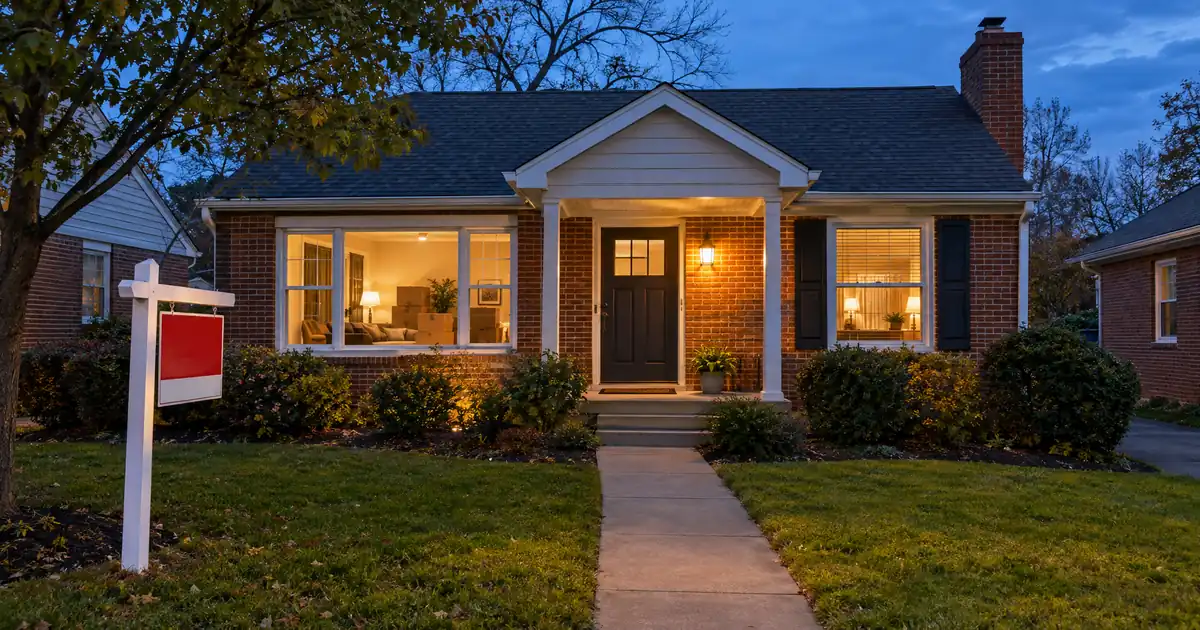
The Quick Read: Yes, usually, when two conditions are met: you and the partner have co-owned the home long enough, and everyone has signed a written agreement on the payout. A refinance can pay the partner for their equity and remove them from the loan, while a deed change removes them from title. The person keeping the home must qualify for the new loan alone, and the agencies treat these buyouts as their own category, so the “cash-out” label does not tell the whole story.
Who This Covers
This article is about co-owners of a home, such as spouses, unmarried partners, siblings, relatives, or friends who hold title together. It is not about business “partner” titles or sponsorships. It also assumes the home is the keeper’s primary residence.
How Does a Buyout Refinance Work?
One new loan does two jobs. It pays off the existing mortgage and funds the payment to the departing owner. A deed transfer, usually a quitclaim or similar instrument, then moves the partner’s ownership interest to the keeper. The refinance handles the debt, and the deed handles ownership. You need both.
The sequence runs like this:
1. Agree on the numbers. Value, minus the existing payoff, split by the agreed shares. All parties put the terms in writing.
2. Prove the ownership history. The lender wants title and deed evidence that you co-owned the home for the required period.
3. Qualify the keeper alone. Income, credit, debt-to-income ratio, and reserves are all judged on the person keeping the home.
4. Appraisal and loan sizing. The new loan covers the existing liens, closing costs, and the buyout amount.
5. Closing. Funds go through title or escrow to the departing partner, and the deed and new mortgage are signed together.
A handshake deal does not work for a buyout. Lenders need a written agreement with every signature and a clear statement of who receives what.
Is It Treated as a Cash-Out or a Rate-and-Term Refinance?
It depends on the agency, and the difference affects leverage and cost. Under Fannie Mae’s rules, a buyout where one owner purchases another’s interest can count as a limited cash-out refinance if the property was jointly owned for at least 12 months before the new loan disbursed. All parties must sign a written agreement describing the transfer and how the proceeds will be paid out. The borrower who ends up as sole owner may not receive any of the refinance proceeds.
Limited cash-out is the cheaper category. In the programs we arrange, a rate-and-term (limited cash-out) refinance reaches 95% LTV on a one-unit principal residence, with mortgage insurance above 80%. A full conventional cash-out refinance on that same home tops out at 80% LTV. That 15-point gap decides how much equity you can pay a partner, so the classification matters. Subject to lender guidelines and full file review.
Freddie Mac handles it differently. Its special purpose cash-out refinance is a cash-out loan in which the owner uses the proceeds to buy out a co-owner’s equity. The loan amount is limited to what is used for the buyout, and the two owners must have co-owned the property for at least 12 months before the initial application. Inherited interests are exempt from that period.
Same transaction, two labels. Lenders also layer their own requirements on top, so the practical answer is to ask which category your file will be placed in before you plan the numbers. If you are comparing programs, Lendmire’s cash-out refinance programs page lays out how the equity limits differ by program.
Title Versus Mortgage: Why Both Matter
Being on title and being on the mortgage are different things. Title is ownership. The mortgage is the debt. A quitclaim deed changes title only. It does not release anyone from the loan.
| Partner’s status | What the refinance does | What the deed does | Risk if not handled |
|---|---|---|---|
| On title and on the loan | Pays off old loan, removes partner from debt | Moves their ownership to the keeper | Low once both close together |
| On title only | New loan funds the payout | Transfers their interest | Needs their signature on the deed |
| On the loan only | Removes them from the debt | Usually nothing to transfer | Lender rules for non-title borrowers apply |
| Deed changed, loan untouched | Nothing | Title moves | Departing partner stays liable for the old debt |
That last row is the common trap. A divorce decree or a quitclaim binds the former partners to each other. It does not bind the lender. The departing owner is released from the debt only when the old loan is paid off, so missed payments before then can hurt both people’s credit. The Consumer Financial Protection Bureau notes in a report on homeowners after divorce or death that homeowners generally do not need to refinance to remove a borrower’s name, if they are willing to assume liability and can pass the investor’s underwriting for an assumption. Some loans can be assumed instead of refinanced, though servicer and investor rules vary. If your existing loan is assumable and you are keeping it, an assumption can avoid a new loan altogether. The tradeoff: you keep the old terms, but you still pay the partner from other funds.
Can You Qualify Alone?
This is where most buyouts succeed or fail. Once the partner leaves, the keeper’s own income, credit, and debt load carry the loan. Fannie Mae’s guide says the same thing: the remaining borrower must qualify independently.
In the programs we place, the wholesale conventional lanes start at a 620 decision score, and the automated findings govern most files, with a total ratio ceiling of 50%. Manually underwritten loans run tighter, at 36% or 45% depending on reserves and score. Credit events carry waiting periods set by the agencies, such as four years from a chapter 7 discharge and seven from a foreclosure, with shorter periods possible given documented extenuating circumstances. Subject to lender guidelines.
Some borrowers count support or separate-maintenance income. Whether it counts, and what paperwork proves it, depends on each program’s documentation rules. Ask early.
If you cannot qualify alone, the realistic alternatives are:
- Sell the home and split the proceeds.
- Delay the buyout until income or credit improves.
- Offset the partner’s share with other assets instead of cash from the loan.
- Look at an assumption if the existing loan allows it.
- Bring in a new co-borrower, which changes the structure and means you are no longer buying the partner out cleanly.
How Long Must You Own Together?
Plan on 12 months of joint ownership. Fannie Mae counts the 12 months before the new loan disburses, and Freddie Mac counts them before application. The lender documents the history with title and deed records. Inheritance is the named exception under both agencies, which helps siblings who inherit a home together. Those cases need court or estate documents, so start the paperwork early.
A separate rule applies to standard conventional cash-out refinances. The first mortgage being paid off must be at least 12 months old, and a borrower must be on title for 6 months, with exceptions for delayed financing, inheritance, and legal awards. Fannie Mae’s cash-out refinance section says the first-mortgage seasoning does not apply when you are buying out a co-owner under a legal agreement. That is a real advantage if the existing loan is newer than a year.
Edge Cases Worth Knowing
The keeper is not on title. Fannie Mae’s limited cash-out rule normally needs at least one borrower on title at application. It makes exceptions for inheritance, for property legally awarded in a divorce, separation, or domestic-partnership dissolution, and for a borrower who is on the loan but not on title.
The home sits in an LLC. Fannie Mae allows an LLC majority-owned or controlled by the borrower, but ownership must be moved into the individual borrower’s name before the loan.
Unmarried partners, siblings, or friends. The buyout language is written for owners generally, with divorce and domestic partnership as examples. Co-owners who meet the ownership and written-agreement rules can use it.
The partner will not sign. Lenders need every title-holder to sign the transfer. If the partner refuses, the paths are negotiation, mediation, or a court process such as partition, and a local real-estate attorney should guide that. A loan cannot force the sale of their interest.
A second home or rental. Occupancy decides leverage. Under the programs above, a cash-out on a second home is capped at 75% LTV, the same as two- to four-unit properties. Final terms depend on lender guidelines, property type, leverage, and the borrower’s complete credit picture.
FHA and VA Owners: A Different Road
If your existing loan is government-backed, the streamlines will not fund a buyout.
- FHA Streamline. It requires an existing FHA-insured mortgage that is current, and cash back above $500 is not allowed, per HUD’s Streamline page. It cannot pay a partner.
- VA IRRRL. It generally requires the same obligors on the new loan as the old one, and its proceeds cannot pay off liens other than the existing VA loan. It cannot remove a title-holding partner or pay one.
- VA cash-out. This is the route when a veteran buys out a co-owner. VA guidance says it applies to a residence the veteran owns and occupies as a home. A non-veteran spouse cannot use VA entitlement alone.
For FHA cash-out buyouts, income from a non-occupant co-borrower may not be used to qualify.
Sizing the Buyout
Work the math in this order, using your own numbers:
1. Start with the appraised value.
2. Apply the program’s LTV cap to get the maximum new loan.
3. Subtract the existing payoff and closing costs.
4. What remains is the most you can pay the partner.
Say a home is worth a round number and you want to stay at the 80% cap for a full cash-out. Every point of closing cost reduces the partner’s payout, dollar for dollar. If the agreed buyout is larger than what remains, you either need other funds, a different classification with higher leverage, or a renegotiated figure. This is why the limited cash-out route, with its higher leverage ceiling, matters so much when it is available.
Above 80% LTV, mortgage insurance applies. Under the Homeowners Protection Act, you can request cancellation at 80% of the original value with good payment history, no subordinate liens, and no decline in value, and the servicer must terminate it automatically at 78%. These specifics are subject to lender guidelines and a full review of property, leverage, and credit.
What Changes in Your Budget
The new loan is larger than the old one because it includes the buyout. You carry the full payment alone, and the old interest rate is replaced by whatever the new loan carries. Expect a full refinance with an appraisal, title work, and closing costs. Cash-out pricing generally runs higher than limited cash-out, which is one more reason classification is worth confirming.
Tax treatment can depend on your situation; borrowers should speak with a qualified tax professional before relying on any deduction or credit. Transfers between spouses or former spouses and equity payouts are worth raising with that professional, and a local attorney can cover transfer taxes and recording rules in your state.
Common Misconceptions
- “A quitclaim takes my ex off the mortgage.” It changes title only. The loan stays until it is refinanced, assumed with a release, or paid off.
- “The divorce decree removes them from the loan.” It binds the former spouses, not the lender.
- “I can pocket extra cash in the same transaction.” A qualifying buyout generally allows no cash to the keeper.
- “FHA Streamline or VA IRRRL can fund a payout.” The cash cap and the payoff limits rule both out.
- “We can both stay on the loan and still get a buyout.” In the standard buyout, the departing co-owner is not on the new loan.
- “Refinancing is the only way to remove someone.” An assumption is another route when the investor and servicer allow it.
Key Terms Defined
On title: Your name is on the deed, which means you hold an ownership interest in the home.
On the mortgage: Your name is on the loan, which means you owe the debt, whether or not you own the home.
Quitclaim deed: A deed that transfers whatever ownership interest the signer has, without changing the loan.
Limited cash-out refinance: A refinance that pays off the existing loan and costs, with only incidental cash back, and usually allows higher leverage.
Seasoning: The minimum time a loan or ownership must have existed before a new loan is reviewed.
Assumption: A transfer of an existing mortgage to a new borrower on the same terms, if the investor and servicer permit it.
Frequently Asked Questions
Can I buy out an unmarried partner or sibling, or only a spouse?
Yes, you can buy out any co-owner. The agency language uses divorce and domestic-partnership dissolution as examples, but owners generally can use it. You still need the signed written agreement and the required period of joint ownership, and the lender will document both.
Will I get cash back on top of paying my partner?
Generally not in a qualifying buyout. Fannie Mae’s rule says the borrower who ends up as sole owner may not receive any of the proceeds. Freddie Mac limits the loan amount to the amounts used to buy out the co-owner’s equity. Extra cash would push the loan into a standard cash-out category with lower leverage.
What if my partner inherited a share with me?
Both Fannie Mae and Freddie Mac exempt inherited interests from the 12-month joint-ownership period. You will need court or estate documents to prove the inheritance, so gather them before applying.
Does my partner stay liable if I only sign a quitclaim?
Yes. A quitclaim moves ownership but leaves the old mortgage in place. Your partner is released from the debt only when the loan is paid off through a refinance, or when an assumption with a formal release is approved.
Can I use an FHA Streamline or VA IRRRL to pay my partner?
No. The FHA Streamline limits cash back to $500, and the VA IRRRL does not allow proceeds to pay liens or other parties beyond the existing VA loan. A veteran buying out a co-owner would look at a VA cash-out refinance, and other owners at a conventional route.
Next Step
Before you commit to a number with your partner, confirm which category your buyout falls into and how much equity that category reaches. A local attorney can handle the deed and any state transfer rules. If you are weighing a cash-out refinance against keeping the loan you have, Lendmire can help you compare the programs and the equity each one reaches, subject to lender guidelines and full file review, and nothing here is a commitment to lend.
For your own numbers, request a scenario review with Lendmire.
For current guidelines and terms, see Lendmire’s refinance programs page.
About Lendmire
Lendmire, NMLS# 2371349, is a mortgage brokerage with consumer lending licenses in 16 states. FHA, VA, conventional and jumbo purchase and refinance loans are arranged through wholesale lending partners, and each application is reviewed individually by the lender. Scotsman Guide named Lendmire a Top Mortgage Workplace in both 2025 and 2026.
Get Started
Ready to find the right loan for you?
In about 30 seconds you can review financing options available for your home or investment property. No commitment required.
Informational only. Not a Loan Estimate, approval, or commitment to lend. Program availability and eligibility are subject to lender guidelines, credit approval, property review, and underwriting.
References
1. Fannie Mae Selling Guide B2-1.3-02, Limited Cash-Out Refinance Transactions
2. Freddie Mac Guide Section 4301.6, Special Purpose Cash-Out Refinance
3. Consumer Financial Protection Bureau, Homeowners Face Problems After Divorce or Death
4. Fannie Mae Selling Guide B2-1.3-03, Cash-Out Refinance Transactions
5. HUD FHA Streamline Refinance
This article is part of Lendmire’s Refinance series — every loan program’s qualification details, guidelines, and scenarios live on the loan options page.
Related reading: How Much Return a Cash-Out Refi on a 2–4 Unit Needs to Pencil · How Much a Brokerage Account Backs on a Purchase vs Cash-Out Before a Call · How a PAL Sizes on a Purchase vs Cash-Out Before a Maintenance Call
Brandon Miller
Founder & CEO, Mortgage Loan Originator, Lendmire LLC
- Mortgage Loan Originator · NMLS# 1129696 · Verify on NMLS Consumer Access
- North Carolina Real Estate Broker · License# 343312 · Verify on NCREC
- North Carolina Insurance Producer · License# 19053198 · Property, Casualty, Life, Health · Verify on NAIC SBS
- Lendmire LLC · Firm NMLS# 2371349 · Verify firm licensure
Legal disclosures. Lendmire (NMLS# 2371349) is a state-licensed mortgage brokerage that arranges financing through wholesale lender relationships. Lendmire is not a direct lender, depository institution, or registered financial advisor. The discussion above is general informational content about real estate financing — it is not financial, legal, or tax advice, and readers should consult licensed professionals for guidance on their individual circumstances. Loan inquiries are subject to lender underwriting; this article does not represent a commitment to lend. Loan terms, rates, and qualification standards vary by borrower, property, and state, and are subject to change at any time. Equal Housing Opportunity. NMLS Consumer Access: nmlsconsumeraccess.org.