
The Quick Read: A cash-out refinance on a duplex you live in replaces your current mortgage with a larger one and pays you the difference in cash. Conventional loans cap the leverage at 75% of the home’s value on a two-unit home, compared with 80% on a single-family home. The loan also has to clear seasoning rules, a debt-to-income test, and an appraisal. Only part of the rent from the other unit counts toward qualifying. Terms depend on the lender’s guidelines, the property type, the leverage, and a full review of the credit profile.
What a Cash-Out Refinance on a Duplex Actually Is
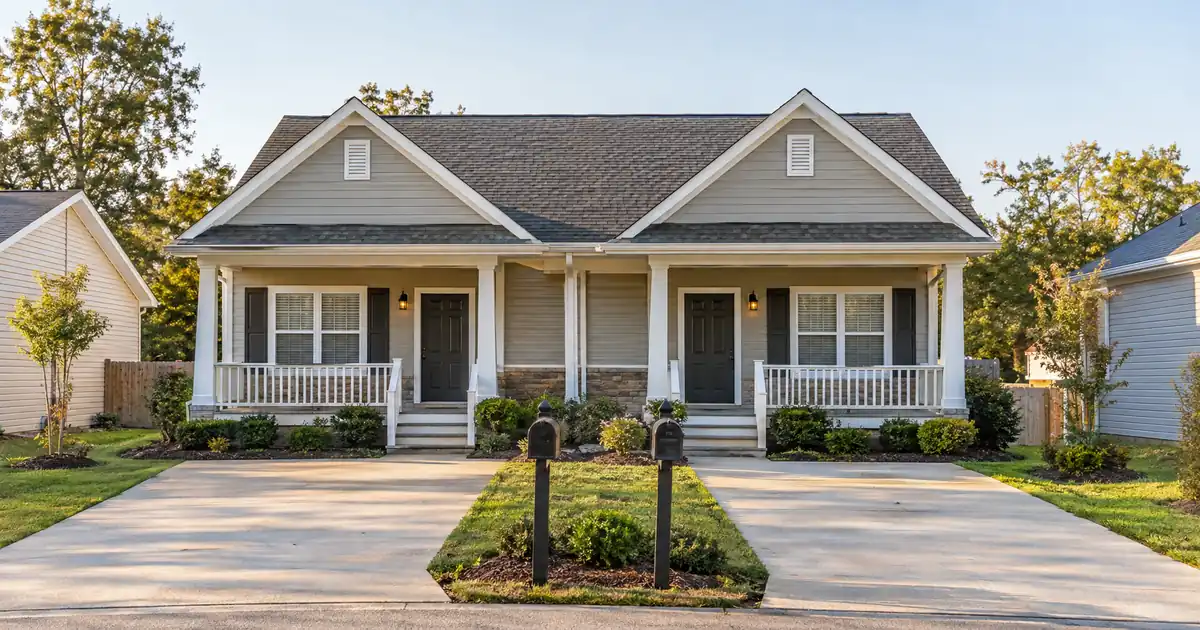
A cash-out refinance is a new first mortgage that pays off your old one and hands you the leftover equity. Equity is the part of the home’s value you own outright. A duplex is a two-unit home, and for lending purposes it sits in the one-to-four-unit residential category, not in commercial lending.
A refinance works differently. It swaps your loan for a new one without pulling meaningful cash out. Across the wholesale programs Lendmire places files with, a rate-and-term refinance on a one-unit principal residence reaches 95% LTV. LTV, or loan-to-value, is the loan balance divided by the home’s appraised value. A cash-out loan carries a lower cap because the lender is taking on more risk. The exact numbers vary by lender and program and follow a full review of property, leverage, and credit.
This article covers a duplex where you live in one unit. If you rent out both, the lender treats the loan as a different product with tighter leverage, and the owner-occupant rules below do not apply. In short, occupancy decides the leverage.
Lendmire explains its cash-out refinance programs in more detail, but the mechanics below apply across most conventional files.
Which Situation Are You In?
| Your situation | Typical lane | Main constraint |
|---|---|---|
| Live in one unit | Conventional cash-out | 75% LTV cap |
| Want a lower balance or term only | Rate-and-term | Higher LTV, little cash back |
| Own an FHA loan | FHA streamline or FHA cash-out | Streamline gives no cash |
| Eligible veteran | VA cash-out or IRRRL | Must live in the home |
| Just bought with cash | Delayed financing | Source-of-funds proof |
How Much Can You Take Out?
On a two-unit principal residence, conventional cash-out tops out at 75% LTV. The Fannie Mae Eligibility Matrix lists 80% for one unit and 75% for two to four units. That gap is the first thing most duplex owners miss. A duplex does not get single-family leverage. Final terms depend on the lender’s guidelines, the property type, and the borrower’s complete credit picture.
Here is how the cap works in plain terms. The new loan cannot exceed 75% of the appraised value. Your payoff, closing costs, and any other liens being paid come out of that room first. Whatever remains is your cash.
Picture a duplex with a large existing balance relative to its value. If the payoff already eats most of the 75%, there is little cash left. A duplex with a small balance leaves much more. The appraisal drives everything, so a soft value shrinks the cash.
One sentence on the exception: a wholesale lane we place reaches 89.99% LTV with no mortgage insurance at a 680 score and a 50% ratio, on a thirty-year fixed primary residence with a conforming balance. It carries its own six-month seasoning rule, and eligibility on a two-unit home is subject to lender guidelines.
How Is the Loan Underwritten, Step by Step?
Underwriting is the lender’s review of your file. Here is the sequence on a duplex.
1. Pick the product. Conventional, FHA, or VA, depending on who guarantees the loan and whether you qualify.
2. Check seasoning and title. The Fannie Mae Selling Guide requires the first mortgage being paid off to be at least 12 months old, counted note date to note date. At least one borrower must have been on title for six months.
3. Confirm occupancy. You must live in one of the units. Occupancy is what keeps this a home loan.
4. Order the appraisal. A two-unit property is typically valued on the small residential income property form, which looks at the rent as well as comparable sales.
5. Run the income math. The lender adds your income, counts part of the rent, and adds the new payment to your debts.
6. Review reserves and credit. Reserves are savings you hold after closing.
7. Close and disburse. The new loan pays off the old one and any other liens. You receive the remainder.
Pricing and available terms vary by lender, borrower profile, property type, and full underwriting review. The automated finding governs most files, with a total ratio ceiling of 50%. Manually underwritten loans use 36% or 45%, plus the reserve and score factors in the Eligibility Matrix. Every figure is subject to lender guidelines and full file review.
How Does the Rent From the Other Unit Count?
Only part of it counts, and only the unit you don’t live in. Under the Fannie Mae rental income policy for a two-to-four-unit home where you occupy one unit, the lender uses a discounted share of the rent. The usual figure is 75% of the lease amount or the appraiser’s market rent. That discount covers vacancy and upkeep.
Two details trip people up:
- Your own unit’s rent doesn’t count. You can’t claim income from the space you live in.
- The new payment still goes into your debts. The rent helps your income side. It doesn’t erase the payment.
So the rent helps, but it won’t carry the loan alone. A borrower with a thin income and a full duplex of tenants can still land above the ratio ceiling.
When the loan refinances a property with rental history, the lender usually wants the appraisal’s rent schedule plus either your most recent signed tax return showing the rental income, or current leases if an exception applies.
Here is a quick picture of the difference a vacancy makes. With both leases in place, the counted rent from the second unit is stable. With that unit empty at appraisal, the lender may use the appraiser’s market rent figure instead, which can differ from what you collected. A vacant unit doesn’t automatically kill the loan. It does change the income picture, so raise it early.
Where the General Rule Breaks
Several edge cases change the answer.
Limited cash-out versus cash-out. If you take only incidental cash back and are simply paying off the first mortgage and closing costs, the loan can qualify as limited cash-out. Leverage for that on a two-to-four-unit home is much higher than the 75% cash-out cap. Paying off a non-purchase second lien, or taking more than a small amount of cash, flips it to cash-out. The line between the two is thin, so decide which you want before you apply. Each figure is subject to lender guidelines and a complete review of property type, leverage, and credit.
The 97% product is one-unit only. The first-time-buyer high-LTV program requires a one-unit principal residence. A duplex can’t use it.
Delayed financing. Buy a duplex with cash and the six-month title rule would normally keep you waiting. The Selling Guide allows an exception when you can document where the purchase money came from.
Inheritance and divorce. These can waive the six-month title requirement. The same guide describes legal awards through divorce, separation, or dissolution of a domestic partnership.
Listed for sale. If the home was on the market, it must be off the market by the time the loan disburses.
Free and clear. A duplex with no mortgage can take a cash-out refinance. It still counts as cash-out.
Not living there. If you don’t occupy a unit, the loan is treated as an investment property with tighter leverage. It’s a different product, and this article doesn’t cover it.
FHA and VA. An FHA cash-out is capped at 80% of adjusted value, per HUD Mortgagee Letter 2019-11. FHA streamlines, in contrast, refinance only an existing FHA loan and give you no meaningful cash, per HUD’s refinance reference. VA is similar. The VA cash-out loan needs a Certificate of Eligibility and requires you to live in the home. The VA IRRRL is a VA-to-VA rate-reduction loan, not a cash product. Whether a particular duplex qualifies for VA depends on VA’s property rules, so confirm that before you plan around it.
Does the Cash Pay Off? A Decision Framework
Cash-out raises your balance, so it usually raises your payment. VA’s own news service says a cash-out refinance very rarely lowers the monthly payment. It also adds to the interest you pay over the life of the loan.
Weigh these four points:
- Cost of the money. Closing costs include origination, appraisal, title, and other fees. The Loan Estimate lists them. They can be paid in cash or built into the loan.
- What happens to your existing loan. If your current mortgage terms are favorable, replacing them to get cash may cost more than the cash is worth.
- What the cash does. Spending it on an improvement that adds value or on higher-cost debt can make sense. Spending it on things that lose value rarely does.
- Risk. A CFPB research report notes that rolling other debt into a mortgage raises foreclosure risk if you can’t keep up with payments, while defaulting on those other debts is unlikely to cost you the home.
Tax treatment can depend on your situation; borrowers should speak with a qualified tax professional before relying on any deduction or credit.
Cash-Out, HELOC, or Something Else?
| Option | What it does | Watch for |
|---|---|---|
| Cash-out refinance | Replaces your first mortgage | Higher balance on the whole loan |
| Home equity line | Adds a second lien | Variable draw terms |
| Home equity loan | Adds a fixed second lien | Second payment |
| Keep and sell later | Releases equity at sale | Timing and moving costs |
If your current first mortgage has terms you like, a second lien leaves it alone. A cash-out resets the entire loan. That tradeoff matters more than the cash amount.
When to Skip It
Skip it, or wait, when any of these fit:
- Your appraisal comes in soft and the cash shrinks to almost nothing.
- Your debt ratio is already near the ceiling.
- You bought or refinanced recently and the seasoning clocks haven’t run.
- You’d be converting short-term spending into a 30-year debt.
- A recent credit event is still inside the agencies’ waiting periods. Those run four years from a chapter 7 discharge, seven from a foreclosure, and four from a short sale or deed-in-lieu, shorter with documented extenuating circumstances.
Not ideal for a borrower who just wants a lower payment. A rate-and-term refinance fits that goal better.
Common Mistakes
1. Assuming a duplex gets the same cash-out limit as a single-family home.
2. Expecting the rent to cover the payment.
3. Counting the rent from the unit you live in.
4. Assuming a recent buyer can pull equity right away.
5. Treating any cash back as a cash-out. Small amounts stay in the limited category.
Key Terms Defined
Cash-out refinance: A new first mortgage larger than the old one, with the difference paid to you in cash.
LTV (loan-to-value): The loan amount divided by the home’s appraised value.
Seasoning: The waiting period a loan or ownership has to run before you can refinance.
DTI (debt-to-income): Your monthly debts, including the new payment, divided by your monthly income.
Limited cash-out refinance: A refinance that pays off your first mortgage and costs, with only incidental cash back.
Reserves: Savings left after closing that cover mortgage payments.
Frequently Asked Questions
Can I get a cash-out refinance if I live in one unit of a duplex?
Yes, on a conventional loan, as long as you occupy one unit. Leverage tops out at 75% LTV, versus 80% on a one-unit home. FHA and VA cash-out also exist for owner-occupants who qualify, subject to lender guidelines and full file review.
How soon after buying can I cash out?
Usually after six months on title, and the mortgage being paid off must be at least 12 months old. A cash purchase has a delayed-financing exception if you can document the source of funds. Inheritance and certain legal awards can also waive the title rule.
Does the second unit’s rent count toward qualifying?
Partly. The lender typically counts 75% of the lease or market rent, and only for the unit you don’t live in. The new payment still goes into your debt ratio.
Is an FHA or VA streamline a way to get cash?
No. An FHA streamline refinances only an existing FHA loan and allows no meaningful cash back. The VA IRRRL is a VA-to-VA rate-reduction loan. If you want cash, you’d look at the cash-out versions.
Will a cash-out refinance lower my payment?
Rarely. You’re borrowing more, so the balance rises. The payment can go down only if the other terms change enough to offset the larger loan.
If you are weighing a cash-out refinance against keeping the loan you have, Lendmire can help you compare the programs and the equity each one reaches. For a broader look at which lenders handle these loans, see Lendmire’s piece What Is The Best Bank To Cash Out Refinance My Home.
For your own numbers, request a scenario review with Lendmire.
About Lendmire
Lendmire (NMLS# 2371349) is a mortgage broker licensed for consumer lending in 16 states. Lendmire arranges FHA, VA, conventional and jumbo purchase and refinance loans through wholesale lenders; every file is underwritten by the lender under the applicable program guidelines. Scotsman Guide named Lendmire a Top Mortgage Workplace in both 2025 and 2026.
Get Started
Ready to find the right loan for you?
In about 30 seconds you can review financing options available for your home or investment property. No commitment required.
Informational only. Not a Loan Estimate, approval, or commitment to lend. Program availability and eligibility are subject to lender guidelines, credit approval, property review, and underwriting.
References
1. Fannie Mae Eligibility Matrix
2. Fannie Mae Selling Guide B2-1.3-03, Cash-Out Refinance Transactions
3. HUD Mortgagee Letter 2019-11
6. VA News: losing thousands on your home loan
7. CFPB: Cash-Out Refinances and Paydown Behavior
This article is part of Lendmire’s Refinance series — every loan program’s qualification details, guidelines, and scenarios live on the loan options page.
Related reading: How Much Equity a Cash-Out Refi Releases When Scaling to Ten Doors · Sell vs Cash-Out Refi When You Need Equity for the Next Door · Can an S-Corp Owner Cash Out Without Tax Returns?
Brandon Miller
Founder & CEO, Mortgage Loan Originator, Lendmire LLC
- Mortgage Loan Originator · NMLS# 1129696 · Verify on NMLS Consumer Access
- North Carolina Real Estate Broker · License# 343312 · Verify on NCREC
- North Carolina Insurance Producer · License# 19053198 · Property, Casualty, Life, Health · Verify on NAIC SBS
- Lendmire LLC · Firm NMLS# 2371349 · Verify firm licensure
Disclosure information. Lendmire is a state-licensed mortgage brokerage under NMLS# 2371349. Lendmire is not a depository institution, direct lender, or financial advisor — all loans referenced are placed through wholesale lender partners and are subject to each lender's underwriting standards. This article is provided for general informational purposes and is not a commitment to lend, nor does it constitute financial, legal, or tax advice. Loan programs, terms, rates, and qualification standards change without notice and depend on borrower profile, property type, and the state in which the subject property is located. Equal Housing Opportunity provider. NMLS Consumer Access: nmlsconsumeraccess.org.