
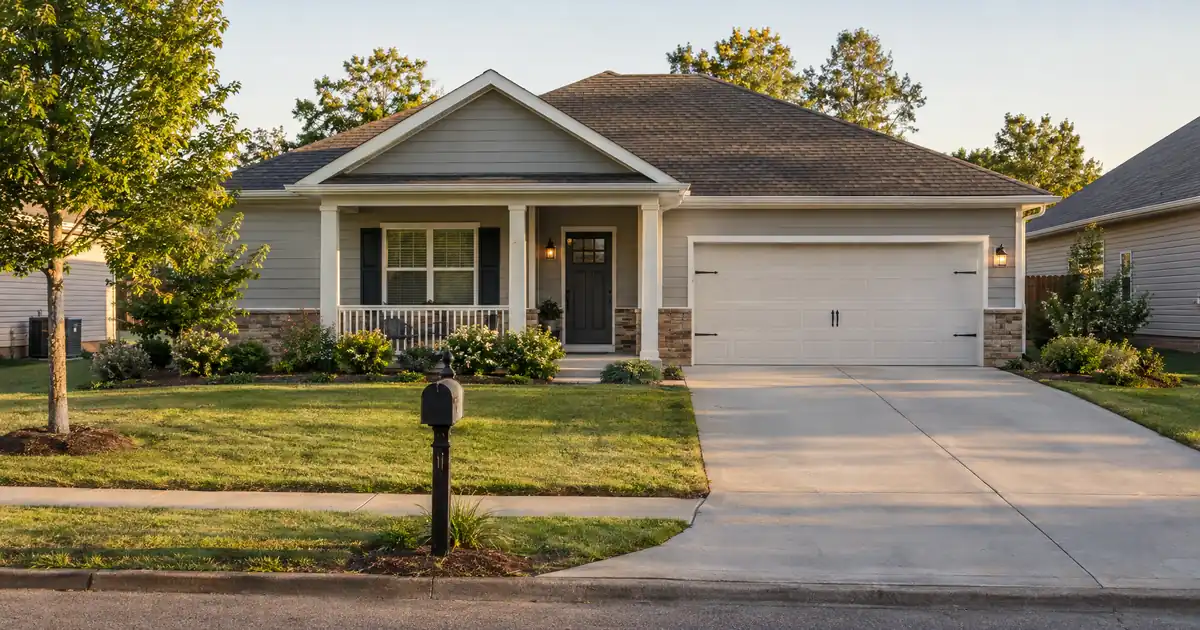
The Quick Read: The disability fee exemption belongs to the VA program only. A conventional cash-out loan has no equivalent, so no conventional loan can waive a fee because of a service-connected rating. For an exempt veteran, the VA cash-out can reach 100% of the home’s appraised value with no mortgage insurance and no funding fee. A conventional cash-out leaves more equity in the home and does not touch your VA entitlement. Subject to lender guidelines and full file review.
The Honest Answer First
Here is the short version, borrower to borrower. VA cash-out suits a veteran who needs the most cash the home can give, or who wants to move out of a loan that carries mortgage insurance. Conventional cash-out suits a borrower who wants a cushion of equity left, or who would rather keep VA entitlement untouched.
The phrase “disability fee exemption” confuses people, so here is what it means. The VA charges a one-time funding fee on most of its loans. Veterans who receive VA compensation for a service-connected disability are exempt, along with a few other groups. The VA’s funding fee page explains that the fee exists because the program has no down payment and no monthly mortgage insurance.
Conventional loans have no such fee to waive. They have mortgage insurance instead, and nothing about a disability rating changes it. So the real comparison is not “which loan has the exemption.” It is “what does an exempt veteran give up, and gain, by choosing VA over conventional.”
Side-by-Side
| Factor | VA Cash-Out | Conventional Cash-Out |
|---|---|---|
| Maximum leverage | Up to 100% of appraised value | Lower; leaves real equity |
| Upfront funding fee | Waived if exempt | None, but other costs apply |
| Mortgage insurance | None | Often required at higher leverage |
| Occupancy | Your primary home | Primary, second home, or other |
| Credit floor | 580 decision score on our wholesale programs | Varies by lender and program |
| Documentation | COE, full underwriting, appraisal | Full underwriting, appraisal |
| Key test | Residual income, net tangible benefit | Debt-to-income and equity |
| VA entitlement | Used | Untouched |
Every figure in the VA column comes from the wholesale programs I place files with, and all of it is subject to lender guidelines. Conventional terms differ by lender, so confirm them on your file.
On conventional leverage, the Fannie Mae Eligibility Matrix sets different maximum loan-to-value limits by occupancy and unit count. A principal-residence cash-out on a one-unit home sits well below 100%. Multi-unit homes and second homes sit lower still. That gap is the main reason the two loans feel so different.
When VA Cash-Out Is the Better Fit
VA cash-out wins when leverage and monthly cost matter most. A few situations stand out.
You need the maximum cash. The VA cash-out reaches 100% of the appraised value, including any financed funding fee. On a conventional loan, the lower leverage cap limits what you can pull out, whatever your credit looks like.
You are paying mortgage insurance today. Many homeowners with a conventional or FHA loan pay monthly mortgage insurance. VA loans carry none. VA’s own net tangible benefit test, which applies to all cash-out loans, counts removing monthly mortgage insurance as a valid benefit. The VA Cash-Out Refinance Quick Reference explains how the test works for refinances out of non-VA loans. A refinance that clears the insurance often clears the test.
You carry a loan type that conventional underwriting dislikes. The VA cash-out refinances any loan type into VA. Residual income is the controlling test, and the 41% debt-to-income figure is a guideline, not a cap. A borrower above that ratio needs residual income well above the table. Many borrowers with tight ratios but strong monthly cash flow do better under that test.
Credit is another draw. VA sets no minimum score, though the wholesale programs I work with start at a 580 decision score. That is a lower entry point than many conventional options. Individual lenders may set their own higher floors.
Now the exemption itself. For an exempt veteran, the funding fee drops to zero. A non-exempt first-time user pays 2.15% on a cash-out, and a repeat user pays 3.3%. Those are the program figures, and exempt borrowers owe none of it. The VA’s own page carries the current charts.
Proof matters. Exemption status usually shows on your Certificate of Eligibility (COE). If the COE says “Non-Exempt” but you receive compensation, or a claim is pending, your lender needs the paperwork sorted before closing. Don’t close on the assumption that a refund will follow. Get status verified first.
What stays. The exemption removes the funding fee only. Appraisal, title, and origination costs remain. Think of it as one big line item gone, not a free loan.
When Conventional Cash-Out Is the Better Fit
Conventional wins when you value equity, flexibility, or your VA benefit more than maximum cash.
You want to keep a cushion. A conventional cash-out on a one-unit primary home leaves meaningful equity in the house. That is protective if prices dip or you need to sell. A VA loan at 100% leaves almost none. Neither choice is wrong. It depends on how you would feel owing nearly the full value of your home.
You want to preserve VA entitlement. Using VA entitlement on a cash-out can affect how much benefit you have left for a later purchase. I would not state the exact effect here, because it depends on your file. Ask your loan officer how it applies to you. If you plan to buy another home with VA later, this deserves real thought.
The property or occupancy does not fit VA. VA cash-out requires you to certify that you live in the home. Conventional programs also finance second homes and other occupancies, at lower leverage limits. If this is not your primary home, VA is off the table.
You already have strong equity and a clean file. If your equity is large, the leverage gap matters less. A borrower who wants a modest amount of cash from a home with a lot of equity may not need VA’s high ceiling. Conventional can do that job.
On mortgage insurance, conventional is not a dead end. The Fannie Mae private mortgage insurance page explains that PMI can terminate automatically when the balance reaches 78% of the original value. You can also ask the servicer to remove it at 80%. So a conventional loan’s insurance does not necessarily last forever. It still costs something until then, and VA has none.
One Home, Two Routes
Picture a veteran with a service-connected rating and a long-held home with substantial equity. The home is a primary residence. They want cash for repairs and to clear other debts.
On the VA route, the funding fee is waived. The loan can reach up to 100% of appraised value. There is no mortgage insurance. The tradeoff: almost no equity remains afterward, and VA entitlement is used.
On the conventional route, the loan stops at a lower leverage cap. Less cash comes out. More equity stays in the home. Mortgage insurance may apply, depending on the final loan-to-value. VA entitlement stays whole.
Neither route is “cheaper” in the abstract. One pulls more cash and costs less in fees. The other keeps more equity and more future options. A good loan officer will show you both on your actual numbers, on the Loan Estimate, before you decide.
Here’s the catch with cash-out generally. The new loan replaces your first mortgage, so the terms on the whole balance reset. The CFPB’s guide to using home equity notes it can lengthen payoff time and raise your payment. Paying off credit cards with it also turns unsecured debt into debt secured by your home. That is a real risk, not a footnote.
Common Mistakes to Avoid
- Assuming the exemption covers everything. It waives the funding fee. Other closing costs remain.
- Treating a pending claim as an exemption. It is not one until the rating is established.
- Confusing the cash-out with a streamline. The IRRRL cannot provide cash out. A VA cash-out needs a full appraisal and full underwriting.
- Ignoring seasoning. A VA cash-out refinance carries seasoning of the later of 210 days from the first payment and the sixth payment, plus a net tangible benefit.
- Chasing the highest cash number. More cash means a bigger balance and less equity. Size the loan to the need.
- Skipping the entitlement question. If you may use VA again, ask first.
Tax treatment can depend on your situation; borrowers should speak with a qualified tax professional before relying on any deduction or credit.
Key Terms Defined
Funding fee: A one-time VA charge, waived for exempt borrowers, that can be financed into the loan.
Cash-out refinance: A new, larger loan that pays off your current mortgage and gives you the difference in cash.
Net tangible benefit: A VA test showing the refinance helps you, such as removing monthly mortgage insurance or shortening the term.
Certificate of Eligibility (COE): The VA document that confirms your eligibility and shows your funding fee status.
Entitlement: The amount of VA benefit you can use to back a loan.
Residual income: The money left each month after your major obligations, which VA treats as the controlling test.
The Balanced Verdict
If you are exempt and need the most cash, or want out of mortgage insurance, the VA cash-out deserves a serious look. The waived fee, no mortgage insurance, and 100% ceiling are hard to match. If equity, flexibility, or your VA benefit matter more, conventional earns its place. Occupancy decides some of this for you, since VA is a primary-home program.
Lendmire’s VA cash-out refinance program page lays out the VA side in more detail.
If you are weighing a cash-out refinance against keeping the loan you have, Lendmire can help you compare the programs and the equity each one reaches.
Frequently Asked Questions
Can a conventional cash-out loan waive a fee because of my disability rating?
No. The exemption is a VA rule tied to the VA funding fee. Conventional loans have no such fee, so there is nothing to waive. What a rating can change is which program costs you less, and VA is usually where that shows up.
Does the exemption apply to a VA cash-out specifically?
Yes. The funding fee applies to cash-out refinances unless you are exempt. For a first-time user the cash-out fee is 2.15%, and 3.3% after that. An exempt veteran pays neither. Your COE or lender verification confirms status before closing.
What if my disability claim is still pending?
A pending claim is not an exemption until it is established. Active-duty members with a pre-discharge claim have separate rules, and without a proposed or memorandum rating before closing, they are not exempt. Ask your loan officer how your lender handles it.
Will I still pay closing costs if I am exempt?
Yes. Appraisal, title, and other closing costs still apply. Your Loan Estimate and Closing Disclosure show each line.
Which loan leaves me with more equity?
Conventional, in most cases. A one-unit primary-home conventional cash-out is capped well below 100% of value. The VA cash-out can reach 100% of appraised value, so little equity remains. Both are subject to lender guidelines and full file review.
For your own numbers, request a scenario review with Lendmire.
About Lendmire
Lendmire, NMLS# 2371349, is a mortgage brokerage with consumer lending licenses in 16 states. FHA, VA, conventional and jumbo purchase and refinance loans are arranged through wholesale lending partners, and each application is reviewed individually by the lender. Scotsman Guide named Lendmire a Top Mortgage Workplace in both 2025 and 2026.
For current guidelines, see VA loan programs.
Get Started
Ready to find the right loan for you?
In about 30 seconds you can review financing options available for your home or investment property. No commitment required.
Informational only. Not a Loan Estimate, approval, or commitment to lend. Program availability and eligibility are subject to lender guidelines, credit approval, property review, and underwriting.
References
1. VA: Funding fee and closing costs
2. Fannie Mae Eligibility Matrix
3. VA Cash-Out Refinance Quick Reference
4. Fannie Mae: Private mortgage insurance
5. CFPB: Using home equity guide
This article is part of Lendmire’s VA Loans series — every loan program’s qualification details, guidelines, and scenarios live on the loan options page.
Related reading: How Much a VA Cash-Out Funding Fee Adds to Your Monthly Payment · How to Document the Fee Exemption or Claim a Refund on a VA Cash-Out · VA vs Conventional Cash-Out Requirements for a Veteran
Brandon Miller
Founder & CEO, Mortgage Loan Originator, Lendmire LLC
- Mortgage Loan Originator · NMLS# 1129696 · Verify on NMLS Consumer Access
- North Carolina Real Estate Broker · License# 343312 · Verify on NCREC
- North Carolina Insurance Producer · License# 19053198 · Property, Casualty, Life, Health · Verify on NAIC SBS
- Lendmire LLC · Firm NMLS# 2371349 · Verify firm licensure
Compliance and disclosures. Lendmire (NMLS# 2371349) is a licensed mortgage broker and is not a direct lender, depository institution, financial advisor, or tax professional. Content in this article is general market analysis and educational information — not financial, legal, or tax advice for any specific situation. Lendmire does not guarantee loan approval; every transaction is subject to underwriting by the funding lender. Mortgage pricing and loan program guidelines are subject to change at any time without notice and vary by borrower characteristics, property type, and state regulations. Lendmire complies with Equal Housing Opportunity. Licensure verification: NMLS Consumer Access.