
The Quick Read: The amount is set by your home’s value, not by how much debt you carry. The base loan can reach 80% of the appraised value. Your current mortgage balance and closing costs come out of that first. Whatever is left is the budget for paying off cards and personal loans. The upfront premium is financed on top of the base loan, so it raises the balance you owe but does not use up the 80% ceiling. A high debt-to-income ratio is a separate test, and payoffs at closing are often what bring it down.
What Does “Debt Consolidation” Mean Inside an FHA Cash-Out?
An FHA cash-out refinance replaces your current mortgage with a new, larger one. The extra money pays off other debts, and the lender can send it straight to your creditors at closing. Proceeds are not limited to home repairs or any one purpose, so paying off credit cards, personal loans and similar balances is an allowed use.
FHA cash-out estimate
Seeded with an example value, a balance to match, and a round cash request; change any field.
Editable benchmark: 7.40% as of October 15, 2026 · Freddie Mac 30-year average via FRED®. A conventional market reference, not an FHA cash-out refinance quote.
Illustrative starting assumptions: a $350,000 home value, a $193,000 current balance, the FHA cap on a principal residence with the upfront premium financed, a thirty-year term at the current Freddie Mac benchmark, and property taxes and insurance estimated at typical national rates. Every field is editable.
An illustration, not a Loan Estimate, an approval, a quote, or a commitment to lend. The rate shown is the weekly Freddie Mac thirty-year conventional benchmark, used as a market reference; an FHA cash-out is priced by the lender at lock, and this is not an FHA cash-out refinance quote. HUD’s cap limits the base loan; the upfront premium is financed on top of the capped base loan; the monthly premium for the first year follows the snapshot’s schedule. Cash available means the base loan the cap permits less the balances retired, before closing costs, which this calculator leaves out. The line figure applies the line program’s combined loan-to-value ceiling to the same value and balance. Taxes and insurance are estimates you can edit. Licensed in sixteen states for consumer mortgages.
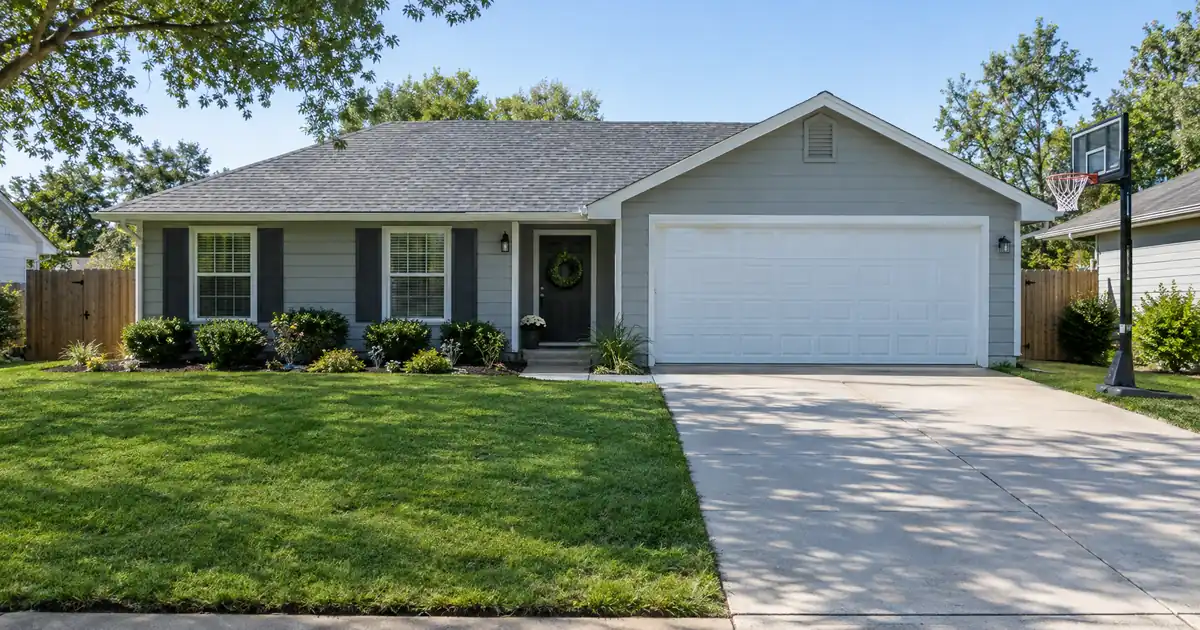
The program is for the home you live in. HUD’s Handbook 4000.1 scope language limits FHA programs to one- to four-family, owner-occupied principal residences. Second homes and rentals are out. Lendmire’s FHA cash-out refinance program follows that same rule.
Your current loan does not need to be FHA. A conventional loan or another type can be refinanced into an FHA cash-out, subject to lender guidelines.
Key Terms Defined
Loan-to-value (LTV): The base loan balance divided by the home’s appraised value.
Combined LTV (CLTV): The first mortgage plus any other liens on the home, divided by the value.
Debt-to-income ratio (DTI): Your monthly debt payments divided by your gross monthly income.
Upfront mortgage insurance premium (MIP): A one-time FHA premium, 1.75% of the base loan, that is usually financed on top of the base loan.
Compensating factors: Documented strengths, such as reserves or stable income, that let a file carry a higher DTI.
Payoff statement: A creditor’s written balance, which the lender uses to pay each debt at closing.
How Much Cash Is Actually Available for Debts?
The cap on the base loan is a percentage of the appraised value. HUD’s Mortgagee Letter 2019-11 lowered the maximum LTV and CLTV on cash-out refinances from a higher prior limit. HUD said the change was meant to reduce risk to the FHA insurance fund from rising insured balances on cash-out loans.
The percentage cap applies to the whole base loan. It is not the amount of cash you receive.
Here is the order of operations. It is arithmetic from the cap, not an HUD-published example:
| Step | What happens |
|---|---|
| 1 | Take 80% of the appraised value. That is the ceiling on the base loan. |
| 2 | Subtract the payoff of your current mortgage. |
| 3 | Subtract any other lien that must be paid. |
| 4 | Subtract closing costs paid from the loan. |
| 5 | What remains is the budget for debt payoffs and any cash to you. |
The financed upfront premium is added on top of the base loan. It raises your new balance and your payment, but it is not part of the 80% ceiling in step 1.
Every payoff has to fit inside step 5. If your mortgage balance is already close to 80% of value, there is little or nothing left. In that case the cash-out cannot consolidate much, however high your debt is.
Picture a borrower whose current mortgage sits near 55% of the home’s value. The ceiling leaves roughly a quarter of the value before costs. After closing costs, the budget is smaller still. That budget either covers the card balances or it does not. Debt size does not stretch it.
Now picture a borrower whose mortgage is near 75% of value. The headroom is only a few points of value. Costs can eat most of it. This borrower should expect to consolidate little, if anything.
One more point for borrowers with a second mortgage. The first and second liens together must fit under the combined cap. If the second stays in place, its holder must agree in writing to stay behind the new first. A new second lien adds no extra room.
Which Debts Get Paid First?
Pay the debts that remove the most monthly payment per dollar of balance. Lenders look at monthly payments for DTI, not balances. A card with a small balance and a high minimum payment can matter more than a larger balance with a low payment.
| Debt type | Why it ranks where it does |
|---|---|
| Installment loans with large payments | Often remove a big monthly payment for a modest balance |
| Credit cards with high minimums | Payment tied to balance, so payoff clears a steady monthly obligation |
| Personal loans | Fixed payment, often a good payoff target |
| Low-payment, large-balance debts | Use up budget while removing little payment |
Run this ranking before you apply. If the budget cannot cover every debt, clear the ones that remove the most payment first. Sometimes clearing just a few is enough to bring the ratio into range.
Your loan officer will ask for payoff statements. The lender uses them to pay creditors directly at closing, so the balances are cleared rather than handed to you as cash.
How Does a High DTI Work Under FHA?
DTI is a second gate, separate from value. The Consumer Financial Protection Bureau defines it as all monthly debt payments divided by gross monthly income, and notes that different loan products and lenders have different limits.
Across the wholesale programs Lendmire places FHA files with, the base pair is 31/43. That means housing costs at 31% of income and total debts at 43%, with no compensating factors. Documented compensating factors can lift the limit, reaching 40/50 at the top tier. The automated underwriting finding governs most files. A human underwriter reviews the ones that come back as a refer.
Many borrowers assume 43% is a hard FHA cap. It is not. The 43% figure comes from the general Qualified Mortgage rule. The Congressional Research Service notes that mortgages above 43% still receive QM status if they meet the requirements to be insured by FHA, VA or USDA. FHA’s own rules decide high-DTI approvals. Exact current ratio rules sit in HUD Handbook 4000.1, and every file is subject to lender guidelines and full review.
What counts as a compensating factor in practice? Typically cash reserves after closing, a steady income history, a clean recent payment record, and a modest increase in housing payment. A file with one or two of these documented is easier to support than one with none.
Does Paying Off Debts Lower DTI?
Often, yes, but not automatically. A debt paid off at closing can generally be dropped from the DTI calculation. At the same time, the new mortgage payment, including mortgage insurance, replaces your old housing payment. The net result is the whole question. Lenders count the new payment and any debts that remain.
Think of three scenarios, described in plain terms:
The file that fails. Heavy card and loan payments, a small budget for payoffs, and a new mortgage payment that is much larger than the old one. After payoffs, DTI is still above what the automated finding accepts. The debts cleared were too small relative to the added housing cost.
The file that barely passes. The budget clears the highest-payment debts. The new payment rises, but the removed payments outweigh it. DTI lands just inside the range the automated finding accepts.
The file that passes with support. DTI after payoff is still elevated, but the borrower documents reserves and stable income. The underwriter can weigh those factors in the file’s favor.
The mortgage insurance adds to the payment in each case. The upfront premium is 1.75% of the base loan and is usually financed on top of it. The annual premium runs between 0.15% and 0.75% of the balance, depending on term, loan amount and LTV. On a thirty-year loan above 90% LTV, the annual premium lasts the whole term. At or below 90%, it ends after eleven years. Because the cash-out ceiling is 80%, most files fall in the shorter-duration group, though the exact result depends on the loan’s structure.
Where Does the General Rule Break?
These edge cases change the answer.
Recently acquired homes. FHA cash-out requires the home to have been owned and occupied for 12 months before the case number. A recent purchase does not qualify. Payment history on the current mortgage is also reviewed. Confirm the exact test on the Handbook page.
Existing second lien. As covered above, a second that stays needs a recorded subordination, and the combined cap still binds.
Rentals and second homes. Not eligible. Occupancy decides the program.
Hawaiian Homelands loans. Section 247 loans are carved out of the 2019 change. The letter says the policy does not apply to mortgages insured under Section 247.
Nonprofit and government borrowers. Not eligible for cash-out under the Handbook.
Handbook changes. HUD revises Handbook 4000.1 on a regular basis, and the latest redline shows how often wording shifts. A rule you read online may have been revised, so confirm the effective date before relying on it.
What Are the Risks and Trade-Offs?
Unsecured debt becomes debt secured by your home. If you fall behind, the lender can foreclose. With cards, the worst outcome is collections and credit damage. With a mortgage, it is the loss of the house.
HUD has long held this view. An older, now-superseded HUD handbook warned that cash-out refinancing for debt consolidation represents considerable risk, especially when borrowers have not had a matching increase in income.
Other trade-offs to weigh:
- Lower payment on paper, longer payoff. Spreading card balances over a thirty-year term lowers the monthly payment but can raise the total cost over time.
- Added costs. Mortgage insurance and closing costs reduce the cash left for payoffs or raise your balance. Costs are shown on your Loan Estimate and Closing Disclosure.
- Less equity. You are converting home equity into debt payoff. Equity you spend is not there later.
- Running the cards back up. Paid-off cards with open balances can fill again. Then you carry both the larger mortgage and new card debt.
Tax treatment can depend on your situation; borrowers should speak with a qualified tax professional before relying on any deduction or credit.
Is FHA Cash-Out the Right Fit?
| Good fit | Poor fit |
|---|---|
| Enough equity left under 80% after your mortgage and costs | Mortgage balance already near 80% of value |
| Debt payments are heavy relative to income, and payoffs remove most of them | Only a small debt balance, so costs outweigh the benefit |
| Home owned and occupied as your residence for 12 months | Home bought recently, or a rental or second home |
| Some reserves or steady income to support a higher DTI | Spending habits likely to refill the cards |
Alternatives exist. An FHA rate-and-term refinance reaches 97.75% on a principal residence occupied for the previous twelve months, but it gives you no cash. If your current loan is already FHA, the FHA Streamline refinances with no appraisal and a limited credit review, again with no cash out. Neither one consolidates debt. Other options, such as a home equity loan or a personal loan, work differently and have their own tests.
How Does the Process Work?
1. Screen eligibility. Confirm the home is your owned and occupied residence, with 12 months of ownership and a payment history that meets the lender’s test.
2. Order the appraisal. The appraised value sets the 80% ceiling.
3. List your debts. Gather balances and monthly payments, then rank them by payment removed per dollar spent.
4. Underwrite the file. The loan runs through automated underwriting, and a human underwriter reviews a refer result. Expect to supply pay stubs, traditional personal-income documentation, W-2s and bank statements.
5. Collect payoff statements. The lender gets payoff statements for your existing mortgage and the debts being cleared.
6. Review disclosures. Your Loan Estimate and Closing Disclosure show the loan amount, costs and payoffs.
7. Close and pay off. Creditors are paid directly from the proceeds.
If you are weighing a cash-out refinance against keeping the loan you have, Lendmire can help you compare the programs and the equity each one reaches. Program details are subject to lender guidelines and full file review, and nothing here is a commitment to lend.
Frequently Asked Questions
Can I get an FHA cash-out with a high DTI?
Yes, in many cases. High DTI is not an automatic denial under FHA. The base pair is 31/43, and documented compensating factors can reach 40/50 at the top tier. The automated finding governs most files. Expect closer review and be ready to document reserves and income.
How much of my home’s value can I borrow?
Up to 80% of the appraised value on the base loan. That includes your existing balance, closing costs paid from the loan and any liens that must be paid. The remainder under the ceiling is what you can use for debts or cash.
Will paying off my cards lower my DTI?
Usually, if the payoffs remove more monthly payment than the new mortgage adds. The new payment includes mortgage insurance. Lenders count the new payment and any debts left open. Run both sides before you apply.
Do I need a current FHA loan to get an FHA cash-out?
No. The loan you have now can be conventional or another type. The home must be your owned, occupied principal residence, with the ownership period the program requires.
Is consolidating debt with my mortgage always a good idea?
No. It can lower the monthly payment on paper, yet it turns unsecured debt into debt secured by your home. It also adds mortgage insurance and closing costs and stretches repayment over a long term. It fits best when the payoffs remove a large share of your payments and you can avoid refilling the cards.
If the home you live in is the one you want to refinance, you can request a scenario review with Lendmire. FHA cash-out applies only to an owner-occupied primary residence, so rentals and investment property are not part of this program.
For current guidelines and terms, see Lendmire’s FHA loan programs page.
About Lendmire
As a mortgage broker (NMLS# 2371349), Lendmire helps homeowners and home buyers in 16 states with FHA, VA, conventional and jumbo purchase and refinance loans arranged through wholesale lenders. Lendmire is never the lender; program terms are set by the lender and the agency guidelines. Scotsman Guide named Lendmire a Top Mortgage Workplace in both 2025 and 2026.
Get Started
Ready to find the right loan for you?
In about 30 seconds you can review financing options available for your home or investment property. No commitment required.
Informational only. Not a Loan Estimate, approval, or commitment to lend. Program availability and eligibility are subject to lender guidelines, credit approval, property review, and underwriting.
References
1. HUD Handbook 4000.1 MPR drafting table
2. HUD Mortgagee Letter 2019-11
3. CFPB: What is a debt-to-income ratio?
4. Congressional Research Service: The Ability-to-Repay Rule
6. HUD Handbook 4155.1 (superseded)
This article is part of Lendmire’s FHA cash-out refinance program — full qualification details, guidelines, and scenarios live on the program page.
Related reading: How to Close a Texas FHA Cash-Out to Pay Off Debt on a High DTI · FHA Cash-Out Documentation on the Use of Proceeds · How to Apply for an FHA Cash-Out Refinance Step by Step
Brandon Miller
Founder & CEO, Mortgage Loan Originator, Lendmire LLC
- Mortgage Loan Originator · NMLS# 1129696 · Verify on NMLS Consumer Access
- North Carolina Real Estate Broker · License# 343312 · Verify on NCREC
- North Carolina Insurance Producer · License# 19053198 · Property, Casualty, Life, Health · Verify on NAIC SBS
- Lendmire LLC · Firm NMLS# 2371349 · Verify firm licensure
Disclosures. The information presented in this article is general market commentary, not financial, legal, or tax advice. Lendmire is a mortgage brokerage (NMLS# 2371349) — not a direct lender or depository institution — and loan placement is subject to lender underwriting. Nothing in this content represents a commitment to lend. Loan terms, pricing, and program availability vary based on borrower qualifications, property characteristics, and state of subject property, and are subject to change at any time. Lendmire complies with Equal Housing Opportunity requirements. Consumer access: nmlsconsumeraccess.org.