
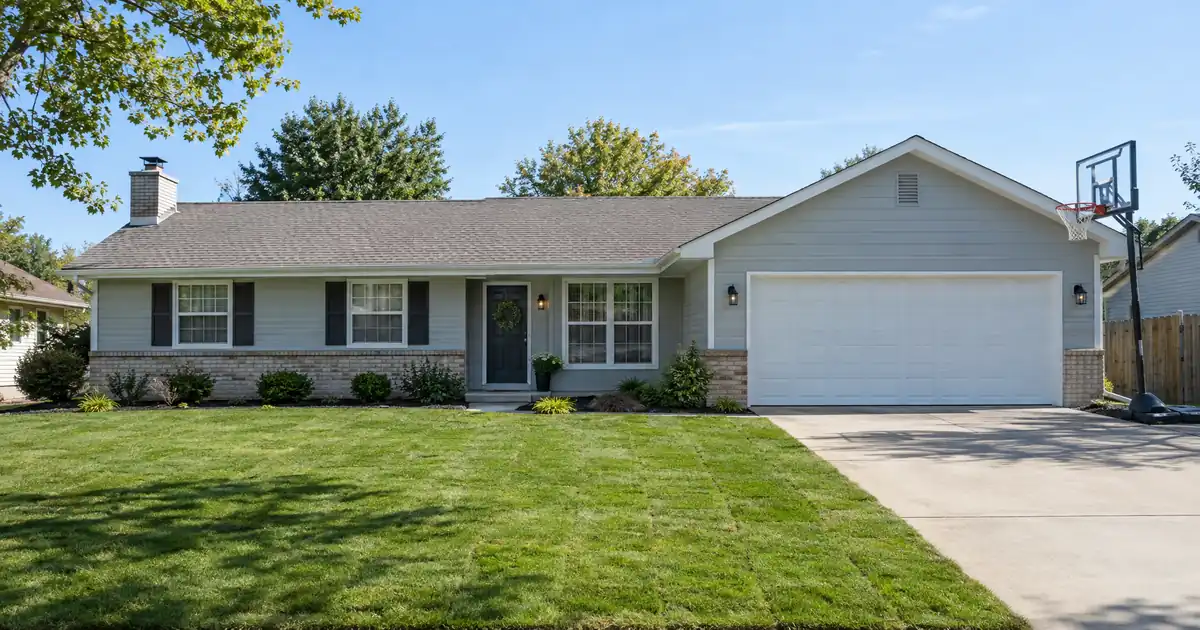
The Quick Read: Not directly. A VA cash-out refinance only applies to a home you live in, so it cannot finance a different house. Partial entitlement does not block the next purchase, though. You can take cash out of the home you occupy and use that cash toward a down payment on the next home. Those are two separate loans, each approved on its own merits.
Why the Cash-Out Can’t Buy the Next House
The VA’s cash-out refinance page lists three conditions. You need a Certificate of Eligibility (COE). You must meet VA and lender credit and income standards. And you must live in the home you’re refinancing.
That third condition settles the question. Across the wholesale programs Lendmire places VA files with, the cash-out is tied to the property securing it. The borrower certifies they occupy that home. Proceeds can go to many uses, but the loan itself never reaches a second property.
Lendmire’s VA cash-out refinance program page covers the product in general. What matters here is how it interacts with partial entitlement.
What “Partial Entitlement” Actually Means
Entitlement is the dollar amount VA is prepared to guarantee for you. It is not equity, and paying down a loan does not restore it. If you still own a home financed with VA, part of your entitlement stays charged against that loan.
That leaves you with partial, not zero, entitlement. VA’s Buyer’s Guide says you can still buy at any loan amount. VA simply guarantees only what your remaining entitlement covers.
The VA Lenders Handbook adds that VA sets no specific maximum loan for partial entitlement. The practical cap comes from lenders and the secondary market.
How the Down Payment Gap Is Set
The gap comes from a 25% test. Most lenders want your remaining entitlement plus any down payment to cover at least 25% of the loan. VA’s loan limits page describes the shortcut: multiply remaining entitlement by four to see roughly how much you can borrow with nothing down.
Here is the sequence:
1. Pull a current COE. It shows the entitlement already used.
2. Find remaining entitlement. Take 25% of the conforming loan limit for the new home’s county and subtract the entitlement still charged to the old loan.
3. Run the times-four test against the price of the next home.
4. Cover any shortfall with cash down, a lower price, or a different timeline.
The down payment is not 25% of the price. It only fills the gap between what VA guarantees and 25% of the loan. Whether a down payment is needed, and how much, depends on your county and file. Speak with a loan officer rather than guessing.
Where the Cash-Out Fits (and Where It Doesn’t)
The cash-out is a funding source, not a purchase loan. Used well, it looks like this.
| Situation | Entitlement effect | Helps the next home? |
|---|---|---|
| Cash-out on the home you live in, then buy | Existing VA loan replaced; restoration rules apply | Yes, as down payment cash |
| Cash-out on a home you’ve moved out of | Fails the occupancy test | No |
| Buy first, cash-out later | Old loan may still be charged | Depends on sequencing |
| Cash-out to fund an unrelated rental | Occupancy test fails | No |
One point catches borrowers off guard. When you cash out an existing VA loan, VA’s Circular 26-19-30 shows the entitlement used on the loan being replaced can be added back for the refinance. Entitlement tied to a different VA-financed home stays charged.
Sequencing: Refinance First or Buy First?
Order matters more than most borrowers expect.
Cash-out first, then buy. This is the cleaner path. You refinance the home you occupy, receive proceeds, then bring that cash to the purchase. Each loan is underwritten separately. The new payment on the refinanced home counts when you qualify for the next one.
Buy first, then refinance. This carries a real risk. Circular 26-19-30 shows that if the purchase closes before the existing VA loan is paid off, restoration is incomplete. The guaranty left on the new loan shrinks by the entitlement still unrestored.
There is also the occupancy clock. The cash-out requires you to certify that you live in the home. If you refinance and then move out almost immediately, that certification becomes a problem. Delayed occupancy exists in narrow cases, and an active-duty spouse can certify, but treat those as exceptions to confirm with the lender, not plans to build on.
A false occupancy certification carries serious consequences. Do not sign one as a workaround.
Two Payments, One Budget
Carrying two homes strains the numbers. Residual income is the controlling VA test. The 41% debt-to-income figure is a guideline, not a cap, but a ratio above it needs residual income well above the table.
Lenders may count or exclude rental income from the old home under the handbook’s income rules, so don’t assume it offsets your payment. The CFPB’s home equity guide notes a cash-out can lengthen your payoff time and raise your payment, because the loan is larger and terms reset. It also reminds borrowers that the home secures the loan.
The cash-out funding fee is 2.15% on first use and 3.3% after, waived for veterans receiving compensation for a service-connected disability and other exempt groups. It can be financed, which reduces the cash you walk away with. The purchase loan carries its own funding fee, which depends on the down payment and whether it is first or subsequent use.
Edge Cases Worth Knowing
- Cash-out reach. The VA cash-out reaches 100% of the appraised value, including the financed fee. Some lenders set a lower cap by overlay, so VA allows high leverage but a given lender may stop short.
- Seasoning and benefit. The cash-out carries seasoning requirements and a net tangible benefit test.
- Appraisal. A VA appraisal sets the “reasonable value,” which caps the loan.
- Streamline is different. The IRRRL cannot return cash. It exists to lower the rate or move from adjustable to fixed.
- Credit floors. VA sets no minimum score. The wholesale programs Lendmire works with start at a 580 decision score, though some lenders set a higher floor.
Alternatives When the Gap Is Too Big
The cash-out is one lever among several. Weigh these honestly.
| Option | Upside | Tradeoff |
|---|---|---|
| VA cash-out on current home | Large equity reach, no mortgage insurance | Larger balance, occupancy test, fee |
| Sell the old home and restore entitlement | Full benefit returns | You give up the property |
| Savings toward the gap | No new debt | Slower |
| Lower-priced next home | Shrinks the gap | Fewer choices |
| Waiting for restoration | Full entitlement later | Timing may not fit a move |
If you are moving soon, run the break-even. The CFPB’s refinance handout cautions that refinancing may not pay off if you move before you recoup the costs. A PCS move on a short timeline can turn a sensible cash-out into an expensive one.
Tax treatment can depend on your situation; borrowers should speak with a qualified tax professional before relying on any deduction or credit.
Common Mistakes
1. Assuming one loan does both jobs. The cash-out and the purchase are separate files.
2. Confusing entitlement with equity. Paying down the old loan doesn’t restore it.
3. Skipping the COE. Guessing at remaining entitlement leads to surprises at the table.
4. Buying before the payoff. That can leave restoration incomplete.
5. Treating the occupancy form as a formality.
Pre-Application Checklist
- A current COE showing entitlement used
- Existing mortgage payoff information
- Income and employment documentation
- A clear plan for which home is your primary residence and when
- The price range of the next home, so the times-four test can be run early
Lendmire’s team has a related piece on how a VA cash-out can fund the next home after a PCS, and another on how much entitlement a VA cash-out ties up for the next purchase.
Key Terms Defined
Entitlement: The amount VA guarantees on your behalf, which backs the lender if the loan defaults.
Partial entitlement: The portion left after part is charged to a VA loan you still carry.
Certificate of Eligibility (COE): The VA document showing your eligibility and entitlement used.
Residual income: The money left each month after major obligations, which VA treats as the controlling test.
Notice of Value: The VA appraisal result that sets the home’s reasonable value.
Frequently Asked Questions
Can I hold two VA loans at once?
Yes, if you have enough remaining entitlement and meet the occupancy rule on the new home. VA guarantees only what remaining entitlement covers, so a down payment may fill the rest. The lender confirms the exact figure from your COE.
Does paying down my first VA loan restore entitlement?
No. Entitlement is not equity. Restoration generally comes from paying the loan off in full, selling, or substituting another eligible veteran. Pull a fresh COE to see where you stand.
Can I turn my current home into a rental after the cash-out?
Only after you’ve met the occupancy certification, and only if you honestly intended to live there. Timing here matters, and the certification is a serious statement. Talk it through with a loan officer before you commit.
Will my cash-out payment count against me on the next loan?
Yes. The larger payment on the refinanced home counts toward residual income and debt ratios for the next purchase. Lenders may also treat rental income from the old home differently, so don’t count on it.
Is a 25% down payment always required with partial entitlement?
No. The down payment only closes the gap between the VA guaranty and 25% of the loan. With enough remaining entitlement, none may be needed. Speak with a loan officer about your county.
If you are weighing a cash-out refinance against keeping the loan you have, Lendmire can help you compare the programs and the equity each one reaches.
For your own numbers, request a scenario review with Lendmire.
About Lendmire
Lendmire (NMLS# 2371349) is a mortgage brokerage serving homeowners and home buyers in 16 states. FHA, VA, conventional and jumbo purchase and refinance loans are arranged through wholesale lending channels; Lendmire brokers the financing and the lender underwrites each application. Scotsman Guide named Lendmire a Top Mortgage Workplace in both 2025 and 2026.
For the program’s current guidelines, see VA loan programs.
Get Started
Ready to find the right loan for you?
In about 30 seconds you can review financing options available for your home or investment property. No commitment required.
Informational only. Not a Loan Estimate, approval, or commitment to lend. Program availability and eligibility are subject to lender guidelines, credit approval, property review, and underwriting.
References
1. VA.gov: Cash-out refinance loan
2. VA Home Loan Guaranty Buyer’s Guide
3. VA Lenders Handbook, Chapter 3
5. VA Circular 26-19-30, Exhibit A
This article is part of Lendmire’s VA Loans series — every loan program’s qualification details, guidelines, and scenarios live on the loan options page.
Related reading: How to Check Entitlement and Get Your COE Before a VA Cash-Out · VA Cash-Out Requirements for a New COE and Remaining Entitlement · How Much a VA Cash-Out Can Clear at Full Value on a $400K Home
Brandon Miller
Founder & CEO, Mortgage Loan Originator, Lendmire LLC
- Mortgage Loan Originator · NMLS# 1129696 · Verify on NMLS Consumer Access
- North Carolina Real Estate Broker · License# 343312 · Verify on NCREC
- North Carolina Insurance Producer · License# 19053198 · Property, Casualty, Life, Health · Verify on NAIC SBS
- Lendmire LLC · Firm NMLS# 2371349 · Verify firm licensure
Required disclosures. Lendmire (NMLS# 2371349) operates as a licensed mortgage broker, not a direct lender or depository. The discussion in this article is general in nature and should not be relied upon as financial, legal, or tax advice — every investment scenario is unique and should be reviewed by a qualified professional. Any loan inquiry is subject to lender underwriting, and this article is not a commitment to lend or a guarantee of approval. Mortgage rates, loan terms, and program guidelines vary by borrower, property, and state, and may change without notice. Equal Housing Opportunity. Verify licensure at NMLS Consumer Access.