
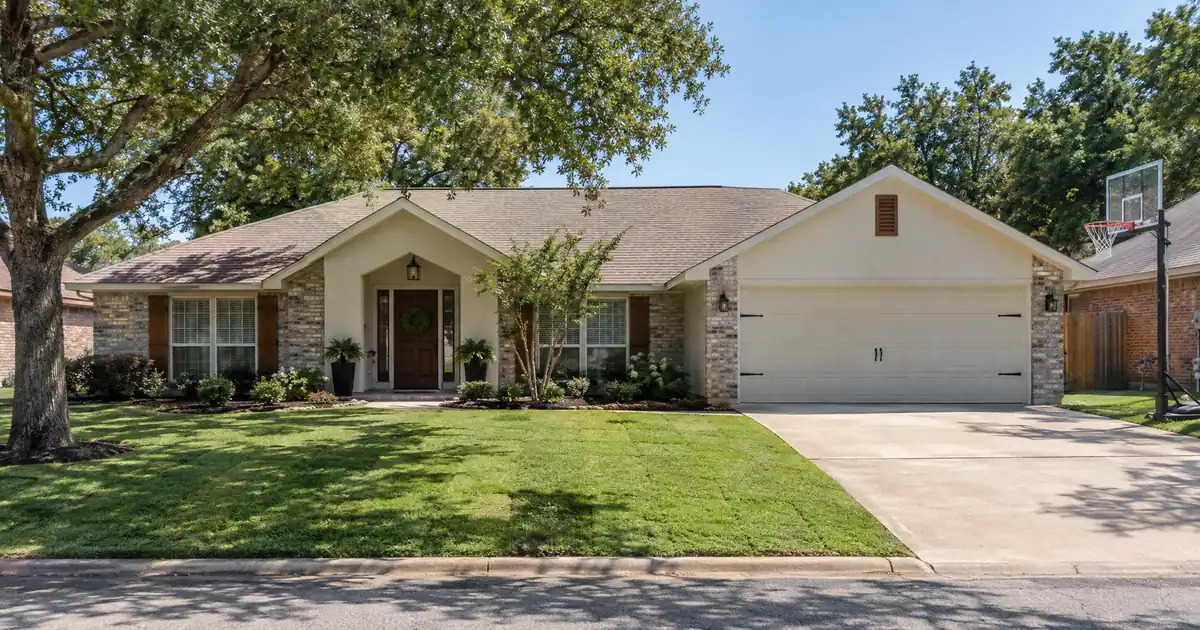
The Quick Read: A Texas homestead with no mortgage can be refinanced for cash, and the new loan is classified as a cash-out refinance by definition. The stricter rule wins at each step, which means the combined loans cannot exceed 80% of the home’s appraised value, a mandatory waiting period applies, and the closing follows a set sequence.
Why a Home With No Mortgage Still Counts as Cash-Out
Fannie Mae’s cash-out rules cover a borrower who owns a home free and clear and takes out a new loan against it.
The logic is plain. A refinance pays off an existing first mortgage. With nothing to pay off, every dollar that reaches the borrower is cash out. That is why the limited cash-out lane, which is built around paying off a first mortgage, does not fit this borrower.
Texas adds a second layer. A cash-out loan on a Texas homestead is a Section 50(a)(6) loan, often called “A6,” named for Article XVI, Section 50(a)(6) of the state constitution. The Texas Real Estate Research Center at Texas A&M notes that this section generally covers cash-out refinancing, home equity loans and HELOCs.
Key Terms Defined
- Cash-out refinance: A new mortgage that puts cash in the borrower’s hands, rather than only replacing an existing loan.
- Free and clear: A property owned with no mortgage lien recorded against it.
- Section 50(a)(6) (A6): The part of the Texas Constitution that sets the rules for home-equity loans on a homestead.
- Combined loan-to-value (CLTV): All loans secured by the home, added together, as a percentage of its appraised value.
- Fair market value acknowledgment: A written statement, signed by the borrower, accepting the appraised value as the home’s fair market value.
- Right of cancellation: A three-business-day window after signing to cancel the loan.
How Much Cash Can You Pull Out?
On a one-unit principal residence, the conventional cash-out maximum is 80% LTV. Fannie Mae’s Eligibility Matrix shows the same 80% ceiling, with lower caps for two- to four-unit homes, second homes and investment property. In Texas, the constitution sets the same 80% limit on the principal amount plus all other liens. Each figure is subject to lender guidelines and a complete review of property type, leverage, and credit.
For a free-and-clear homeowner, that makes the math simple. Maximum cash is roughly 80% of appraised value, minus any liens still on the property. At least 20% of the value stays in the home as equity.
Two things follow from this.
- The appraisal sets the ceiling. A lower appraisal means less available cash, even if you expected more.
- Lenders set a practical limit too. Your income, credit and debts must support the new payment. Hitting the 80% cap does not mean you will be approved for it.
Across the wholesale programs Lendmire works with, a separate high-leverage cash-out lane exists elsewhere. It is not written on Texas homesteads, because the state constitution caps the loan at the agency figure.
The Closing Sequence, Step by Step
Texas cash-outs cannot be rushed, because several clocks run at once. Here is the order in which things happen.
1. Classify the loan
The lender decides that this is a cash-out refinance and a Section 50(a)(6) loan. Fannie Mae’s Texas 50(a)(6) guidance says its underwriting system does not contain the Texas eligibility rules, so the lender must determine eligibility itself. A lender experienced with Texas files matters here.
2. Application and the 12-day clock
Texas rules require a waiting period after you submit the application or receive the consumer notice, whichever is later, before the loan may close. That waiting period sets the earliest possible closing date, and the overall timeline varies by file and lender. Anyone needing funds by a deadline should plan around it.
3. Seasoning and ownership
Lenders often look at how long the borrower has held title, a requirement commonly called seasoning, and may limit cash-out or valuation based on a recent purchase. Exceptions exist for inherited or court-awarded property, such as a divorce settlement, and for delayed financing after a recent cash purchase.
4. Income, credit and assets
No mortgage does not mean no documentation. The lender reviews income, credit and assets the way it would for any cash-out loan. Across the programs Lendmire arranges, the wholesale conventional lanes start at a 620 decision score, and the automated finding governs most files with a total ratio ceiling of 50%. These figures are subject to lender guidelines and full file review.
5. Appraisal and value acknowledgment
Texas ties “fair market value” to an appraisal. Fannie Mae’s rules require the appraisal to be attached to your written acknowledgment of fair market value. You cannot reuse an older appraisal or skip the step.
6. Title work and closing documents
With no payoff, the title search matters more than people expect. It must show you as owner with no liens, and the source of funds used to buy the home should be documented. The first payment may not be due earlier than two months after closing.
7. Rescission and funding
After you sign, the three-business-day cancellation window begins. Saturdays count as business days; Sundays and legal holidays do not. Funds are generally disbursed after the window closes. Because you have no old loan to pay off, rescinding would simply cancel the new one.
The Texas Rules in Plain Language
| Rule | What it means for you |
|---|---|
| 80% combined limit | Loans plus liens stay at or below 80% of value |
| One A6 loan at a time | No second home-equity loan while one is open |
| 12-day wait | Closing waits for the later of application or notice |
| One-year rule | A new A6 generally waits a year after the last one |
| Non-recourse | Only the home secures the loan, barring actual fraud |
| All owners consent | Each owner and spouse must agree |
| Lender fee cap | Texas limits lender charges; a 2017 change lowered the cap |
On the fee cap, ask your lender which charges count toward it. Appraisal, title and survey costs may be handled separately in practice, and the answer matters for your net cash.
The non-recourse feature is unusual and worth noting. Foreclosure on a homestead equity loan requires a court order, and the borrower is not personally liable beyond the home. That protection is real, but it is a feature of the Texas rule, not of cash-out loans generally.
Where the General Rule Breaks
A few edge cases catch free-and-clear owners off guard.
Streamlines do not apply. HUD defines the FHA Streamline as the refinance of an existing FHA-insured mortgage. The VA’s IRRRL is a VA-to-VA loan that requires an existing VA loan. No existing loan means no streamline, no matter your service history.
Only a homestead qualifies. Fannie Mae limits Texas 50(a)(6) loans to a single-unit principal residence that is your homestead. Two- to four-unit properties, second homes and investment properties are not eligible. Condos and PUDs can be.
Acreage can matter. If you own adjacent land, the lender may ask for evidence such as a survey to confirm the homestead stays within the acreage limit.
Trusts need care. A revocable trust can be the borrower only if it is a “qualifying trust” under Texas law. If your title sits in a trust, an LLC or a life estate, raise it on day one.
Recent cash buyers. If you bought the home with cash a few months ago, the delayed financing exception may let you skip the usual six-month title wait. It requires an arm’s-length purchase and documentation of how you paid.
Missing disclosures extend your cancellation right. If a lender never delivers the required notices, the right to rescind can last up to three years under Regulation Z. Cure rules also exist for loans found out of compliance with Section 50(a)(6). This is why Texas closings are procedurally strict.
What Changes After You Close
A free-and-clear home becomes a home with a lien, and your budget changes with it. You go from no mortgage payment to a new payment that must fit your household’s income and debts. Cash-out loans also carry loan-level price adjustments that no-cash-out refinances do not, so the cost of pulling equity is built into the loan.
The Texas one-year rule also applies. A new A6 loan generally cannot close within a year of a prior one on the same home, though a sworn-statement exception exists, and the state has adopted a disaster-area exception with conditions. Do not assume either applies to you without checking.
The practical effect is that this loan is hard to repeat quickly.
Cash-Out Refinance, Home Equity Loan or HELOC?
For a debt-free Texas homestead, the realistic choices are a conventional cash-out refinance, a Texas home equity loan or a home equity line of credit. All three fall under Section 50(a)(6), so the 80% combined cap applies to each.
| Option | Structure | Best fit |
|---|---|---|
| Cash-out refinance | One new first-lien loan | One large, planned need |
| Home equity loan | Lump sum, fixed schedule | Defined project cost |
| HELOC | Draw as needed | Uncertain or phased spending |
Fannie Mae places no other restrictions on how you use proceeds, but they cannot be used to acquire or improve the homestead if a loan for that purpose could have been made under a different provision of the Texas Constitution. The decision usually comes down to whether you want one lump sum or flexible access.
The bigger question is whether to give up a clean title at all. If the need is modest or temporary, a smaller line may do less damage to your equity than a full cash-out. If the need is large and certain, the cash-out can be the cleaner structure. Looking at cash-out refinance programs side by side shows how much equity each one reaches, and the answer differs by borrower. Tax treatment can depend on your situation; borrowers should speak with a qualified tax professional before relying on any deduction or credit.
What Can Go Wrong, and a Pre-Application Checklist
Common problems are predictable:
- A low appraisal that shrinks your maximum cash.
- Title surprises, such as old liens or judgments that must be cleared.
- Missing signatures, since every owner and spouse must consent.
- Timing slippage, because the 12-day wait and the cancellation window both sit on the calendar.
- A trust or entity on title that was never reviewed.
Before applying, gather your recent income documents, a list of every owner and spouse on title, your purchase and title records, and a clear figure for the cash you actually need. Having a number in mind keeps you from borrowing more than the purpose requires.
If you are weighing a cash-out refinance on a home you own outright, Lendmire can help you compare the programs and the equity each one reaches.
Frequently Asked Questions
Can I skip the appraisal on a Texas cash-out?
No. Texas ties fair market value to an appraisal, and the lender must attach it to your signed written acknowledgment. The appraised value also sets the 80% cap, so it decides how much cash is available.
Does the 80% limit mean I can borrow 80% of my home’s value?
It is a ceiling, not a promise. The new loan plus all other liens cannot exceed 80% of appraised value, and your income, credit and debts must also support the payment. Approval is subject to lender guidelines and full file review.
Can a veteran or FHA homeowner with no mortgage use a streamline?
No. The FHA Streamline needs an existing FHA-insured loan, and the VA IRRRL needs an existing VA loan. With no lien, the choices are conventional cash-out, a Texas home equity loan or a HELOC.
Can I use a Texas cash-out on a rental or second home?
No. Fannie Mae limits Texas 50(a)(6) loans to a single-unit principal-residence homestead. Occupancy decides both eligibility and leverage.
Can I waive the three-day cancellation period to get funds sooner?
Only for a bona fide personal financial emergency. The CFPB says the waiver must be your own handwritten, dated and signed statement, signed by all owners. Convenience alone does not qualify.
For your own numbers, request a scenario review with Lendmire.
About Lendmire
Lendmire is a mortgage brokerage (NMLS# 2371349) licensed for consumer mortgage lending in 16 states, arranging FHA, VA, conventional and jumbo purchase and refinance loans through a wholesale lending network. Eligibility is determined by the lender on each file. Scotsman Guide named Lendmire a Top Mortgage Workplace in both 2025 and 2026.
Get Started
Ready to find the right loan for you?
In about 30 seconds you can review financing options available for your home or investment property. No commitment required.
Informational only. Not a Loan Estimate, approval, or commitment to lend. Program availability and eligibility are subject to lender guidelines, credit approval, property review, and underwriting.
References
1. Texas Real Estate Research Center, Texas A&M: Home Equity Loans in Texas
2. Fannie Mae Eligibility Matrix
3. Fannie Mae Selling Guide B5-4.1-01: Texas Section 50(a)(6) Loans
6. CFPB
This article is part of Lendmire’s Refinance series — every loan program’s qualification details, guidelines, and scenarios live on the loan options page.
Related reading: How to Close a Texas Cash-Out Refinance Through the Cancellation Period · Can a Texas Cash-Out Refinance Be Refinanced Again for a Lower Payment? · How to Qualify for a Cash-Out Refinance on a Free-and-Clear Home
Brandon Miller
Founder & CEO, Mortgage Loan Originator, Lendmire LLC
- Mortgage Loan Originator · NMLS# 1129696 · Verify on NMLS Consumer Access
- North Carolina Real Estate Broker · License# 343312 · Verify on NCREC
- North Carolina Insurance Producer · License# 19053198 · Property, Casualty, Life, Health · Verify on NAIC SBS
- Lendmire LLC · Firm NMLS# 2371349 · Verify firm licensure
Legal disclosures. Lendmire (NMLS# 2371349) is a state-licensed mortgage brokerage that arranges financing through wholesale lender relationships. Lendmire is not a direct lender, depository institution, or registered financial advisor. The discussion above is general informational content about real estate financing — it is not financial, legal, or tax advice, and readers should consult licensed professionals for guidance on their individual circumstances. Loan inquiries are subject to lender underwriting; this article does not represent a commitment to lend. Loan terms, rates, and qualification standards vary by borrower, property, and state, and are subject to change at any time. Equal Housing Opportunity. NMLS Consumer Access: nmlsconsumeraccess.org.