
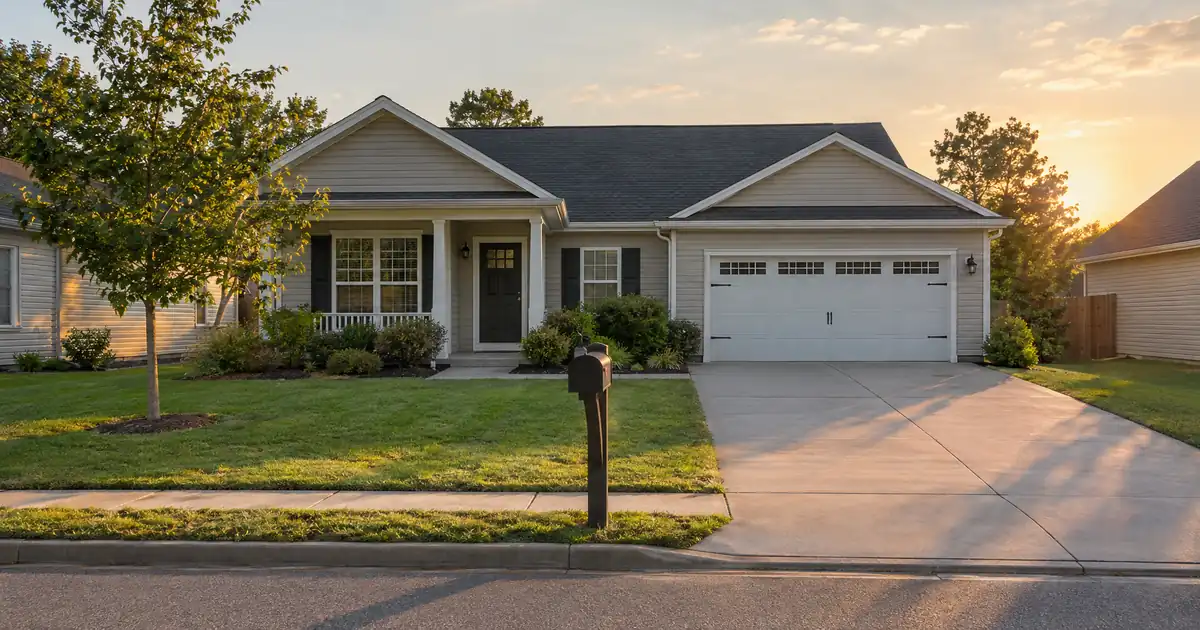
The Quick Read: A conventional cash-out refinance replaces your entire first mortgage with a new, larger loan, so the low rate you’re protecting goes away along with the old balance. The new loan pays off the old one, covers closing costs, and sends you the leftover equity as cash. On a one-unit primary home, the new loan generally tops out at 80% of the home’s value, subject to lender guidelines and full file review.
For a homeowner with a low first mortgage, that is the whole decision. The cash is real. So is the cost of retiring the loan you like. The sections below walk through how the loan is built, what limits apply, and where the general rules bend.
Key Terms Defined
Cash-out refinance: A new first mortgage that pays off the existing loan and delivers extra money to the borrower.
LTV (loan-to-value): The new loan balance divided by the appraised value of the home.
Seasoning: The minimum age of the loan being paid off, or the minimum time you have held title.
Note date: The date the borrower signs the loan’s promissory note. Seasoning is measured from one note date to the next.
Limited cash-out (rate-and-term) refinance: A refinance that pays off the old loan and costs, with only incidental cash back.
Subordinate lien: A second loan, such as a HELOC or home equity loan, that sits behind the first mortgage.
What Does “Locked-In” Really Cost You?
A cash-out refinance does not touch only the cash portion. It reprices the whole balance. If your current first mortgage carries a rate well below today’s market, the new loan replaces all of it, including the part you already owed.
Run it as a framework, with no numbers needed. Your old loan had a balance and a rate you like. The new loan has a larger balance and a new rate. You are paying the new rate on the old money, plus the new rate on the cash. The extra cost on the old money is the price of getting the cash this way.
A cash-out can still win. It tends to make sense when:
- you need a large lump sum, not a small one;
- you also carry a second lien you want to fold into one payment;
- your current first mortgage has a variable rate;
- you plan to stay long enough for the new structure to pay off.
It tends to lose when you need a modest sum, when your first mortgage is the best debt you hold, or when you would be resetting a loan that is nearly paid down.
How Is the Loan Underwritten, Step by Step?
Across the wholesale programs Lendmire places files with, a conventional cash-out follows a predictable sequence. Lendmire’s cash-out refinance programs reach borrowers in 16 states, and the steps look the same in each.
1. Seasoning check. The existing first mortgage must be at least 12 months old, measured from its note date to the new loan’s note date. At least one borrower must also have been on title for six months. Fannie Mae’s Selling Notice SEL-2023-01 lays out both clocks.
2. Application and Loan Estimate. You apply, and the lender issues a Loan Estimate showing loan costs and estimated cash to close.
3. Full underwriting. Credit, income, debt-to-income ratio, assets and reserves all get reviewed. The wholesale conventional programs start at a 620 decision score, and the automated finding governs most files, with a total ratio ceiling of 50%. Manually underwritten loans run tighter, at 36% or 45%, with the reserve and score factors of the Eligibility Matrix.
4. Appraisal. The appraised value sets the ceiling on the new loan. A low appraisal cuts your cash dollar for dollar.
5. Payoffs. The lender pays off your first mortgage first, then any second lien, then financed closing costs and prepaid items.
6. Closing and cancellation window. On a primary residence you generally have three business days to cancel a refinance after signing. Funds are normally held until that window ends.
7. Cash to you. Whatever remains after payoffs and costs is your net cash.
That last point trips people up. The cap applies to the new loan against value. It does not measure the equity you can pocket.
What Is the Maximum LTV by Property Type?
The cap depends on how you use the home. Per the Fannie Mae Eligibility Matrix, cash-out limits drop as the property moves away from a one-unit primary residence.
| Property / occupancy | Cash-out LTV cap |
|---|---|
| Primary residence, 1 unit | 80% |
| Primary residence, 2-4 units | 75% |
| Second home | 75% |
| Investment property | 75% |
Manufactured housing on a primary residence carries a lower cap still, per the same matrix. If your home is a rental or second home, occupancy sets the leverage, and it comes in below the primary-residence figure.
Compare that with a limited cash-out refinance, which allows 95% LTV on a one-unit primary residence (97% where the existing loan is agency-owned and the first-time-buyer program allows). The gap exists because pulling real cash raises the lender’s risk. Each figure is subject to lender guidelines and a complete review of property type, leverage, and credit.
There is a wholesale lane worth knowing about. It reaches 89.99% LTV with no mortgage insurance, at a 680 score and a 50% ratio, on a thirty-year fixed primary residence with a conforming balance. It carries its own six months of seasoning and is subject to lender guidelines. In Texas, a cash-out on the homestead is capped by the state constitution at the agency figure, and the wholesale lane is not written there.
How Do You Calculate Your Net Cash?
Work in percentages. Take the appraised value and multiply by the cap, 80% on a one-unit primary home. That is your maximum new loan. Then subtract, in order:
- the payoff of your existing first mortgage;
- any second lien you are paying off;
- financed closing costs and prepaid items.
What remains is cash in hand. Closing costs vary by loan, and the Loan Estimate itemizes them. Each reduces your proceeds.
Picture a homeowner with about 40% equity in a one-unit primary residence. The 80% cap leaves a 20% cushion in the home. If the first mortgage already uses a big slice of that 80%, the cash left over is thinner than the equity figure suggests. And if the appraisal comes in a few percent lower than expected, the cash shrinks by that amount, since the cap moves with value.
A free-and-clear home works the same way. A new loan on a home with no mortgage still counts as cash-out, with the same 80% cap on a one-unit primary residence.
What Can You Use the Cash For?
Per Fannie Mae Selling Guide B2-1.3-03, proceeds may go toward paying off the existing first mortgage, financing closing costs and prepaid items, paying off subordinate liens of any age, or taking equity out for any purpose. Past-due real estate taxes can be rolled in too, though an escrow account must then be set up, subject to applicable law.
Use matters for your finances, though. Debt consolidation, a renovation that adds value, or a one-time large expense are very different uses than discretionary spending. Tax treatment can depend on your situation; borrowers should speak with a qualified tax professional before relying on any deduction or credit.
Where Does the General Rule Break?
The 12-month and six-month clocks look rigid, but they bend in named cases.
Delayed financing. If you bought a home with cash, you may be able to refinance for cash-out without waiting out the six-month title clock. The file needs settlement-statement proof that no mortgage financed the purchase and a clean title search.
Inheritance and legal awards. Ownership acquired through inheritance or a legal award can qualify for an exception to the six-month rule.
Freddie Mac’s carve-outs. Freddie Mac’s Seller/Servicer Guide 4301.5 also requires the existing loan to be at least 12 months old, and it requires every borrower on a primary-residence cash-out to occupy the home. It lists title-time carve-outs for situations like leaseholds, co-ops and property held in an LLC or LP. Some exceptions to the seasoning rule are described in secondary summaries. Confirm them in the guide itself before relying on them.
Combining with other programs. Community Seconds assistance cannot be combined with a cash-out refinance.
State rules. Some states layer extra rules on cash-out loans.
Government loans. FHA and VA cash-outs follow different seasoning and leverage rules, and they sit outside this article.
How Does Pricing Work Without a Pricing Quote?
Fannie Mae applies loan-level price adjustments to certain cash-out refinances, based on LTV and credit score. Borrowers rarely see these as a separate line. They are built into the pricing of the loan you are offered, so a higher-leverage or lower-score file tends to price less favorably than a lower-leverage, stronger one.
Two practical effects follow. First, leverage is a lever you control: borrowing a bit less can improve the file’s pricing. Second, cash-out and rate-and-term refinances are priced on different grids, so a quote for one tells you little about the other.
Mortgage insurance is the other payment variable. On standard agency loans it applies above 80% LTV, while the one wholesale lane that reaches 89.99% is structured without it. Where it does apply, you can request cancellation at 80% of original value with good payment history, no subordinate liens, and no decline in value, and the servicer must terminate it automatically at 78% under the Homeowners Protection Act. Because the standard cash-out cap is 80%, many conventional cash-outs avoid it entirely. Leverage, reserves, and pricing vary by lender and program; the final terms follow the full file review.
Should You Keep the Loan and Borrow Beside It?
Often the better question is whether to touch the first mortgage at all. The CFPB’s guide to using home equity lists three options: a cash-out refinance, a home equity loan, and a HELOC. The last two leave your first mortgage in place.
| Factor | Cash-out refinance | HELOC / home equity loan |
|---|---|---|
| Existing first mortgage | Replaced | Stays in place |
| New rate applies to | Entire balance | Only the new money |
| Payments | One loan | Two loans |
| Payment risk | Fixed or adjustable | HELOC can vary |
| Best fit | Large sum, consolidation | Smaller sum, keep low rate |
Choose the cash-out when you need a lot of money, want one payment, or are consolidating a second lien. Choose the second lien when your first mortgage is the asset you are protecting and the sum is moderate. It depends on the size of the need and the gap between your current loan and the market.
The CFPB also notes that lenders typically want you to keep an equity cushion, and that your home is collateral, so missed payments risk foreclosure. Borrow what you need, not what the cap allows.
What Mistakes Do Borrowers Make Most?
- Assuming the cap equals available cash. The 80% limit applies to the whole new loan. Payoffs and costs come out first.
- Thinking only the new money gets a new rate. The entire first mortgage is replaced.
- Refinancing too soon after a purchase. The six-month title rule and 12-month seasoning rule apply, with delayed financing as the main exception.
- Treating cash-out and rate-and-term as interchangeable. They carry different leverage caps and different pricing.
- Counting on cash at the table. The three-business-day cancellation window on a primary residence comes before funds are released.
- Ignoring the term. Resetting to a new 30-year term can lower the monthly payment but raises total interest over time. A shorter term does the reverse.
Frequently Asked Questions
Can I keep my current low rate and still take cash out?
Not with a cash-out refinance, because it replaces the whole first mortgage. To keep the first loan, borrowers look at a HELOC or home equity loan, which sit behind it as a second lien. The tradeoff is a second payment and different closing costs.
How much equity do I have to leave in the home?
On a one-unit primary residence, the cap is 80% LTV, so at least 20% stays in the home. Two- to four-unit primary residences, second homes and investment property cap at 75%. A wholesale lane reaches 89.99% on qualifying thirty-year fixed primary residences, subject to lender guidelines.
How long do I have to own the home before a cash-out?
Your existing first mortgage must be at least 12 months old, and at least one borrower generally must have been on title for six months. Delayed financing, inheritance and legal-award exceptions can change the title clock. Each lender applies its own review, so a full file check settles it.
Do I get the money right away at closing?
No. On a primary residence you have three business days to cancel after signing, and funds are normally not released until that window ends, per the CFPB. A waiver is possible only for a bona fide personal financial emergency.
Does a second home get the same treatment?
The cash-out cap is lower at 75%, and the cancellation right is tied to a primary residence. Occupancy decides leverage, so a second home reaches less cash than the same equity in a primary home.
If you are weighing a cash-out refinance against keeping the loan you have, Lendmire can help you compare the programs and the equity each one reaches. Program figures are subject to lender guidelines and full file review, and nothing here is a commitment to lend.
For your own numbers, request a scenario review with Lendmire.
About Lendmire
Lendmire is a mortgage brokerage (NMLS# 2371349) licensed for consumer mortgage lending in 16 states, arranging FHA, VA, conventional and jumbo purchase and refinance loans through a wholesale lending network. Eligibility is determined by the lender on each file. Scotsman Guide named Lendmire a Top Mortgage Workplace in both 2025 and 2026.
For the program’s current guidelines, see conventional loan programs.
Get Started
Ready to find the right loan for you?
In about 30 seconds you can review financing options available for your home or investment property. No commitment required.
Informational only. Not a Loan Estimate, approval, or commitment to lend. Program availability and eligibility are subject to lender guidelines, credit approval, property review, and underwriting.
References
1. Fannie Mae Selling Notice SEL-2023-01
2. Fannie Mae Eligibility Matrix
3. Fannie Mae Selling Guide B2-1.3-03: Cash-Out Refinance Transactions
4. Freddie Mac Seller/Servicer Guide 4301.5
5. CFPB: Using Home Equity to Meet Financial Needs
6. CFPB
This article is part of Lendmire’s Conventional Loans series — every loan program’s qualification details, guidelines, and scenarios live on the loan options page.
Related reading: How Much Cash a Conventional Cash-Out Refinance Should Release · Conventional Cash-Out Refinance Credit Tiers for a Locked-in Homeowner · Should You Consolidate Debt Into a Conventional Cash-Out Refinance?
Brandon Miller
Founder & CEO, Mortgage Loan Originator, Lendmire LLC
- Mortgage Loan Originator · NMLS# 1129696 · Verify on NMLS Consumer Access
- North Carolina Real Estate Broker · License# 343312 · Verify on NCREC
- North Carolina Insurance Producer · License# 19053198 · Property, Casualty, Life, Health · Verify on NAIC SBS
- Lendmire LLC · Firm NMLS# 2371349 · Verify firm licensure
Disclosure information. Lendmire is a state-licensed mortgage brokerage under NMLS# 2371349. Lendmire is not a depository institution, direct lender, or financial advisor — all loans referenced are placed through wholesale lender partners and are subject to each lender's underwriting standards. This article is provided for general informational purposes and is not a commitment to lend, nor does it constitute financial, legal, or tax advice. Loan programs, terms, rates, and qualification standards change without notice and depend on borrower profile, property type, and the state in which the subject property is located. Equal Housing Opportunity provider. NMLS Consumer Access: nmlsconsumeraccess.org.