
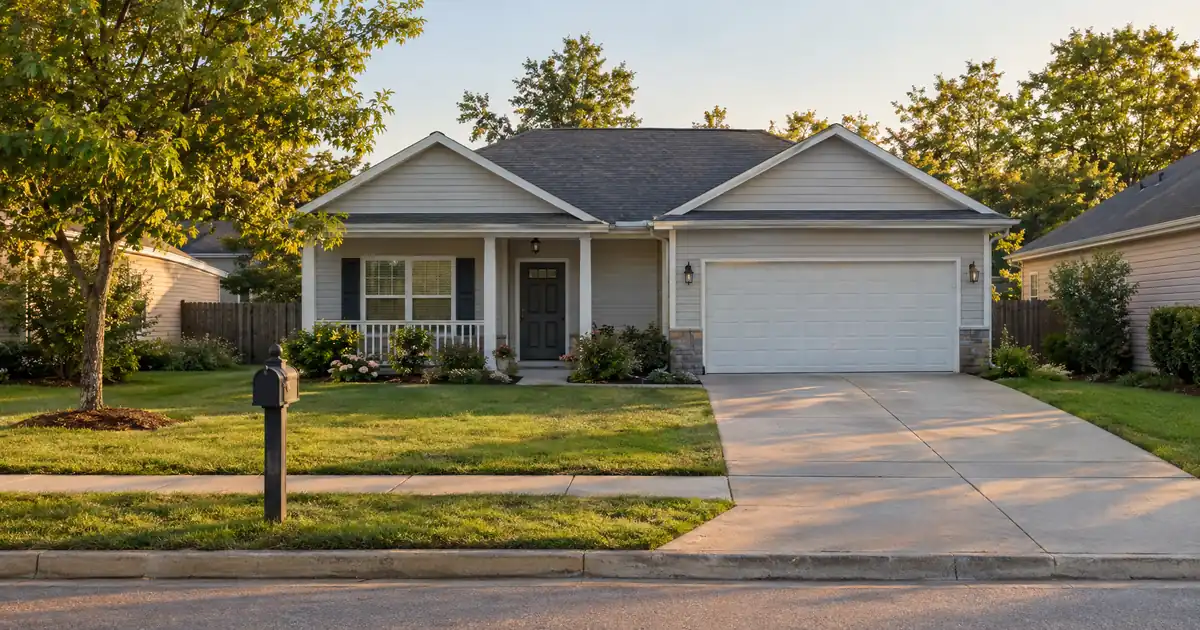
The Quick Read: Your equity sets the most you can take, but your plan and your budget should set the amount you actually take. With plenty of equity, the maximum is rarely the right number. Start with what the money must do, add the closing costs, and test the new payment against your household budget. Whatever equity you leave untouched is a deliberate cushion, and it protects you.
Key Takeaways
- Having equity is not the same as being able to borrow all of it. The program, the property type and the appraisal set the ceiling.
- Size the loan from the need up, not from the ceiling down.
- A larger balance means a larger payment, and the lender still has to qualify you at that bigger loan.
- A cash-out refinance replaces your current mortgage. That matters most if your current loan has good terms.
- Equity you leave in the home is your protection if values dip or income stalls.
The Four-Step Sizing Method
Choose the amount in four steps, and treat the maximum as a limit rather than a goal.
1. Name the purpose and the number. A repair estimate, a debt payoff total, or a defined goal. No purpose, no amount.
2. Add the costs. Closing costs and any financed insurance or fees come out of what you receive. Add them to find the loan size you need.
3. Compare to the ceiling. The gap between your needed loan and the program ceiling is equity you are choosing to keep.
4. Test the payment. Run the new total payment against your monthly budget, including taxes and insurance. If it is tight, shrink the draw.
Most homeowners with large equity skip step four. They see a big ceiling and treat it as a target. That is the mistake this article is built to prevent.
Your Equity Versus Your Maximum
Equity is what your home is worth minus what you owe on it. Loan-to-value (LTV) is the loan balance divided by the home’s appraised value. A cash-out refinance has a ceiling: the highest LTV the program allows.
Here is the formula in plain steps:
- Appraised value × the program’s maximum LTV = the largest new loan.
- Largest new loan − payoff of your current mortgage and any other liens being paid = gross cash.
- Gross cash − closing costs and financed fees = cash in your hand.
Say your home appraises at 100% of its value and you owe 30%. At an 80% ceiling, the largest new loan is 80%. Before costs, the most cash is 50% of the home’s value. That is the ceiling. It is not a recommendation.
If you want the mechanics of the loan itself, Lendmire’s cash-out refinance programs page walks through the options. One note: the appraisal drives the whole calculation. A lower-than-expected value shrinks the ceiling, so treat any pre-appraisal number as an estimate.
From Gross Loan to Net Cash
Most people confuse the loan amount with the cash they receive. They are different numbers.
Use this worksheet, in order:
1. Appraised value.
2. Multiply by the program’s maximum LTV. That is the loan ceiling.
3. Subtract the payoff of your current first mortgage.
4. Subtract any other lien you are paying off, such as a home equity line.
5. Subtract closing costs and any financed fees.
6. What remains is your net cash.
Any lien that stays on the home still counts against the ceiling. A home equity line you keep eats room. A bigger value does not lift you past loan-size limits either. On high-value homes, the conforming loan limit can bind before your equity does. In that case the jumbo lanes take over, with their own credit and leverage rules.
Who Sets the Ceiling?
Across the wholesale programs Lendmire arranges loans through, the ceiling depends on what the home is and how you use it. Conventional cash-out refinances follow the same cap structure the agencies publish, and the Fannie Mae Eligibility Matrix sets cash-out limits by occupancy and unit count.
| Property type | Conventional cash-out ceiling |
|---|---|
| 1-unit primary residence | 80% LTV |
| 2–4 unit primary residence | 75% LTV |
| Second home | 75% LTV |
| Investment property | 75% LTV |
Primary residences get the highest limit. If your title question involves a second home or rental, occupancy decides the leverage, and the table above is the answer.
One wholesale lane reaches 89.99% LTV with no mortgage insurance. It requires a 680 score, a 50% total ratio, a thirty-year fixed rate, a primary residence, a conforming balance and six months of seasoning. It is not written in Texas, where the state constitution caps a homestead cash-out at the agency figure. Even where it fits, a higher ceiling does not make a higher draw wise. Final terms depend on lender guidelines, property type, leverage, and the borrower’s complete credit picture.
FHA and VA cash-out are owner-occupant products. FHA caps cash-out at a lower share of value than its purchase loans. VA can go well above conventional limits, but a financed funding fee counts inside that limit, and many individual lenders set a lower cap than the program allows. That gap between program rules and what one lender offers is real. Ask for the lender’s number, not the program’s.
FHA Streamline and VA IRRRL do not belong here. They are rate-and-term tools for existing government loans, and they allow essentially no cash back.
Where the General Rule Breaks
The 80% rule is a starting point. These cases change it.
- Limited cash-out versus cash-out. The Fannie Mae Selling Guide covers cash-out refinances separately from limited ones. A limited cash-out refinance can pay off only a purchase-money second lien and gives back little cash. Paying off any other second lien turns it into a full cash-out loan.
- Free and clear. A home with no mortgage still counts as a cash-out. At least one borrower must typically have been on title for six months, and primary residence rules require every borrower to occupy the home, per Freddie Mac Guide 4301.5.
- Seasoning. Across the conventional programs, the first mortgage being paid off must be at least 12 months old, counted from note date to note date. A borrower must also have been on title for 6 months. Delayed financing, inheritance and legal-award exceptions exist.
- Multi-unit homes. A duplex to a fourplex where you live drops the ceiling to 75%.
- Appraisal shortfalls. A value below your hopes cuts the cash dollar for dollar.
Every parameter is subject to lender guidelines and full file review. Nothing here is a commitment to lend.
Pick the Amount: Four Tests
Run your number through each test. If it fails one, shrink it.
Purpose test. Can you name what each dollar does? Money with a job (a roof, a payoff, a defined project) passes. Money held “just in case” usually fails.
Payment test. A bigger loan means a bigger payment. Lenders check your credit, income and total debt ratio at the new balance. Equity is not a substitute for income. The automated finding governs most conventional files, with a total ratio ceiling of 50%. Passing the lender’s test is the minimum. Your own budget should be stricter.
Break-even test. Every added dollar of loan carries interest cost and often a share of closing costs. Ask what each extra dollar earns you or saves you. If the project saves less than it costs, skip that portion.
Cushion test. Decide how much equity you will not touch. Values can drop and income can pause. Equity left alone is the buffer. With lots of equity, you can afford to leave a lot of it.
Conservative, Moderate and Maximum Draws
Here is the same home at three draw sizes. Assume the home is valued at 100%, the current loan is 30% of value, and the conventional ceiling is 80%. These percentages are illustrations, not quotes.
| Draw | New loan (% of value) | Cash before costs | Equity left | Risk profile |
|---|---|---|---|---|
| Conservative | 40% | 10% of value | 60% | Low; payment barely moves |
| Moderate | 55% | 25% of value | 45% | Balanced; budget check needed |
| Maximum | 80% | 50% of value | 20% | High; thin cushion |
The maximum draw leaves the least protection and carries the largest payment. The conservative draw may be all the project needs. Moderate fits larger plans with a clear payoff.
Three Worked Scenarios
A high-equity primary residence. The owner owes 25% of value and wants a kitchen project costing about 12% of value. The ceiling is 80%. The needed loan is about 37% plus closing costs, call it roughly 40%. Taking the full 80% would mean borrowing against more than the project needs. The right draw is the smaller one.
A nearly paid-off home. The owner owes under 5% of value. A cash-out refinance here is a brand-new mortgage on a home with almost none. The cash-out rules treat a free-and-clear home the same way. The owner should ask whether a smaller, targeted product fits better, since refinancing replaces the whole balance to access part of the equity.
A high-value home. Value is large and equity is huge, but the loan needed is above the conforming limit. Loan-size limits bind first, and the jumbo lanes apply, with their own credit and leverage rules. The ceiling is a loan-size question, not an equity one. Size the loan to the need, then see which lane it lands in.
Sizing by Use of Funds
| Use of funds | Sizing logic |
|---|---|
| Home renovation | Contractor estimate plus a buffer for overruns, plus closing costs |
| Debt payoff | Exact payoff total only; do not round up |
| Education or emergency | Defined amount; keep the rest in equity |
| Large purchase or investment | Smallest draw that works; the risk sits with you |
The CFPB’s research on cash-out refinancing found that moving non-mortgage debt into mortgage debt raises the stakes. Missing credit-card payments is unlikely to cost you a home. Missing mortgage payments can. Debt payoff is the most common use of cash-out proceeds, and the risk is the reason to size it exactly.
Tax treatment can depend on your situation; borrowers should speak with a qualified tax professional before relying on any deduction or credit.
What Happens to Your Existing Loan?
A cash-out refinance replaces your current mortgage. That is the trade-off many homeowners overlook. You are resetting the whole balance to reach a slice of the equity.
If your current loan has strong terms, ask whether giving them up is worth the cash you need. A CFPB analysis of cash-out borrowers draws the line clearly. Cash-out refinances replace the original mortgage. Home equity loans and lines leave the first lien in place.
When the draw is small, that difference matters more. Resetting a large balance to pull out a small amount is often overkill. That is the point where a partial-draw alternative deserves a look.
Alternatives at Smaller Draw Sizes
| Option | Best fit |
|---|---|
| Cash-out refinance | Large amount; current loan has no special terms to protect |
| Home equity loan | Fixed amount, one-time need, keep your first loan |
| HELOC | Spread-out costs; flexible borrowing over time |
The short version: if you need a modest sum and your current loan is good, the smaller product often wins.
Overborrowing Red Flags
Check yourself against this list.
- You cannot name what each dollar is for.
- The amount is “whatever the ceiling allows.”
- The new payment only works if everything goes right.
- You are rolling closing costs into a larger draw without checking what that adds.
- The cash is covering ongoing spending, not a one-time need.
- You would have little equity left if values fell.
- You are paying off unsecured debt but expect to run it up again.
Two or more checks means shrink the draw.
Key Terms Defined
- Equity: The home’s value minus what you owe on it.
- Loan-to-value (LTV): The loan balance divided by the appraised value.
- Cash-out ceiling: The highest LTV a program allows on a cash-out loan.
- Seasoning: The waiting period a loan or title must hold before a refinance.
- Limited cash-out refinance: A refinance that pays off the first mortgage and costs, with only incidental cash back.
- Mortgage insurance: Coverage on loans above 80% LTV that cancels at 80% and ends automatically at 78%. These specifics are subject to lender guidelines and a full review of property, leverage, and credit.
Frequently Asked Questions
Can I take out all of my equity?
No. Conventional cash-out on a one-unit primary residence stops at 80% LTV, and every lien still on the home counts toward that limit. Government programs differ, and individual lenders may set lower caps than the program allows. Terms depend on the lender’s guidelines, the property type, the leverage, and a full review of the credit profile.
How much cash will I really receive?
Less than the loan ceiling suggests. Your payoff, any other liens, closing costs and financed fees all come out first. The worksheet above shows the order. The Loan Estimate shows the final figures.
Does more equity make approval automatic?
No. Credit, income, debt ratio, occupancy and seasoning still apply. The lender qualifies you at the larger loan amount, so equity cannot stand in for income.
Should I take less than the maximum?
Usually, yes. The right amount is your need plus costs, plus a cushion for safety. The maximum is a limit on the program, not a recommendation.
What if my home is worth more than the loan limit?
Loan-size limits can bind before your equity does. In that case the jumbo lanes apply, with their own credit and leverage rules, and the amount follows your need rather than your equity.
Next Step
If you are weighing a cash-out refinance against keeping the loan you have, Lendmire can help you compare the programs and the equity each one reaches. Bring your purpose, your current balance and a realistic budget, and the numbers will point to an amount that makes sense. A strong equity position gives you choices, and the best of them is often borrowing less than you could.
For your own numbers, request a scenario review with Lendmire.
For current guidelines and terms, see Lendmire’s refinance programs page.
About Lendmire
Lendmire is a mortgage brokerage (NMLS# 2371349) licensed for consumer mortgage lending in 16 states, arranging FHA, VA, conventional and jumbo purchase and refinance loans through a wholesale lending network. Eligibility is determined by the lender on each file. Scotsman Guide named Lendmire a Top Mortgage Workplace in both 2025 and 2026.
Get Started
Ready to find the right loan for you?
In about 30 seconds you can review financing options available for your home or investment property. No commitment required.
Informational only. Not a Loan Estimate, approval, or commitment to lend. Program availability and eligibility are subject to lender guidelines, credit approval, property review, and underwriting.
References
1. Fannie Mae Eligibility Matrix
2. Fannie Mae Selling Guide B2-1.3-03
4. CFPB: Cash-out refinances and paydown behavior of non-mortgage debt balances
5. CFPB Office of Research blog: cash-out refinance mortgages and their borrowers
This article is part of Lendmire’s Refinance series — every loan program’s qualification details, guidelines, and scenarios live on the loan options page.
Related reading: Can an Heir Get a Cash-Out Refinance Before Six Months on Title? · How to Turn Cash-Out Refinance Equity Into a Second Home Down Payment · How to Remove Your Ex From Title and Note With a Cash-Out Refinance
Brandon Miller
Founder & CEO, Mortgage Loan Originator, Lendmire LLC
- Mortgage Loan Originator · NMLS# 1129696 · Verify on NMLS Consumer Access
- North Carolina Real Estate Broker · License# 343312 · Verify on NCREC
- North Carolina Insurance Producer · License# 19053198 · Property, Casualty, Life, Health · Verify on NAIC SBS
- Lendmire LLC · Firm NMLS# 2371349 · Verify firm licensure
Legal disclosures. Lendmire (NMLS# 2371349) is a state-licensed mortgage brokerage that arranges financing through wholesale lender relationships. Lendmire is not a direct lender, depository institution, or registered financial advisor. The discussion above is general informational content about real estate financing — it is not financial, legal, or tax advice, and readers should consult licensed professionals for guidance on their individual circumstances. Loan inquiries are subject to lender underwriting; this article does not represent a commitment to lend. Loan terms, rates, and qualification standards vary by borrower, property, and state, and are subject to change at any time. Equal Housing Opportunity. NMLS Consumer Access: nmlsconsumeraccess.org.