
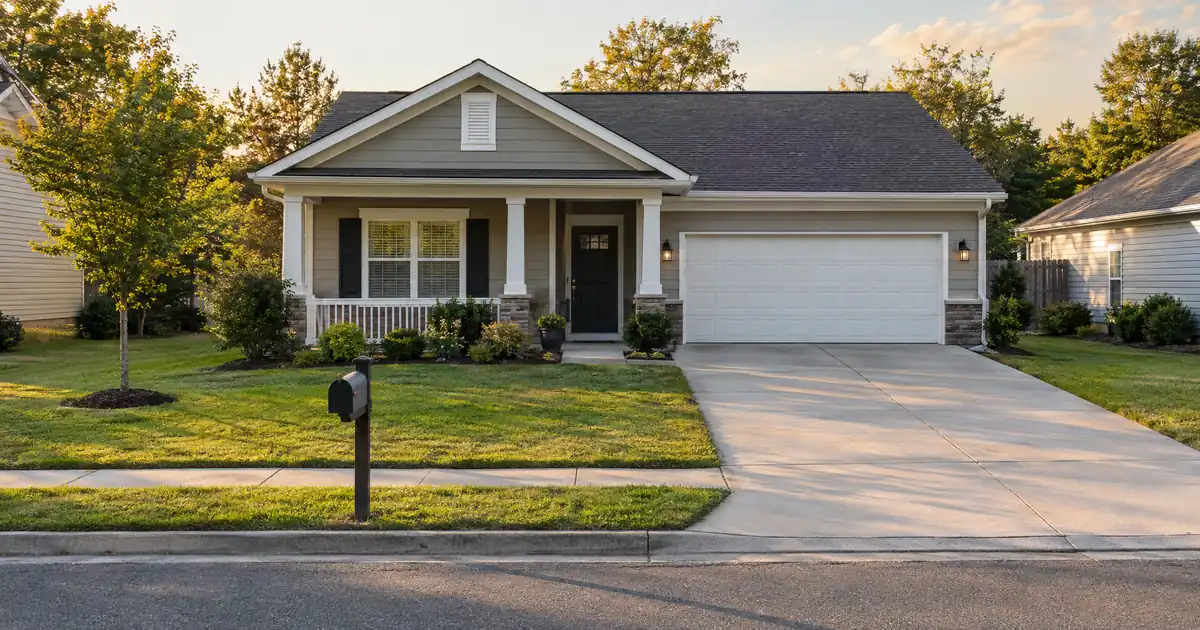
The Quick Read: Usually no. The blocker is title, not occupancy. An heir can skip the normal 12-month wait on an inherited home, but the heir generally has to hold legal title first. During open probate, title often still sits with the estate. Homes that pass outside probate can move sooner.
Why Does Title Block the Loan?
Title is the blocker because a refinance pays off or pulls equity from a home that the borrower already owns. During open probate, the estate often owns it. You may be the named heir in a will, but a will alone does not move ownership into your name.
Probate is the court process that sorts out a person’s property after death. Depending on the case, it identifies heirs, pays creditors and transfers title. An executor, or an administrator when there is no will, gets court papers that prove authority to act. Those papers are called letters testamentary (with a will) or letters of administration (without one). They let the executor deal with the home. They do not make you the owner.
Occupancy is a separate question. Plenty of heirs assume the 12-month ownership rule is the problem. It is not. FHA waives it for heirs in the right situation, as the next sections explain. What remains is whether your name is on the deed.
Picture a sole heir who has lived in a late parent’s paid-off home for years. The will names the heir. The court has not yet approved distribution. That heir has the occupancy story a lender wants, but no recorded ownership. A lender and title insurer will want to see the title in the heir’s name before an FHA cash-out moves forward.
Some terms here trip people up. They are defined near the end, in Key Terms Defined.
The Probate Timeline, Stage by Stage
The stage you are in decides what is possible. The table shows where an FHA cash-out becomes realistic. Exact steps vary by state and by how the home was held, so treat it as a map and not a legal checklist.
| Stage | Who acts | FHA cash-out possible? |
|---|---|---|
| Death, probate not yet opened | Family, named executor | No |
| Court issues letters | Executor or administrator | No, estate still holds title |
| Debts and heirs sorted out | Executor, court | Usually not yet |
| Distribution approved | Executor, court | Not until title moves |
| Deed or court order recorded in heir’s name | Executor, title company | Yes, if other tests are met |
Notice that “probate closed” and “deed recorded in your name” are different moments. The second one is the one a lender cares about. A case can be technically open while an heir already holds a recorded deed. A case can also be closed on the court’s side while the paperwork lags. Ask your probate attorney which stage you are in. Ask the title company whether the title is ready to insure.
Lendmire does not run probate, and a probate attorney is the right voice on court steps. Where a mortgage broker helps is the lending side: sizing the equity, checking the occupancy history, and lining up the file so it is ready when the deed is.
When a First FHA Cash-Out Before Probate Closes Can Happen
It can happen when the home never needed probate, or when title has already moved. The sole heir, the surviving co-owner and the trust beneficiary all have different paths. A mortgage broker cannot decide which one applies to you. A title company and an attorney can.
Not every inherited home goes through probate. Some pass by survivorship, by trust, or by a transfer-on-death deed. In those cases the title may already be in a surviving owner’s or heir’s name. Whether a particular deed or trust works for an FHA loan is a call for the lender and the title company, so treat the paths below as “may,” not “will.”
| How the home passed | Title status | Cash-out outlook |
|---|---|---|
| Survivorship with a co-owner | Often already in survivor’s name | May be possible |
| Trust, successor in place | Held by the trust or beneficiary | Lender and title decide |
| Transfer-on-death deed | Moves when the deed is recorded | May be possible after recording |
| Will through probate | Estate holds until transfer | Usually after title moves |
In practice, title is the part of this file you cannot fix with a stronger application. An heir who gets the deed recorded and any title issues cleaned up early tends to have a smoother file. A borrower who starts the loan before the paperwork is settled often has to pause and wait.
If you are weighing the FHA route, Lendmire’s FHA cash-out refinance program page lays out the basic structure. Everything there is subject to lender guidelines and full file review.
What the Inheritance Exception Waives
FHA lets an heir skip the 12-month occupancy wait before a cash-out refinance. The catch is a condition: the heir cannot have treated the home as an investment property at any point since inheriting it. Everything else on the file still applies.
Under HUD’s FHA Handbook 4000.1, a refinance is a new mortgage that pays off existing debt or withdraws equity for a borrower who holds legal title. The same handbook says a cash-out refinance is allowed on a principal residence. The standard test is that the borrower owned and occupied the home for the 12 months before the FHA case number is assigned. The case number is the identifier HUD assigns to an FHA loan file. For an inherited home, the heir’s “no investment use since inheritance” condition takes the place of that 12-month test.
Three details matter in practice:
- A paid-off home counts. HUD’s definition covers withdrawing equity where no mortgage exists. An inherited home with no loan on it can qualify as a cash-out, and this is what “first” cash-out usually means for an heir.
- Renting it first breaks the exception. If the heir rents the home after inheriting, the waiver is lost. The heir then has to live there as a principal residence for 12 months before a cash-out. A short rental to cover costs can cost you a year.
- Older guidance was stricter. HUD’s archived refinance reference guide asked the heir to have lived in the home since the inheritance and required the lender to document it. It is superseded, so the current handbook governs. It still shows how closely lenders look at occupancy history.
The exception removes a waiting period. It does not remove title, credit, income or appraised equity from the picture.
What You Still Have to Qualify For
You are underwritten as a regular borrower. Your own credit, income and debts decide the file. The decedent’s income and credit do not carry over, and the inheritance itself does not count as income.
Here is what the lender looks at across the wholesale programs Lendmire works with:
- Credit. The programs Lendmire places FHA loans with start at a decision score of 580. Some lenders set a higher floor. Credit events carry HUD waiting periods: two years from a chapter 7 discharge and three years from a foreclosure.
- Ratios. The base pair is 31/43, meaning housing costs and total debts as a share of income. Documented compensating factors can stretch it as far as 40/50 at the top tier. The automated finding governs most files.
- Equity. An FHA cash-out reaches 80% LTV. LTV is the loan amount divided by the home’s appraised value. Any other lien that stays on the home counts toward that 80%, so you need at least 20% equity left after closing.
- Occupancy. The home must be your principal residence. Investment properties and second homes are not eligible for FHA cash-out.
- Co-borrower income. On a cash-out, income from a non-occupant co-borrower generally cannot be used to qualify. Income from a rented accessory unit cannot either. The purchase program is more flexible on co-borrowers, so do not assume the rules carry over. Confirm current handbook language with your loan officer.
On cost, FHA charges mortgage insurance. That is a monthly-and-upfront premium that protects the lender if the loan defaults. The upfront premium is 1.75% of the base loan and is typically financed. The annual premium runs between 0.15% and 0.75% of the balance, depending on term, loan amount and LTV. At 80% LTV on a thirty-year loan, it ends after eleven years. Those are program mechanics, not a price quote. You will see the actual numbers on a Loan Estimate.
The Existing Loan: Paying It Off or Keeping It
If the decedent left a mortgage, the servicer will want proof that you have a right to the home. The CFPB says that proof may include the executed will and the death certificate, or a letter from the executor. The CFPB also points inheriting households to HUD-approved housing counseling agencies and the HOPE Hotline at (888) 995-HOPE (4673).
A payoff statement from the servicer is needed to refinance the existing loan. Expect to supply a current one. A clean recent payment history on the existing loan also matters, so someone has to keep the mortgage, insurance and property taxes paid during probate. If the home passes through probate, the executor is generally responsible. A missed payment now can create trouble for a later refinance.
Keeping the loan for a while can be a sound choice. A confirmed successor in interest, meaning an heir recognized by the servicer, gets servicing rights on the existing loan. Those rights are not a new loan. The CFPB also says that when you already hold title, the lender is not required to run an ability-to-repay check just to let you take over the existing mortgage. That is a separate question from qualifying for new cash-out. A new FHA cash-out is fully underwritten.
An inherited reverse mortgage follows its own rules, with defined payoff options for heirs. If that is your situation, ask the servicer for the options in writing before you plan a refinance.
Common Scenarios, Without the Dollar Signs
The sole heir, paid-off home, will in probate. This is the textbook case. The occupancy exception likely applies. The cash-out waits until the deed is in the heir’s name and the title company can insure it. Appraised equity at the 80% cap then sets the ceiling.
Several heirs, one wants to keep the house. Owners on title generally have to sign, and a buyout of siblings is treated as a refinance. Expect more moving parts here, and ask the probate attorney how the buyout is documented.
The home sits in a trust. The trust terms and the title company decide whether the lender can proceed. Sometimes the path is shorter than probate. Sometimes it is not.
The inherited loan is FHA. The heir may keep paying it and refinance later. An FHA Streamline can swap an existing FHA loan with no appraisal and a limited credit review, but it is a rate-and-term tool with a net tangible benefit test. It does not give you cash.
The heir rented the home to a tenant first. The exception is gone. The heir needs 12 months of principal-residence occupancy before cash-out.
If you are curious how the same question plays out on other programs, Lendmire’s piece Can You Get Your First VA Cash-Out Before Probate Closes? covers the VA side.
If You Cannot Wait for Title
The honest options are to wait, to keep the existing loan current, or to talk to the estate’s attorney about what the estate itself can do. Executors sometimes can borrow against estate property, but that is an estate-level decision that usually needs court authority. It is a different thing from an heir’s FHA mortgage.
Products marketed as probate advances are not FHA loans. They are built around the estate or an expected inheritance, not the home you will live in. Weigh them with an attorney, not a loan officer.
A practical sequence:
1. Keep the mortgage, insurance and taxes current.
2. Do not rent the home out if you may use the FHA exception.
3. Ask the attorney when title will be conveyed and by what document.
4. Gather your own income and credit documents early.
5. Get a title check as soon as the deed is recorded.
Tax treatment can depend on your situation; borrowers should speak with a qualified tax professional before relying on any deduction or credit.
Key Terms Defined
Probate: The court process that identifies heirs, pays debts and transfers a deceased person’s property.
Letters testamentary / letters of administration: Court papers that prove an executor or administrator has authority to act for the estate.
Cash-out refinance: A new mortgage that pays off the old loan, or taps equity if no loan exists, and gives you the difference.
Case number: The identifier assigned to an FHA loan file, which anchors the occupancy test.
LTV: Loan-to-value, the loan amount as a percentage of the home’s appraised value.
Successor in interest: An heir the servicer recognizes as having rights to an existing mortgage.
Frequently Asked Questions
Can an executor do an FHA cash-out on a home in probate?
Not as the borrower on a typical FHA loan. FHA refinances are made to a borrower who holds legal title and will live in the home. An executor acts for the estate and usually does not meet that test. Estate-level borrowing is a separate question for the estate’s attorney.
Does the inheritance exception mean I can cash out immediately?
No. It removes only the 12-month occupancy wait. You still need title in your name, qualifying credit and income, and enough appraised equity under the 80% LTV cap. All of that is subject to lender guidelines and full file review.
What if the house has no mortgage on it?
Usually that still works. HUD’s definition of a cash-out refinance includes withdrawing equity where no mortgage exists, so a paid-off inherited home can qualify once title and the other tests are in place.
Does a will put the house in my name?
No. A will states wishes, but probate may still be needed to move title. Some homes pass outside probate through survivorship, a trust or a transfer-on-death deed, and those can move sooner.
What happens if I rent the house after inheriting it?
You lose the inheritance exception. Any investment use since inheriting means you would have to live in the home as your principal residence for 12 months before an FHA cash-out.
If you are weighing a cash-out refinance against keeping the loan you have, Lendmire can help you compare the programs and the equity each one reaches. You can request a scenario review to start.
About Lendmire
Lendmire is a mortgage brokerage (NMLS# 2371349) licensed for consumer mortgage lending in 16 states, arranging FHA, VA, conventional and jumbo purchase and refinance loans through a wholesale lending network. Eligibility is determined by the lender on each file. Scotsman Guide named Lendmire a Top Mortgage Workplace in both 2025 and 2026.
Get Started
Ready to find the right loan for you?
In about 30 seconds you can review financing options available for your home or investment property. No commitment required.
Informational only. Not a Loan Estimate, approval, or commitment to lend. Program availability and eligibility are subject to lender guidelines, credit approval, property review, and underwriting.
References
1. HUD FHA Single Family Housing Policy Handbook 4000.1
2. HUD Archives HOC Reference Guide, Refinances
3. CFPB: How do I get mortgage information about a home I inherited?
4. CFPB: I recently inherited a house; is the lender required to determine my ability to repay?
This article is part of Lendmire’s FHA Loan series — every loan program’s qualification details, guidelines, and scenarios live on the loan options page.
Related reading: Can an Heir Get an FHA Cash-Out in the First Year? · How to Get an FHA Cash-Out When Heirs Will Not Sell · Can a First-Time Equity Borrower Challenge a Low FHA Cash-Out Appraisal?
Brandon Miller
Founder & CEO, Mortgage Loan Originator, Lendmire LLC
- Mortgage Loan Originator · NMLS# 1129696 · Verify on NMLS Consumer Access
- North Carolina Real Estate Broker · License# 343312 · Verify on NCREC
- North Carolina Insurance Producer · License# 19053198 · Property, Casualty, Life, Health · Verify on NAIC SBS
- Lendmire LLC · Firm NMLS# 2371349 · Verify firm licensure
Important disclosures. Lendmire (NMLS# 2371349) is a licensed mortgage brokerage. Lendmire is not a direct lender, depository institution, or financial advisor. All loan inquiries are subject to lender underwriting; this article does not constitute a commitment to lend. Rates, terms, and program guidelines are subject to change without notice and vary by borrower profile, property type, and state. Information in this article is general in nature and is not financial, legal, or tax advice. Equal Housing Opportunity. NMLS Consumer Access: nmlsconsumeraccess.org.