
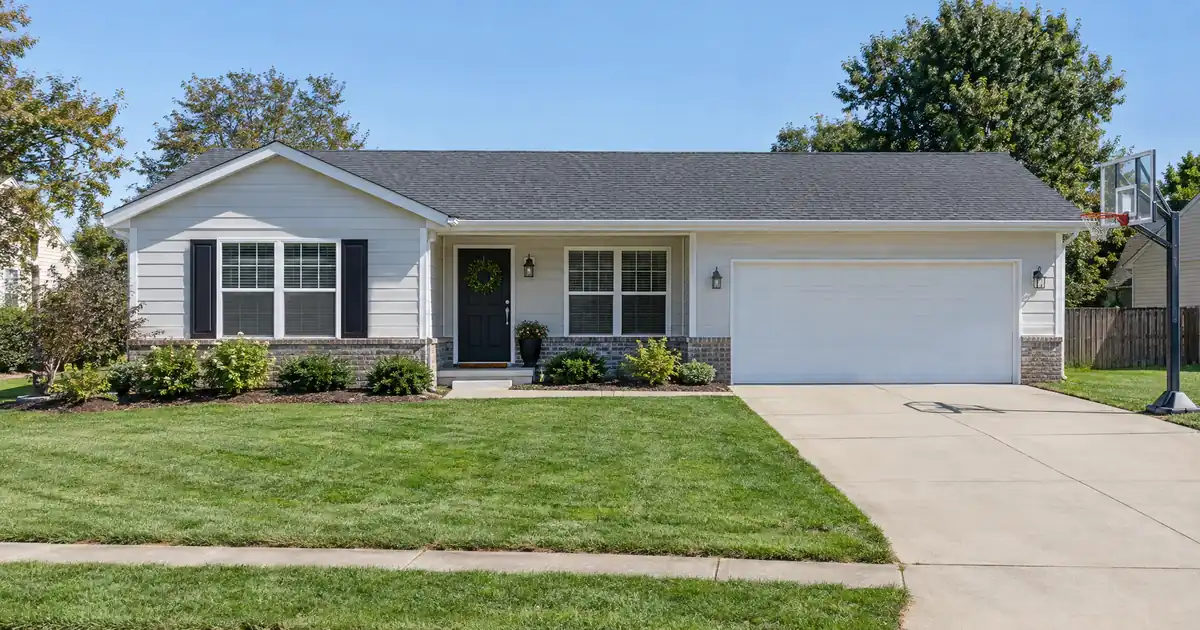
The Quick Read: It depends, and it fits fewer people than the marketing suggests. An FHA cash-out tends to work when you have owned and lived in the home for at least 12 months, the cash solves one specific problem, and you are comfortable replacing your whole current mortgage. It tends not to work when your current loan is a good one you would rather keep. Lendmire arranges these loans through wholesale lenders, so the sections below walk through the mechanics, the exceptions, and a decision path.
What Does “First-Time Equity Borrower” Mean Here?
It means the first time you borrow against the equity in your home. It does not mean first-time homebuyer. You may have owned your house for ten years and still be new to this.
FHA cash-out estimate
Seeded with an example value, a balance to match, and a round cash request; change any field.
Editable benchmark: 7.40% as of October 15, 2026 · Freddie Mac 30-year average via FRED®. A conventional market reference, not an FHA cash-out refinance quote.
Illustrative starting assumptions: a $350,000 home value, a $193,000 current balance, the FHA cap on a principal residence with the upfront premium financed, a thirty-year term at the current Freddie Mac benchmark, and property taxes and insurance estimated at typical national rates. Every field is editable.
An illustration, not a Loan Estimate, an approval, a quote, or a commitment to lend. The rate shown is the weekly Freddie Mac thirty-year conventional benchmark, used as a market reference; an FHA cash-out is priced by the lender at lock, and this is not an FHA cash-out refinance quote. HUD’s cap limits the base loan; the upfront premium is financed on top of the capped base loan; the monthly premium for the first year follows the snapshot’s schedule. Cash available means the base loan the cap permits less the balances retired, before closing costs, which this calculator leaves out. The line figure applies the line program’s combined loan-to-value ceiling to the same value and balance. Taxes and insurance are estimates you can edit. Licensed in sixteen states for consumer mortgages.
That distinction matters because first-timers tend to make the same three mistakes. They take the maximum instead of the amount they need. They treat equity like income. And they underestimate how much the new payment changes the monthly budget.
How Does an FHA Cash-Out Actually Work?
An FHA cash-out replaces your current mortgage with a new, larger one. The new loan pays off the old balance, covers closing costs, and the remainder comes to you as cash. It does not sit on top of your existing loan.
The CFPB describes it the same way: you take out a larger mortgage, use part of it to pay off the current one, and take the rest in cash. The same guide warns that your monthly payment may rise, the payoff period may lengthen, and your loan terms reset. Because your home is the collateral, missed payments put you at risk of foreclosure.
Here is the part first-timers miss. Everything about your current loan goes away. The balance, the payoff schedule, and the lender’s terms are all replaced. If your existing mortgage is a good one, you are giving it up to get the cash.
You do not need an existing FHA loan to use this program. Any owner-occupied home that meets the rules can qualify, subject to lender guidelines and full file review. The FHA cash-out refinance program page lays out how Lendmire places these files.
How Much Can You Borrow?
Up to 80% of the home’s appraised value. That is the cap on FHA cash-out refinances, and it means you keep at least 20% equity after closing. HUD’s Handbook 4000.1 Update 7.5 transmittal records that the maximum loan-to-value (LTV) on cash-out refinances was lowered to 80%.
LTV is the new loan balance divided by the home’s appraised value. If you see 85% quoted on an older web page, it is out of date.
Two other limits matter in practice:
- The appraisal sets the value. It values the home as it stands today, not what you plan to spend on it.
- County loan limits apply. FHA sets maximum loan amounts by county, and they change every year. Your lender can tell you the figure for your county.
Any junior liens that stay in place count against the cap too. So a home with a second mortgage leaves less room for cash than the 80% number suggests.
What Does It Take to Qualify?
Occupancy, payment history, credit, and income against ratios. Each one can decide the outcome, and the appraisal and lender guidelines sit on top.
Occupancy and ownership. The home must be your principal residence. Across the wholesale programs Lendmire places FHA files with, the home must be owned and occupied for 12 months before the case number is assigned. HUD’s refinance reference guide confirms the owner-occupancy principle, and notes that a home owned free and clear can still be refinanced as a cash-out. A non-occupant co-borrower cannot be added to help the file qualify.
Payment history. Expect the lender to look hard at the last 12 months of payments on the mortgage being refinanced. HUD’s guidance on cash-out has historically required those payments to be made within the month due. A single late payment can derail the file, so pull your own record before you apply.
Credit. The wholesale programs Lendmire works with start at a 580 decision score. HUD has a lower tier, but those programs do not reach below 580. Some lenders set a higher floor on cash-out files, so a score that works for a purchase may not clear a cash-out.
Ratios. Lenders compare your housing payment and your total debts to your income. The base pair is 31/43 with no compensating factors. Documented compensating factors, such as strong reserves or a long job history, can stretch that as far as 40/50 at the top tier. The automated underwriting finding governs most files.
Multi-unit homes. A three- or four-unit home you live in adds extra tests under the HUD archive guide, including a self-sufficiency test and reserves after closing. Treat that as a general picture and ask the lender for the current rule.
What Does the Mortgage Insurance Do to the Math?
It adds two layers of cost that a conventional loan with healthy equity may not carry. FHA charges an upfront premium of 1.75% of the base loan, which is usually financed into the balance. It also charges an annual premium, between 0.15% and 0.75% of the balance depending on term, loan amount, and LTV.
Duration matters. On a thirty-year loan above 90% LTV, the annual premium lasts the full term. At or below 90%, it ends after eleven years. Since a cash-out tops out at 80%, that second case is the one that usually applies here, though the exact schedule depends on your loan.
The premium applies to the whole new balance, not only the cash you take out. HUD revised the annual premium schedule in a mortgagee letter, so check the current table rather than relying on older articles.
Add closing costs on the entire new balance, and the real price of the cash is higher than the cash amount suggests. That is not a reason to skip the loan. It is a reason to ask what the cash buys.
Is This You? A Fit Check
| Your situation | Likely best fit | Why |
|---|---|---|
| Current mortgage is one you like | Keep it, consider a second lien | Cash-out replaces the whole loan |
| Mid-range credit, needs a large sum | FHA cash-out may fit | Flexible scoring and ratios |
| Strong credit, plenty of equity | Compare conventional | Mortgage insurance may cost more on FHA |
| Small cash need | Probably not a cash-out | Closing costs apply to the full balance |
| Owned less than 12 months | Not yet | Seasoning requirement not met |
This is a starting point, not a verdict. Your file decides.
How Does It Compare With Other Ways to Tap Equity?
| Option | Replaces first mortgage? | Best when |
|---|---|---|
| FHA cash-out | Yes | Your first mortgage has no rate advantage to protect |
| Conventional cash-out | Yes | Credit and equity are strong |
| Home equity loan | No | You want a fixed sum and keep your first loan |
| HELOC | No | You want flexible access over time |
For a first-time equity borrower, that is the central question: do you need to touch the first mortgage at all?
If you are weighing that choice, Lendmire’s piece Should a First-Time Equity Borrower Use Cash-Out Refinance Over a HELOC? walks through the tradeoff in more depth.
A Decision Path in Five Questions
Answer these in order. Each question is worded so that a “yes” is the answer you want. Stop at the first “no.”
1. Have you lived in and owned the home for 12 months? If not, you are not eligible yet.
2. Have all payments on your current mortgage been on time for the last 12 months? If not, fix that first.
3. Can you name the specific use for the cash? “Just in case” is a warning sign.
4. Are you comfortable replacing your current mortgage? If not, price a second lien first.
5. Can you carry the new payment if your income dips? A larger loan usually means a larger payment.
Five yeses means an FHA cash-out is worth a serious look. Any single no is a signal to stop, fix that item or choose a different route, and then come back.
What Is the Right Amount of Cash to Take?
The amount you need, not the amount you can. The 80% cap is a ceiling, not a target. Every dollar you borrow is financed with closing costs and mortgage insurance attached, and repaid over a long term.
A useful test is whether the use builds value or cuts costs. Repairs that protect the home, or paying off higher-cost debt on a plan you will actually keep, are in that column. Spending that leaves nothing behind is not. Replacing credit-card debt with home-secured debt lowers the number of payments, but it puts your house behind that debt. If the cards fill up again, you have both.
What Can Go Wrong?
Three things deserve a straight look.
Home values fall. Your cushion shrinks, and a later refinance gets harder.
Payment strain. The loan’s term resets and the balance grows. Your payment may go up, which the CFPB flags for any cash-out.
You are stuck. Leaving FHA later usually means another refinance with its own costs. Whether that makes sense depends on your equity and credit at that point.
Practitioner view: first-timers usually arrive with a number in mind for the cash and no number in mind for the payment. The better conversation starts from the monthly budget and works backward to the cash amount.
What Will the Lender Ask For?
Expect the usual set. These are typical, not a fixed HUD list:
- Pay stubs and traditional personal-income documentation
- Bank statements
- Your current mortgage statement and payoff
- Homeowners insurance
- Proof you live in the home
- A title report and an appraisal, which the lender orders
Program terms vary by lender, and nothing here is a commitment to lend. Tax treatment can depend on your situation; borrowers should speak with a qualified tax professional before relying on any deduction or credit.
Frequently Asked Questions
Do I need an existing FHA loan to get an FHA cash-out?
No. The program works for any qualifying owner-occupied home, whatever loan you have now. If you do have an older FHA loan, replacing it with a new one resets the mortgage insurance schedule, so confirm the details with your lender.
Can I use an FHA cash-out on a second home or rental?
No. Occupancy decides the leverage, and FHA cash-out is for the home you live in as your principal residence.
Is there an exception to the 12-month ownership rule?
Handbook exceptions exist, with inherited homes the common example, but they carry conditions. Confirm the current rule with your lender before counting on one.
Is an FHA Streamline the same as a cash-out?
No. A Streamline refinances an existing FHA loan with no appraisal and a limited credit review. It requires a net tangible benefit and does not pay you cash.
Will an FHA cash-out lower my monthly payment?
Often not. A larger balance, a reset term, and mortgage insurance on the full amount can push the payment up. Ask for the full Loan Estimate and compare before deciding.
If you are weighing a cash-out refinance against keeping the loan you have, Lendmire can help you compare the programs and the equity each one reaches.
For your own numbers, request a scenario review with Lendmire.
For current guidelines and terms, see Lendmire’s FHA loan programs page.
About Lendmire
Lendmire (NMLS# 2371349) is a mortgage brokerage serving homeowners and home buyers in 16 states. FHA, VA, conventional and jumbo purchase and refinance loans are arranged through wholesale lending channels; Lendmire brokers the financing and the lender underwrites each application. Scotsman Guide named Lendmire a Top Mortgage Workplace in both 2025 and 2026.
Get Started
Ready to find the right loan for you?
In about 30 seconds you can review financing options available for your home or investment property. No commitment required.
Informational only. Not a Loan Estimate, approval, or commitment to lend. Program availability and eligibility are subject to lender guidelines, credit approval, property review, and underwriting.
References
1. CFPB, Using home equity to meet financial needs
2. HUD Handbook 4000.1 Update 7.5 transmittal
3. HUD Archives HOC Reference Guide, Refinances
4. HUD Mortgagee Letter 2023-05
This article is part of Lendmire’s FHA cash-out refinance program — full qualification details, guidelines, and scenarios live on the program page.
Related reading: Why Homeowners Are Tapping Record Equity With an FHA Cash-Out Refinance? · How to Apply for an FHA Cash-Out Refinance Step by Step · Can You Use FHA Cash-Out Money for Tuition or a Business?
Brandon Miller
Founder & CEO, Mortgage Loan Originator, Lendmire LLC
- Mortgage Loan Originator · NMLS# 1129696 · Verify on NMLS Consumer Access
- North Carolina Real Estate Broker · License# 343312 · Verify on NCREC
- North Carolina Insurance Producer · License# 19053198 · Property, Casualty, Life, Health · Verify on NAIC SBS
- Lendmire LLC · Firm NMLS# 2371349 · Verify firm licensure
Disclosure information. Lendmire is a state-licensed mortgage brokerage under NMLS# 2371349. Lendmire is not a depository institution, direct lender, or financial advisor — all loans referenced are placed through wholesale lender partners and are subject to each lender's underwriting standards. This article is provided for general informational purposes and is not a commitment to lend, nor does it constitute financial, legal, or tax advice. Loan programs, terms, rates, and qualification standards change without notice and depend on borrower profile, property type, and the state in which the subject property is located. Equal Housing Opportunity provider. NMLS Consumer Access: nmlsconsumeraccess.org.