
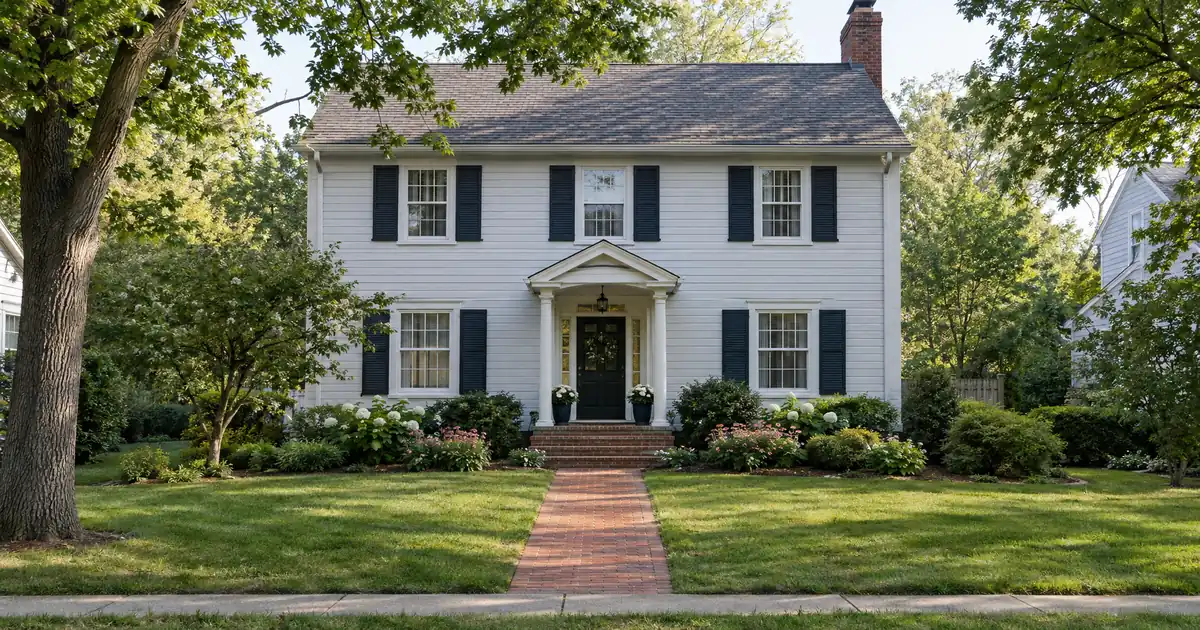
The Quick Read: Only when you can point to a specific, documentable problem. A wrong square-footage figure, a missed addition, or comparable sales that don’t resemble your home all qualify. Being disappointed by the number does not. You also have no formal right to appeal on your own. The request goes through your loan officer to the underwriter, so it works best when the evidence is clean.
Why Does a Small Miss Hurt So Much on a Cash-Out?
A cash-out refinance replaces your current mortgage with a new, larger one. The new loan is sized off the appraisal, so the appraisal sets your ceiling. On the FHA cash-out refinance program, the ceiling is 80% of the appraised value, on a home you have owned and lived in for 12 months before the case number is assigned. Programs and file details are subject to lender guidelines and full file review.
Here is the catch. Your cash is not the loan. Your cash is the loan minus your payoff and costs. A small miss on value shaves the ceiling, and the shaving comes straight out of the cash you were counting on.
Run it as a modeled example, with all numbers as a percentage of the value you expected. Assume your current payoff equals 60% of that expected value. Costs come out of the cash on top of this, including the upfront mortgage insurance premium that FHA finances into the loan.
| Appraisal result | Max loan (80%) | Cash before costs |
|---|---|---|
| 100% of expected | 80% | 20% |
| 95% of expected | 76% | 16% |
| 90% of expected | 72% | 12% |
A 5% miss on value cuts the cash by a fifth. A 10% miss cuts it by two-fifths. If a small miss pushes the ceiling toward your payoff plus costs, the refinance stops making sense at all.
Lendmire’s piece How a Low Appraisal Limits an FHA Cash-Out at the Cap walks through that squeeze in more detail.
Which Misses Are Worth Disputing?
The ones with paper behind them. Sort what you find in the report into four buckets before you write a word.
| What you found | Type of miss | Evidence | Worth a request? |
|---|---|---|---|
| Wrong square footage or bed/bath count | Factual error | Plans, prior listing, measurements | Yes |
| Finished work left out | Omission | Permits, receipts, photos | Yes |
| Comps far away, dated, or unlike your home | Weak comps | Better recent sales nearby | Often |
| “It just feels low” | Opinion | None | Rarely |
Factual errors are the strongest case. The appraiser got a fact wrong, and a fact can be checked. Omissions come next, provided you can document them.
Comp disputes are harder. You are arguing about judgment, and appraisers often hold their ground. A few clearly better sales help. A long list of listings with asking prices does not, because asking prices are not closed sales.
The weakest case is disappointment. If the facts are right and the comps are reasonable, the number probably stands. Honestly, that is the most common outcome.
Should a Locked-In Homeowner Fight for This Refinance at All?
This is the question most dispute guides skip. If you hold a low-rate first mortgage, an FHA cash-out replaces it. The interest rate on your entire balance resets to today’s market, not just on the cash you pull out. That is the locked-in cost.
So before you fight for a higher appraisal, ask whether the refinance still makes sense at the cash level you will get. A winning dispute helps only if the deal was worth doing at the higher number.
| Path | What happens to your first mortgage | Cash? |
|---|---|---|
| FHA cash-out | Replaced | Yes, up to the 80% ceiling |
| Separate second lien or HELOC | Stays in place | Yes, from a different product |
| FHA Streamline (existing FHA loan) | Replaced, no appraisal | No cash |
| Do nothing | Stays | No |
A second lien is not an FHA product, and it carries its own qualification and costs. Still, it is the route that keeps your first mortgage intact. Lendmire’s piece Should a Homeowner With a Low First Mortgage Skip the Cash-Out Refinance? covers that trade in depth.
A Streamline is worth knowing about if you already have an FHA loan and only want a different payment structure. It skips the appraisal, so a low value cannot hurt it. It also cannot deliver cash.
Many borrowers in this spot find a middle answer. Dispute if the evidence is strong. If the revised number still leaves too little cash, let the refinance go and use another tool.
Do You Have a Right to Appeal?
You have a right to a copy of the appraisal. You do not have a formal appeal right. That distinction trips up a lot of homeowners.
Under the CFPB’s valuations rule summary, the lender must tell you at application that you can get a copy of the appraisal. You then receive it promptly after completion, with the exact timing depending on the file and the lender. You can waive the timing, but you still get the copy at or before closing. The copy itself is free, even though the appraisal has a fee.
The right to challenge the value is thinner. In 2024, FHA added a borrower-initiated Reconsideration of Value process. FHA rescinded it with Mortgagee Letter 2025-08, which restores the older language letting the underwriter request a review when the appraiser missed information that was relevant on the effective date. The NAR Washington Report notes that borrowers can still ask their lender about requesting one.
The takeaway is practical. You work through your loan officer and the lender’s underwriter. You do not file anything yourself, and you do not direct the appraiser.
How Does the Request Actually Work?
Here is the sequence, start to finish.
1. Get the report. Ask for it if it has not arrived.
2. Read it line by line. Check lot size, square footage, bedroom and bath counts, and listed upgrades. Then look at the comps: how far away, how recent, how similar.
3. Send a written request to your loan officer with evidence. Do not call the appraiser.
4. The underwriter decides. FHA puts the responsibility for reviewing the appraisal on the lender’s Direct Endorsement underwriter, not on the appraiser alone.
5. Three outcomes. The appraiser changes the value, keeps it, or explains it. The final Adjusted Value then drives your maximum loan.
The underwriter must give the appraiser all relevant data. Be aware that the appraiser may charge an additional fee when that data was not available on the effective date. So disputing is not always free.
Whether a second appraisal is possible depends on the lender and the current handbook, and it is not a borrower entitlement. Ask your loan officer rather than assuming. The ceiling itself is written into Handbook 4000.1 as updated by ML 2019-11.
What Does a Good Request Packet Look Like?
Short and organized. One page of text and your attachments beats five pages of frustration.
- Opening line. State the property and what you are asking for: a review of the value based on the items below.
- Numbered findings. Each is one sentence on what the report says and one on what is correct.
- Attachments, in the same order. Permits, receipts, photos, prior listing data, or a short list of better comparable sales.
- Tone. Calm and factual. The underwriter is your audience, not an opponent.
For comps, offer a few closed sales that are close by, recent, and similar in size and condition, and say why each is better than what the report used. Three strong comps beat ten weak ones.
If you suspect the value reflects bias rather than a factual issue, tell the lender in writing and say so plainly. A fair housing complaint is a separate path and can run alongside the request.
What About Repairs and Conditions?
FHA appraisals also flag health, safety, and condition items. A required repair is not a dispute of value, but it matters to your cash. If repairs must be done before closing, that money comes from you or reduces what the loan can fund, so factor it in.
Do not confuse a safety condition with a value opinion. You can often fix the condition and move on. You cannot dispute your way around it.
What If the Dispute Fails?
You have a short list of decisions, and they are mostly arithmetic.
1. Take the smaller loan, if the cash left still covers your purpose.
2. Bring cash to closing to cover a shortfall, if the refinance is otherwise worth it.
3. Change the product. A rate-and-term FHA refinance on a principal residence you have occupied for the previous twelve months reaches 97.75%, but it delivers no cash.
4. Keep the first mortgage and fund the need with a separate second lien.
5. Wait and re-appraise later, once comps change or improvements are finished and documented.
6. Walk away. The appraisal fee is typically paid even if the deal ends, so treat it as spent.
One more point. Mortgage insurance follows the loan amount and LTV. FHA charges an upfront premium of 1.75% of the base loan, which is financed, plus an annual premium that runs between 0.15% and 0.75% of the balance depending on term, amount, and LTV. At 80% LTV on a thirty-year loan, the annual premium ends after eleven years. A lower appraisal changes the loan amount and LTV, so the premium tier can shift with it. Each figure is subject to lender guidelines and a complete review of property type, leverage, and credit.
Key Terms Defined
Appraised value: the appraiser’s opinion of what your home is worth on a stated date, used to size the loan.
Adjusted Value: the value FHA uses to set the loan cap. It is usually the appraised value.
LTV (loan-to-value): the loan amount as a percentage of the home’s value.
CLTV (combined LTV): all liens on the home added together, as a percentage of value. A second lien that stays in place uses up room under the same cap.
Reconsideration of Value (ROV): a request that the appraiser review the value with new or corrected information.
Cash-out refinance: a new, larger mortgage that pays off the old one and gives you the difference in cash.
Frequently Asked Questions
Can I order my own appraisal?
Not for an FHA loan. The appraisal is ordered through the lender’s process, and the lender’s underwriter is responsible for reviewing it. You can supply evidence such as comps and receipts, but you do not choose or direct the appraiser.
Does a dispute cost anything?
Sometimes. Asking is free, but the appraiser may charge an additional fee if the data you supply was not available on the effective date. The original appraisal fee is typically paid whatever happens to the loan.
Will a second mortgage or HELOC raise my cash-out limit?
No. The 80% cap is a combined limit, so a second lien that stays in place counts toward it. It can only reduce the room available for the new FHA loan.
Can a low appraisal change my mortgage insurance?
Yes, in some cases. The annual premium depends on term, loan amount, and LTV, so a lower value can move you into a different tier. The upfront premium is a percentage of the base loan, so a smaller loan means a smaller premium dollar amount.
Is an FHA Streamline a way around a low appraisal?
Only if you already have an FHA loan and do not need cash. A Streamline requires no appraisal but has no cash-out feature. It is a payment-structure tool, not a way to reach equity.
Weighing It Against Keeping Your Loan
If you are weighing a cash-out refinance against keeping the loan you have, Lendmire can help you compare the programs and the equity each one reaches. It is a mortgage broker arranging loans through wholesale lenders, so the comparison runs across more than one option. Request a quote at Lendmire’s quote page or call 828-256-2183. Every program is subject to lender guidelines and full file review, and nothing here is a commitment to lend.
About Lendmire
Lendmire (NMLS# 2371349) is a mortgage broker licensed for consumer lending in 16 states. Lendmire arranges FHA, VA, conventional and jumbo purchase and refinance loans through wholesale lenders; every file is underwritten by the lender under the applicable program guidelines. Scotsman Guide named Lendmire a Top Mortgage Workplace in both 2025 and 2026.
Get Started
Ready to find the right loan for you?
In about 30 seconds you can review financing options available for your home or investment property. No commitment required.
Informational only. Not a Loan Estimate, approval, or commitment to lend. Program availability and eligibility are subject to lender guidelines, credit approval, property review, and underwriting.
References
1. CFPB ECOA Valuations Rule summary
2. HUD Mortgagee Letter 2025-08
3. NAR: FHA Rescinds Multiple Appraisal Related Policies
4. HUD Handbook 4000.1, Update 7 transmittal
This article is part of Lendmire’s FHA Loan series — every loan program’s qualification details, guidelines, and scenarios live on the loan options page.
Related reading: Texas FHA Cash-Out Requirements for a Homeowner With an Existing FHA Loan · How a Low Appraisal Cuts an FHA Cash-Out on an Existing FHA Loan · FHA Cash-Out Appraisal Requirements for an Existing FHA Loan
Brandon Miller
Founder & CEO, Mortgage Loan Originator, Lendmire LLC
- Mortgage Loan Originator · NMLS# 1129696 · Verify on NMLS Consumer Access
- North Carolina Real Estate Broker · License# 343312 · Verify on NCREC
- North Carolina Insurance Producer · License# 19053198 · Property, Casualty, Life, Health · Verify on NAIC SBS
- Lendmire LLC · Firm NMLS# 2371349 · Verify firm licensure
Legal disclosures. Lendmire (NMLS# 2371349) is a state-licensed mortgage brokerage that arranges financing through wholesale lender relationships. Lendmire is not a direct lender, depository institution, or registered financial advisor. The discussion above is general informational content about real estate financing — it is not financial, legal, or tax advice, and readers should consult licensed professionals for guidance on their individual circumstances. Loan inquiries are subject to lender underwriting; this article does not represent a commitment to lend. Loan terms, rates, and qualification standards vary by borrower, property, and state, and are subject to change at any time. Equal Housing Opportunity. NMLS Consumer Access: nmlsconsumeraccess.org.