
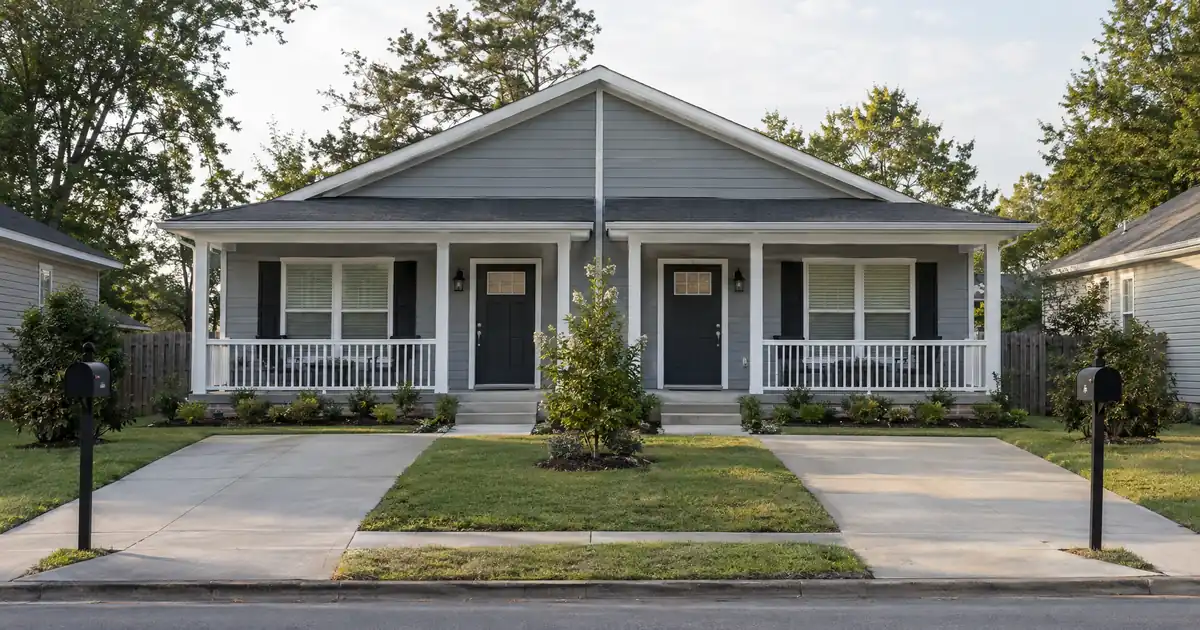
The Quick Read: A cash-out refinance on a duplex, triplex or fourplex you live in almost always needs a full appraisal, with the appraiser walking the property inside and out. The appraised value sets the ceiling on your new loan, and on conventional loans that ceiling is 75% of value, lower than the 80% allowed on a one-unit home. Everything is subject to lender guidelines and full file review.
Key Takeaways
- A 2-4 unit cash-out generally requires a full interior and exterior appraisal. The shortcuts built for one-unit homes usually don’t reach this property type.
- The conventional cash-out cap is 75% of appraised value on a 2-4 unit primary residence, against 80% on a one-unit home.
- The appraisal has two jobs: it opines on market value and on market rents for every unit.
- Your existing loan generally must be at least 12 months old, and a borrower must have been on title for six months.
- A low appraisal shrinks your cash. It rarely kills the loan outright.
- Lenders must give you a free copy of the appraisal.
What Is a 2-4 Unit Cash-Out Refinance?
A cash-out refinance replaces your current first mortgage with a new, larger one and pays you the difference in cash. On a 2-4 unit primary home, you live in one unit and may rent the others. The lender treats it as an owner-occupied loan, which is why leverage is better than on an investment property.
Across the wholesale programs Lendmire places consumer files with, the appraisal is the step that most often decides how much cash a multi-unit owner actually receives. The new loan is a percentage of appraised value. Whatever the appraiser concludes sets the limit before income, credit or reserves even come into play.
If you want to see the full menu of programs that fit this goal, Lendmire’s cash-out refinance programs page lays out the options by property type.
Why Does a 2-4 Unit Get a Lower Cash-Out Cap?
Conventional cash-out on a 2-4 unit principal residence tops out at 75% of value. A one-unit principal residence reaches 80%.
The reasoning is risk. Multi-unit homes carry more moving parts: more tenants, more systems, a thinner pool of comparable sales. Agencies price that in by leaving a bigger equity cushion.
Here is the catch. People often see the higher purchase leverage on 2-4 units and assume it carries over. It doesn’t. Purchase and no-cash-out refinance tiers are higher, but cash-out stays at 75%. Some lenders set stricter limits than the agencies, so a particular lender may land lower than 75%.
A quick comparison:
| Transaction | One-unit primary | 2-4 unit primary |
|---|---|---|
| Conventional cash-out | 80% LTV | 75% LTV |
| Limited cash-out (rate-and-term) | Up to 95% LTV | Up to 95% LTV |
| Appraisal waiver | Sometimes | Generally no |
The limited cash-out line matters for one reason: it gives you almost no cash. It pays off your existing first mortgage and closing costs, with only incidental money back. If your goal is real cash, it won’t meet it.
Which Appraisal Report Applies, and Can It Be Waived?
A 2-4 unit gets a full appraisal on Fannie Mae’s Form 1025, the Small Residential Income Property Appraisal Report, per the Fannie Mae Selling Guide on appraisal forms. It covers 2-4 unit homes even when they sit in a condo, co-op or planned development.
The form does two things a one-unit report doesn’t. It gives an opinion of value from comparable sales. It also includes a rent schedule, where the appraiser estimates market rent for each unit and reconciles it against any leases.
Waivers are the usual shortcut on one-unit homes. Fannie Mae calls its version value acceptance: the lender’s submitted value is accepted through automated underwriting with no appraisal. Those options are aimed at one-unit properties, and 2-4 units are generally left out. Plan on a real appraisal.
One wrinkle worth knowing. A one-unit home with an accessory dwelling unit is still classified as one unit. A home with two full units is not. That distinction can change which path you’re on.
What Must Be True Before the Appraisal Is Ordered?
Several screens come first. The Fannie Mae Selling Guide on cash-out refinances sets the core ones:
- The mortgage being paid off must be at least 12 months old, measured note date to note date.
- At least one borrower must have been on title for six months before disbursement.
- A property listed for sale must come off the market on or before disbursement.
- Six months of reserves apply on automated-underwriting loans where the total debt ratio exceeds 45%.
Exceptions exist. Delayed financing covers a cash purchase you now want to refinance. Inheritance and legal-award situations carry their own treatment. Across the wholesale programs we place files with, there is also a lane reaching 89.99% LTV with no mortgage insurance at a 680 score on a thirty-year fixed primary residence with a conforming balance. It has its own six-month seasoning. Whether a 2-4 unit fits that lane depends on the lender’s guidelines, so ask before assuming.
Occupancy comes up here too. You must live in one of the units. If no one in the household occupies a unit, it’s an investment property and the caps drop. Stated occupancy has to match reality.
What Does the Appraiser Look At in Each Unit?
Expect a full walk-through. The appraiser inspects the exterior, the interior of the unit you live in, and generally the other units too. Tenants need notice, and access is a real planning item.
The appraiser comments on:
- Unit mix and layout: bedrooms, baths and whether each unit is self-contained.
- Condition and systems: roof, structure, heating, plumbing, electrical.
- Legal use: whether the building is zoned and permitted as the unit count you claim.
- Comparable sales: other 2-4 unit sales nearby, which are scarcer than one-unit comps.
- Market rent: an estimate per unit, checked against leases.
Thin comps are the weak point. In a neighborhood where few multi-unit buildings sell, the appraiser may reach further for comparables, which can pull value around. A vacant unit has its own effect: the appraiser relies on market rent rather than a lease, which can look softer on paper.
Condition findings matter more than borrowers expect. Safety items, such as a missing handrail or a failing roof, may need to be fixed before closing. Those fixes cost money and add steps.
How Does Appraised Value Become Your Loan Amount?
Appraised value sets the cap. The lender divides your new first lien, plus any second lien that stays in place, by that value. The result must sit at or under the cash-out limit, 75% on a conventional 2-4 unit primary residence.
Work through a scenario in percentages. Say the appraiser values your fourplex at 100 units of value, and you owe 40% of that on your current mortgage. A 75% cap leaves 35 points of value as the gap between your payoff and the maximum loan. Closing costs and any other liens come out of that gap first. What remains is your cash.
Now picture the appraisal landing 5% lower than you expected. The cap falls with it. Your payoff hasn’t moved, so the entire drop comes out of your cash. That’s why a modest value miss can feel outsized.
Mortgage insurance isn’t part of this picture at 75% LTV, since it applies above 80%. Pricing adjustments for cash-out loans do apply, though, and they vary by lender and file.
How Is Rent Treated?
Rent from the unit you live in generally cannot be used to qualify. That’s a common mix-up. Rent from the other units is different.
Fannie Mae requires the lender to report gross monthly rent for 2-4 unit principal residences whether or not the rent is used to qualify. So the rent schedule matters even when your own income carries the loan.
Documentation has to agree. The appraiser’s rent opinion, your leases and your traditional personal-income documentation should tell the same story. When they don’t, expect questions.
What If the Appraisal Comes in Low or Flags Repairs?
You have a few paths, and the right one depends on the size of the gap.
1. Ask for a review. If the report missed a relevant comparable or misread the unit count, a lender may allow a reconsideration of value with supporting sales data.
2. Take less cash. Resize the loan to the new cap. If you still clear your payoff and costs, this is the simplest route.
3. Fix and proceed. For repair conditions, complete the work and have it verified before closing.
4. Pause. If the numbers no longer justify refinancing, waiting for improvements or a stronger market is a legitimate choice.
This is a genuine judgment call. Chasing a value dispute can cost time without changing the outcome, while resizing is certain but gives up cash. The flip point is how much of the cash you actually need.
You are also entitled to see the report. Under the ECOA valuations rule, lenders must give applicants free copies of appraisals on first-lien mortgages. Per the CFPB consumer explainer, you receive notice of this right after you apply, and the copy arrives promptly after the appraisal is completed, with exact timing varying by file and lender. You may waive the early timing but still receive the copy.
Where the General Rule Breaks
A few situations bend the standard path.
FHA cash-out. FHA caps cash-out below its purchase leverage, and it generally requires a complete appraisal. Its streamline refinance is a different product: it pays no meaningful cash, and it only works when you already hold an FHA loan. FDIC’s streamline summary confirms no cash may be taken out.
VA loans. The VA IRRRL is VA-to-VA only, and the VA home loans program describes it that way. It can’t pay off other debts. A true VA cash-out is a separate loan that requires an appraisal.
High-LTV refinance. Fannie Mae’s high-LTV refinance option applies to loans already above certain leverage levels. Don’t confuse it with cash-out.
Moving out. If you leave and rent every unit, the property becomes an investment property with lower caps. That changes the product entirely.
Jumbo balances. Above the conforming limit, jumbo lanes take over with their own appraisal and leverage standards. Ask the lender what they require.
Texas. A cash-out on a Texas homestead is capped by the state constitution at the agency figure, and the wholesale 89.99% lane isn’t written there.
Tax treatment can depend on your situation; borrowers should speak with a qualified tax professional before relying on any deduction or credit.
How the Process Runs, Step by Step
1. Application. You apply and receive the valuation notice. Automated underwriting runs and checks whether any appraisal alternative applies. For a 2-4 unit, it generally won’t.
2. Eligibility screens. The lender checks loan age, title time, listing status and reserves.
3. Appraisal ordered. A full report on Form 1025 is scheduled, with access to each unit.
4. Value sets the cap. The new loan is sized against appraised value at the 75% limit.
5. Rent and income. Rent from the other units is documented and reconciled.
6. Conditions. Repair items and lien payoffs are resolved.
7. Copy delivery and closing. You receive the appraisal and sign.
Budget for the appraisal fee. Waivers save borrowers money, per FHFA research, but since they rarely reach 2-4 units, you should expect to pay for a full report.
Key Terms Defined
Appraised value: the appraiser’s opinion of what the property would sell for, which sets the maximum loan.
Loan-to-value (LTV): your new loan balance divided by appraised value, shown as a percentage.
Seasoning: the minimum time you must have held the existing loan and title before a cash-out refinance.
Form 1025: the appraisal report for 2-4 unit homes, which includes a value opinion and a rent schedule.
Limited cash-out refinance: a refinance that pays off your existing loan and costs but returns only incidental cash.
Frequently Asked Questions
Can I skip the appraisal on a duplex cash-out refinance?
Rarely. Appraisal waivers and value acceptance options are built for one-unit homes, and two- to four-unit properties are generally left out. Plan for a full interior and exterior appraisal, and budget for the fee.
Does the appraiser have to enter every unit?
Generally yes, or at least the lender will expect access to the units. Tenants should get notice ahead of time. A unit the appraiser can’t see can cause delays or force the lender to ask for another visit.
Will the rent from my own unit help me qualify?
Usually not. Rent from the unit you occupy generally can’t count as income. Rent from the other units may count toward income and debt ratios on programs that allow it, so ask the lender how they treat it.
What happens if the appraisal is lower than I expected?
The loan size drops with it, because the cap is a percentage of value. Your payoff stays the same, so the reduction comes out of your cash. You can ask for a review with better comparable sales, take less cash, or decide not to proceed.
Is the cap really lower than on a single-family home?
Yes, on conventional loans. The cap is 75% for a 2-4 unit principal residence and 80% for a one-unit principal residence. Individual lenders can set stricter limits than the agencies.
If you are weighing a cash-out refinance against keeping the loan you have, Lendmire can help you compare the programs and the equity each one reaches.
For current guidelines and terms, see Lendmire’s refinance programs page.
About Lendmire
As a mortgage broker (NMLS# 2371349), Lendmire helps homeowners and home buyers in 16 states with FHA, VA, conventional and jumbo purchase and refinance loans arranged through wholesale lenders. Lendmire is never the lender; program terms are set by the lender and the agency guidelines. Scotsman Guide named Lendmire a Top Mortgage Workplace in both 2025 and 2026.
For your own numbers, request a scenario review with Lendmire.
Get Started
Ready to find the right loan for you?
In about 30 seconds you can review financing options available for your home or investment property. No commitment required.
Informational only. Not a Loan Estimate, approval, or commitment to lend. Program availability and eligibility are subject to lender guidelines, credit approval, property review, and underwriting.
References
1. Fannie Mae Selling Guide on appraisal forms
2. Fannie Mae Value Acceptance
3. Fannie Mae Selling Guide B2-1.3-03, Cash-Out Refinance Transactions
4. CFPB, ECOA Appraisals Rule: What It Means for Consumers
6. FHFA
This article is part of Lendmire’s Refinance series — every loan program’s qualification details, guidelines, and scenarios live on the loan options page.
Related reading: Can a Cash-Out Refinance on Your Primary Home Fund a Second Home? · How Much a Low Appraisal Cuts a Cash-Out Refinance on a Paid-Off Home · How to Handle a Low Appraisal on a Cash-Out Refinance for a Renovation
Brandon Miller
Founder & CEO, Mortgage Loan Originator, Lendmire LLC
- Mortgage Loan Originator · NMLS# 1129696 · Verify on NMLS Consumer Access
- North Carolina Real Estate Broker · License# 343312 · Verify on NCREC
- North Carolina Insurance Producer · License# 19053198 · Property, Casualty, Life, Health · Verify on NAIC SBS
- Lendmire LLC · Firm NMLS# 2371349 · Verify firm licensure
Disclosures. The information presented in this article is general market commentary, not financial, legal, or tax advice. Lendmire is a mortgage brokerage (NMLS# 2371349) — not a direct lender or depository institution — and loan placement is subject to lender underwriting. Nothing in this content represents a commitment to lend. Loan terms, pricing, and program availability vary based on borrower qualifications, property characteristics, and state of subject property, and are subject to change at any time. Lendmire complies with Equal Housing Opportunity requirements. Consumer access: nmlsconsumeraccess.org.