
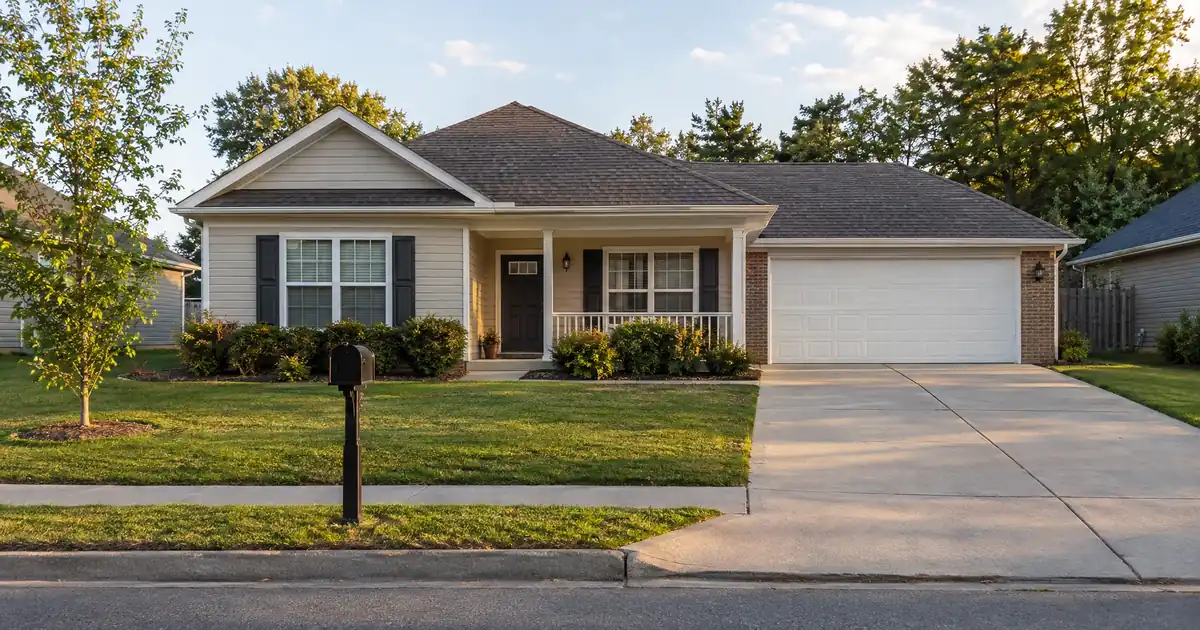
The Quick Read: Lenders ask for three layers of paperwork on a second-home cash-out. The first is your personal income, asset and debt file. The second is a cash-out layer covering the current loan payoff, title, appraisal and ownership history. The third is a second-home layer that proves you actually use the property as a second home. Conventional loans are the only realistic path, and the limits are tighter than on a primary residence. All program figures are subject to lender guidelines and full file review, and nothing here is a commitment to lend.
Key Takeaways
- Conventional cash-out on a second home tops out at 75% LTV, versus 80% on a one-unit primary residence.
- The mortgage being paid off must be at least 12 months old, and you must have been on title for 6 months, with narrow exceptions.
- Occupancy proof matters as much as income proof. A second home is one you keep for your own use.
- Rental income cannot be used to qualify on a second home.
- There is no three-day cancellation window on a second home, so sign only when you are sure. Leverage, reserves, and pricing vary by lender and program; the final terms follow the full file review.
What Is a Second Home Cash-Out Refinance?
A second home cash-out refinance replaces the mortgage on your vacation or secondary residence with a larger one and pays you the difference in cash. It differs from a refinance, which only pays off the existing loan, closing costs and a purchase-money second lien, with incidental cash back.
Cash-out refinance estimate
The starting figures are an example value with a balance and a cash request in proportion. Replace them with yours.
Editable benchmark: 7.40% as of October 15, 2026 · Freddie Mac 30-year average via FRED®. A conventional market reference, not a cash-out refinance quote.
Illustrative starting assumptions: a $350,000 home value, a $193,000 current balance, the agency cap on a one-unit principal residence, a thirty-year term at the current Freddie Mac benchmark, and property taxes and insurance estimated at typical national rates. Every field is editable.
Illustrative estimate only — not a Loan Estimate, approval, quote, or commitment to lend. The rate field carries the weekly Freddie Mac thirty-year conventional benchmark, a market reference and not a cash-out refinance quote; a cash-out loan is priced by the lender at lock. The cash available is the loan the program cap allows less the balances paid off, before closing costs, which are not included. The HELOC line is the program’s combined loan-to-value ceiling applied to the same value and balance. Taxes and insurance are editable estimates. Licensed in sixteen states for consumer mortgages.
Across the wholesale programs Lendmire places files with, conventional loans are the lane for second homes. FHA is built for principal residences. VA cash-out requires you to certify that you live in the home. The VA IRRRL and FHA Streamline are tied to an existing government loan and offer no path to cash out of a vacation property.
The leverage gap is the first thing to understand. The Fannie Mae Eligibility Matrix caps a one-unit second-home cash-out at 75% loan-to-value. A one-unit primary residence reaches 80%. That means at least 25% of the property’s appraised value must stay as your equity. Terms vary by lender guidelines, property type, leverage, credit profile, and full file review.
Lendmire’s cash-out refinance programs follow those conventional limits. Lendmire is a mortgage broker and arranges these loans through wholesale lenders. It does not lend.
How Is a Second Home Cash-Out Underwritten, Step by Step?
The deal works through six stages, and each one has its own paperwork.
1. Occupancy declaration. You state how the property is used. Everything else, including leverage, depends on this answer.
2. Application and disclosures. You apply, and the lender issues a Loan Estimate. On a refinance there is no sales price, so the form uses the estimated property value.
3. Automated underwriting. Most files run through the agencies’ automated system. The automated finding governs most files, with a total ratio ceiling of 50%.
4. Document collection. You supply the three layers described below.
5. Appraisal. The appraised value sets how much cash can come out.
6. Closing. The Closing Disclosure must reach you three business days before closing, as explained in the CFPB’s Know Before You Owe guide.
The wholesale conventional programs start at a 620 decision score. Higher scores widen your options on reserves and ratios. Credit events carry agency waiting periods: four years from a chapter 7 discharge, seven from a foreclosure, and four from a short sale or deed-in-lieu, shorter with documented extenuating circumstances.
Layer One: Baseline Personal Documents
Every borrower supplies the same core file. What changes is the income stack.
| Borrower type | Typical income documents | Why the lender asks |
|---|---|---|
| Salaried | Recent pay stubs, W-2s, traditional personal-income documentation | Confirms stable income |
| Self-employed | personal and business income documentation, year-to-date profit-and-loss statement | Shows net business income |
| Retired | Pension, Social Security, retirement distributions | Shows ongoing income |
| Commission | Multi-year traditional personal-income documentation, year-to-date pay records | Averages variable income |
Beyond income, expect to provide:
- Government ID and a signed credit authorization.
- Bank and asset statements, with every page of every statement.
- Retirement and investment account statements, which support reserves.
- Written explanations of large deposits.
- A list of every property you own and the loans against them.
Lenders ask about your other properties for a reason. Reserves rise when you own multiple financed properties and the subject is a second home. The Fannie Mae Selling Guide caps financed properties at 10 for second-home transactions underwritten in its automated system, per its multiple financed properties rule. So the file needs mortgage statements, tax bills, insurance and any HOA dues for each one.
One practical point: cash you receive from this refinance cannot count as your reserves on the subject property. Reserves have to come from assets you already hold.
Layer Two: The Cash-Out Paperwork
This layer is what separates a cash-out from a rate-and-term file. It proves the loan being paid off, who owns the home and what it is worth.
- Current mortgage statement and payoff. The new loan pays off the existing lien, so the lender needs the balance and loan history.
- Other liens. Any home equity line or second mortgage must be paid off or addressed. Additional liens count toward combined loan-to-value.
- Title and ownership history. The lender confirms you are on title and for how long.
- Appraisal. Leverage is measured against appraised value. The 75% cap applies to the new loan, and a lower appraisal means less cash.
- Homeowners insurance. Hazard coverage is required, and flood coverage applies where the property sits in a flood zone.
- Seasoning proof. This is the paperwork people forget.
How seasoning works
On a conventional cash-out, the first mortgage being paid off must be at least 12 months old, measured note date to note date. You must also have been on title for 6 months. Narrow exceptions exist for delayed financing, inheritance and legal awards.
Delayed financing is the one most second-home owners ask about. Say you bought a beach condo with cash and want your money back. The Fannie Mae cash-out rules allow an exception for recent purchases, but it requires an arm’s-length original purchase. Expect to document where the purchase money came from, usually with the closing statement and the account statements that funded it.
If the home is currently listed for sale, it must be off the market on or before the disbursement date.
Layer Three: Proving It Is Really a Second Home
This is the layer most checklists skip. A second home is a different occupancy type from an investment property, and it earns better leverage. Lenders therefore test the claim.
By Fannie Mae’s occupancy definitions, a second home is occupied by the borrower for some part of the year. It must be suitable for year-round use, and you must keep exclusive control. A management or rental-pool arrangement that controls who stays there disqualifies it.
Expect the lender to want:
- A signed occupancy certification.
- Evidence of how you use the home and why it is a second home.
- The property’s distance from your primary residence. Fannie Mae’s own quality-control bulletin lists close proximity as a red flag.
- HOA or condo documents where they apply, including the budget and master insurance.
- Proof of housing costs on both homes: mortgage or rent, taxes, insurance and dues.
Lenders do this because occupancy misrepresentation is a known risk. Fannie Mae notes that lower-risk occupancy usually brings more leverage and better pricing, which creates an incentive to misstate it. Honest answers protect you. Describe how you really use the home.
The combined load also matters. Your primary housing payment plus the second-home payment both count in your debt-to-income ratio. Manually underwritten loans run to 36% or 45% depending on reserves and score. Most files rely on the automated finding.
Can Rental Income Help You Qualify?
No. Rental income from a second home cannot be used to qualify. If you identify rental income, the loan can still be a second home only if you do not count that income. If a manager or rental pool controls occupancy, the property is an investment property, which is a separate product outside this article.
So occasional renting is not automatically disqualifying, but you qualify on your own income. Do not build the file around expected rent.
Where the Rules Break: Edge Cases
- Manufactured housing. Eligibility is treated separately and differs by program. Ask a loan officer before assuming it works.
- Condos and co-ops. The eligibility matrix carries exceptions, and co-op units are ineligible for some transaction types.
- Two- to four-unit second homes. The standard matrix lists second-home cash-out only on one-unit properties.
- Freddie Mac. Freddie Mac lists second homes as eligible property on its cash-out refinance page and builds a cash-out credit fee into pricing.
- High-LTV refinance. This option applies to second homes but is a no-cash-out product.
- Higher ratios. If your debt-to-income ratio on the automated finding exceeds 45%, Fannie Mae requires six months of reserves on a cash-out.
Key Terms Defined
Cash-out refinance: A new, larger mortgage that pays off the old one and gives you the difference in cash.
Limited cash-out (rate-and-term) refinance: A refinance that pays off the loan, closing costs and a purchase-money second lien, with only incidental cash back.
Seasoning: The minimum time a loan has existed or you have held title before you can cash out.
Reserves: Liquid assets left after closing that could cover mortgage payments.
Combined loan-to-value (CLTV): All liens on the property divided by its appraised value.
Second home: A home you occupy part of the year, keep for your own use and control exclusively.
Why Files Stall
Most delays trace back to mismatches, not missing income.
| Problem | Typical fix |
|---|---|
| Missing statement pages | Send every page of every statement |
| Unexplained large deposit | Provide a written explanation and source |
| Name or address mismatch | Align documents or explain the difference |
| Rental-pool or manager control | Resolve before applying |
| Insurance gaps | Bind hazard and flood coverage early |
| New credit during underwriting | Avoid new accounts and large purchases |
Partial answers produce repeat requests.
Pre-Submission Checklist
- ID and credit authorization
- Income documents for your borrower type
- Statements for every asset, all pages
- Current mortgage statement and any second lien
- Title and purchase closing statement
- Homeowners and flood insurance
- HOA or condo documents
- Housing-cost proof for both properties
- Signed occupancy certification
- Written explanations for deposits and credit items
What the Decision Looks Like in Practice
Picture a borrower with a lake house held for several years and a comfortable primary residence. The appraisal comes in, and the new loan can reach 75% of that value at most. The borrower subtracts the payoff and any other liens, and what remains is the maximum cash, before closing costs are netted from proceeds.
The Loan Estimate and Closing Disclosure show whether cash is due to or from you. Compare the two forms line by line.
Then consider the downside. Federal Regulation Z’s right of rescission applies to a principal dwelling, and a vacation home is not one. A second-home loan carries no cancellation window, so the Closing Disclosure review period is your last pause point.
Compare alternatives before committing. Keeping a low-balance existing loan and using other equity may be cheaper than replacing the whole mortgage. If the loan amount runs large, Lendmire’s piece How to Handle Two Appraisals on a Second Home Jumbo Cash-Out Refinance explains how a second valuation can change the file.
Tax treatment can depend on your situation; borrowers should speak with a qualified tax professional before relying on any deduction or credit.
If you are weighing a cash-out refinance against keeping the loan you have, Lendmire can help you compare the programs and the equity each one reaches.
Frequently Asked Questions
Do I need to use the cash for anything specific?
Usually not, though lenders may ask about intended use on some files. The documentation focus is on income, assets, title and occupancy, not how you spend proceeds. Keep purpose notes handy in case a condition asks for them.
Can I use bank statements instead of traditional personal-income documentation?
Some programs allow it, but standard conventional second-home loans rely on full documentation. Self-employed borrowers should expect to provide traditional income documentation and business records.
Does a second home need more reserves than a primary residence?
Often yes. Reserves rise with the number of financed properties, and a debt-to-income ratio above 45% adds six months on a cash-out. Cash from the refinance cannot count toward reserves.
Can I cash out a vacation home I bought recently?
Possibly, through the delayed financing exception. It needs an arm’s-length cash purchase and proof of the source of funds. Otherwise, seasoning rules require 12 months on the existing mortgage and 6 months on title.
Why does the lender ask how far the home is from my primary residence?
Distance helps show the property is a genuine second home. Very close proximity is a recognized red flag for misstated occupancy, so expect questions about how and why you use it.
For your own numbers, request a scenario review with Lendmire.
About Lendmire
Lendmire, NMLS# 2371349, is a mortgage brokerage with consumer lending licenses in 16 states. FHA, VA, conventional and jumbo purchase and refinance loans are arranged through wholesale lending partners, and each application is reviewed individually by the lender. Scotsman Guide named Lendmire a Top Mortgage Workplace in both 2025 and 2026.
Get Started
Ready to find the right loan for you?
In about 30 seconds you can review financing options available for your home or investment property. No commitment required.
Informational only. Not a Loan Estimate, approval, or commitment to lend. Program availability and eligibility are subject to lender guidelines, credit approval, property review, and underwriting.
References
1. Fannie Mae Eligibility Matrix
3. Fannie Mae Selling Guide B2-2-03
4. Fannie Mae Selling Guide B2-1.3-03, Cash-Out Refinance Transactions
5. Fannie Mae Selling Guide B2-1.1-01, Occupancy Types
6. Freddie Mac Cash-Out Refinance
This article is part of Lendmire’s cash-out refinance program — full qualification details, guidelines, and scenarios live on the program page.
Related reading: Can You Refinance and Take Cash Out on a Second Home? · Cash-Out Refinance Seasoning Requirements for a Recently Bought Home · Should a Cash-Out Refinance Fund Your Next Home Purchase?
Brandon Miller
Founder & CEO, Mortgage Loan Originator, Lendmire LLC
- Mortgage Loan Originator · NMLS# 1129696 · Verify on NMLS Consumer Access
- North Carolina Real Estate Broker · License# 343312 · Verify on NCREC
- North Carolina Insurance Producer · License# 19053198 · Property, Casualty, Life, Health · Verify on NAIC SBS
- Lendmire LLC · Firm NMLS# 2371349 · Verify firm licensure
Disclosures. The information presented in this article is general market commentary, not financial, legal, or tax advice. Lendmire is a mortgage brokerage (NMLS# 2371349) — not a direct lender or depository institution — and loan placement is subject to lender underwriting. Nothing in this content represents a commitment to lend. Loan terms, pricing, and program availability vary based on borrower qualifications, property characteristics, and state of subject property, and are subject to change at any time. Lendmire complies with Equal Housing Opportunity requirements. Consumer access: nmlsconsumeraccess.org.