
The Quick Read: There is no single credit score for a cash-out refinance on a duplex, triplex or fourplex you live in. The score a lender needs depends on how the file is underwritten, how much of the value you borrow against, your debt-to-income ratio and your reserves. Conventional cash-out on a 2-4 unit home is capped at 75% of value, and a 620 decision score is where the wholesale conventional programs start. Lenders can set higher floors.
Key Takeaways
- Conventional cash-out on a 2-4 unit primary home stops at 75% LTV. A one-unit home gets 80%.
- The wholesale conventional programs start at a 620 decision score, and 640 on an adjustable rate under manual underwriting. Lender overlays can sit above that.
- The first mortgage must be at least 12 months old, and one borrower must have been on title for 6 months.
- Rental income from the units you don’t occupy can count, but the full housing payment still counts as a debt.
- FHA Streamline and VA streamline refinance lower the rate on an existing government loan. They do not pay out cash. Final terms depend on the lender’s guidelines, the property type, and the borrower’s complete credit picture.
What Is a Cash-Out Refinance on a 2-4 Unit Home?
A cash-out refinance replaces your existing first mortgage with a larger one and pays you the difference. Per the Fannie Mae Selling Guide, the new loan pays off the existing first mortgage with a new first mortgage on the same property. A free-and-clear property can also take a new loan and count as cash-out.
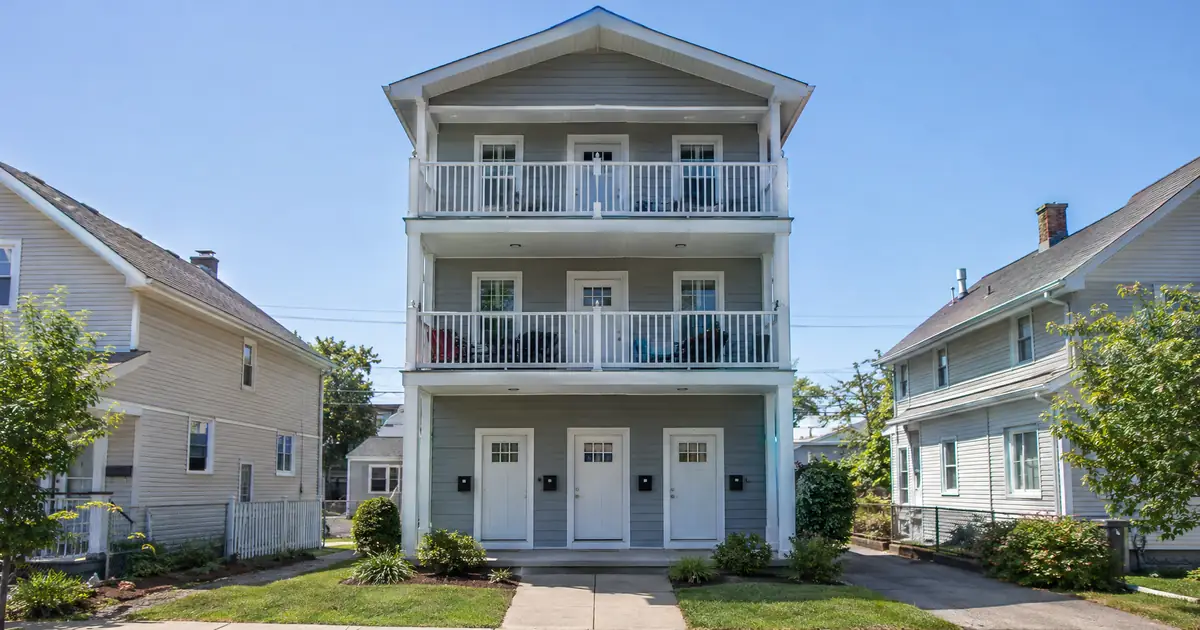
A 2-4 unit primary home means you live in one unit and the others are rented or available to rent. That occupancy is what keeps the file in the owner-occupied lane. The lender confirms it, and the appraisal is done on the small residential income property form, Form 1025.
Across the wholesale programs this lane runs on, occupancy decides the leverage. If you move out and rent every unit, the property is no longer a primary residence and the file is underwritten as a different product.
How Is the Loan Underwritten, Step by Step?
The deal works through the same checks in the same order. Knowing them tells you which one is likely to stop you.
1. Classify the loan. If it pays off the first mortgage and returns more than incidental cash, it is a cash-out. Rate-and-term refinances sit in a different lane with higher leverage.
2. Run the seasoning tests. The first mortgage being paid off must be at least 12 months old, measured from the old note date to the new note date. At least one borrower must have been on title for six months before disbursement.
3. Confirm occupancy. You live in one unit. The lender documents it.
4. Order the appraisal. The value drives everything after it. Form 1025 covers the units and the rent schedule.
5. Treat the rental income. The lender decides how much of the other units’ rent can help the file. More on that below.
6. Underwrite credit, debt-to-income and reserves. The automated findings weigh these together. Manual files use fixed minimums.
7. Compute the maximum loan. Take 75% of the appraised value, count every lien that stays on the home, and make sure the result fits under the conforming loan limit.
8. Disclosures and funding. You review the Loan Estimate and Closing Disclosure. On a refinance of your primary home you then have a three-day right of cancellation, which the federal consumer-finance regulator’s Your Home Loan Toolkit explains.
What decides the outcome is the appraised value against the 75% cap, the credit profile, ratios and reserves, seasoning, and the rental documentation. Credit is one of five gates, not the only one.
Why Isn’t There One Credit Score?
Credit requirements here are a range because the lender reads several factors at once. Most conventional files go through automated underwriting, and that finding governs. Fannie Mae removed the fixed minimum score for files run through its automated system, as Orrick’s summary describes. The system now relies on its own risk assessment.
That does not mean any score works. The wholesale conventional programs this lane runs on start at a 620 decision score, and 640 on an adjustable rate under manual underwriting. The automated finding governs most files, with a total ratio ceiling of 50%. Manually underwritten loans use 36% or 45%, with the reserve and score factors in the Eligibility Matrix.
Cash-out on a 2-4 unit home is one of the tougher cells. Manual underwriting asks for a higher score on this loan than on a simple refinance, and the exact figure sits in the Fannie Mae Eligibility Matrix. It moves with LTV, loan purpose, unit count, amortization type and ratio.
Some lenders also set overlays, meaning a floor above the agency’s. Two lenders can quote different credit requirements on the same property for that reason. Overlays are one of the main reasons the same file can be placed with one lender and not another, and it is why Lendmire’s team compares lenders before submitting.
Credit-file details beyond the score
The score is a summary. The underwriter also reads the file behind it:
- Recent late payments, especially on mortgages.
- Collections and charge-offs.
- Recent inquiries and new debt.
- Credit events. Agency waiting periods run four years from a chapter 7 discharge, seven from a foreclosure, and four from a short sale or deed-in-lieu. Documented extenuating circumstances can shorten them.
- Multiple borrowers. With more than one borrower, the lender uses the average of each borrower’s median score, not the lowest or the highest. With one borrower it is that person’s representative score.
How Do Credit, LTV and Unit Count Work Together?
Credit and leverage are linked. A stronger score gives the file more room. A thinner score on a high-leverage cash-out is the combination that gets turned down.
| Factor | One-unit primary | 2-4 unit primary |
|---|---|---|
| Conventional cash-out max LTV | 80% | 75% |
| Rate-and-term max LTV | 95% | Per lender and program |
| Mortgage insurance on cash-out | Above 80% | Not reached under the cap |
| Score floor, wholesale conventional | 620 | 620, higher by lender |
A 75% cap leaves a quarter of the value untouched. A one-unit home gets five more points.
There is one wholesale lane that reaches 89.99% LTV with no mortgage insurance. It needs a 680 score and a 50% ratio on a thirty-year fixed rate. It applies to a primary residence with a conforming balance and has its own six months of seasoning. It is not written in Texas, where the state constitution caps a homestead cash-out at the agency figure. Check with the lender whether a 2-4 unit property fits that lane before you count on it. Each figure is subject to lender guidelines and a complete review of property type, leverage, and credit.
How Does Rental Income Count?
Rental income from the units you rent out can help, but it is not a free pass. Fannie Mae’s rental income rule generally does not allow rent from your own principal residence to qualify you, with an exception for the units in a 2-4 unit property that you don’t occupy. Check the exact wording with the lender, because the application depends on the file.
Where rental income is used, the lender adds the positive rent used for lender review to your monthly income. It then counts the full housing payment, including taxes, insurance and any association dues, as your obligation. It cannot net one against the other. A building with thin rents does not shrink your debts.
Even when rent is not used to qualify, lenders report the gross monthly rent per unit on a 2-4 unit primary home. Documentation usually means leases, a rent schedule from the appraiser and a worksheet such as Form 1037. Gaps in lease evidence are a common reason the income gets trimmed.
What Are the Edge Cases?
- The six-month title clock. Exceptions exist for inheritance and for legal awards such as divorce, separation or the end of a domestic partnership. The archived 2020 Selling Guide section describes them. Confirm current wording with the lender. Delayed financing for cash purchases is also covered.
- Occupancy changes the file. If the property is a second home or held for rent, it is no longer a primary-residence file. The documents, reserves and underwriting differ, so the lender treats it as a separate product.
- Condos and co-ops. The matrix excludes co-op units and attached condo units from the 2-4 unit treatment.
- Listed for sale. A home listed for sale must come off the market on or before disbursement.
- High reserves on high ratios. On automated files with a debt-to-income ratio above 45%, six months of reserves are required.
- High LTV refinance. Fannie Mae has a separate no-cash path for borrowers whose LTV is above the normal limited cash-out limit, with minimum LTV thresholds that differ by unit count. It is not a cash-out tool.
How Do FHA, VA and Streamline Loans Fit?
They fit differently, and the borrower with an existing government loan should read this part twice.
| Program | Cash out on a 2-4 unit? | Key point |
|---|---|---|
| Conventional cash-out | Yes | 75% cap, seasoning, credit and ratio tests |
| FHA cash-out | Yes | 12 months’ owner occupancy; HUD’s cap is lower than VA’s |
| VA cash-out | Yes, with eligibility | Full credit file, appraisal, net tangible benefit |
| FHA Streamline | No | Existing FHA loan, no real cash back |
| VA IRRRL | No | Existing VA loan, no cash to borrower |
On FHA, HUD Handbook 4000.1 requires that a borrower have owned and occupied the home as a principal residence for the prior 12 months, with an inheritance exception. The cash-out cap is below VA’s. An older HUD reference guide for single-family housing also describes a self-sufficiency test and three months of reserves for 3-4 unit properties, so confirm current requirements with the lender.
On VA, Circular 26-19-05 says VA no longer guarantees refinance loans over 100% of reasonable value, and that a cash-out must show a net tangible benefit. A 90% LTV or less is one listed benefit. Many lenders set their own limits well under 100%. The VA cash-out is fully underwritten for credit, income and residual income, and ratios above 41% need compensating factors, per VA Pamphlet 26-7. The IRRRL needs no appraisal or underwriting and pays no cash.
If your existing loan is conventional, a Streamline is not available. It requires an existing FHA loan. For details on the programs Lendmire arranges, see its cash-out refinance programs.
Three Borrower Scenarios
Run the numbers on a borrower with a strong score and a high ratio. They have a good credit profile but heavy debts outside the property. The automated finding may still pass them, but with a ratio above 45% the file needs six months of reserves. The score does not cancel the ratio.
Say a borrower has a mid-range score and most of the building rented. The 75% cap applies the same way, and the rent helps only if it is documented. A middling score with thin lease evidence is the file that stalls, not because of any one item but because there is no cushion.
Consider a borrower who bought the fourplex a few months ago and wants cash for renovations. Seasoning is the issue, not credit. With under six months on title and a first mortgage under 12 months old, the cash-out is not available yet, apart from the delayed financing and similar exceptions. Waiting is the answer here.
Should You Cash Out or Do Something Else?
Cash-out is one tool. A rate-and-term refinance reaches higher leverage, but returns only incidental cash. Keeping a low first mortgage and borrowing separately is another route. Borrowers should be cautious about using cash-out to pay off short-term or unsecured debt, and refinancing late in a loan’s life restarts amortization. The new loan is larger and usually runs longer.
Closing costs either reduce the cash you receive or add to the balance if financed. The CFPB toolkit tells borrowers to work out the break-even point. Cash-out loans and multi-unit properties also generally carry pricing adjustments from the agencies.
Tax treatment can depend on your situation; borrowers should speak with a qualified tax professional before relying on any deduction or credit.
Key Terms Defined
Cash-out refinance: A new first mortgage that pays off the old one and returns the extra equity to you as cash.
LTV (loan-to-value): The loan balance divided by the appraised value, shown as a percentage.
Seasoning: The minimum time you must have held the loan and the title before a cash-out is allowed.
Overlay: A lender rule stricter than the agency’s own minimum.
Debt-to-income ratio: Your monthly debts, including the housing payment, divided by your monthly income.
Reserves: Liquid funds left after closing, counted in months of housing payments.
Pre-Application Checklist
- Pull your credit reports and look for errors, late payments and collections.
- Pay down card balances before the lender pulls your score, not after.
- Gather leases, rent deposits and a rent schedule for each rented unit.
- Confirm the note date of your current first mortgage and the date you took title.
- Document the cash you hold as reserves.
- Avoid new debt or large purchases while the file is open.
If you are weighing a cash-out refinance against keeping the loan you have, Lendmire can help you compare the programs and the equity each one reaches. Program details are subject to lender guidelines and full file review, and nothing here is a commitment to lend.
Frequently Asked Questions
What credit score do I need for a cash-out refinance on a duplex I live in?
There is no single number. The wholesale conventional programs start at a 620 decision score, and 640 on an adjustable rate under manual underwriting. Automated files weigh score, ratio and reserves together. Some lenders set a higher floor, and manual underwriting asks for more on cash-out for 2-4 units.
Why is my cash-out limit lower on a fourplex than on a single-family home?
Multi-unit homes carry more risk to the lender, so the agencies cap conventional cash-out at 75% for 2-4 units against 80% for one unit. The cap applies to the full set of liens that stay on the home. Leverage, reserves, and pricing vary by lender and program; the final terms follow the full file review.
Can I cash out right after buying the building?
Generally not. The first mortgage being paid off must be at least 12 months old, and one borrower must have been on title for six months. Exceptions exist for delayed financing, inheritance and legal awards.
Does rent from my tenants count toward qualifying?
It can for the units you don’t occupy, but only with documentation, and the full housing payment still counts as a debt. The lender cannot net the rent against it.
Can I take cash out with an FHA Streamline or a VA IRRRL?
No. Both are for lowering the cost of an existing FHA or VA loan and pay no meaningful cash. A cash-out on a government loan goes through the full cash-out program.
For your own numbers, request a scenario review with Lendmire.
About Lendmire
As a mortgage broker (NMLS# 2371349), Lendmire helps homeowners and home buyers in 16 states with FHA, VA, conventional and jumbo purchase and refinance loans arranged through wholesale lenders. Lendmire is never the lender; program terms are set by the lender and the agency guidelines. Scotsman Guide named Lendmire a Top Mortgage Workplace in both 2025 and 2026.
Get Started
Ready to find the right loan for you?
In about 30 seconds you can review financing options available for your home or investment property. No commitment required.
Informational only. Not a Loan Estimate, approval, or commitment to lend. Program availability and eligibility are subject to lender guidelines, credit approval, property review, and underwriting.
References
1. Fannie Mae Selling Guide B2-1.3-03, Cash-Out Refinance Transactions
2. CFPB’s Your Home Loan Toolkit
4. Fannie Mae Eligibility Matrix
5. Fannie Mae Selling Guide B3-3.1-08, Rental Income
6. HUD single-family reference guide (archive)
This article is part of Lendmire’s Refinance series — every loan program’s qualification details, guidelines, and scenarios live on the loan options page.
Related reading: How Much a Cash-Out Refinance Raises DTI on a 2-4 Unit Primary Home · How to Recover Your Cash on a Second Home With a Cash-Out Refinance · Can a Nurse With Strong Credit Get a Large Cash-Out Refinance?
Brandon Miller
Founder & CEO, Mortgage Loan Originator, Lendmire LLC
- Mortgage Loan Originator · NMLS# 1129696 · Verify on NMLS Consumer Access
- North Carolina Real Estate Broker · License# 343312 · Verify on NCREC
- North Carolina Insurance Producer · License# 19053198 · Property, Casualty, Life, Health · Verify on NAIC SBS
- Lendmire LLC · Firm NMLS# 2371349 · Verify firm licensure
Required disclosures. Lendmire (NMLS# 2371349) operates as a licensed mortgage broker, not a direct lender or depository. The discussion in this article is general in nature and should not be relied upon as financial, legal, or tax advice — every investment scenario is unique and should be reviewed by a qualified professional. Any loan inquiry is subject to lender underwriting, and this article is not a commitment to lend or a guarantee of approval. Mortgage rates, loan terms, and program guidelines vary by borrower, property, and state, and may change without notice. Equal Housing Opportunity. Verify licensure at NMLS Consumer Access.