
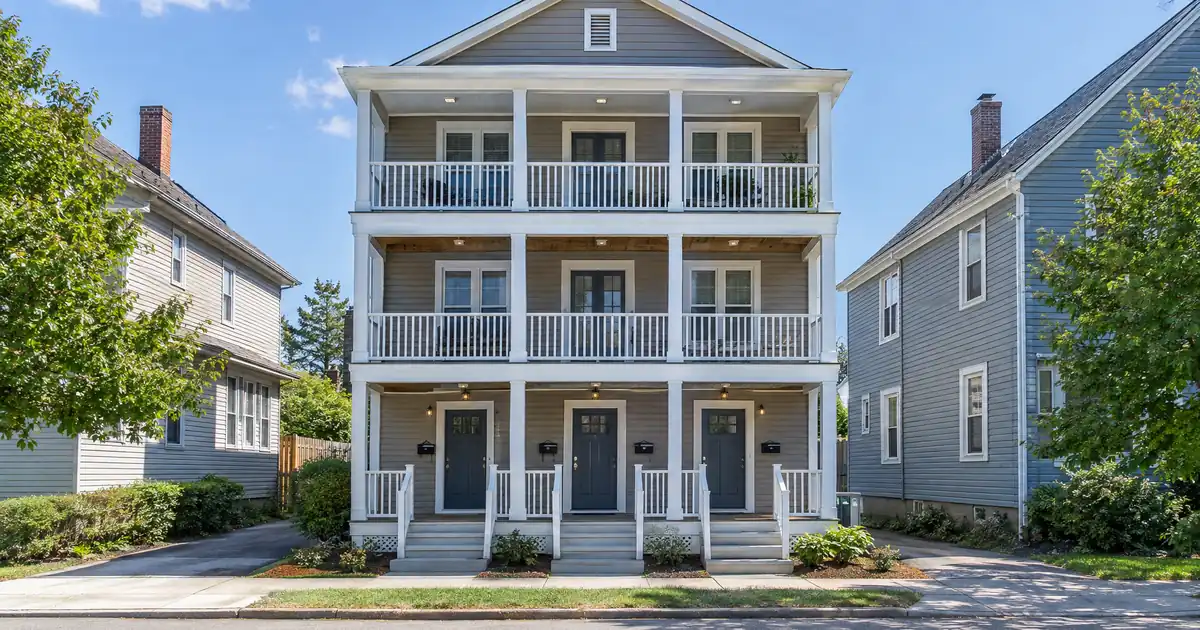
The Quick Read: A conventional cash-out refinance on a two- to four-unit home you live in caps the new loan at 75% of the appraised value, so you must keep about 25% equity after closing. A one-unit home is allowed 80%. Because the cap applies to the whole new loan, that remaining equity can’t be spent as cash.
What Is the Equity Rule, in Plain Terms?
The limit is on the new loan, not on a share of your equity. Fannie Mae’s Eligibility Matrix lists 75% as the ceiling for a cash-out refinance on a two- to four-unit principal residence. A one-unit principal residence gets 80%.
Flip that around and you get the equity translation: about 25% of the home’s value stays in the property. That is simple arithmetic from the cap. It isn’t a separate agency requirement.
Across the wholesale programs Lendmire places files with, the same cap shows up on two- to four-unit primary residences. Individual lenders can add tighter rules of their own, and every figure here is subject to lender guidelines and full file review.
Key Takeaways
- The cap is 75% of appraised value on the new loan for a 2-4 unit primary home.
- A one-unit primary home is allowed 80%, so a duplex gets less room than a single-family house at the same value.
- Other liens that stay in place count toward the cap.
- Time rules apply too: the loan being paid off must be at least 12 months old, and a borrower must have been on title for 6 months.
- A lower appraisal cuts your available cash dollar for dollar.
Key Terms Defined
Loan-to-value (LTV): The new loan amount divided by the appraised value of the home.
Combined LTV (CLTV): All loans secured by the home, added together, divided by the appraised value.
Cash-out refinance: A new first mortgage that pays off the old one and gives you the leftover proceeds.
Limited cash-out (rate-and-term) refinance: A refinance that pays off the old loan and costs, with only incidental cash back.
Seasoning: How long a loan or your ownership has existed before it can be refinanced.
How Does a Cash-Out Underwrite, Step by Step?
Underwriting runs in a fixed order. Each step can shrink the cash you receive.
1. Definition. Per the Fannie Mae Selling Guide, B2-1.3-03, a cash-out refinance pays off an existing first mortgage with a new one on the same property. Proceeds beyond the payoff and costs go to you.
2. Value. An appraiser sets the value. On a 2-4 unit, the appraisal also reports market rents for the units. Expect a full appraisal, since appraisal waivers generally don’t reach these properties.
3. The cap. The new loan, plus any lien that stays in place, can’t exceed 75% of that value.
4. Payoff and costs. The existing mortgage, any liens being paid off and financed closing costs come out of the 75% first. What remains is your cash.
5. Seasoning. The mortgage being paid off must be at least 12 months old, measured note date to note date. At least one borrower must have been on title for six months before disbursement.
6. Credit and ratios. Across the wholesale conventional programs, the minimum credit score depends on the scenario, and the automated underwriting finding governs most files, with a total ratio ceiling of 50%. Some lenders set higher floors.
7. Reserves and listing. For automated files with a debt-to-income ratio above 45%, six months of reserves are required. A home listed for sale must be taken off the market on or before disbursement.
What Does the Math Look Like?
Think in percentages of value. Say a home is appraised at 100 units of value, and a duplex and a single-family house are compared side by side.
| Factor | 1-Unit Primary | 2-4 Unit Primary |
|---|---|---|
| Max new loan | 80% of value | 75% of value |
| Equity left in home | about 20% | about 25% |
| Cash available | cap minus payoff, costs | cap minus payoff, costs |
Now three owners of a duplex, each with a different balance.
- Low balance. The owner owes 40% of value. The cap leaves 35% of value before costs, so there is real room to borrow.
- Mid balance. The owner owes 65%. Only 10% of value remains under the cap, and closing costs eat into it.
- High balance. The owner owes 75% or more. No cash-out is possible. A limited cash-out refinance is the only conventional refinance path.
The same 65% balance on a one-unit home would leave 15% of value. Unit count changes the answer even when the balance is identical.
Does a HELOC or Second Lien Change the Number?
Yes. The cap applies to combined loan-to-value. Fannie Mae’s matrix labels the ratio “LTV/CLTV/HCLTV,” which means a HELOC or second mortgage that stays open counts toward the 75%.
Many borrowers miss this. A homeowner with a 55% first mortgage and a 15% HELOC is already at 70% combined. That leaves almost no room, whatever the first mortgage balance suggests.
Why Is 95% Allowed on a Purchase but Not on Cash-Out?
Purchase and limited cash-out refinances on 2-4 unit primary homes reach 95%, per the matrix’s published copy. Cash-out stays at 75%.
So a household with 5% equity can buy a fourplex but can’t pull cash from one. Lenders treat cash back as added risk.
Two related limits matter here. A one-unit home with 5% equity could still do a limited cash-out refinance at 95%, subject to lender guidelines. And the higher purchase leverage on these properties doesn’t automatically carry over to high-balance or manually underwritten loans, so those files need a separate check.
What Does Rental Income From the Other Units Do?
It can help you qualify, but it isn’t free money. Rent from the unit you live in can’t be used. Rent from the other units can, and Fannie Mae’s desktop underwriting job aid applies a 75% factor to gross rent. That haircut covers vacancy and upkeep.
Two practical points follow. The full housing payment on the property still counts in your ratios. And a borrower with under a year of landlord history may only be allowed to use rent to offset that property’s payment, not as added income.
The rent schedule typically comes from leases plus the appraisal’s rent report. Expect to provide both.
Where Does the General Rule Break?
Several named edge cases change the picture.
- Delayed financing. If you bought the property with cash in an arm’s-length purchase and can document the source of funds, the six-month title wait doesn’t apply. The LTV cap still does.
- Ownership exceptions. Inheritance, divorce or legal separation, and an LLC or trust you control can each affect the title clock.
- Paying off a second lien. The 12-month rule doesn’t apply to paying off existing subordinate liens or buying out a co-owner under a legal agreement.
- A wholesale no-mortgage-insurance lane. One lane reaches 89.99% LTV with no mortgage insurance at a 680 score and 50% ratio, but only on a thirty-year fixed primary residence at a conforming balance. It isn’t written on 2-4 units, so don’t assume it applies to your duplex.
- Texas. A cash-out on a Texas homestead is capped by the state constitution at the agency figure, and the wholesale lane isn’t written there. Two- to four-unit eligibility there is narrow, so check it first.
- Occupancy. Move out, and it’s no longer a principal residence. Investment two- to four-unit properties drop to 70% on cash-out under both agencies, per the matrix.
- Manufactured housing. Cash-out runs lower, at 65% on a one-unit principal residence. Final terms depend on the lender’s guidelines, the property type, and the borrower’s complete credit picture.
What If You Don’t Have Enough Equity?
Run through your options in this order.
1. Take less cash. The cap sets a ceiling, and a smaller request may work.
2. Wait for the clocks. If the loan is under 12 months old or title is under six months, time alone can open the door.
3. Pay down the balance. Each point of value you pay down adds a point of room.
4. Pay off a second lien first. It may free combined room.
5. Consider limited cash-out. If you only want a different term or a lower balance cost, a rate-and-term refinance allows higher leverage on a primary residence.
6. Compare a second loan. A HELOC or home equity loan adds to combined LTV, so it has less room than the 75% headline suggests.
Appraisal risk deserves its own line. A lower value shrinks every number above. A higher purchase-side allowance won’t rescue it. Closing costs on a refinance are real, whether paid in cash or financed, and financed costs reduce your net cash.
Tax treatment can depend on your situation; borrowers should speak with a qualified tax professional before relying on any deduction or credit.
How Does This Fit Your Decision?
The decision usually comes down to three questions. What do you owe, including every lien? What will the appraiser say the building is worth? And how much cash do you need after costs?
If the 75% cap leaves enough room, a conventional cash-out is straightforward. If it doesn’t, the answer may be a smaller amount, a different structure, or waiting. Lendmire’s piece How Much a Cash-Out Refinance Returns on a 2-4 Unit Primary Home walks through that gap further, and the brokerage’s cash-out refinance programs page lays out how the conventional options compare.
If you are weighing a cash-out refinance against keeping the loan you have, Lendmire can help you compare the programs and the equity each one reaches. Everything here is subject to lender guidelines and full file review, and none of it is a commitment to lend.
Frequently Asked Questions
Can I do a cash-out refinance on a duplex I live in?
Yes. Fannie Mae’s matrix lists cash-out on a two- to four-unit principal residence at a 75% cap. The claim that agencies don’t allow it is a myth. Lender overlays can be tighter, so eligibility depends on the specific program and file.
Does a fourplex get a different cap than a duplex?
Not in the matrix figure. Two-, three- and four-unit principal residences share the 75% cap on cash-out. Other factors, like rent documentation and appraisal results, can still differ by building.
Is a limited cash-out refinance the same thing?
No. A limited cash-out refinance pays off the existing loan and costs, with only incidental cash back, and it allows much higher leverage on a 2-4 unit primary home. Once cash back exceeds the allowed amounts, it’s treated as cash-out and the 75% cap applies.
Does my rental income count at full value?
No. Fannie Mae’s calculation uses 75% of gross rent from the other units, and limited landlord history can restrict how it’s used. The rent from your own unit can’t be used at all.
How old must my current mortgage be?
At least 12 months, measured from note date to note date, and at least one borrower must have been on title for six months. Exceptions exist for delayed financing, inheritance and certain legal awards.
For current guidelines and terms, see Lendmire’s conventional loan programs page.
About Lendmire
As a mortgage broker (NMLS# 2371349), Lendmire helps homeowners and home buyers in 16 states with FHA, VA, conventional and jumbo purchase and refinance loans arranged through wholesale lenders. Lendmire is never the lender; program terms are set by the lender and the agency guidelines. Scotsman Guide named Lendmire a Top Mortgage Workplace in both 2025 and 2026.
For your own numbers, request a scenario review with Lendmire.
Get Started
Ready to find the right loan for you?
In about 30 seconds you can review financing options available for your home or investment property. No commitment required.
Informational only. Not a Loan Estimate, approval, or commitment to lend. Program availability and eligibility are subject to lender guidelines, credit approval, property review, and underwriting.
References
1. Fannie Mae Eligibility Matrix
2. Fannie Mae Selling Guide B2-1.3-03
3. Fannie Mae Eligibility Matrix (media copy)
4. Fannie Mae desktop underwriting job aid, rental income
This article is part of Lendmire’s Conventional Loans series — every loan program’s qualification details, guidelines, and scenarios live on the loan options page.
Related reading: How Much a Conventional Cash-Out Refinance Releases on a Second Home · Can a Home Still in Probate Get a Conventional Cash-Out? · How Much Cash a Conventional Cash-Out Releases on a 2-4 Unit Home
Brandon Miller
Founder & CEO, Mortgage Loan Originator, Lendmire LLC
- Mortgage Loan Originator · NMLS# 1129696 · Verify on NMLS Consumer Access
- North Carolina Real Estate Broker · License# 343312 · Verify on NCREC
- North Carolina Insurance Producer · License# 19053198 · Property, Casualty, Life, Health · Verify on NAIC SBS
- Lendmire LLC · Firm NMLS# 2371349 · Verify firm licensure
Compliance and disclosures. Lendmire (NMLS# 2371349) is a licensed mortgage broker and is not a direct lender, depository institution, financial advisor, or tax professional. Content in this article is general market analysis and educational information — not financial, legal, or tax advice for any specific situation. Lendmire does not guarantee loan approval; every transaction is subject to underwriting by the funding lender. Mortgage pricing and loan program guidelines are subject to change at any time without notice and vary by borrower characteristics, property type, and state regulations. Lendmire complies with Equal Housing Opportunity. Licensure verification: NMLS Consumer Access.