
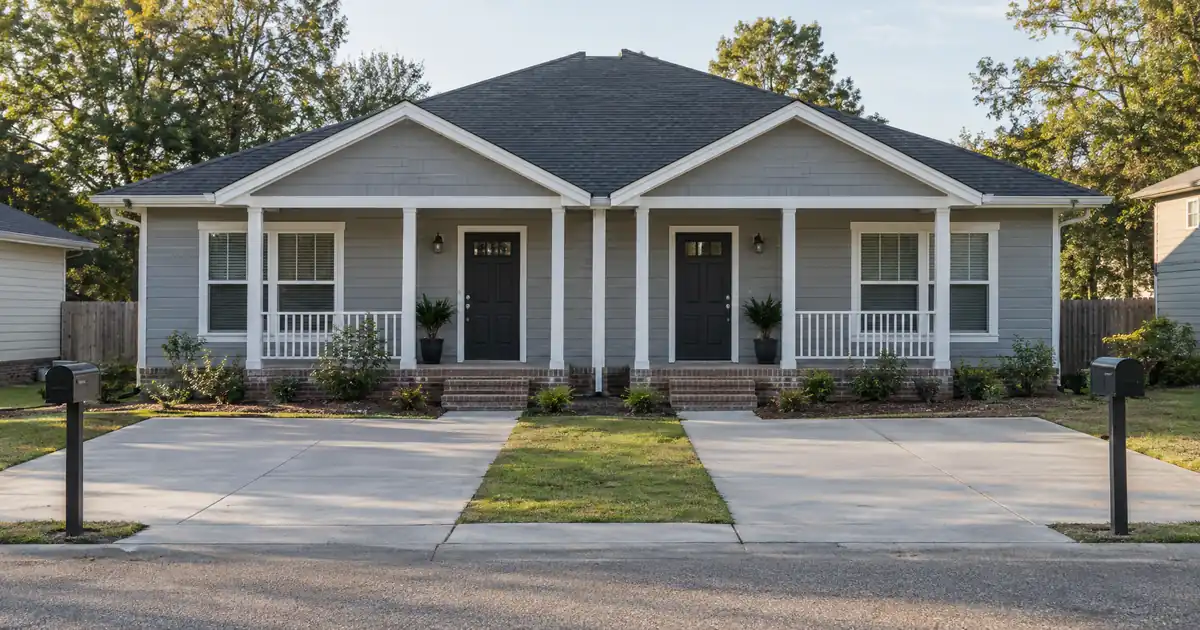
The Quick Read: A conventional cash-out refinance on a duplex, triplex or fourplex you live in tops out at 75% of the appraised value. That is five points below the 80% cap on a one-unit home. It is also far below the 95% you may have seen quoted for buying a 2-4 unit. The new loan must pay off your current first mortgage, so your cash is whatever sits between the 75% ceiling and what you still owe, minus closing costs. Program figures are subject to lender guidelines and full file review.
What a Conventional Cash-Out Actually Is
A cash-out refinance replaces your existing first mortgage with a new, larger one. The difference, after payoff and costs, comes to you as cash. Fannie Mae’s Selling Guide on cash-out refinance transactions treats it as paying off the existing first mortgage and taking out more than a limited amount of cash.
Two things set it apart from a rate-and-term refinance. A rate-and-term (limited cash-out) loan pays off the old mortgage and closing costs, with only incidental cash back. A cash-out loan hands you real money. Lenders price that extra risk with a lower leverage ceiling.
On 2-4 unit homes, the gap is large. Lendmire’s cash-out refinance programs are arranged through wholesale lenders that follow the same agency framework, and the 75% ceiling holds across that framework.
The Ceiling by Occupancy and Unit Count
The 75% number is not a quirk of one lender. It is the agency standard for 2-4 unit principal residences, and the Fannie Mae Eligibility Matrix lists it that way. Here is how the cash-out ceiling compares by property use, using the program figures Lendmire works with.
| Property use | Conventional cash-out max LTV |
|---|---|
| One-unit primary home | 80% |
| 2-4 unit primary home | 75% |
| Second home | 75% |
| Investment property | 75% |
Occupancy decides leverage, so a different use of the property changes the answer. This article stays on the home you live in.
Why Isn’t It the Number You Saw?
Search results for 2-4 unit financing are crowded with purchase content. On a purchase, 2-4 unit primary homes can reach 95% LTV, subject to lender guidelines and a full review of property, leverage, and credit. That is the number people remember.
It does not carry over to cash-out. Purchase leverage and cash-out leverage are separate tables. A homeowner who reads “95% on a duplex” and expects to pull equity at that level will be badly off. Cash-out stays at 75%. Skip the 95% in your planning.
How the Loan Is Sized, Step by Step
Step 1: Start with the appraised value. Every figure below flows from the appraisal, not from your purchase price or a website estimate. A 2-4 unit home needs a full appraisal, not a waiver.
Step 2: Apply the 75% ceiling. Multiply appraised value by 75%. That is the most the new first mortgage can be on value alone.
Step 3: Check the loan limit. The new loan also cannot exceed the conforming loan limit for your county and unit count. Limits rise with each added unit and run higher in high-cost counties. The FHFA conforming loan limit data lets you look up your county. On most 2-4 unit homes, the 75% ceiling binds first, but a high-value property can hit the limit instead.
Step 4: Count every lien. If a HELOC or other second lien stays in place, it counts toward the combined ratio. The 75% test applies to the first mortgage and the combined total. A second lien you keep eats into the room for cash.
Step 5: Subtract the payoff. Your current first mortgage balance comes out of the new loan. So does any lien you pay off at closing.
Step 6: Subtract costs. Closing costs and prepaid items reduce what reaches you, unless you pay them separately. Your Loan Estimate shows the final cash-to-close line.
A Worked Example in Percentages
Treat the appraised value as 100%.
- Maximum new loan at the cap: 75% of value.
- Existing first mortgage balance: 55% of value.
- Room before costs: 20% of value.
- Closing costs and prepaids, which vary by loan, come out of that 20%.
Now run a lower appraisal. If the home appraises 5% below what you expected, the ceiling shrinks in step. Your payoff does not shrink at all. A gap that looked like 20% of your expected value can drop sharply, because the whole cushion sits between two fixed figures. Appraisal sensitivity is the biggest swing factor on a 2-4 unit cash-out.
(And if your current balance is above 75% of value, there is no cash-out at all. Not ideal, but better to learn that before you pay for an appraisal.)
The Seasoning Clocks
Three timers can stop a file before the numbers ever matter.
- Age of the loan you are paying off. In the wholesale programs Lendmire works with, the first mortgage being replaced must be at least 12 months old, measured note date to note date.
- Time on title. At least one borrower generally must have owned the home for six months before the new loan funds.
- Listing status. A home that was on the market must be off it by the funding date.
These are investor guidelines set by Fannie Mae and Freddie Mac, not federal law. That matters because they have exceptions.
Where the Six-Month Wait Bends
Fannie Mae’s guide lists several. Delayed financing waives the wait for a cash purchase, when the original purchase was arm’s length and the funds are documented. The new loan is then limited to the documented investment plus closing costs. Inheritance and legal awards, such as a divorce settlement, carry no waiting period when the lender documents how the property was acquired.
Reserves: The Hidden Gate on a 2-4 Unit
Reserves are liquid assets you still hold after closing, measured in months of your full housing payment. On a one-unit primary home, many files need none. On a 2-4 unit principal residence, Fannie Mae’s reserve requirements call for six months. Terms depend on the lender’s guidelines, the property type, the leverage, and a full review of the credit profile.
A cash-out on a single-family home can also trigger six months when the debt-to-income ratio runs above 45% on automated findings. So a duplex owner can face reserves on two separate grounds. Cash you receive from the refinance is not the same as reserves you must show. Plan for both.
How Rent From the Other Units Counts
You live in one unit. The others produce rent. Agency rules treat the two differently.
Income from the unit you occupy generally cannot be used to qualify. Rent from the other units can, and it can lower your debt-to-income ratio. That, in turn, can keep you under the 45% trigger described above.
Fannie Mae’s rental income rules also require the lender to report gross monthly rent on every 2-4 unit principal residence. Lenders typically document rent with the appraisal’s rent schedule and a worksheet, and a history of receiving rent or managing property can matter. Because the linked guide is an archived version, confirm current treatment with your loan officer.
Rent helps you qualify. It does not raise the 75% ceiling.
Credit and Ratio Basics
Across the wholesale conventional programs Lendmire works with, the starting point is a 620 decision score. The automated finding governs most files, with a total debt ratio ceiling of 50%. Manually underwritten loans use tighter ratios of 36% or 45%, with reserve and score factors from the agency matrix.
Most borrowers who reach 75% LTV have no mortgage insurance to deal with. Mortgage insurance applies above 80% LTV, and a cash-out on a 2-4 unit sits below that line. If you later do a purchase or rate-and-term loan above 80%, the borrower can request cancellation at 80% of the original value, and the servicer must end it automatically at 78%.
Waiting periods after credit events are agency rules: four years from a chapter 7 discharge, seven from a foreclosure, and four from a short sale or deed-in-lieu. Documented extenuating circumstances can shorten them.
Where the General Rule Breaks
The 75% figure is the rule. These are the places it shifts or fails.
- Texas. A cash-out on a homestead is capped by the state constitution, and the wholesale lane that reaches higher leverage on one-unit homes is not written there.
- Manufactured housing. A 2-4 unit manufactured home follows separate treatment in the agency matrix.
- Special-purpose loans. Loans that buy out a co-owner are treated differently from a standard cash-out, so ask before assuming.
- Down-payment assistance. Community Seconds are not permitted with cash-out refinances.
- Special product lines. HomeReady, Home Possible and renovation loans use their own leverage tables.
- Some state-level claims. You may read that owner-occupied multifamily cash-out is “not available.” That is usually a single lender’s overlay or a state-specific rule, not the agency standard. The agencies do allow it, at 75%.
Is Cash-Out the Right Tool?
A conventional cash-out fits when you have real equity, a loan old enough to refinance, and a reason to replace the whole first mortgage. It fits less well in other cases.
| Your situation | Option to compare |
|---|---|
| Good rate on your first loan, need some cash | HELOC or second lien (counts toward combined ratio) |
| Existing FHA loan, no cash needed | FHA Streamline |
| Existing VA loan, no cash needed | VA IRRRL |
| Only want a new term or lower payment | Rate-and-term refinance |
| Need more than 75% of value | Revisit the plan |
A cash-out replaces your entire first mortgage with a larger one, so the new payment covers the whole balance. If your current loan carries terms you would hate to lose, a second lien may be the better route. That is the flip point. Tax treatment can depend on your situation; borrowers should speak with a qualified tax professional before relying on any deduction or credit.
Key Terms Defined
LTV (loan-to-value): The loan balance divided by the appraised value of the home.
CLTV (combined loan-to-value): The first mortgage plus any second liens, divided by the appraised value.
Cash-out refinance: A new first mortgage that pays off the old one and gives you the leftover equity as cash.
Limited cash-out (rate-and-term) refinance: A refinance that pays off the old loan and closing costs, with only incidental cash back.
Seasoning: The minimum time you must own the home, or hold the loan being paid off, before refinancing.
Reserves: Liquid assets you still hold after closing, counted in months of your housing payment.
Delayed financing: An exception that lets a cash buyer take out a loan without the usual six-month wait.
Frequently Asked Questions
What is the maximum LTV on a cash-out refinance for a duplex I live in?
Seventy-five percent of the appraised value. That applies to duplexes, triplexes and fourplexes alike, and to second liens counted together with the new loan. A one-unit home reaches 80%.
Does the 95% purchase leverage apply if I refinance and take cash?
No. The 95% figure belongs to purchases. A cash-out sits under a separate, tighter ceiling, which is 75% for 2-4 unit primary homes.
Do I need reserves on a 2-4 unit cash-out?
Usually, yes. Fannie Mae’s guide calls for six months of housing payments for a 2-4 unit principal residence. Many one-unit primary homes have no minimum, so this catches duplex owners off guard.
Can rent from my tenants help me qualify?
Rent from the units you do not occupy can count, and it may lower your debt ratio. Rent from your own unit generally cannot. The lender reports gross rent on every file either way.
Can I cash out right after buying the home?
Not in most cases. Standard guidelines look for six months on title and a first mortgage at least 12 months old. Exceptions include delayed financing for cash purchases, inheritance and legal awards.
Putting It Together
For a 2-4 unit owner, the decision comes down to four numbers: appraised value, current payoff, the 75% ceiling and your reserves. If the first three leave a thin margin, a lower appraisal can erase it. If reserves fall short, the file stalls on that alone.
If you are weighing a cash-out refinance against keeping the loan you have, Lendmire can help you compare the programs and the equity each one reaches on the 2-4 unit home you live in. Everything above is subject to lender guidelines and full file review, and none of it is a commitment to lend.
To see what a cash-out could reach on your own primary residence, request a scenario review with Lendmire.
About Lendmire
Lendmire is a mortgage brokerage (NMLS# 2371349) licensed for consumer mortgage lending in 16 states, arranging FHA, VA, conventional and jumbo purchase and refinance loans through a wholesale lending network. Eligibility is determined by the lender on each file. Scotsman Guide named Lendmire a Top Mortgage Workplace in both 2025 and 2026.
For the program’s current guidelines, see conventional loan programs.
Get Started
Ready to find the right loan for you?
In about 30 seconds you can review financing options available for your home or investment property. No commitment required.
Informational only. Not a Loan Estimate, approval, or commitment to lend. Program availability and eligibility are subject to lender guidelines, credit approval, property review, and underwriting.
References
1. Fannie Mae Selling Guide: Cash-Out Refinance Transactions
2. Fannie Mae Eligibility Matrix
3. FHFA Conforming Loan Limit Data
4. Fannie Mae Selling Guide: Minimum Reserve Requirements
5. Fannie Mae Selling Guide: Rental Income
This article is part of Lendmire’s Conventional Loans series — every loan program’s qualification details, guidelines, and scenarios live on the loan options page.
Related reading: How to Get a Conventional Cash-Out on a Home Still in the Estate · How Much Cash a Conventional Cash-Out Releases on a 2-4 Unit Home · How Much a Conventional Cash-Out Refinance Releases on a Second Home
Brandon Miller
Founder & CEO, Mortgage Loan Originator, Lendmire LLC
- Mortgage Loan Originator · NMLS# 1129696 · Verify on NMLS Consumer Access
- North Carolina Real Estate Broker · License# 343312 · Verify on NCREC
- North Carolina Insurance Producer · License# 19053198 · Property, Casualty, Life, Health · Verify on NAIC SBS
- Lendmire LLC · Firm NMLS# 2371349 · Verify firm licensure
Required disclosures. Lendmire (NMLS# 2371349) operates as a licensed mortgage broker, not a direct lender or depository. The discussion in this article is general in nature and should not be relied upon as financial, legal, or tax advice — every investment scenario is unique and should be reviewed by a qualified professional. Any loan inquiry is subject to lender underwriting, and this article is not a commitment to lend or a guarantee of approval. Mortgage rates, loan terms, and program guidelines vary by borrower, property, and state, and may change without notice. Equal Housing Opportunity. Verify licensure at NMLS Consumer Access.