
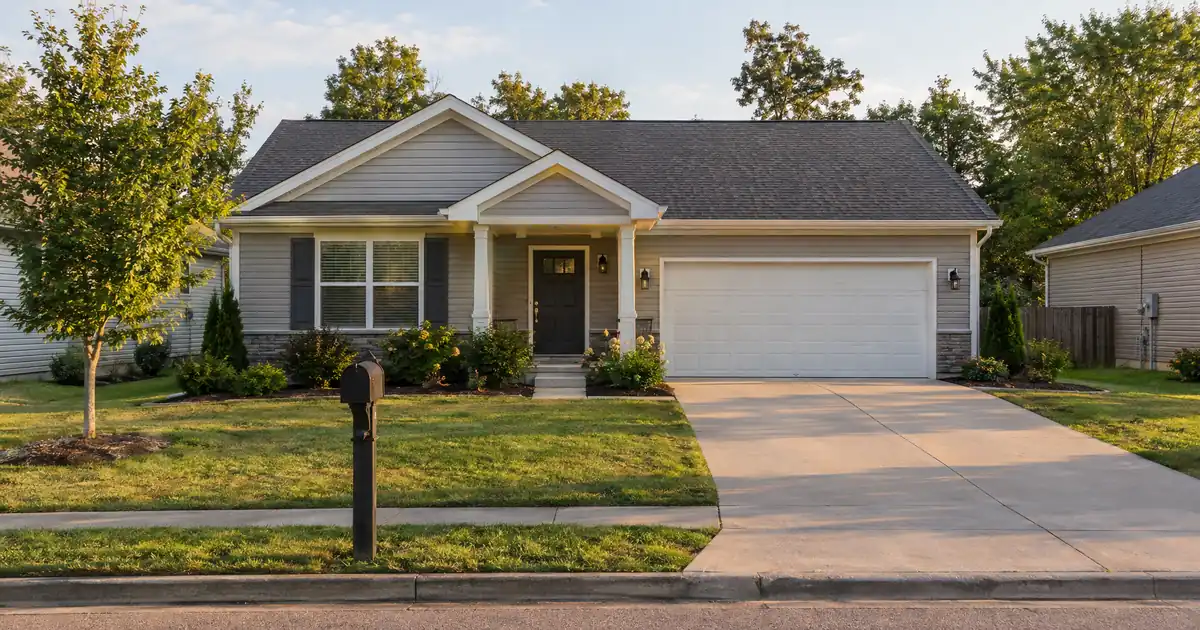
The Quick Read: To size a second home cash-out refinance around its purpose, price the job first, add closing costs and a buffer, then check that total against the lender’s ceiling. On a second home, conventional cash-out generally tops out at 75% of the property’s value, well below the 80% allowed on a principal residence. Borrow what the purpose needs, not what the ceiling allows. The FHA Streamline and VA IRRRL are not tools for this job.
Key Takeaways
- The purpose of the loan decides the lane, and the lane decides the ceiling.
- A second home qualifies for cash-out at 75% of value. Taking only a small amount of cash back can keep you in a higher-leverage lane.
- Closing costs come out of your proceeds or get added to the balance. Plan for that before you pick a number.
- Cash you take out cannot be counted as your reserves.
- FHA cash-out and the VA streamline do not fit a vacation home. Exact terms depend on the lender’s guidelines, property type, leverage, and a full review of the borrower’s file.
What Does “Sizing to Purpose” Mean?
Sizing to purpose means building the loan from the bottom up. You start with what the money must accomplish and end with a loan amount. Most borrowers do it backward. They ask how much the lender will give, then find uses for it.
The difference matters more on a second home than on the house you live in. A second home is priced and underwritten more tightly. The ceiling is lower, the pricing adjustments stack up, and you carry two housing payments at once. Idle cash costs interest on every dollar, month after month.
Here is the basic formula:
1. Price the purpose, including the payoff of the loan you already have.
2. Add closing costs and a small buffer.
3. Compare the total with the ceiling for your loan type.
4. Test the new payment against your income alongside your main home’s payment.
If step three or step four fails, you shrink the plan. You do not stretch the loan.
Is This a Cash-Out Refinance or a Rate-and-Term?
The loan’s purpose picks the lane. A refinance, which agencies also call limited cash-out, replaces your existing loan, pays closing costs and clears a small lien used to buy the home. Only a modest amount of cash comes back to you. A cash-out refinance has no restriction on what you spend the money on.
Crossing that line has a price. Lenders treat cash-out as riskier, so they allow less leverage and charge more. On a second home, the gap is large. Across the wholesale programs Lendmire places files with, the cash-out ceiling for a second home is 75% of value. A second home purchase is allowed up to 90%.
One rule trips people up. A new loan on a second home you own free and clear counts as cash-out, even though no old loan is being paid off. There is nothing to “refinance,” but the lenders still call it that.
If your only goal is a lower payment plus one small lien cleaned up, ask for the limited cash-out lane. If you need real money for a project, plan for the cash-out lane and the equity it demands. Lendmire’s cash-out refinance programs page lays out how the standard lanes compare for the home you live in.
What Counts as a Second Home?
A second home must be a one-unit property that you occupy for part of the year. It must be suitable for year-round living, and you must have exclusive control of it. It cannot be a timeshare or a rental run by a management firm. Fannie Mae’s occupancy rules in Selling Guide B2-1.1-01 list these tests.
Two points surprise people. Owning a home does not make it a second home. And renting it out part of the time does not automatically disqualify it. The property can show rental income, but the lender cannot use that income to qualify you. Heavy rental use can still threaten the second-home label.
Why does the label matter for sizing? If the property fails the test, it is priced as an investment property, with different leverage and different rules. That is a separate lane from the one here. Your stated purpose also has to match how you use the home. Telling a lender it is a vacation home while planning to rent it full time is a problem, not a shortcut.
How Is the Loan Underwritten, Step by Step?
Here is the order a file follows. Each step bounds the next.
1. Purpose. You state what the money is for: payoff, renovation, debt cleanup or something else.
2. Occupancy. The lender confirms the home meets the second-home test.
3. The clocks. Under Freddie Mac’s Guide section 4301.5, at least one borrower must have been on title for six months. If the cash-out pays off a first mortgage, that loan must be at least 12 months old, counted from note date to note date.
4. Automated underwriting. Second homes run through the agencies’ automated system and need an Approve/Eligible finding. Credit score, debt-to-income ratio and reserves all feed that finding.
5. The leverage cap. The loan amount is measured against appraised value. On a second home cash-out, that cap is 75%.
6. Netting the cash. Cash to you equals the new loan, minus the payoff, minus closing costs.
7. Reserves. You must have money left in the bank after closing. Cash-out proceeds from this property do not count toward reserves.
8. Ability to repay. The lender documents income, assets, employment, credit and monthly obligations. Your main home’s payment and the second home’s payment both go in the ratio.
9. Disclosures. Your Loan Estimate shows costs and estimated cash to close. Compare it with the final Closing Disclosure before you sign.
The conventional programs Lendmire works with start at a 620 decision score. The automated finding governs most files, with a total debt ratio ceiling of 50%. Manually underwritten loans run tighter, at 36% or 45%. These figures are subject to lender guidelines and full file review, and a second-home file with a thin cushion on any of them can slow the whole plan.
Here is where the numbers meet. Fannie Mae’s Eligibility Matrix sets different maximum leverage for a one-unit second home depending on purpose. Purchase and limited cash-out share the higher tier of 90%. Cash-out sits at 75%. That 15-point gap is what you pay for crossing the line.
Worked Scenarios (Percentages, Not Dollars)
Treat these as modeled assumptions. They show the arithmetic, not a market result.
Scenario 1: A renovation. Say your second home is appraised at 100% of value, and the existing mortgage equals 50% of that value. The project, with a contingency for overruns, costs 15% of value. Closing costs take a modest slice, perhaps a couple of points. The total comes to roughly 67% to 68% of value. That clears the 75% ceiling with room left. The loan has headroom, so you borrow only what the project plans call for.
Scenario 2: Debt payoff. The existing mortgage equals 55% of value. You want to clear consumer debts that equal 8% of value. Costs add a little more. The total lands around 65%. The sizing question here is not the cap. It is whether you stop using the cards afterward. Paying off debt with a second-home loan turns unsecured balances into debt secured by your vacation home.
Scenario 3: A down payment on another property. The existing mortgage equals 60% of value. You need cash equal to 20% of value to put down elsewhere. Add costs, and the total pushes past 75%. The cap, not your need, now sets the answer. You can take a smaller draw, phase the plan, or look at a different structure. Do not talk yourself into a bigger loan hoping the appraisal comes in high.
In all three, the order is the same: purpose, plus costs, plus buffer, tested against the lane. For the same logic on a main residence, see Lendmire’s piece How to Size a Cash-Out Refinance Around Its Use and Your New Payment.
How Do the Lanes Compare?
| Loan type | Ceiling (one-unit) | What it can do |
|---|---|---|
| Second home, limited cash-out | Higher tier (matrix) | Replace the loan, pay costs, small cash back |
| Second home, cash-out | 75% | Any use of proceeds |
| Principal residence, cash-out | 80% | Any use of proceeds |
| Second home, purchase | 90% | Buy the home |
The pattern is simple. Occupancy decides the leverage. The home you live in gets the most. A second home gets less. Anything that looks like a rental gets less still.
When the Cap Is Lower Than Your Need
This is a common sizing problem. The purpose costs more than the 75% ceiling leaves room for. You have four honest options.
- Shrink or phase the project. Do the work that matters first. Finish the rest from savings or a later loan.
- Take less cash. If a small draw covers the real need, the limited cash-out lane may open at a higher ceiling.
- Use a different tool. A second lien or home equity line can work in some cases, with its own costs and its own payment. It is a separate decision with a separate qualification.
- Wait. Paying down the balance or letting value rise changes the math without changing the plan.
What does not work is padding the appraisal expectation. The lender uses the appraised value, not your estimate. Plan on the loan being sized to a number you do not control.
What Does It Do to Your Monthly Budget?
The new payment covers the whole new balance, not only the cash you took. A small draw on top of a large payoff still resets the entire loan. If you were happy with your existing loan terms, giving them up is part of the cost.
The second home’s payment sits on top of the payment for the home you live in. Lenders count both in your debt-to-income ratio. They also count taxes, insurance and any association dues on each property. Stress-test the combined number against your income with some room for a bad year. If one job loss would make both payments hard, the draw is too big.
Pricing is another quiet cost. Cash-out and second-home features each carry pricing adjustments, and they stack. Fannie Mae publishes the loan-level pricing matrix that shows how. The direction is clear even without quoting numbers: cash-out on a second home costs more than the same loan on your main residence. Your Loan Estimate shows what that means in your case.
Closing costs deserve a line in the plan. They come out of your proceeds or get added to the loan. A “no-closing-cost” refinance does not remove them. The costs are built into the balance or the pricing instead. Either way, the Loan Estimate shows the effect on your cash to close.
Where Does the General Rule Break?
The rules above hold for the standard case. These edge cases change the answer.
Recent purchase. The six-month title rule can be met through a delayed financing exception. Fannie Mae’s cash-out refinance guide describes it for borrowers who bought recently and meet the listed conditions, including an arm’s-length purchase.
Title in an LLC. Time held by an LLC can count toward the six months under certain conditions in the Freddie Mac text. Whether a given file qualifies depends on lender guidelines.
Multiple financed properties. Owning several mortgaged properties raises the reserve test, and the agencies limit how many financed properties a second-home borrower can have.
Condos. Condo projects can carry their own occupancy or leverage limits. A vacation condo can fail on the building, not on you.
Manufactured homes. Eligibility for second homes depends on the product and the home’s dimensions. Ask early.
Free-and-clear homes. As noted above, a new loan with no payoff is still cash-out.
Reserves from the draw. Some borrowers plan to meet the reserve test with the cash they pull out. That does not work. Reserves have to come from elsewhere.
Why the FHA Streamline and VA IRRRL Do Not Fit
Neither one pulls cash out of a vacation home. The FHA Streamline refinances an existing FHA loan with limited credit review and a net tangible benefit test. It produces no cash. FHA cash-out is limited to principal residences, which HUD’s Handbook 4000.1 sets out. A second home cannot use it.
The VA interest rate reduction refinance, or IRRRL, works only on an existing VA loan. You certify that you once lived in the home, so a former residence now used as a second home can sometimes qualify. But the product only lowers your rate. It carries a 0.5% funding fee unless you are exempt, no VA appraisal, and seasoning of the later of 210 days and six payments. It gives you no cash.
If someone suggests either program for equity on your lake house, the answer is no. Those tools apply to loans you already hold and to homes you live in.
Key Terms Defined
Limited cash-out refinance: A refinance that pays off your first mortgage, closing costs and a small lien used to buy the home. Only a small amount of cash comes back.
Cash-out refinance: A refinance where you take equity as cash and can spend it on anything.
Loan-to-value (LTV): The loan amount divided by the home’s appraised value. A 75% LTV means the loan equals three-quarters of value. Every figure here varies by lender and program — guidelines, property type, leverage, and credit profile all apply.
Seasoning: The waiting period before you can refinance. It covers how long you have been on title and how old your current mortgage is.
Reserves: Savings left in the bank after closing, available to cover payments if income dips.
Retained equity: The share of value the lender requires you to keep in the home. At 75% LTV, you keep 25%. Final terms depend on lender guidelines, property type, leverage, and the borrower’s complete credit picture.
How Do You Decide If the Purpose Justifies the Refinance?
Run three checks before you apply.
First, does the purpose pay for itself or protect something? A needed roof repair or a project that adds lasting value passes more easily than a trip or a luxury purchase. Spending equity on short-term use trades long-term wealth for short-term cash.
Second, does the loan outlive the benefit? A balance you are still paying a decade after the project is forgotten is a cost you chose. Match the plan to your horizon for owning the home.
Third, would a smaller draw or a different tool work? If so, the full cash-out may be more loan than the purpose needs.
If all three checks pass, the loan fits. If one fails, shrink the plan before you shop. Tax treatment can depend on your situation; borrowers should speak with a qualified tax professional before relying on any deduction or credit.
Frequently Asked Questions
How much cash can I take out of a second home?
It depends on the ceiling and your payoff. On conventional cash-out, a second home generally tops out at 75% of appraised value. Subtract your current mortgage balance and closing costs from that figure, and what remains is the most you could receive. Credit, ratios and reserves can reduce it further, subject to lender guidelines and full file review.
Can I use the cash to meet my reserve requirement?
No. Cash-out proceeds from the property you are refinancing do not count as reserves. You need other savings left in the bank after closing. Plan this before you decide on an amount, since borrowers often discover the rule only at underwriting.
Does rental income on my second home hurt me?
Not by itself. The property can produce some rental income and still qualify as a second home. The lender cannot use that income to qualify you, though, and heavy or full-time renting can change how the home is classified. A different classification brings rules.
Can I use an FHA or VA loan to pull cash from a vacation home?
No. FHA cash-out is for the home you live in, and the FHA Streamline gives no cash. The VA IRRRL only lowers the rate on an existing VA loan and gives no cash either. Conventional cash-out is the lane for taking equity from a second home.
How long must I own the home before a cash-out refinance?
Generally at least one borrower must have been on title for six months. If a first mortgage is being paid off, it must be at least 12 months old. An exception for delayed financing can apply to recent cash purchases that meet the conditions.
If You’re Ready to Run Your Own Numbers
If you are weighing a cash-out refinance against keeping the loan you have, Lendmire can help you compare the programs and the equity each one reaches. A mortgage broker can lay your purpose, your payoff and your reserves side by side before you commit to an amount. Nothing here is a commitment to lend, and every program figure depends on lender guidelines and your full file.
For your own numbers, request a scenario review with Lendmire.
About Lendmire
As a mortgage broker (NMLS# 2371349), Lendmire helps homeowners and home buyers in 16 states with FHA, VA, conventional and jumbo purchase and refinance loans arranged through wholesale lenders. Lendmire is never the lender; program terms are set by the lender and the agency guidelines. Scotsman Guide named Lendmire a Top Mortgage Workplace in both 2025 and 2026.
Get Started
Ready to find the right loan for you?
In about 30 seconds you can review financing options available for your home or investment property. No commitment required.
Informational only. Not a Loan Estimate, approval, or commitment to lend. Program availability and eligibility are subject to lender guidelines, credit approval, property review, and underwriting.
References
1. Fannie Mae Selling Guide B2-1.1-01, Occupancy Types
2. Freddie Mac Guide Section 4301.5
3. Fannie Mae Eligibility Matrix
5. Fannie Mae Selling Guide B2-1.3-03, Cash-Out Refinance Transactions
This article is part of Lendmire’s Refinance series — every loan program’s qualification details, guidelines, and scenarios live on the loan options page.
Related reading: How to Size a Cash-Out Refinance for One Use on a Mortgage Worth Keeping · How to Size a Cash-Out Refinance for a Renovation Using Contractor Bids · Can a Cash-Out Refinance on Your Primary Home Fund a Second Home?
Brandon Miller
Founder & CEO, Mortgage Loan Originator, Lendmire LLC
- Mortgage Loan Originator · NMLS# 1129696 · Verify on NMLS Consumer Access
- North Carolina Real Estate Broker · License# 343312 · Verify on NCREC
- North Carolina Insurance Producer · License# 19053198 · Property, Casualty, Life, Health · Verify on NAIC SBS
- Lendmire LLC · Firm NMLS# 2371349 · Verify firm licensure
Compliance and disclosures. Lendmire (NMLS# 2371349) is a licensed mortgage broker and is not a direct lender, depository institution, financial advisor, or tax professional. Content in this article is general market analysis and educational information — not financial, legal, or tax advice for any specific situation. Lendmire does not guarantee loan approval; every transaction is subject to underwriting by the funding lender. Mortgage pricing and loan program guidelines are subject to change at any time without notice and vary by borrower characteristics, property type, and state regulations. Lendmire complies with Equal Housing Opportunity. Licensure verification: NMLS Consumer Access.