
The Quick Read: A manual underwrite means a person, not the automated system, reviews your file against FHA’s written rules. You prove you own the building and live in one unit. You prove a clean mortgage history and enough income to carry the new loan. On a three- or four-unit building, the property’s own rent must also pass a separate test.
Key Takeaways
- Manual means a human review. The rules stay the same, but the paperwork gets heavier.
- The cash-out cap is 80% of the appraised value, so at least 20% equity stays in the home.
- You must have owned and lived in the home for 12 months before the case number is assigned.
- A duplex is judged mostly on your personal income. Three and four units add a property-level rent test.
- Lender requirements can be tougher than FHA’s minimums.
What Makes a Cash-Out “Manual”?
A cash-out goes manual when the automated underwriting system will not approve the file, or when a trigger forces a downgrade to a human review. Lendmire’s wholesale lenders see a few patterns again and again. A late payment on a mortgage or home equity line is the most common one.
Here is how the triggers usually work:
| Trigger | What it means | What the file needs next |
|---|---|---|
| System returns “Refer” | The automated review would not approve | Full manual review |
| Late payment in history | Downgrade on a cash-out | Explanation and proof of recent on-time payments |
| No usable credit score | Not enough credit data | Alternative credit history |
| Prior forbearance | Payments were paused earlier | Review of how you resumed payments |
Manual does not mean a lower bar. It means a person applies the same FHA rules and weighs the exceptions by hand. Some lenders also set tougher rules than FHA’s own minimums, so the same file can get different answers from different lenders.
Lendmire’s FHA cash-out refinance program covers the basics of how this loan works. This article goes one level deeper into the file itself.
Which Properties and Borrowers Qualify?
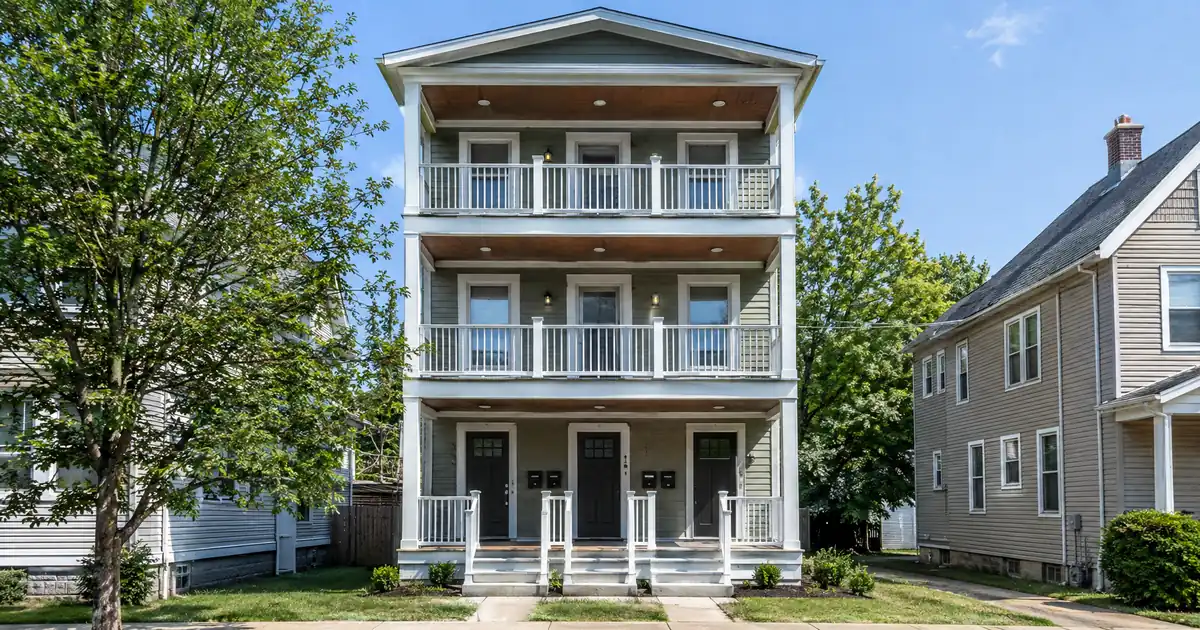
Only a home you live in qualifies. FHA programs are limited to one- to four-family properties that are owner-occupied principal residences. A duplex, triplex or fourplex works if you occupy one unit. A building where you are only the landlord does not.
FHA’s rulebook is Single Family Housing Policy Handbook 4000.1. HUD describes it as the consolidated source of Single Family policy. HUD updates it often, and lenders must follow the current version. Rules can shift between updates, so treat any summary, this one included, as a map and not a contract.
Across the wholesale programs Lendmire works with, these gates decide most files:
- Ownership and occupancy. You owned and lived in the home for 12 months before the case number was assigned. Utility bills or employment records usually prove the address.
- Leverage. The FHA cash-out reaches 80% of the appraised value, not the 96.5% a purchase can reach.
- Credit. The wholesale programs Lendmire places files with start at a 580 decision score.
- Title. You are on title. Nonprofits and government entities are not eligible borrowers.
One edge case matters for heirs. If you inherited the home, the 12-month wait can be handled differently. HUD’s archived guide mentions the inheritance rule. The exception is narrow and depends on how the home was used after you inherited it. Ask your loan officer to confirm it before you count on it.
How Do You Document a Manual File, Step by Step?
Think of the file in four piles: occupancy, housing history, income and property. Each pile answers one question the reviewer has.
Step 1: Prove you live there. Gather utility bills or employment records showing your address for the last 12 months. A driver’s license alone rarely settles it.
Step 2: Prove the mortgage history. The lender documents that you paid every mortgage on the property within the month it was due, for the prior 12 months. If the loan is not on your credit report, expect to supply a verification of mortgage or bank records showing each payment. The lender also orders payoff statements for every lien being paid off.
Step 3: Prove income. Wage earners supply pay stubs, W-2s and a verification of employment. Self-employed borrowers typically provide two years of traditional personal-income documentation, plus a profit-and-loss statement and balance sheet. Many lenders require these, and some add more.
Step 4: Order the appraisal. An FHA-approved appraiser gives an opinion of value, which sets the 80% cap. The report also shows market rent for each unit on a 2-4 unit building. HUD’s glossary notes the appraisal is not a home inspection. It covers readily observable conditions only, so the appraiser can flag repairs but will not find hidden defects.
A simple checklist helps:
| Document | Why it is needed | Common pitfall |
|---|---|---|
| Utility bills, 12 months | Proves occupancy | Bills in another name |
| Mortgage statements | Proves on-time history | Missing months |
| Payoff statements | Sets the liens to clear | Stale figures |
| Pay stubs, W-2s, returns | Proves income | Gaps between years |
| Leases or rent roll | Supports rent from other units | Units with no lease |
| Letter of explanation | Covers a late or a gap | Vague wording |
What Credit and Ratio Limits Apply?
The base ratio pair is 31/43. The first number is your housing payment as a share of income. The second is your total monthly debt as a share of income. That pair needs no compensating factors.
Documented compensating factors can raise the limits, up to 40/50 at the top tier. Most files get a ratio finding from the automated system. A manual file gets one from a person who reads each factor and the proof behind it.
Compensating factors that reviewers weigh include:
- Documented cash reserves
- A small increase in your housing payment
- Strong leftover monthly income after all debts
- Significant extra income you are not using to qualify
These ratios are ceilings, not promises. Lenders may set lower ones. Factors also work only for files that sit in the right credit tier. They do not rescue a weak score.
On payment history, HUD’s answers page describes an acceptable record as on-time housing and installment payments for the past year, with only a small number of minor lates in the prior two years. That page is dated, so read it as an illustration of the standard and not as today’s exact test.
How Does Rent From Your Other Units Count?
Rent from the other units can help you qualify, but only after a reduction for vacancy. The lender does not credit the full rent, and it does not use your own unit’s rent as income. Many borrowers miss this. A fourplex with four tenants is not a fourplex with 100% rent credit.
Duplex. You qualify mostly on your own income. Rent from the second unit may help, with a vacancy reduction. The file needs a lease or the appraiser’s market rent to support it.
Three or four units. The building also has to pass a self-sufficiency test. This is a property-level check, separate from your income. In plain terms:
1. The appraiser estimates market rent for every unit, including yours.
2. The lender reduces that total for vacancy.
3. The result is compared with the full monthly housing payment on the new loan.
If the rent falls short, the loan amount may have to drop. This matters on a cash-out, because a larger balance means a larger payment. The test can decide the outcome even when your personal income is strong.
HUD’s archived guide shows this same self-sufficiency requirement for three- and four-unit cash-outs, along with a reserve requirement. That guide is superseded in places, so confirm the current rules with your loan officer. Final terms depend on the lender’s guidelines, the property type, and the borrower’s complete credit picture.
Do not mix this up with the rule for accessory dwelling units. That restriction concerns rent from a backyard unit on a one-unit home. It does not govern a duplex or fourplex.
How Do Reserves Work on a Cash-Out?
Reserves are savings left after closing, counted in months of housing payments. Three- and four-unit buildings call for them, and a manual file may need extra reserves to support a compensating factor. Lenders generally do not count the cash you take out in the same loan as reserves. Ask your loan officer how your lender treats that point.
Keep reserve proof clean. Bank statements should show the source and the balance. Large unexplained deposits invite questions.
How Do You Write a Letter of Explanation?
A good letter answers three questions: what happened, why, and what changed. Keep it factual and short. Attach evidence.
- For a late payment: state the month, the cause, and proof that you paid on time since.
- For a gap in income: state the dates and what ended it.
- For a compensating factor: name the factor, then point to the document that proves it.
Skip the pleading tone. Reviewers want dates and documents, not drama.
Where Does the General Rule Break?
A few situations change the picture:
- Inherited home. The occupancy wait may be handled differently, as noted above.
- Non-occupant co-borrower. Their income generally cannot be used to qualify on a cash-out.
- Forbearance history. If you completed a forbearance plan, the file may need a manual review and a stretch of on-time payments. Lenders set the details.
- No prior mortgage. If the home is owned free and clear, the file needs different documents to show how you hold title and pay housing costs.
- Lender overlays. A lender can ask for a higher score, lower ratios or more reserves than FHA’s minimum.
One more thing for rentals and second homes. Occupancy decides leverage, and FHA’s cash-out is for the home you live in.
What Does This Mean for Your Budget?
A cash-out replaces your current loan with a larger one. Your housing payment usually rises. FHA mortgage insurance also applies to the larger balance.
Here is how that insurance works mechanically. The upfront premium is 1.75% of the base loan, and it can be financed. The annual premium runs between 0.15% and 0.75% of the balance, depending on term, loan amount and LTV. On a thirty-year loan at or below 90% LTV, the annual premium ends after eleven years. Above 90%, it lasts the full term.
The 80% cap leaves equity behind. The CFPB says lenders typically require you to keep at least 10% to 20% of your home’s value as equity. The same guide warns that because the home is collateral, missed payments could put you at risk of foreclosure.
Closing costs reduce your cash or add to your balance if financed. Your Loan Estimate and Closing Disclosure show them line by line. Tax treatment can depend on your situation; borrowers should speak with a qualified tax professional before relying on any deduction or credit.
Mistakes That Stall a Manual File
- Counting your own unit’s rent as qualifying income
- Skipping the 12 months of payment proof for a smaller second mortgage
- Submitting a letter with no supporting documents
- Assuming a lender’s overlay is FHA’s rule, or the reverse
- Treating the appraisal as a repair inspection
Next Step
If you are weighing a cash-out refinance against keeping the loan you have, Lendmire can help you compare the programs and the equity each one reaches. Every parameter here is subject to lender guidelines and full file review, and nothing here is a commitment to lend.
Key Terms Defined
Manual underwriting: A person reviews your file against FHA’s written rules instead of relying on the automated finding.
Compensating factor: A documented strength, such as savings or low added payment, that supports higher ratios.
Self-sufficiency test: A check on three- and four-unit buildings that compares reduced market rent with the full housing payment.
Reserves: Savings left after closing, counted in months of housing payments.
Seasoning: The time you must own and live in the home before the case number is assigned. Here it is 12 months.
Case number: The FHA identifier assigned to your loan file. The 12-month clock runs back from it.
Frequently Asked Questions
Can I use a manual FHA cash-out on a triplex or fourplex?
Yes, if you live in one unit as your primary home. The building must also pass the self-sufficiency test, and the lender may reduce the loan if rent falls short.
How much equity do I have to leave in the home?
At least 20%, because the cash-out reaches 80% of the appraised value. Lenders can set tighter limits than that.
Does my own unit’s rent count toward qualifying?
Not as income. On three- and four-unit buildings, the appraiser’s market rent for your unit does enter the self-sufficiency test, after the vacancy reduction.
Will a late payment end my chances?
Not always. A late can force a manual review, and the file then needs an explanation and proof of recent on-time payments. Lenders vary on how much they weigh it.
Is FHA’s minimum the same as what every lender offers?
No. HUD sets the floor. The wholesale programs Lendmire places files with start at a 580 decision score, and individual lenders may add overlays on top.
For your own numbers, request a scenario review with Lendmire.
About Lendmire
Lendmire — NMLS# 2371349 — is a mortgage broker that arranges FHA, VA, conventional and jumbo home purchase and refinance financing in 16 states through wholesale lenders. Every option is subject to the lender’s guidelines and full underwriting. Scotsman Guide named Lendmire a Top Mortgage Workplace in both 2025 and 2026.
For the program’s current guidelines, see FHA loan programs.
Get Started
Ready to find the right loan for you?
In about 30 seconds you can review financing options available for your home or investment property. No commitment required.
Informational only. Not a Loan Estimate, approval, or commitment to lend. Program availability and eligibility are subject to lender guidelines, credit approval, property review, and underwriting.
References
1. HUD Handbook 4000.1 draft table of contents (property type text)
2. HUD Single Family Housing Policy Handbook 4000.1 Overview
3. HUD Archives Reference Guide, Refinances p. 2-19
4. HUD Handbook 4000.1 Glossary
5. HUD Answers: FHA manual underwriting credit history
6. CFPB: Using home equity to meet financial needs
This article is part of Lendmire’s FHA Loan series — every loan program’s qualification details, guidelines, and scenarios live on the loan options page.
Related reading: Can an Heir Who Inherited the Home Get an FHA Cash-Out Refinance? · How a Low Appraisal Cuts an FHA Cash-Out on a Paid-Off Home · FHA Cash-Out Refinance Requirements at a Glance
Brandon Miller
Founder & CEO, Mortgage Loan Originator, Lendmire LLC
- Mortgage Loan Originator · NMLS# 1129696 · Verify on NMLS Consumer Access
- North Carolina Real Estate Broker · License# 343312 · Verify on NCREC
- North Carolina Insurance Producer · License# 19053198 · Property, Casualty, Life, Health · Verify on NAIC SBS
- Lendmire LLC · Firm NMLS# 2371349 · Verify firm licensure
Disclosure information. Lendmire is a state-licensed mortgage brokerage under NMLS# 2371349. Lendmire is not a depository institution, direct lender, or financial advisor — all loans referenced are placed through wholesale lender partners and are subject to each lender's underwriting standards. This article is provided for general informational purposes and is not a commitment to lend, nor does it constitute financial, legal, or tax advice. Loan programs, terms, rates, and qualification standards change without notice and depend on borrower profile, property type, and the state in which the subject property is located. Equal Housing Opportunity provider. NMLS Consumer Access: nmlsconsumeraccess.org.