
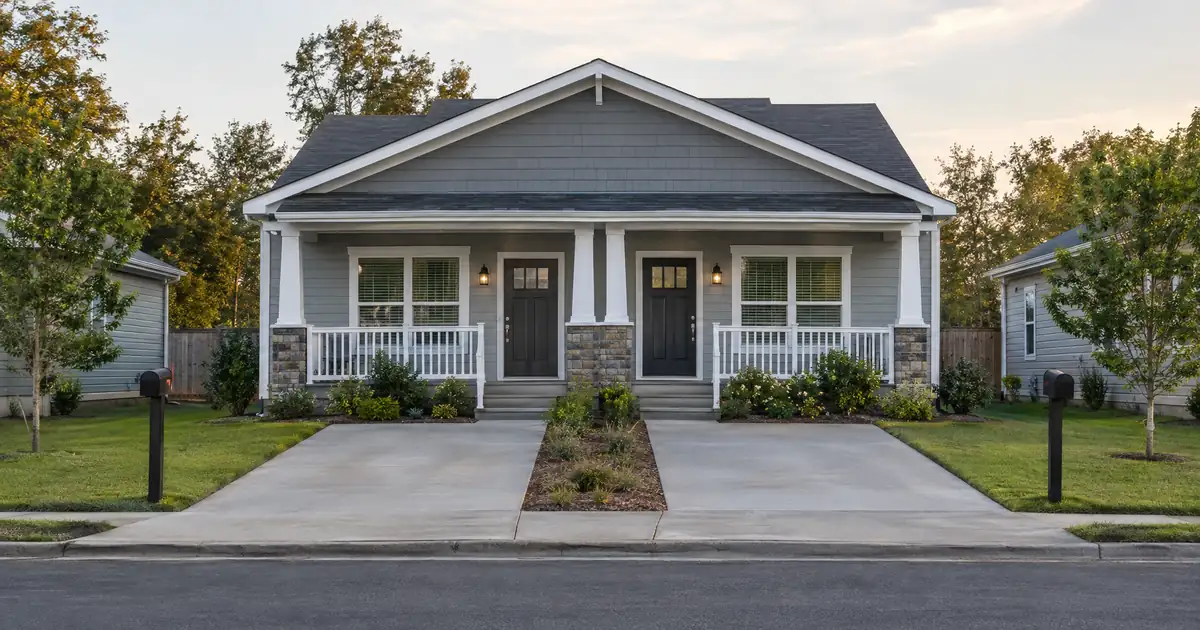
The Quick Read: On an FHA cash-out of a duplex, triplex or fourplex you live in, the annual mortgage insurance premium (MIP) generally runs for 11 years. It does not run for the life of the loan. That is because a cash-out tops out at 80% loan-to-value, below the ninety percent line that separates the 11-year tier from the full-term tier. Unit count does not change the duration. Your lender confirms the exact tier on your actual file.
Key Takeaways
- Duration is set by the new loan’s term and its loan-to-value (LTV) at origination. The number of units is not an input.
- A thirty-year loan at or below ninety percent LTV pays annual MIP for eleven years. Above ninety percent, it lasts for the term.
- A cash-out is a new FHA loan. Refinancing at year eight restarts the eleven-year count.
- Extra principal payments and a higher appraisal do not cancel MIP early on a current FHA loan.
- On a 3-4 unit, the real hurdle is usually the rent test, not the insurance clock.
Two Meanings of “Duration” (and Which One This Page Covers)
This page is about how long you pay annual MIP. It is not about how long you must live in the building. Those are separate questions, and search results blur them together.
MIP is the insurance premium FHA borrowers pay. It protects the lender, not you. You pay it in two pieces: a one-time upfront premium and an annual premium collected monthly.
The occupancy question gets a short section near the end. The rest covers the insurance clock on a cash-out refinance of a 2-4 unit primary home.
If you want the program basics first, start with Lendmire’s overview of the FHA cash-out refinance program. It covers who the loan is for and how equity is measured.
How Is MIP Duration Decided, Step by Step?
Duration comes down to four inputs: the loan term, the LTV at origination, the base loan amount, and the date the FHA case number was assigned. Term and LTV set how long you pay. Loan amount sets which premium level applies. The case-number date decides which rulebook governs.
Here is how it plays out on a cash-out:
1. Eligibility screen. The home must be your principal residence. You must have owned and lived in it for 12 months before the case number is assigned.
2. Appraisal. The appraisal sets the value. The loan is capped at 80% of it.
3. LTV is measured. The base loan amount is divided by the lesser of the price or appraised value. For a cash-out the appraised value is the working number.
4. Upfront premium is added. The upfront premium is 1.75% of the base loan. It is usually financed into the balance.
5. Tier is assigned. At or below ninety percent LTV on a term over fifteen years, annual MIP runs eleven years. Above ninety percent on a thirty-year loan, it runs for the term.
6. Annual MIP is collected monthly. It rides inside your mortgage payment until the end date.
HUD’s Mortgagee Letter 2013-04 sets the duration framework. HUD’s loan lookup help page restates the same table.
One detail trips people up. The LTV test excludes the financed upfront premium, per that same letter. So the premium you roll into the balance does not push you across a tier line.
Why a Cash-Out Usually Lands in the Eleven-Year Tier
A cash-out caps at 80% LTV, and the tier line sits at ninety percent. A thirty-year cash-out therefore falls in the eleven-year tier. These specifics are subject to lender guidelines and a full review of property, leverage, and credit.
That conclusion comes from two rules working together. No single sentence in HUD’s rules says “cash-outs get eleven years.” It is the practical result, and your lender confirms it on the file.
Here is a picture. Say the appraisal comes in and you borrow the maximum 80% of value. The upfront premium is 1.75% of that base loan, which adds about 1.4% of the home’s value to the balance. Your balance sits near 81.4% of value. The test still reads 80%, because the financed premium is excluded.
Even on a different tier, you would be well below the line that triggers full-term MIP. This is why the common warning that FHA mortgage insurance is “forever” often does not describe a cash-out. It tends to describe purchase loans with very little down. Older web pages also cite a higher cash-out cap than today’s. Ignore them.
What Changes on a 2-4 Unit, and What Doesn’t?
For the insurance clock, nothing changes. HUD’s rules make no distinction between a one-unit home and a 2-4 unit home on MIP duration. What differs is eligibility, rent math and loan size.
| Factor | Same as one-unit? | What differs |
|---|---|---|
| MIP duration | Same | Set by term and LTV only |
| Cash-out LTV cap | Same | 80% on an owner-occupied home |
| Occupancy | Same | You live in one unit |
| Rent test | Different | Applies to 3-4 units |
| Reserves | Often different | Some lenders ask more on 3-4 units |
| Premium level | Indirect | Larger loans may reach a higher tier |
Across the wholesale programs Lendmire places FHA files with, the 3-4 unit cash-out is where files stall. The cause is rarely the insurance. It is the self-sufficiency test.
On a three- or four-unit home, the property’s own rent must help carry the full housing payment. The appraiser estimates market rent for every unit, including the one you occupy. Underwriting counts only a portion of that rent. What remains must cover the payment. A duplex does not face this test.
So a 3-4 unit cash-out can pass on LTV and MIP duration and still fail on rent. Reserve requirements and credit floors can also run higher with some lenders. Those are lender overlays, separate from HUD’s insurance rules. Terms depend on the lender’s guidelines, the property type, the leverage, and a full review of the credit profile.
Larger loans are more likely on 2-4 units. A bigger base loan can move you into a higher annual premium tier. That is a loan-size effect, not a property-type rule.
Worked Scenarios
These use percentages only. The point is the pattern.
Scenario one: a first cash-out on a duplex. You own a duplex and live in one side. You have owned and occupied it more than 12 months. You borrow 80% of the appraised value on a thirty-year term. Annual MIP runs eleven years from the new loan’s start. The upfront premium is financed. No rent test applies, because it is a two-unit.
Scenario two: a fourplex with strong equity. The LTV and the eleven-year tier look identical. The rent test now decides the outcome. The appraiser’s market rents, counted at a reduced share, must cover the housing payment. If they fall short, a smaller cash-out request may help, since a lower balance means a smaller payment to cover. A lender reviews that on the file.
Scenario three: a borrower already paying MIP. Say you are in year eight of an existing FHA loan. You cash out into a new FHA loan. The old loan’s seasoning does not carry over. You now pay annual MIP for a fresh eleven years. You also pay a new upfront premium. Your total time paying MIP just stretched.
Does a Cash-Out Reset the Clock?
Yes. A cash-out is a new FHA loan with its own case number, its own LTV and its own duration clock.
| Item | Old loan | New cash-out loan |
|---|---|---|
| Clock starts | Original closing | New closing |
| Years remaining at year 8 | About 3 | Eleven |
| Upfront premium | Already paid | New one applies |
| Balance insured | Old balance | Old balance plus cash out |
Annual MIP also applies to the whole new balance. That includes the cash you take out and the financed upfront premium. If you only need a modest amount of cash, that extends and enlarges your insurance cost. It is worth weighing before you commit. A borrower within a few years of the end of MIP should look hard at whether the cash is worth restarting the count.
Where the General Rule Breaks
The eleven-year answer holds for most cash-outs. A few situations change it.
Shorter terms. A term of fifteen years or less at ninety percent LTV or below also gets eleven years. It uses a different premium table.
Above ninety percent LTV. A cash-out normally cannot exceed 80%, so the full-term tier mostly shows up on purchases. Do not assume “for life” applies to your cash-out without checking the loan’s own LTV.
Older FHA loans. Loans with case numbers assigned before the cutoff in the 2013 letter followed a different rule. Their MIP could cancel once the balance reached a lower LTV after a minimum period. HUD’s answers page describes it. A cash-out replaces that old loan with a new one under today’s rules. You do not keep the old cancellation feature.
Streamline refinances. HUD’s 2023 premium-reduction letter has a carve-out for Streamline and Simple Refinances of certain older FHA loans. It does not apply to a cash-out.
Inherited homes. Some lender material says an heir may skip the 12-month occupancy wait. Treat that as unsettled. Confirm the current wording with your lender before planning around it.
Lender overlays. Credit floors and reserve rules differ from lender to lender. Some set a higher floor than the program minimum. They sit on top of HUD’s rules and do not change the insurance clock.
Can You End MIP Early?
Not by paying down or by home appreciation. On a current FHA loan, HUD’s published rules do not provide equity-based cancellation. HUD’s cancellation language for older loans also says a new appraised value is not used for that test.
Two real exits exist:
| Path | What it takes | Tradeoff |
|---|---|---|
| Reach the end date | Keep the loan for the full duration | Slowest, no new costs |
| Refinance out of FHA | Qualify for a non-FHA loan | New closing costs, new credit and equity review |
If you plan to exit by refinancing, compare the whole picture. That means closing costs on the new loan, how much equity you hold, and what you would give up. Some borrowers with a short stretch of MIP left find waiting is cheaper than refinancing. Others with a long stretch and strong equity find leaving FHA worthwhile.
Occupancy Duration, Briefly
You must have lived in the home as your principal residence for 12 months before the cash-out case number is assigned. That is the entry test. After closing, FHA expects the home to remain your primary residence. On a 2-4 unit, you occupy one unit and may rent the others.
Cash-out and later renting interact. If you move out soon after, the loan no longer fits its owner-occupied purpose. Talk to your loan officer before planning a move. Also remember that occupancy has nothing to do with MIP length. The two clocks run separately.
Key Terms Defined
MIP (mortgage insurance premium): The insurance FHA borrowers pay, made up of an upfront premium and an annual premium.
UFMIP (upfront mortgage insurance premium): A one-time premium of 1.75% of the base loan, usually financed into the balance.
LTV (loan-to-value): The base loan amount divided by the home’s value. A higher LTV means less equity.
Base loan amount: The loan before the financed upfront premium is added. This is the figure used for the LTV test.
Case number: The identifier FHA assigns to a loan file. Its assignment date decides which duration rules apply.
Self-sufficiency test: A rent test for 3-4 unit homes. Counted rent must help cover the full housing payment.
Seasoning: The time you have owned and lived in the home before the cash-out. Here it is 12 months.
What the Decision Looks Like in Practice
Start with three questions. First, how much cash do you actually need? A larger balance means more insured dollars and a longer-feeling cost. Second, how long will you keep the home? If you may sell within a few years, a long insurance clock matters less. Third, on a 3-4 unit, do the appraised rents pass the test?
Then compare cash-out against keeping your current loan. If you already hold a lower balance and a shorter MIP stretch, a cash-out resets both. That is the main cost beyond closing expenses.
Documented compensating factors can stretch the debt ratios on a cash-out, from the base 31/43 pair up to 40/50 at the top tier. The automated finding governs most files. Every figure here is subject to lender guidelines and full file review, and none is a commitment to lend.
Frequently Asked Questions
Does a duplex or fourplex pay MIP longer than a single-family home?
No. Duration follows the loan term and the original LTV. A larger loan on a multi-unit may land in a higher premium tier, but the number of years stays the same.
Can I stop paying MIP when I reach 20% equity?
Not on a current FHA loan. HUD’s published rules do not offer equity-based cancellation. The ways out are reaching the end date or refinancing into a non-FHA loan.
Does the financed upfront premium count toward the ninety percent line?
No. HUD excludes the financed upfront premium from the LTV test. Only the base loan amount, divided by the lesser of price or appraised value, is measured.
If I cash out in year eight, do I keep my remaining MIP years?
No. A cash-out is a new loan, so a new eleven-year clock begins. You also pay a new upfront premium on the new base loan.
Is the 3-4 unit rent test the same as the MIP rules?
No. The rent test is an eligibility screen for 3-4 unit homes. It has no bearing on how long annual MIP lasts.
Next Step
If you are weighing a cash-out refinance against keeping the loan you have, Lendmire can help you compare the programs and the equity each one reaches.
For your own numbers, request a scenario review with Lendmire.
About Lendmire
Lendmire (NMLS# 2371349) is a mortgage brokerage serving homeowners and home buyers in 16 states. FHA, VA, conventional and jumbo purchase and refinance loans are arranged through wholesale lending channels; Lendmire brokers the financing and the lender underwrites each application. Scotsman Guide named Lendmire a Top Mortgage Workplace in both 2025 and 2026.
Get Started
Ready to find the right loan for you?
In about 30 seconds you can review financing options available for your home or investment property. No commitment required.
Informational only. Not a Loan Estimate, approval, or commitment to lend. Program availability and eligibility are subject to lender guidelines, credit approval, property review, and underwriting.
References
1. HUD Mortgagee Letter 2013-04
2. HUD Single Family Loan Lookup: loan balance at final MIP date
3. HUD answers: MIP duration, pre-June 2013 case numbers
4. HUD Mortgagee Letter 2023-05
5. HUD Handbook MIP excerpt on cancellation
This article is part of Lendmire’s FHA Loan series — every loan program’s qualification details, guidelines, and scenarios live on the loan options page.
Related reading: FHA Cash-Out Upfront MIP Rules for an Existing FHA Loan · Does an FHA Cash-Out From a Conventional Loan Carry MIP for Life? · Can an Heir Who Inherited the Home Get an FHA Cash-Out Refinance?
Brandon Miller
Founder & CEO, Mortgage Loan Originator, Lendmire LLC
- Mortgage Loan Originator · NMLS# 1129696 · Verify on NMLS Consumer Access
- North Carolina Real Estate Broker · License# 343312 · Verify on NCREC
- North Carolina Insurance Producer · License# 19053198 · Property, Casualty, Life, Health · Verify on NAIC SBS
- Lendmire LLC · Firm NMLS# 2371349 · Verify firm licensure
Legal disclosures. Lendmire (NMLS# 2371349) is a state-licensed mortgage brokerage that arranges financing through wholesale lender relationships. Lendmire is not a direct lender, depository institution, or registered financial advisor. The discussion above is general informational content about real estate financing — it is not financial, legal, or tax advice, and readers should consult licensed professionals for guidance on their individual circumstances. Loan inquiries are subject to lender underwriting; this article does not represent a commitment to lend. Loan terms, rates, and qualification standards vary by borrower, property, and state, and are subject to change at any time. Equal Housing Opportunity. NMLS Consumer Access: nmlsconsumeraccess.org.