
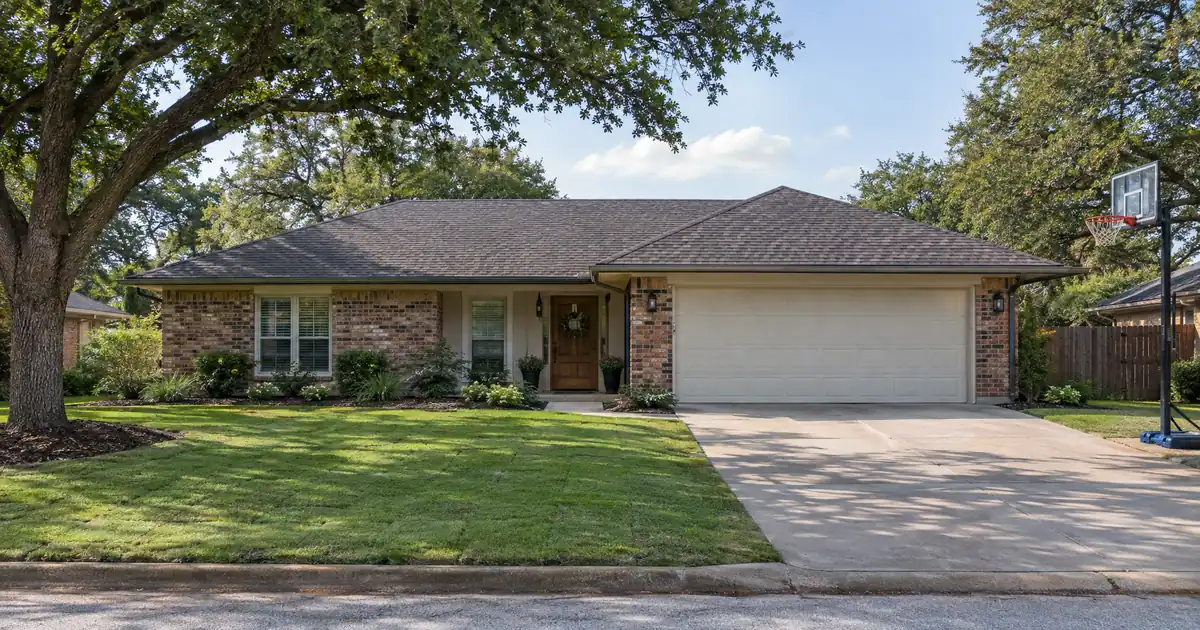
The Quick Read: A VA cash-out refinance requires you to live in the home, or to intend to live in it, so a house that is already rented does not fit the product. Texas adds a second hurdle. State regulators and lenders generally treat a cash-out on a Texas homestead as a home equity loan that VA’s guaranty cannot sit behind. Confirm both points with the lender and title company before planning around a move-out.
Two rule sets meet in this scenario, and a borrower can fail either one. VA asks whether you live in the home. Texas asks whether the loan is a homestead equity loan. Renting the house later changes the answer to the first question and does not fully clear the second.
This is a general explanation, not legal or tax advice. Program figures below come from the wholesale VA programs Lendmire places loans with and are subject to lender guidelines and full file review.
What does a VA cash-out refinance actually do?
A VA cash-out replaces your current mortgage with a new VA-backed loan and can pay you out of the equity. It can also move a non-VA loan into a VA loan. VA’s cash-out page lists three conditions: you qualify for a Certificate of Eligibility, you meet VA and lender credit and income standards, and you will live in the home you are refinancing.
Across the wholesale programs Lendmire places files with, the cash-out reaches 100% of the appraised value, including the financed funding fee. It refinances any loan type into VA, and it carries a net tangible benefit test and seasoning: the later of 210 days from the first payment and the sixth payment. The Lendmire VA cash-out refinance program page covers those mechanics in full.
The occupancy condition is the one that matters here. It is not a footnote. It is one of the three tests VA names.
How is a VA cash-out underwritten, step by step?
A cash-out is underwritten much like a purchase loan, with a full appraisal and full credit review. The deal works through these steps.
1. Eligibility. The borrower holds a Certificate of Eligibility with entitlement available or restorable. VA decides eligibility, and service requirements are VA’s rules.
2. Credit and income review. VA sets no minimum credit score. The wholesale programs Lendmire works with start at a 580 decision score. Residual income is the controlling test. The 41% debt-to-income figure is a guideline, not a cap, and a higher ratio needs residual income well above the table.
3. Appraisal. A full appraisal sets the value that the 100% ceiling is measured against. Streamline loans skip this. Cash-outs do not.
4. Occupancy certification. The borrower certifies occupancy at application and at closing. 38 U.S.C. § 3704 sets the two-point certification structure for VA loans. In practice, lenders collect signed occupancy forms as checklist items.
5. Net tangible benefit and fee recoupment. The refinance has to benefit the borrower, and 38 U.S.C. § 3709 requires fees and incurred costs to be scheduled for recoupment within 36 months of the new loan.
6. Texas overlay. The lender and title company decide whether the transaction is a Texas homestead equity loan. That decision can end the file before occupancy ever comes up.
The VA funding fee on a cash-out is 2.15% for first use and 3.3% after. It is waived for veterans receiving service-connected disability compensation and the other exempt groups. There is no mortgage insurance on VA loans.
Why does a home that is already rented not fit?
It does not fit because you cannot truthfully certify that you live there or will. Occupancy is a statement you sign, not a preference you express. A tenant in place, or a lease signed for a date before closing, contradicts the statement.
The lender can take the certification at face value unless the file shows otherwise. A lease, a listing, or a change of address on the file is “otherwise.” Underwriters look for exactly that. A reasonable basis to conclude you will occupy the home is the working test, and a signed lease defeats it.
Intent is judged at closing. There is no universal one-year safe harbor that makes later renting automatically fine. Nor does a clock that has “run out” let you refinance a rented house into a cash-out. Those are two different questions, and mixing them is a common mistake on these files.
Where does Texas homestead law come in?
In Texas, cash-out on a homestead is a Section 50(a)(6) home equity loan. The Texas Attorney General’s opinion KP-0183 addresses whether veterans with VA loans can do a cash-out refinance on a Texas homestead. It describes the Texas cash-out as an Article XVI, § 50(a)(6) loan and quotes the state’s Department of Savings and Mortgage Lending reaching the conclusion that VA-loan veterans cannot get one.
The reasoning turns on Section 50(a)(6)(H). A home equity loan cannot be secured by anything beyond the homestead, and VA’s guaranty is treated as additional collateral. An attorney general opinion is advisory, not binding law. Lenders in Texas generally underwrite to it anyway.
That means the Texas problem exists whether or not you rent the home. It is not caused by renting. Some web pages say a VA cash-out works in Texas with a lower cap, and others say it is unavailable. The primary source supports the second view. Treat the question as one to settle with the lender and title company before you spend money on an appraisal.
Does renting a Texas homestead end its homestead status?
Not automatically. The Texas Constitution provides that temporary renting of a homestead does not change its character while no other homestead has been acquired. Abandonment takes two things together: you stop using the home, and you intend to stop for good. A Texas Tech repository summary of homestead termination lays out that two-part test.
Here is the catch. This is a different question from VA’s. A rented house can legally remain a Texas homestead and still fail VA’s occupancy test. And a house that is still a homestead keeps the Section 50(a)(6) limits in play.
So the two rules do not cancel out. They stack. Moving out and renting does not free the house from the Texas restriction, and it also removes the VA occupancy you needed.
How long a Texas homestead can be rented before it is treated as abandoned is fact-specific. No authority gives a clean number of months. A title attorney should review any file where that line matters.
Property tax exemptions are a separate track handled by the county appraisal district. Tax treatment can depend on your situation; borrowers should speak with a qualified tax professional before relying on any deduction or credit.
Key Terms Defined
Occupancy certification: A signed statement that you live in the home, or will, as your residence.
Homestead: Texas law’s protected status for a primary residence, which also triggers special rules on equity loans.
Section 50(a)(6) loan: A Texas home equity loan on a homestead, governed by the state constitution.
IRRRL: VA’s Interest Rate Reduction Refinance Loan, a streamline for an existing VA loan.
Net tangible benefit: A test showing the refinance gives the borrower a real, measurable gain.
Entitlement: The amount of VA guaranty available to you, which stays tied to a home until restored.
Where does the general rule break?
Several edge cases change the answer.
Already moved out and rented. You cannot certify current or intended occupancy, so a VA cash-out does not fit. The product is the strict one in VA’s refinance family.
You want no cash, and you already have a VA loan. The IRRRL may fit. Under 38 CFR § 36.4307, an IRRRL requires you to certify that you currently occupy the home or previously did. It refinances an existing VA loan with no VA appraisal and a 0.5% fee unless exempt, and it still needs a net tangible benefit and the same seasoning. It pays you no cash.
Spouse or dependent occupancy. For an active-duty veteran, a spouse’s occupancy or intent to occupy can satisfy the requirement, as can a dependent child’s. Lenders have their own documentation rules for this. Ask about them early.
A pure rental that was never a homestead. The Section 50(a)(6) limits do not apply to it. That does not make it VA-eligible for cash-out. VA still requires occupancy.
Other loan types. FHA and conventional treatment differ. In Texas, a conventional home equity loan is the usual route to cash from a homestead. Whether another program fits your house depends on the lender’s guidelines.
What does the timeline look like when you plan to rent later?
Sequence matters more than anything else. Picture a veteran with PCS orders who still lives in the house and owns a loan that is not a VA loan.
While living there, the home is a homestead, and the occupancy test is satisfied. The Texas equity-loan restriction still applies. A VA cash-out on that homestead is the part Texas regulators block.
After a tenant moves in, the home may still be a homestead under Texas law for a while, but the VA occupancy test now fails. Neither door is open for a VA cash-out.
After a new home is bought and lived in, the old house looks more like a rental, because a new homestead is strong evidence the old one was left. The Texas homestead question may fade. The VA question is already settled against you.
Now take a different case. A veteran who plans to return after a short assignment cannot cover a lease with an occupancy statement. Intent has to be real and supported by facts. Do not certify intent you do not hold. A false occupancy certification is a legal problem, not a paperwork one, and a Texas attorney should answer questions about its consequences.
What does this mean for a borrower’s budget and plan?
Anyone who moves out and rents loses the ability to pull cash out of that house with a VA cash-out. Cash from that equity would need another product or a different structure.
Planning before the move-out is the main lever. If a VA cash-out is on the table at all, it has to happen while the home is truly your residence, and the Texas question has to be settled first. Entitlement also stays tied to the home until it is restored, which matters for your next VA purchase.
Fee recoupment applies if you do refinance. The scheduled recovery within 36 months is a statutory test, so a cash-out that cannot recover its costs in that window fails the benefit analysis.
What should you gather before talking to a lender?
- Your Certificate of Eligibility and any record of prior VA use
- Your current loan statement and the property’s ownership history
- Any lease, listing, or tenant communication, because it will come up
- Your relocation orders, if the move is military
- A plain account of when you moved, and whether you plan to return
Ask the lender two direct questions. First, will it treat this as a Texas Section 50(a)(6) transaction? Second, what occupancy documents does it require on this file? Then ask the title company the first question again. Gaps between those answers are where files stall.
Common misconceptions
“VA requires one year of occupancy before renting.” There is no universal one-year safe harbor. Intent at closing is what gets tested.
“Renting ends my Texas homestead.” Temporary renting does not change a homestead’s character while no other homestead exists.
“It is still a homestead, so I can do a VA cash-out.” The occupancy test fails anyway, and the Texas opinion blocks the product on a homestead.
“An IRRRL needs current occupancy.” It needs only a certification of prior occupancy.
For deeper reading, see Lendmire’s guide VA Cash-Out Occupancy Rules for Veterans and Spouses.
Frequently Asked Questions
Can I do a VA cash-out on a Texas house I plan to rent out?
No. You must live in the home or intend to, and a planned rental contradicts that. Texas adds a separate block on homestead cash-out under the home equity rules. Both points are settled with the lender and title company.
Does a rented house stop being a Texas homestead?
Not automatically. Temporary renting does not change homestead character while you have no other homestead, and abandonment needs both discontinued use and intent to stay away. How long renting can last is fact-specific, so a title attorney should review it.
Can an IRRRL help if I already moved out?
It can, if you already hold a VA loan and want no cash out. The IRRRL needs a certification of current or prior occupancy. It carries a 0.5% fee unless exempt, a net tangible benefit, and the same seasoning as a cash-out.
Can my spouse satisfy the occupancy rule?
For an active-duty veteran, a spouse’s occupancy or intent to occupy can satisfy it, and a dependent child’s occupancy can too. Lenders document this differently, so ask what the file needs.
What is the main risk of getting this wrong?
A false occupancy certification is a legal exposure, not a paperwork error. Plan the refinance before you move out, and do not certify intent you do not hold.
If you are weighing a cash-out refinance against keeping the loan you have, Lendmire can help you compare the programs and the equity each one reaches.
For your own numbers, request a scenario review with Lendmire.
About Lendmire
Lendmire, NMLS# 2371349, is a mortgage brokerage with consumer lending licenses in 16 states. FHA, VA, conventional and jumbo purchase and refinance loans are arranged through wholesale lending partners, and each application is reviewed individually by the lender. Scotsman Guide named Lendmire a Top Mortgage Workplace in both 2025 and 2026.
Get Started
Ready to find the right loan for you?
In about 30 seconds you can review financing options available for your home or investment property. No commitment required.
Informational only. Not a Loan Estimate, approval, or commitment to lend. Program availability and eligibility are subject to lender guidelines, credit approval, property review, and underwriting.
References
1. VA.gov — Cash-out refinance loan
4. Texas Attorney General Opinion KP-0183
5. Texas Tech repository summary of homestead termination
This article is part of Lendmire’s VA Loans series — every loan program’s qualification details, guidelines, and scenarios live on the loan options page.
Related reading: VA Cash-Out Occupancy Certification for a PCS Move · Can a Surviving Spouse Do a VA Cash-Out on a Home Now Rented Out? · VA Cash-Out Occupancy Rules With Partial or Restored Entitlement
Brandon Miller
Founder & CEO, Mortgage Loan Originator, Lendmire LLC
- Mortgage Loan Originator · NMLS# 1129696 · Verify on NMLS Consumer Access
- North Carolina Real Estate Broker · License# 343312 · Verify on NCREC
- North Carolina Insurance Producer · License# 19053198 · Property, Casualty, Life, Health · Verify on NAIC SBS
- Lendmire LLC · Firm NMLS# 2371349 · Verify firm licensure
Compliance and disclosures. Lendmire (NMLS# 2371349) is a licensed mortgage broker and is not a direct lender, depository institution, financial advisor, or tax professional. Content in this article is general market analysis and educational information — not financial, legal, or tax advice for any specific situation. Lendmire does not guarantee loan approval; every transaction is subject to underwriting by the funding lender. Mortgage pricing and loan program guidelines are subject to change at any time without notice and vary by borrower characteristics, property type, and state regulations. Lendmire complies with Equal Housing Opportunity. Licensure verification: NMLS Consumer Access.