
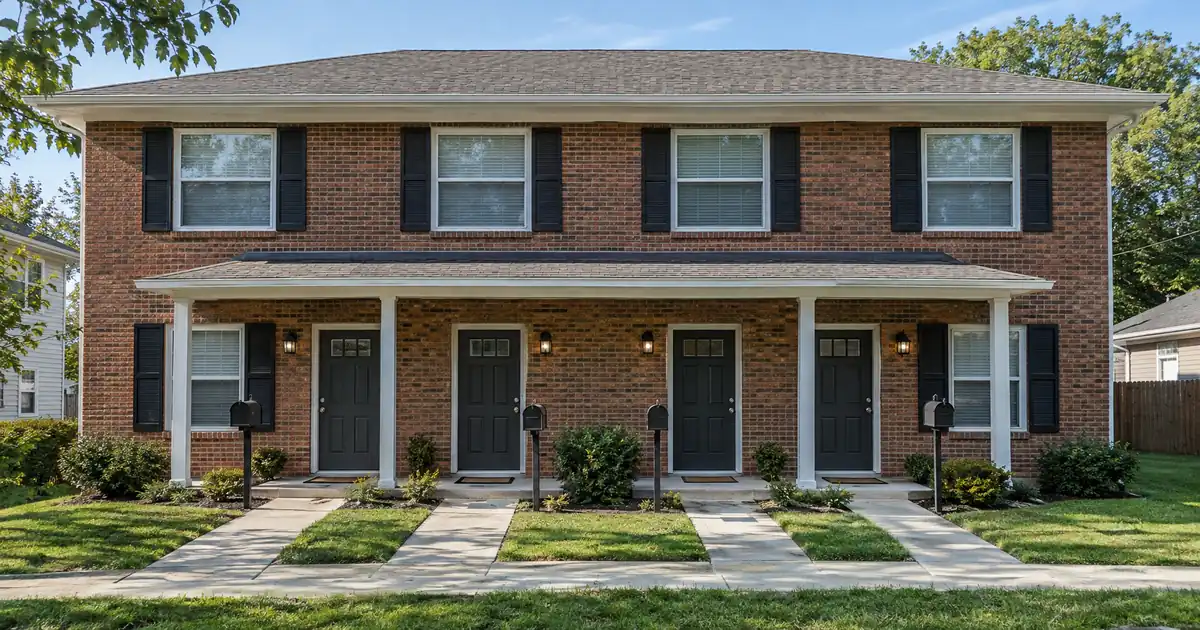
The Quick Read: VA cash-out reaches much deeper into your equity than conventional cash-out on a duplex, triplex or fourplex. Across the wholesale programs Lendmire places files with, VA can reach 100% of the appraised value, including the financed funding fee. Conventional cash-out on a 2-4 unit primary residence stops at a much lower ceiling. The tradeoff is eligibility. VA requires entitlement and a Certificate of Eligibility, while conventional is open to any qualified owner-occupant.
The honest answer: if you hold entitlement and want the most cash, VA usually wins on leverage. If you don’t hold entitlement, or you want to keep a thick equity cushion, conventional is the cleaner lane. Neither option is better for everyone.
Side-by-Side
| Factor | VA cash-out | Conventional cash-out |
|---|---|---|
| Who qualifies | Veterans and others with a COE | Any qualified owner-occupant |
| Max leverage, 2-4 units | Up to 100% of appraised value | 75% of value |
| Credit floor | 580 decision score on these wholesale programs | Set by lender, tied to LTV |
| Mortgage insurance | None | Usually not an issue at this leverage |
| Upfront fee | Funding fee, waived if exempt | None of that type |
| Occupancy | You must live in the home | You must live in one unit |
| Income test | Residual income controls | Debt-to-income ratio controls |
| Existing loan | Any loan type can move into VA | Any loan type |
Every figure above is subject to lender guidelines and full file review. None of it is a commitment to lend.
Why Living in the Building Changes the Loan
You live in one unit and rent the others. Lenders treat that as a primary residence, not an investment property. That classification unlocks owner-occupant leverage on both programs.
Occupancy is also the dividing line. Conventional guidelines set lower cash-out ceilings once a 2-4 unit is an investment property or second home. VA does not finance those at all. VA requires you to live in the home. So if you’ve moved out and rented every unit, neither program treats the file the same way.
One more point on property type. A 2-4 unit is residential, not commercial, as long as it has four or fewer legal units. A fifth unit pushes the property out of both lanes. Legal unit count comes from the appraisal and local classification, not from how a listing describes it.
How VA Cash-Out Works on a 2-4 Unit
VA cash-out replaces your current mortgage with a new, larger one and hands you the difference. VA’s cash-out page lists three conditions: a Certificate of Eligibility, credit and income that meet VA and lender standards, and living in the home you’re refinancing. It can also move a non-VA loan into the VA program. So you don’t need an existing VA loan to use it.
Here are the program mechanics we see in the wholesale lending channels:
- Leverage. The new loan can reach 100% of the appraised value, with the financed funding fee counted inside that figure.
- No mortgage insurance. VA loans carry none. Instead there’s a funding fee.
- Funding fee. On a cash-out refinance it’s 2.15% for first use and 3.3% after that. It can be financed. It’s waived for veterans receiving compensation for a service-connected disability and for the other exempt groups.
- Credit. VA sets no minimum score. The wholesale programs Lendmire works with start at a 580 decision score. Some lenders elsewhere set higher floors.
- Underwriting. Residual income is the controlling test. The 41% debt-to-income figure is a guideline, not a cap. A higher ratio needs residual income well above the table.
The 100% ceiling comes from 38 CFR 36.4306, which also requires a net tangible benefit. That means the new loan has to be in your financial interest. VA Circular 26-19-05 splits cash-out into Type I and Type II. Type I applies when the new loan, fee included, doesn’t exceed the payoff of the loan being refinanced. Type II applies when it does exceed that payoff. A Type II carries extra tests on top of the basic benefit rules. The cash you take out is what makes a refinance Type II.
Seasoning matters too. On these programs, the later of 210 days from your first payment and your sixth payment has to pass before a VA refinance. A VA cash-out also needs an existing lien to pay off. A free-and-clear property doesn’t fit.
On a 3-4 unit building, VA may layer on additional property-level tests. Ask your loan officer how rental income from the other units is counted. How much of it counts, and whether you need leases, is a lender-level question worth asking early.
How Conventional Cash-Out Works on a 2-4 Unit
Conventional cash-out is simpler on eligibility and tighter on leverage. The Fannie Mae Eligibility Matrix sets the maximum LTV for a principal-residence cash-out at 80% for a one-unit home and 75% for two to four units. That’s the number that surprises people. Final terms depend on the lender’s guidelines, the property type, and the borrower’s complete credit picture.
Another figure gets confused with it. The same matrix lists a higher ceiling of 95% for a 2-4 unit purchase or limited cash-out refinance. A limited cash-out only pays off the existing loan and costs. It doesn’t hand you equity. Once you pull cash out, the 75% cap applies.
Credit and LTV interact on conventional files. Cash-out on a 2-4 unit comes with score conditions, and lenders may layer their own floors on top. Underwriting runs on debt-to-income, and rental income from the other units generally has to be documented and may be discounted. Your own unit’s rent doesn’t count.
Because the ceiling sits at 75%, you keep at least a quarter of the home’s value as equity. Some borrowers want that cushion. Others find it too restrictive.
When VA Cash-Out Is the Better Fit
VA tends to be the stronger route in these situations:
- You hold entitlement and want the most equity. The gap between 100% and 75% is large on a multi-unit building. Think of a home appraised well above what you owe. VA can reach most of that gap. Conventional can’t.
- Your credit is rebuilding. A 580 decision score floor on these wholesale programs, with residual income as the controlling test, leaves room for files that conventional’s score-and-LTV conditions may not.
- You’re avoiding mortgage insurance. VA carries none at any leverage. That matters most when you borrow near the top of the range.
- You’re moving a non-VA loan into VA. A cash-out can convert any loan type into a VA loan, which opens the program’s features going forward.
- Your debt-to-income ratio is high but your income is steady. Because residual income controls, a ratio above 41% isn’t an automatic stop, provided residual income is well above the table.
VA’s costs sit elsewhere. The funding fee is real: 2.15% on first use of a cash-out, 3.3% after. If you’re exempt, it’s waived, and that changes the math a lot. Borrowing near 100% also leaves you almost no equity cushion. If prices dip, you could owe close to what the home is worth.
And one caution from VA itself. VA News warns that a cash-out rarely lowers a monthly payment, and that adding cash to the loan raises the interest you pay over its life. Allowable closing costs can come out of loan proceeds, which reduces cash due at closing. But it also adds to the balance.
When Conventional Cash-Out Is the Better Fit
Conventional is often the better call in these cases:
- You don’t have entitlement. Conventional has no service requirement. For many owner-occupants of 2-4 units, this settles the question.
- You need a moderate amount of cash. If the 75% ceiling already covers your goal, say a renovation or paying off a modest balance, the extra reach of VA doesn’t buy you anything.
- You want to avoid a funding fee. Conventional has no VA-style funding fee. At 75% LTV or below, private mortgage insurance usually isn’t in the picture.
- You want to keep real equity. A mandatory 25% cushion is a built-in safety margin. If you value that, the cap works in your favor.
- Your credit and ratios are strong. A borrower with a high score and clean debt-to-income can use conventional without giving up much.
The tradeoff is simple. Conventional caps your cash. On a 2-4 unit, 75% is a hard limit, and if the appraisal comes in low, you get less than you planned.
Seasoning, Occupancy and Moving Out
Two clocks matter on a refinance, and they work differently.
Seasoning is how long you’ve held the current loan before refinancing. On the VA programs described above, it’s the later of 210 days from your first payment and your sixth payment. Conventional lenders also apply their own time-in-loan or title rules, so confirm yours.
Occupancy is the other clock. VA cash-out asks that you live in the home. If you’ve moved out and rented all the units, VA cash-out is off the table. A conventional lender would treat the file as an investment property, with a lower ceiling.
If you’re still living there, both programs work. If you plan to move within a year or two, tell your loan officer up front. Occupancy certification is a serious statement, and the program you pick should match your real plans.
Where the Cash Goes Matters
The Consumer Financial Protection Bureau found that paying off other bills or debts was the most common reason borrowers took cash out. It also warned that using mortgage debt to pay non-mortgage debts can raise foreclosure risk. That’s worth sitting with. You’re turning unsecured debt into debt secured by your home.
Using proceeds on repairs or improvements to the building often makes more sense, since the spending may raise value. But it still increases the balance. Consider whether the new loan helps your finances overall, not just whether you can reach the cash.
Tax treatment can depend on your situation; borrowers should speak with a qualified tax professional before relying on any deduction or credit.
Key Terms Defined
Entitlement: The amount of VA backing you hold, which determines how much you can borrow without a down payment.
Certificate of Eligibility (COE): The VA document showing you’ve met service requirements for the program.
Residual income: What’s left of your monthly income after debts and living costs, which VA uses as its main test.
LTV (loan-to-value): The loan balance divided by the home’s appraised value.
Seasoning: The time you must hold a loan before refinancing it.
Funding fee: A one-time VA charge that replaces mortgage insurance and can be financed.
Net tangible benefit: VA’s requirement that the new loan clearly serve your financial interest.
The Balanced Verdict
For an eligible veteran with a lot of equity in a 2-4 unit, VA cash-out usually reaches more cash and avoids mortgage insurance. The cost is a funding fee unless you’re exempt, and very thin equity afterward.
For everyone else, and for veterans who only need a modest amount, conventional cash-out is simpler, carries no funding fee, and leaves a built-in cushion. It just stops at 75%.
The decision usually comes down to three questions. Do you hold entitlement? How much cash do you actually need? How much equity do you want to keep? If you are weighing a cash-out refinance against keeping the loan you have, Lendmire can help you compare the programs and the equity each one reaches. You can start with Lendmire’s VA cash-out refinance program page.
Frequently Asked Questions
Can I cash-out refinance a duplex I live in?
Yes, on both VA and conventional programs, as long as you occupy one unit. Conventional caps leverage at 75% for 2-4 units. VA can reach 100% of appraised value with the financed fee included, subject to lender guidelines.
Do I need to be a veteran to get this?
Only for the VA route. VA requires a Certificate of Eligibility. Conventional has no service requirement, so non-veterans use that lane.
Does the rent from my other units count?
Usually in part, and it generally has to be documented. Lenders often discount it, and your own unit’s rent doesn’t count. Ask your loan officer which documents they want, such as leases, and how a vacant unit is treated.
Do I have to keep living there?
Yes, at the time of the refinance. If you’ve moved out and rented every unit, a conventional lender would treat it as an investment property with a lower ceiling.
Does a VA cash-out lower my monthly payment?
Rarely. A cash-out replaces your loan with a larger one, so the balance usually rises. The CFPB notes it may also lengthen the time to pay off the loan.
For your own numbers, request a scenario review with Lendmire.
About Lendmire
Lendmire (NMLS# 2371349) is a mortgage brokerage serving homeowners and home buyers in 16 states. FHA, VA, conventional and jumbo purchase and refinance loans are arranged through wholesale lending channels; Lendmire brokers the financing and the lender underwrites each application. Scotsman Guide named Lendmire a Top Mortgage Workplace in both 2025 and 2026.
For current guidelines, see VA loan programs.
Get Started
Ready to find the right loan for you?
In about 30 seconds you can review financing options available for your home or investment property. No commitment required.
Informational only. Not a Loan Estimate, approval, or commitment to lend. Program availability and eligibility are subject to lender guidelines, credit approval, property review, and underwriting.
References
1. VA.gov: Cash-out refinance loan
4. Fannie Mae Eligibility Matrix
5. VA News: You could be losing thousands on your home loan
6. Consumer Financial Protection Bureau
7. CFPB
This article is part of Lendmire’s VA Loans series — every loan program’s qualification details, guidelines, and scenarios live on the loan options page.
Related reading: VA Cash-Out vs Conventional for a Veteran Wanting the Most Cash · VA vs Conventional Cash-Out Requirements With a Disability Rating · Can a Surviving Spouse Do a VA Cash-Out on a Home Now Rented Out?
Brandon Miller
Founder & CEO, Mortgage Loan Originator, Lendmire LLC
- Mortgage Loan Originator · NMLS# 1129696 · Verify on NMLS Consumer Access
- North Carolina Real Estate Broker · License# 343312 · Verify on NCREC
- North Carolina Insurance Producer · License# 19053198 · Property, Casualty, Life, Health · Verify on NAIC SBS
- Lendmire LLC · Firm NMLS# 2371349 · Verify firm licensure
Required disclosures. Lendmire (NMLS# 2371349) operates as a licensed mortgage broker, not a direct lender or depository. The discussion in this article is general in nature and should not be relied upon as financial, legal, or tax advice — every investment scenario is unique and should be reviewed by a qualified professional. Any loan inquiry is subject to lender underwriting, and this article is not a commitment to lend or a guarantee of approval. Mortgage rates, loan terms, and program guidelines vary by borrower, property, and state, and may change without notice. Equal Housing Opportunity. Verify licensure at NMLS Consumer Access.