
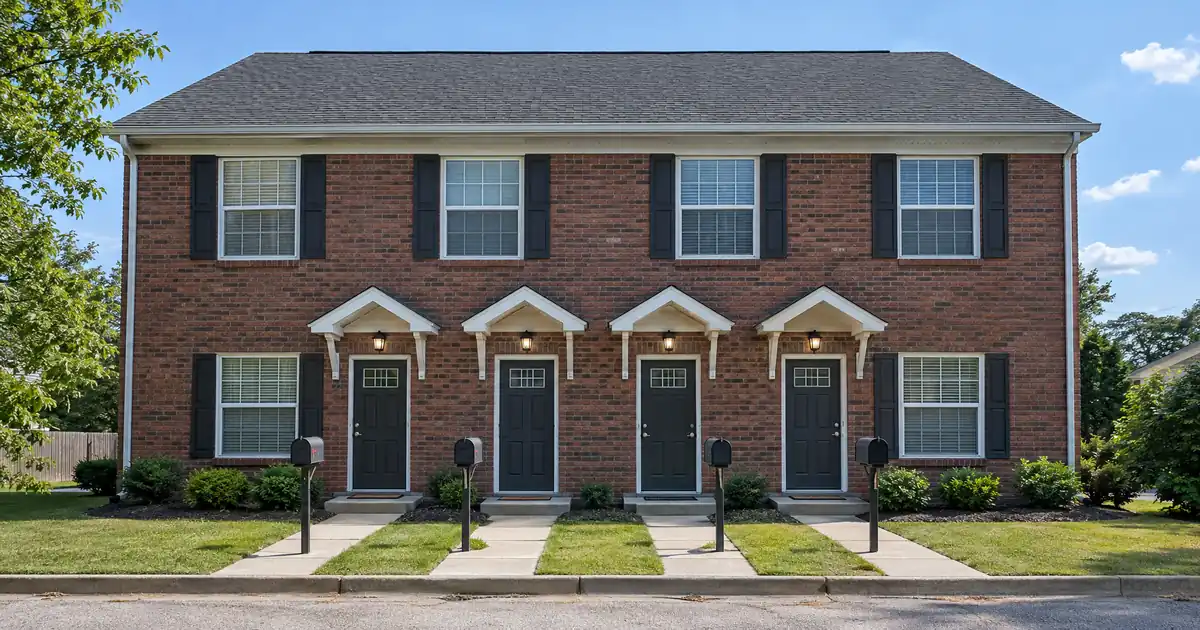
The Quick Read: The annual mortgage insurance premium (MIP) is charged on the whole new base loan, not just the cash you take out. Because the loan tops out at 80% of the home’s value, it lands in the lower-LTV tier, which on a thirty-year term ends after eleven years. Each month’s share of the premium is added to your payment and counts in your qualifying ratios.
Key Takeaways
- Two premiums apply: an upfront premium of 1.75% of the base loan (usually financed) and an annual premium collected monthly.
- The annual premium runs between 0.15% and 0.75% of the balance. Term, loan amount and LTV decide where you fall.
- On a cash-out, LTV is capped at 80%, so the over-90% tier never applies.
- On a three- or four-unit home, the premium also affects the rental self-sufficiency test.
- Refinancing into a new FHA loan restarts the premium clock under current rules.
What Does an FHA Cash-Out on a 2-4 Unit Actually Do?
It replaces your current mortgage with a larger FHA loan and pays you the difference in cash. You must live in one of the units. The home must have been owned and occupied as your primary residence for 12 months before the case number is assigned.
Occupancy decides everything else here. An FHA cash-out is owner-occupied only, so a second home or a property you rent out entirely does not fit the program.
Across the wholesale programs Lendmire places FHA files with, the cash-out reaches 80% LTV. LTV means loan-to-value: the loan balance divided by the appraised value. That leaves at least 20% equity in the home after closing. The details of the FHA cash-out refinance program are on Lendmire’s program page. Every figure here is subject to lender guidelines and full file review.
One more edge matters before the premiums. FHA limits are set by county and change every year, so county loan limits apply to the size of the new loan. Two-, three- and four-unit homes have higher limits than single-family homes. Your loan officer checks your county.
How Do the Two FHA Premiums Work on a Cash-Out?
There are two layers. One is paid up front. The other is paid monthly for years. HUD’s own FHA answers page describes this structure: an upfront premium at closing and an annual premium collected in monthly installments.
The upfront premium. This is 1.75% of the base loan. Most borrowers finance it, which means it is added on top of the base loan rather than paid in cash. Financing it adds interest over the life of the loan, because you are borrowing the premium too.
The annual premium. This is a yearly percentage of the loan balance, divided by twelve and collected with each monthly payment. Across the programs we place, it falls between 0.15% and 0.75% of the balance. Three inputs set the figure:
1. The loan term.
2. The base loan amount.
3. The loan-to-value ratio at origination.
Neither premium is a lender charge. Both go to the federal insurance fund that backs FHA loans. They are program facts, not a price anyone quotes you.
How Is Annual MIP Calculated on a 2-4 Unit Cash-Out?
Annual MIP is the premium percentage times the base loan balance, divided by twelve. Add that monthly amount to principal, interest, taxes and insurance, and you have the full housing payment. Lenders put that full payment into your qualifying ratios.
Here is the step-by-step logic, in words instead of dollars:
1. The appraisal sets the ceiling. The loan cannot exceed 80% of the appraised value. HUD cut the cash-out cap to this level in a mortgagee letter on cash-out leverage, aiming to reduce risk to the insurance fund. Older articles still circulate with higher caps. Ignore them.
2. Your payoff comes first. The new loan pays off your current mortgage. Whatever remains under the cap, after payoff and closing costs, is your cash.
3. The base loan is set. That is the payoff, the closing costs rolled in, and the cash you take out.
4. The upfront premium sits on top. It is 1.75% of the base loan and is generally financed.
5. The annual premium is figured on the base loan balance. It excludes the financed upfront premium. HUD’s cancellation guidance uses the same principal-balance test.
6. The monthly share lands in your payment. The servicer collects one-twelfth of the annual figure each month and sends it to HUD.
Here is why this matters on a cash-out. The premium applies to the entire new balance, including the mortgage you already owed. If your old loan was smaller, the new base loan is larger, so the monthly premium is larger too. You pay the premium on the payoff as well as on the cash.
One open question: some borrowers ask whether the financed upfront premium counts toward the 80% test. Lenders handle this point at the file level. Ask your loan officer how it applies to your numbers.
Lendmire’s piece How Much the Annual MIP Adds to an FHA Cash-Out Payment Over Time carries the same math across the full term.
Which Premium Tier Does a Cash-Out Land In?
The lower one. Because a cash-out cannot go above 80% LTV, it sits in the “ninety percent or below” tier, never the over-90% tier. HUD’s mortgagee letter on annual premium rates sets the schedule by term, base loan amount and LTV. It also ties the loan-amount threshold to the national conforming loan limit, which moves over time. That is why no single dollar threshold is quoted here. These specifics are subject to lender guidelines and a full review of property, leverage, and credit.
| Factor | Cash-out at or below 80% LTV |
|---|---|
| Term | Longer terms and shorter terms use different schedules |
| LTV tier | At or below 90% (the over-90% tier does not apply) |
| Thirty-year duration | Ends after eleven years |
| Over-90% duration | Not applicable to a cash-out |
On a thirty-year loan, a premium in this tier ends after eleven years. A premium on a loan above 90% LTV lasts the full term. A cash-out cannot reach that level. Terms depend on the lender’s guidelines, the property type, the leverage, and a full review of the credit profile.
Shorter terms follow a separate schedule. A cash-out at 80% sits above the lowest LTV bracket on that schedule, so the premium is not the smallest one. Your loan officer confirms the exact tier on a Loan Estimate. The exact numbers vary by lender and program and follow a full review of property, leverage, and credit.
How Long Does Annual MIP Last, and Can It Drop Off Early?
On a new loan, the duration is set by the original LTV. It is not reset by later appreciation or by paying the balance down. Equity you build later does not shorten it.
That surprises many homeowners. Older FHA loans could shed the annual premium once equity reached a set level. HUD’s premium information page says that rule applies only to loans with case numbers assigned before a 2013 change. Newer loans keep paying until the term ends or, for the eleven-year tier, until the eleven years are up.
HUD also does not use a new appraisal to test for early cancellation. A bigger home value alone does not end the premium.
A cash-out resets the clock. Even if your current loan was old enough to drop the premium, the new loan gets a new case number and falls under current duration rules. That cost belongs in your comparison.
Does Unit Count Change the Premium or the Rules?
Unit count changes the loan limit and the qualifying math, not the premium percentage. The tiers depend on term, loan amount and LTV. The cash-out cap is 80% for one-unit and multi-unit homes alike across the wholesale programs we use.
Where units do matter:
- Loan limits. Higher limits apply to two-, three- and four-unit homes. County limits apply, so check yours.
- Balance tiers. A bigger multi-unit loan can cross the loan-amount threshold in the premium schedule, which can move the annual premium percentage up.
- Self-sufficiency on three and four units. See the next section.
- Appraisal. The appraiser reports market rent for each unit, including yours.
Duplexes are generally exempt from the self-sufficiency test. Three- and four-unit homes face it.
How Do Rental Income and MIP Interact in Qualifying?
Rent from the other units can help you qualify, but MIP raises the payment that income has to carry. The base ratio pair on these programs is 31/43: housing payment over income, and total debts over income. With documented compensating factors, ratios reach 40/50 at the top tier, though the automated finding governs most files.
MIP matters twice here. First, the monthly premium sits inside the housing payment in those ratios. Second, on a three- or four-unit home, it feeds the self-sufficiency test.
The self-sufficiency test is separate from your personal debt-to-income. It asks whether the property’s own net rent can cover the full payment, MIP included. The lender counts the appraiser’s market rent for all units, yours too, then subtracts an allowance for vacancy and upkeep. A higher premium makes that test harder to pass. Ask your loan officer whether the test applies to your refinance, because that is decided on the file.
Rent offsets the premium only partly. You still live in the building, and the mortgage insurance is a fixed cost whatever the units earn.
What Does the Cash Really Cost?
The true cost of the cash is the premium, plus interest, plus closing costs, spread over a long time. The CFPB has noted that cash-out refinances can raise foreclosure risk. They typically carry higher balances and payments, and they can turn unsecured debt into debt secured by your home. Its report on cash-out borrowers found that paying off other debts is the most common reason borrowers choose one.
Using the cash to pay off debt does not earn you an underwriting break. The lender evaluates the file the same way either way.
Compare like for like. Put the old payment and the new payment side by side, with MIP in both. A comparison that shows only principal and interest on the new loan hides a real cost.
| Option | What you carry | Watch for |
|---|---|---|
| FHA cash-out | One new loan, both premiums | Premium on the whole balance |
| Conventional cash-out | One new loan, mortgage insurance rules differ | Cap on 2-4 units may be lower |
| Home equity loan or HELOC | Second loan, your first stays | Two payments, equity requirements |
Conventional programs set their own leverage caps on two- to four-unit primary homes, and those caps can differ from FHA’s. Check the lender’s current guidelines. Home equity lenders commonly require some equity to remain after the loan.
Skip the Premium? (Getting Out of MIP)
The usual way out is a refinance, but it has to beat the cost of starting over. Refinancing into a conventional loan can end FHA premiums, but it resets closing costs and qualification. A conventional loan may also have a lower leverage cap on a multi-unit home, and its mortgage insurance follows different rules.
Two cautions:
- If you simply refinance FHA to FHA, the premium clock restarts under current rules.
- The FHA Streamline is a different loan. It refinances an existing FHA loan with no appraisal, a limited credit review and a net tangible benefit, and the premium continues. It does not give cash back.
A cash-out is not a Streamline. They differ in appraisal, cash-back and premium treatment. Treating them as interchangeable is a common mistake.
Key Terms Defined
MIP (mortgage insurance premium): The cost of FHA’s insurance, paid as an upfront premium and an annual premium.
UFMIP (upfront mortgage insurance premium): The one-time premium of 1.75% of the base loan, usually financed.
Base loan amount: The loan before the financed upfront premium is added.
LTV (loan-to-value): The loan balance as a percentage of the appraised value.
Seasoning: The time you must own and live in the home before the cash-out. Here it is 12 months before the case number.
Self-sufficiency test: A property-level check on three- and four-unit homes, comparing net rent to the full payment.
Common Mistakes to Avoid
- Assuming MIP drops at 20% equity. That was true only for older loans.
- Thinking the premium applies only to the cash. It applies to the whole new base loan.
- Using stale numbers. Annual premium percentages were cut for most new loans, so old figures are out of date.
- Quoting the old cap. The cash-out cap is 80%, not the higher figures in older articles.
- Confusing the test with your DTI. The self-sufficiency test is a separate check on the building.
Tax treatment can depend on your situation; borrowers should speak with a qualified tax professional before relying on any deduction or credit.
Frequently Asked Questions
Does annual MIP apply to the cash I take out or the whole loan?
The whole new base loan. The premium is figured on the full balance, which includes your payoff, rolled-in costs and the cash. That is why the monthly premium is usually larger than on your old loan.
How long will I pay annual MIP on an FHA cash-out?
On a thirty-year loan at or below 90% LTV, eleven years. A cash-out cannot exceed 80% LTV, so it lands in that tier. Shorter terms follow a separate schedule, and your Loan Estimate shows which applies. Final terms depend on the lender’s guidelines, the property type, and the borrower’s complete credit picture.
Can I remove MIP once my home value goes up?
Not on a new loan. The duration is set by the original LTV, and HUD does not use a new appraisal to test for cancellation. A refinance into a different loan is the usual way out.
Does the self-sufficiency test apply to my duplex?
Generally no. The test applies to three- and four-unit homes. On those, the monthly premium is part of the payment the net rent must cover.
Can I use an FHA cash-out on a rental I do not live in?
No. The loan is for a primary residence you own and have lived in for 12 months before the case number.
Where to Go From Here
If you are weighing a cash-out refinance against keeping the loan you have, Lendmire can help you compare the programs and the equity each one reaches. Everything here is subject to lender guidelines and full file review, and nothing is a commitment to lend.
For your own numbers, request a scenario review with Lendmire.
About Lendmire
Lendmire is a mortgage brokerage (NMLS# 2371349) licensed for consumer mortgage lending in 16 states, arranging FHA, VA, conventional and jumbo purchase and refinance loans through a wholesale lending network. Eligibility is determined by the lender on each file. Scotsman Guide named Lendmire a Top Mortgage Workplace in both 2025 and 2026.
Get Started
Ready to find the right loan for you?
In about 30 seconds you can review financing options available for your home or investment property. No commitment required.
Informational only. Not a Loan Estimate, approval, or commitment to lend. Program availability and eligibility are subject to lender guidelines, credit approval, property review, and underwriting.
References
1. HUD FHA Answers: mortgage insurance premium structure
2. HUD mortgagee letter on the cash-out leverage cap
3. HUD mortgagee letter on annual premium rates
4. HUD: Single Family Mortgage Insurance Premiums
5. CFPB: CFPB Report Finds Cash Out Mortgage Refinance Borrowers Improve Credit Scores
This article is part of Lendmire’s FHA Loan series — every loan program’s qualification details, guidelines, and scenarios live on the loan options page.
Related reading: FHA Cash-Out Upfront MIP Rules for an Existing FHA Loan · Does an FHA Cash-Out From a Conventional Loan Carry MIP for Life? · How Much Cash a VA Cash-Out Adds Over Your FHA or Conventional Loan
Brandon Miller
Founder & CEO, Mortgage Loan Originator, Lendmire LLC
- Mortgage Loan Originator · NMLS# 1129696 · Verify on NMLS Consumer Access
- North Carolina Real Estate Broker · License# 343312 · Verify on NCREC
- North Carolina Insurance Producer · License# 19053198 · Property, Casualty, Life, Health · Verify on NAIC SBS
- Lendmire LLC · Firm NMLS# 2371349 · Verify firm licensure
Disclosures. The information presented in this article is general market commentary, not financial, legal, or tax advice. Lendmire is a mortgage brokerage (NMLS# 2371349) — not a direct lender or depository institution — and loan placement is subject to lender underwriting. Nothing in this content represents a commitment to lend. Loan terms, pricing, and program availability vary based on borrower qualifications, property characteristics, and state of subject property, and are subject to change at any time. Lendmire complies with Equal Housing Opportunity requirements. Consumer access: nmlsconsumeraccess.org.