
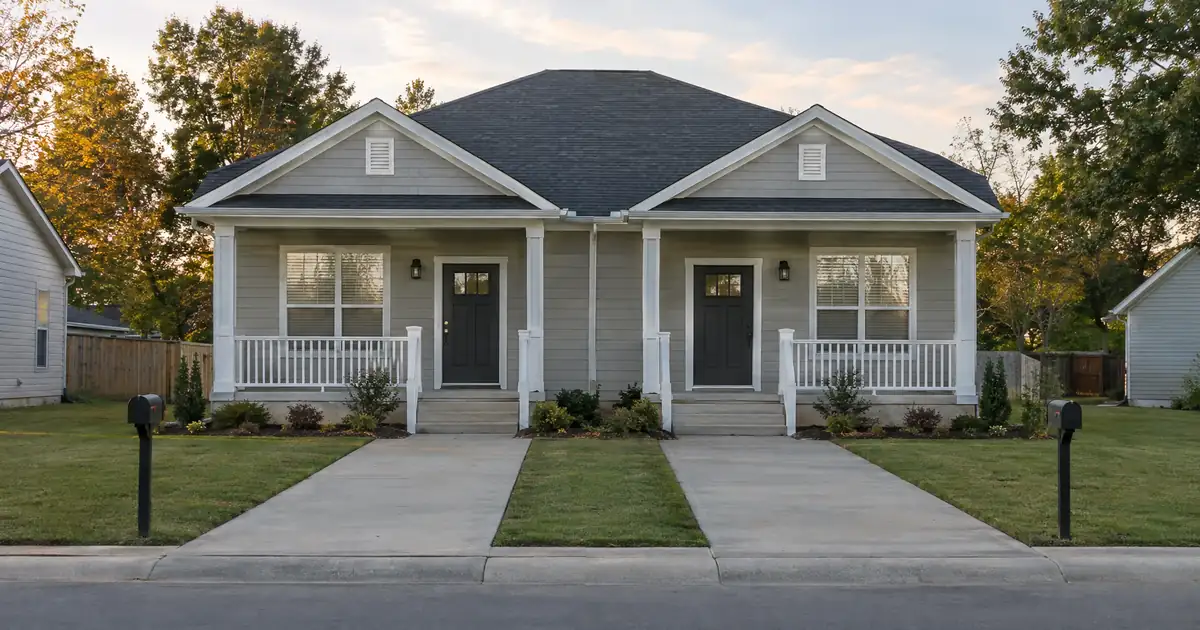
The Quick Read: Mortgage insurance premium (MIP) on this loan ends on a set schedule, not when you build equity. A cash-out on a duplex, triplex or fourplex you live in is capped at 80% of value. That puts it in the shorter MIP bucket of eleven years instead of the full loan term. Leaving early means refinancing into another loan, and you plan that test before you close.
Key Takeaways
- The 80% cap on an FHA cash-out sets your MIP duration at closing. Extra payments and a rising home value do not shorten it.
- Your annual premium falls into a band of 0.15% to 0.75% of the balance, depending on term, loan amount and LTV. The upfront premium is 1.75% of the base loan and is usually financed.
- A new cash-out is a new loan, so the eleven years start over. That is how the rules work in practice, and your lender should confirm it on your file.
- Your three exit routes are to run out the clock, refinance into a conventional loan, or keep or sell and compare the numbers.
- On a 3-4 unit home, the size of the premium can also affect whether you qualify at all.
What Does “MIP Exit” Mean on a Multi-Unit Home?
The exit is a timeline plus a refinance test. It is not a form you file to cancel the premium. On a standard FHA loan today, the lender collects MIP for a fixed period that is set the day the loan is made.
Here is why that matters. Many borrowers hear “MIP drops off once you hit 80% equity,” the way private mortgage insurance on a conventional loan can. That is not how an FHA loan written today works. You do not request removal. You wait out the schedule, or you replace the loan.
So the useful question changes. It is not “how do I cancel?” It is “when would I want out, and what would I need to qualify for the loan that replaces this one?” You can answer that before you sign.
If you are comparing programs, Lendmire’s FHA cash-out refinance program page lays out the basic structure.
Key Terms Defined
MIP (mortgage insurance premium): The insurance FHA loans carry, paid in two parts, that protects the lender if you default.
Upfront premium: A one-time charge of 1.75% of the base loan, usually added to the loan balance instead of paid in cash.
Annual premium: The ongoing part, billed monthly as part of your payment. It runs between 0.15% and 0.75% of the balance each year, depending on term, loan amount and LTV.
LTV (loan-to-value): Your loan balance divided by the home’s appraised value. An 80% LTV means you owe four-fifths of what the home is worth. Leverage, reserves, and pricing vary by lender and program; the final terms follow the full file review.
Case number: The ID HUD assigns when a lender starts an FHA loan. A new loan gets a new one, and the MIP schedule keys off it.
Self-sufficiency test: A rule for 3-4 unit homes. The rent the property can earn must cover the housing payment on its own, after a deduction.
Seasoning: The waiting period before you can use a program. For an FHA cash-out, that means owning and living in the home for 12 months before the case number is assigned.
How the Loan Is Underwritten, Step by Step
Underwriting a 2-4 unit FHA cash-out follows six steps, and each one touches your exit plan.
1. Occupancy and ownership. You must have owned the property and lived in it as your main home for 12 months before the case number is assigned. Wholesale lenders also look for a clean mortgage payment history over that stretch. Exact payment-history wording sits in HUD’s handbook and varies in how lenders apply it, so confirm it on your file.
2. Appraisal. An appraisal is required. On a multi-unit home, the appraiser values all units, not just yours.
3. The 80% cap. The new first mortgage must fit inside 80% of the appraised value. That cap is measured on the total debt against the home. Any other lien that stays in place counts against it.
4. Income and credit review. The lender runs the file through HUD’s automated scoring or reviews it by hand. Across the wholesale programs Lendmire places FHA files with, the starting ratios are 31/43 (housing payment and total debts as a share of income), and documented strengths can stretch them toward 40/50.
5. Who counts as income. A non-occupant co-borrower can help on an FHA purchase. On a cash-out, HUD bars that person’s income from being used to qualify. HUD’s guidance also says a one-unit home with an extra apartment stays a one-unit property, but a property with two or more units counts each separate dwelling as a unit.
6. MIP is set at closing. The premium schedule locks in based on the loan you are signing, not the loan you are paying off.
The lender applies its own review on top of HUD’s. Every figure here is subject to lender guidelines and full file review.
How Long Does MIP Last on This Loan?
On a thirty-year FHA cash-out at the 80% cap, annual MIP lasts eleven years. HUD ties the length to the original LTV. Above 90% LTV on a thirty-year loan, the premium lasts for the full term. At or below 90%, it ends after eleven years. A cash-out never gets above 80%, so it lands in the shorter bucket. Terms vary by lender guidelines, property type, leverage, credit profile, and full file review.
HUD publishes the grid in its annual MIP schedule. The base-loan threshold that affects the annual rate moves with HUD’s updates. That is why this article describes it in words. Check the current schedule with your lender.
There are two things people get wrong here.
Extra payments do not shorten the eleven years. Paying down principal builds equity, which helps a refinance. It does not move the end date. Appreciation does not either.
The old 78% rule is gone for new loans. HUD used to cancel annual MIP automatically at 78% LTV. HUD rescinded that cancellation and now collects the premium for the longest period the statute allows. For older loans with a case number assigned before June 3, 2013, HUD’s answers page says the 78% test uses the original value and ignores new appraisals. A new cash-out gets a new case number, so the 78% cancellation rule does not carry over to it. Exact terms depend on the lender’s guidelines, property type, leverage, and a full review of the borrower’s file.
Now the part you should confirm with your lender. No single HUD page says it in so many words, but a new case number means a new loan. Your eleven-year clock starts again at the new closing. If you are cashing out of an FHA loan that is already five years old, you are trading six remaining years for a fresh eleven.
HUD also cut annual premiums by a published reduction that left the duration structure alone. A cheaper premium did not make it shorter.
The Three Exit Routes
You have three realistic ways out. They suit different owners.
| Route | What it takes | 2-4 unit catch |
|---|---|---|
| Run the full schedule | Keep paying until the eleven years end | A longer hold on a premium inside your payment |
| Refinance to conventional | Enough equity, credit and income | Lower leverage caps than a one-unit home |
| Keep or sell | Compare remaining MIP to refinance costs | A new FHA loan means a new upfront premium |
Run the schedule. This costs nothing extra and needs no qualifying. It is the right call when a refinance would not pay for itself.
Refinance out. This is the real exit. Fannie Mae’s eligibility matrix shows the conventional cash-out cap on a 2-4 unit principal residence at 75%, versus 80% on one unit. That is lower than the FHA cash-out cap of 80%. A no-cash-out conventional refinance generally allows more leverage, but the matrix footnotes qualify it, so confirm the details with your lender. Conventional loans usually carry private mortgage insurance above 80% LTV, so the equity you hold at exit decides whether insurance disappears.
Keep or sell. If you plan to sell in a few years, a refinance may never earn back its costs. If you plan to stay for decades, exit matters more.
Building the Timeline
Plan the exit in checkpoints, starting before you sign.
Before closing. Decide how much cash you actually need. Every dollar you take lowers your equity cushion for the exit refinance. Costs paid out of the cash-out also eat into the 80% cap, and the financed upfront premium raises your balance and the interest on it.
Early years. Keep your payment history clean. Keep rent records if you collect from tenants in the other units. Those rent records matter later.
Around the midpoint. Ask for a rough value check. The question is simple: could today’s balance sit at or below 80% of the home’s value? If yes, a conventional refinance without private mortgage insurance may be possible. If no, you know how far off you are.
When the checkpoint looks right. Run the break-even test below. Then talk to a loan officer about conventional terms for a 2-4 unit home.
At year eleven. If you never refinance, the annual premium ends on its own. Nothing to file.
Lendmire’s article How to Plan Your Exit From MIP After an FHA Cash-Out covers the same sequence for one-unit homes, and the unit-count differences here are the main change.
A Worked Example
Consider a duplex you live in, owned for several years. You take an FHA cash-out at the 80% cap. Some years later, the home has appreciated and you have paid the balance down. A lender tells you a conventional refinance on a 2-4 unit home would sit just under 80% LTV. Every figure here varies by lender and program — guidelines, property type, leverage, and credit profile all apply.
Here is the break-even test in plain words:
1. Add up what the annual MIP costs you each month on the current loan.
2. Subtract what private mortgage insurance would cost on the new loan. If you land at or below 80%, that number may be zero.
3. Add the closing costs of the new loan.
4. Divide those closing costs by the monthly saving. The answer is the number of months you must stay in the home to come out ahead.
If that answer is longer than you expect to own the house, skip the refinance. If it is shorter than the MIP years you have left, it likely pays.
Two cautions. The new conventional loan also has its own terms, which change the payment beyond the insurance line. And if you cash out again, you may fall under the 75% conventional cap and need more equity than you expect. Plan for that gap instead of assuming it will not matter.
Where the General Rule Breaks
A few cases bend the rules above.
Older loans. If your existing loan has an older case number from before HUD’s rescission, the 78% rule may apply to it. It does not apply to a new cash-out, because that is a new loan.
3-4 unit homes and the self-sufficiency test. On three or four units, HUD requires the property’s rent to carry the housing payment by itself. The lender takes the appraiser’s market rent for all units, including yours, subtracts a vacancy and maintenance deduction, and compares what is left to the full payment. The test does not apply to one or two units. Since MIP is part of that payment, a larger premium can push a 3-4 unit file closer to failing. Confirm the exact test with your lender and HUD’s handbook.
Rental income on a cash-out. HUD bars rental income from an accessory unit as qualifying income on a one-unit cash-out. For 2-4 unit homes, how rent counts depends on lender and HUD guidance. Ask for the treatment on your file instead of assuming.
Streamline refinances. An FHA Streamline refinances an existing FHA loan with no appraisal, a limited credit review and a net tangible benefit. The premium continues under that program, so it is not an exit. A cash-out is a different product, and the special reduced-premium treatment on certain older FHA loans does not extend to it.
Shorter terms. A term of 15 years or less uses a different premium grid. If you choose a shorter term, ask for the schedule that applies.
Conventional insurance cancellation. The CFPB describes federal cancellation rights for private mortgage insurance on single-family principal residences. The page does not cover FHA premiums, and it does not clearly cover 2-4 unit conventional loans. Ask the servicer how cancellation works on your loan.
What Can Derail the Exit
Exits fail for ordinary reasons.
A low appraisal. Value sets everything. If the appraisal comes in under what you hoped, your LTV stays high and the conventional route may not clear without insurance.
Taking too much cash. The more you pull out now, the less equity you have later. Treat the 80% cap as a ceiling, not a target.
Credit changes. Conventional underwriting weighs credit tiers. A lower score at exit time can change both approval and cost.
Messy rent records. If tenants pay in cash or without paperwork, a lender may not count the income. Keep leases and deposits clean.
A stalled refinance market. You cannot control timing. Having a fallback, which is running the schedule, keeps a failed exit from becoming a crisis.
A common mistake is picking FHA for the cash and never pricing the exit. It is a genuine tradeoff: FHA reaches 80% where conventional stops at 75% on 2-4 units, but you pay for that reach in premium and in the reset clock.
FHA Cash-Out or Conventional in the First Place?
Choose FHA when the extra five points of reach matter and your credit or income profile fits FHA better. Choose conventional when you have enough equity to stay under its cap and want to avoid the premium altogether.
A quick test: after taking the cash you need, would your new loan sit at or below 75% of value? If so, conventional may avoid the exit problem entirely. If you need to land between 75% and 80%, FHA may be the only one of the two that gets you there. Lenders review credit, income and the property under each program, so treat this as a starting point for the conversation.
A Practical Next Step
If you are weighing a cash-out refinance against keeping the loan you have, Lendmire can help you compare the programs and the equity each one reaches. Bring your current balance, a rough idea of value and the cash you need. The comparison starts there.
Frequently Asked Questions
Can I take an FHA cash-out on a duplex, triplex or fourplex I live in?
Yes, if you own and live in it as your main home and meet the occupancy and payment-history tests. The loan caps at 80% of the appraised value. On three or four units, the self-sufficiency test also applies. All of it is subject to lender guidelines and full file review.
Will my MIP end sooner if my home gains value?
No. The length is set by your LTV at closing and your loan term. Appreciation and extra principal build equity, which helps you refinance, but they do not change the eleven-year schedule on a loan at or below 90% LTV. Final terms depend on lender guidelines, property type, leverage, and the borrower’s complete credit picture.
Does a cash-out restart the MIP clock?
In practice, yes. A cash-out is a new loan with a new case number, so the premium schedule starts again. No single HUD page states it in those words, so ask your lender to confirm it for your file before you commit.
Can I refinance into a conventional loan to drop MIP on a 2-4 unit home?
Often, if you have enough equity, credit and income. The cap on a conventional cash-out for a 2-4 unit principal residence is lower than FHA’s. A no-cash-out refinance may allow more, but lender rules and footnotes apply. Plan the equity before you take cash out.
Does the self-sufficiency test apply to a duplex?
No. It applies to three- and four-unit homes. The test counts the appraiser’s market rent for every unit, including yours, less a deduction, against the full housing payment. Since MIP is in that payment, premium size can affect those files.
For your own numbers, request a scenario review with Lendmire.
About Lendmire
Lendmire, NMLS# 2371349, is a mortgage brokerage with consumer lending licenses in 16 states. FHA, VA, conventional and jumbo purchase and refinance loans are arranged through wholesale lending partners, and each application is reviewed individually by the lender. Scotsman Guide named Lendmire a Top Mortgage Workplace in both 2025 and 2026.
Get Started
Ready to find the right loan for you?
In about 30 seconds you can review financing options available for your home or investment property. No commitment required.
Informational only. Not a Loan Estimate, approval, or commitment to lend. Program availability and eligibility are subject to lender guidelines, credit approval, property review, and underwriting.
References
1. HUD Mortgagee Letter on non-occupant co-borrowers and unit definitions
2. HUD annual MIP schedule and duration grid (Mortgagee Letter, Appendix 1.0)
3. HUD letter rescinding automatic MIP cancellation (FHFA-hosted copy)
4. HUD Single Family Answers: MIP on older loans
6. Fannie Mae Eligibility Matrix
7. CFPB: When can I remove PMI?
This article is part of Lendmire’s FHA Loan series — every loan program’s qualification details, guidelines, and scenarios live on the loan options page.
Related reading: How to Build an MIP Exit Plan Before an FHA Cash-Out · Can a Homeowner Planning an MIP Exit Take FHA Cash-Out Now? · FHA Cash-Out Upfront MIP Rules for an Existing FHA Loan
Brandon Miller
Founder & CEO, Mortgage Loan Originator, Lendmire LLC
- Mortgage Loan Originator · NMLS# 1129696 · Verify on NMLS Consumer Access
- North Carolina Real Estate Broker · License# 343312 · Verify on NCREC
- North Carolina Insurance Producer · License# 19053198 · Property, Casualty, Life, Health · Verify on NAIC SBS
- Lendmire LLC · Firm NMLS# 2371349 · Verify firm licensure
Important disclosures. Lendmire (NMLS# 2371349) is a licensed mortgage brokerage. Lendmire is not a direct lender, depository institution, or financial advisor. All loan inquiries are subject to lender underwriting; this article does not constitute a commitment to lend. Rates, terms, and program guidelines are subject to change without notice and vary by borrower profile, property type, and state. Information in this article is general in nature and is not financial, legal, or tax advice. Equal Housing Opportunity. NMLS Consumer Access: nmlsconsumeraccess.org.