
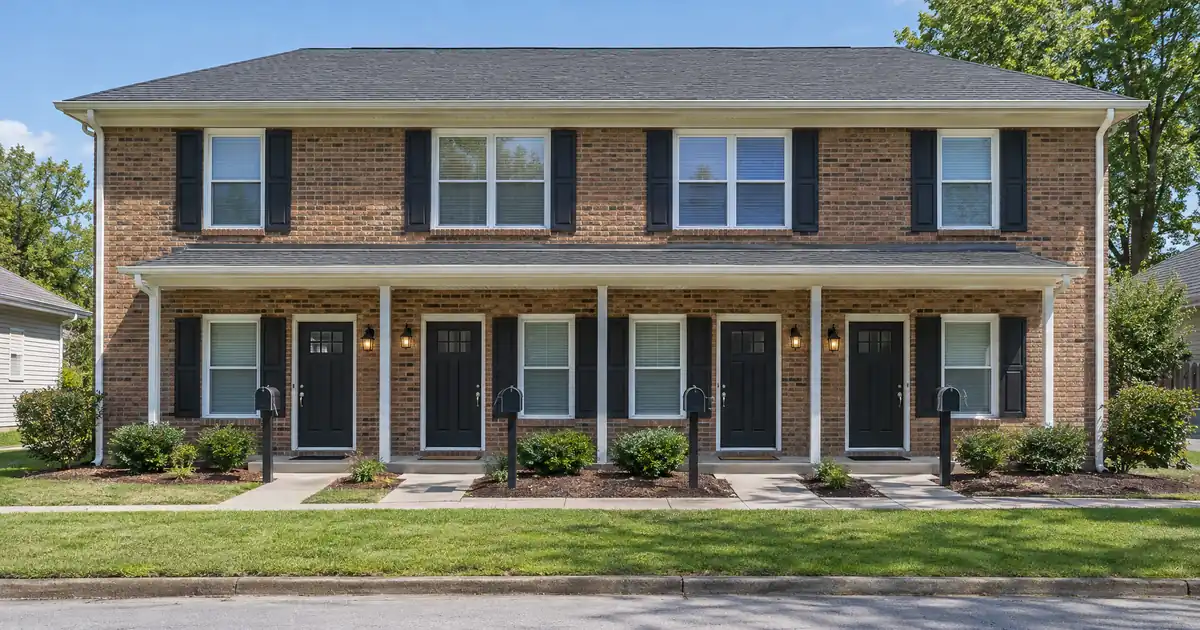
The Quick Read: On a duplex, triplex, or fourplex where you live in one unit, VA cash-out reaches much more of the home’s value than conventional cash-out does. Conventional caps leverage noticeably lower on 2-4 unit homes. VA asks for service eligibility and a stricter look at your leftover monthly income. Conventional asks for more equity left in the building.
The honest answer is that the two loans serve different people. VA fits an eligible veteran or service member who wants the most equity out of a small multifamily home and plans to keep living there. Conventional fits a borrower who has no VA eligibility, or who has plenty of equity and wants a simpler path with no funding fee. Both treat the other units’ rent cautiously. Neither lets you stop living in the building and keep owner-occupied terms.
Key Takeaways
- VA cash-out can reach 100% of the appraised value, including the financed funding fee.
- Conventional cash-out on a 2-4 unit sits well below that, so you leave more equity in the building.
- VA requires you to live in one of the units. Conventional treats a non-occupied building as an investment property with lower leverage.
- VA carries no mortgage insurance. Conventional loans can add mortgage insurance and risk-based adjustments as leverage rises.
- Rent from the other units may help you qualify under either program, but only with documentation and conditions.
Side-by-Side
This table covers the main decision factors for a 2-4 unit you live in. Everything is subject to lender guidelines and full file review. Nothing here is a commitment to lend.
| Factor | VA Cash-Out | Conventional Cash-Out |
|---|---|---|
| Maximum leverage | Up to 100% of appraised value | Noticeably lower on 2-4 units |
| Who can use it | Holders of a Certificate of Eligibility | Any qualified owner-occupant |
| Occupancy | You live in one unit | You live in one unit for best terms |
| Credit floor | No VA minimum; 580 decision score on the wholesale programs placed here | Set by lender; often higher |
| Mortgage insurance | None | Possible, depending on leverage |
| One-time VA fee | 2.15% first use, 3.3% after (waived if exempt) | None |
| Main qualifying test | Residual income, with 41% DTI as a guideline | Debt-to-income ratio, credit, reserves |
| Other units’ rent | Partial credit with conditions | Documented; your own unit’s rent generally excluded |
How VA Cash-Out Works on a 2-4 Unit
VA’s own cash-out page lists three conditions, and all must be true. You need a Certificate of Eligibility (COE), meaning VA’s confirmation that your service qualifies you. You must meet credit and income standards. And you must live in the home you’re refinancing. On a fourplex, that means you occupy one unit and the other three are rentals.
The ceiling is 100% of the value VA’s appraisal sets, per 38 CFR 36.4306. The old 90% cap on regular cash-outs is gone. Some lenders still set their own lower limits, so the program’s maximum and a given lender’s maximum can differ.
The Lendmire team arranges the VA cash-out refinance program through wholesale lenders. Across those programs, three features matter for a small multifamily home:
- Funding fee inside the cap. The fee can be financed, but the total still has to stay at or under 100% of value. A big fee on a high-leverage loan trims your cash.
- Any loan type can be paid off. A VA cash-out can refinance a conventional or FHA loan into VA. That is how a conventional 2-4 unit owner switches.
- Net tangible benefit. The refinance has to pass a test showing it helps you. The rule lists eight possible ways to pass, and you need at least one. Examples include removing mortgage insurance, shortening the term, or raising residual income.
VA also requires the lender to give you a side-by-side comparison of the old and new loan. Read it. Compare the same costs on both sides, because comparing a payment with taxes and insurance against one without them is a classic trap.
How Conventional Cash-Out Works on a 2-4 Unit
Conventional here means loans that follow Fannie Mae’s conforming rules. Fannie Mae’s eligibility matrix sets maximum loan-to-value (LTV, the loan as a percentage of the home’s value) by transaction, occupancy, and unit count. Cash-out on a 2-4 unit principal residence sits below the single-family cap. The same matrix allows much higher leverage on a limited cash-out refinance, which pays off your existing loan with little or no cash back. Those two transactions are not the same, and they get mixed up often.
Confirm the exact percentage on the live matrix before you plan around it. Older copies floating around the internet show different numbers.
Conventional loans also have risk-based pricing adjustments that move with credit score and leverage. Higher leverage usually means more cost layers. Credit expectations are generally stricter than VA’s, and lenders often add their own overlays on top of the agency rules.
What Counts as Rent, and What Doesn’t
This is where people stumble on both loans.
Under Fannie Mae’s rental income rules, rent from the unit you occupy generally can’t help you qualify. Income from the other units can, backed by an appraisal rent schedule or similar documentation. Gross rent on a 2-4 unit principal residence also gets reported, even if you don’t use it to qualify.
VA treats rent conservatively too. Only a portion of the rental income counts, and prospective rent (rent from units not yet leased) comes with landlord-experience and cash-reserve conditions. VA’s underwriting standards sit in its regulations, so ask your loan officer how they apply to your file. One more point to verify with the lender: cash you receive from the refinance generally doesn’t count as the reserves VA wants to see.
When VA Is the Better Fit
VA tends to win in these situations:
- You want maximum equity access. The gap between 100% of value and a conventional cap on 2-4 units is wide. If you need to pull out more cash, VA is usually the only program that reaches that far on a multifamily home.
- You’d rather avoid mortgage insurance. VA carries none, at any leverage. Conventional loans can add it as leverage climbs.
- Your credit is bruised but workable. VA sets no minimum score of its own. The wholesale programs where VA files are placed start at a 580 decision score, subject to lender guidelines. That is a different posture from conventional.
- Your debt-to-income ratio is higher than you’d like. VA’s controlling test is residual income, the money left after taxes, debts, and living costs. The 41% DTI figure is a guideline, not a cap. A ratio above it needs residual income well above the standard requirement.
- You’re paying off a non-VA loan. A VA cash-out can refinance any loan type, so a conventional 2-4 unit owner can switch.
The cost side matters. The cash-out funding fee is 2.15% on first use and 3.3% on later use, waived for veterans receiving service-connected disability compensation and other exempt groups. It is one-time and reviewable, but it grows the balance. With that much leverage, you carry a bigger loan against less cushion.
When Conventional Is the Better Fit
Conventional tends to win in these situations:
- You have no VA eligibility. This settles it for many owners. A COE is the gate, and VA’s service rules decide it.
- You have deep equity and modest cash needs. If you’re pulling out a smaller slice of the value, the conventional leverage cap may not hurt you. You also skip the funding fee.
- You want to keep your VA entitlement untouched. Entitlement is the guarantee VA backs. Using it on a refinance can affect what’s available for a future VA purchase. Ask a loan officer how that applies to you before choosing.
- Your file is strong on credit and ratios. Strong credit and a comfortable debt-to-income ratio can make conventional straightforward. The adjustments that come with high leverage matter less when the leverage is moderate.
- You’re no longer in the building. This one cuts against both loans. VA requires you to live there, so it’s out. Conventional treats a non-occupied building as an investment property, with lower leverage than a principal residence. If you’ve moved out, occupancy decides your leverage, and the owner-occupied comparison no longer applies.
Edge Cases That Change the Answer
- VA-to-VA waiting period. If the loan being paid off is already a VA loan, there is a seasoning wait. It runs to the later of 210 days from the first payment and the 6th monthly payment. It doesn’t apply when you pay off a non-VA loan.
- Type I vs. Type II. VA’s cash-out refinance user guide separates a cash-out that is really a rate-and-term change (Type I, a new loan at or below the payoff) from one that returns cash. The first brings extra certifications on VA-to-VA files.
- A streamline is not a cash-out. The IRRRL refinances an existing VA loan with no cash back. It is a different product.
- State law. Some states limit cash-out on homestead property. Ask your lender how your state treats it.
- Appraisal. On a 2-4 unit, both programs want an appraisal that reflects every unit, not just yours. VA’s reasonable value is the ceiling, so a conservative appraisal shrinks your cash directly.
Picture Two Borrowers
Take a veteran with a fourplex who lives in one unit and needs a large sum for a renovation. VA’s 100% ceiling is the only path that reaches far enough. The financed funding fee eats into that room. They should compare the full-cost disclosure line by line.
Now take a non-veteran owner with a duplex and a large equity cushion, who wants a modest sum. Conventional can work comfortably. They skip the funding fee, and the lower cap doesn’t pinch because they aren’t asking for much.
Neither borrower’s answer comes from the loan label. It comes from how much cash they need, how much they own outright, and whether they hold a COE.
Key Terms Defined
Certificate of Eligibility (COE): VA’s confirmation that your service qualifies you for the loan benefit.
Loan-to-value (LTV): The loan balance as a percentage of the home’s appraised value.
Residual income: The money left each month after taxes, debts, and estimated living costs. It is VA’s controlling test.
Funding fee: A one-time VA charge, reviewable and waived for exempt borrowers.
Net tangible benefit: VA’s requirement that a refinance help you in a measurable way.
Seasoning: The waiting period between loan events, such as the payoff of a VA loan and a new VA refinance.
The Balanced Verdict
If you hold a COE, live in one unit, and need real equity out of a 2-4 unit, VA usually reaches furthest and avoids mortgage insurance. You pay for that with a funding fee and a thinner equity cushion. If you have no VA eligibility, or you need only a modest sum, conventional can be the cleaner choice. Many owners find the leverage cap isn’t the binding limit.
Run both against your own numbers. Look at the total loan balance, not just the cash you receive. Tax treatment can depend on your situation; borrowers should speak with a qualified tax professional before relying on any deduction or credit.
If you are weighing a cash-out refinance against keeping the loan you have, Lendmire can help you compare the programs and the equity each one reaches. It arranges consumer loans through wholesale lenders as a mortgage broker in 16 states.
Frequently Asked Questions
Can I use VA cash-out on a fourplex?
Yes, if you live in one of the units and meet VA’s and the lender’s credit and income standards. You also need a COE. The other units can be rented, and their rent may help you qualify under VA’s conditions.
Does VA cash-out really go to 100% of value?
The regulation sets 100% of VA’s reasonable value as the ceiling, and the financed funding fee counts inside that figure. Individual lenders may set lower limits, so your actual maximum can differ from the program’s.
Is the 210-day wait on every refinance?
No. The seasoning wait applies when the loan being paid off is a VA loan. Paying off a conventional or FHA loan with a VA cash-out doesn’t trigger it.
Can I count all the rent from my other units?
No. Under both programs, only part of the documented rent helps, and rent from the unit you live in generally doesn’t count on a conventional loan. VA adds reserve and landlord-experience conditions for projected rent.
Is a VA streamline the same as VA cash-out?
No. The streamline (IRRRL) refinances an existing VA loan and does not give you cash back. A cash-out reaches equity and can refinance any loan type into VA.
For your own numbers, request a scenario review with Lendmire.
About Lendmire
Lendmire (NMLS# 2371349) is a mortgage broker licensed for consumer lending in 16 states. Lendmire arranges FHA, VA, conventional and jumbo purchase and refinance loans through wholesale lenders; every file is underwritten by the lender under the applicable program guidelines. Scotsman Guide named Lendmire a Top Mortgage Workplace in both 2025 and 2026.
For current guidelines, see VA loan programs.
Get Started
Ready to find the right loan for you?
In about 30 seconds you can review financing options available for your home or investment property. No commitment required.
Informational only. Not a Loan Estimate, approval, or commitment to lend. Program availability and eligibility are subject to lender guidelines, credit approval, property review, and underwriting.
References
1. VA.gov: Cash-out refinance loan
3. Fannie Mae Eligibility Matrix
4. Fannie Mae Selling Guide: Rental Income
5. VA Loan Guaranty cash-out refinance user guide
This article is part of Lendmire’s VA Loans series — every loan program’s qualification details, guidelines, and scenarios live on the loan options page.
Related reading: Can You Use VA Cash-Out for the Next Home on Partial Entitlement? · VA vs Conventional Cash-Out Requirements for a High-Equity Home · How Much More the Largest VA Cash-Out Releases Than Conventional
Brandon Miller
Founder & CEO, Mortgage Loan Originator, Lendmire LLC
- Mortgage Loan Originator · NMLS# 1129696 · Verify on NMLS Consumer Access
- North Carolina Real Estate Broker · License# 343312 · Verify on NCREC
- North Carolina Insurance Producer · License# 19053198 · Property, Casualty, Life, Health · Verify on NAIC SBS
- Lendmire LLC · Firm NMLS# 2371349 · Verify firm licensure
Required disclosures. Lendmire (NMLS# 2371349) operates as a licensed mortgage broker, not a direct lender or depository. The discussion in this article is general in nature and should not be relied upon as financial, legal, or tax advice — every investment scenario is unique and should be reviewed by a qualified professional. Any loan inquiry is subject to lender underwriting, and this article is not a commitment to lend or a guarantee of approval. Mortgage rates, loan terms, and program guidelines vary by borrower, property, and state, and may change without notice. Equal Housing Opportunity. Verify licensure at NMLS Consumer Access.