
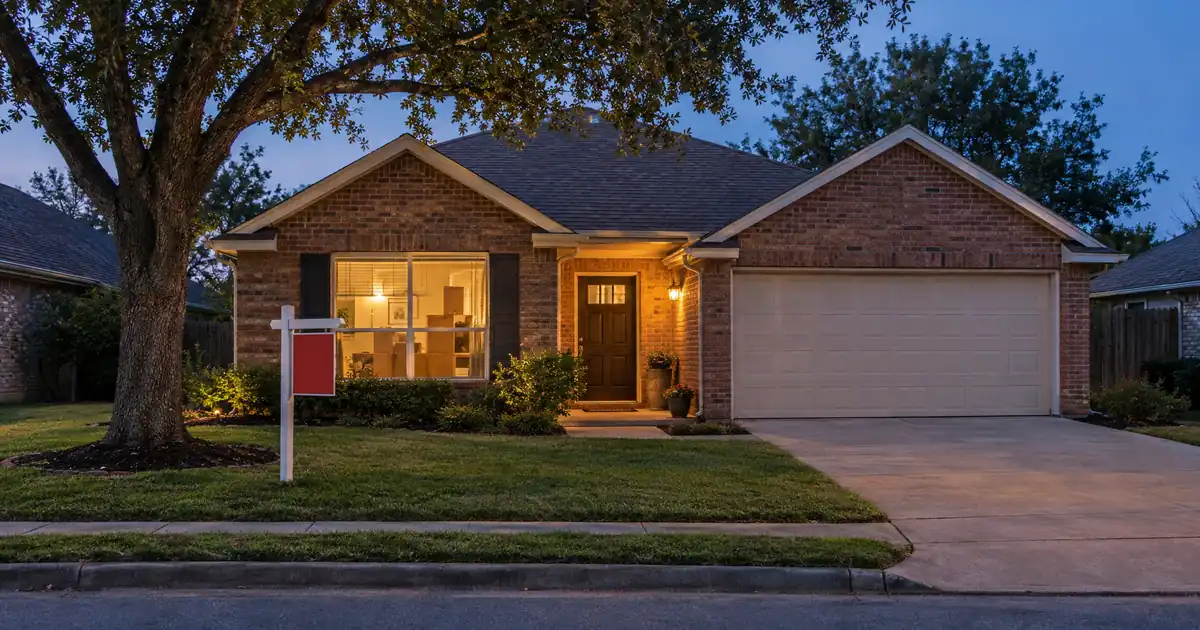
The Quick Read: Two separate clocks apply to a Texas veteran, and they are not the same thing. The VA clock runs only when you refinance an existing VA loan. It counts from your first payment due date, not your closing date. Texas adds its own homestead rules, and those decide whether a cash-out product exists for you at all.
Key Takeaways
- The VA clock has two tests, and both must be met. Your first payment due date must be at least 210 days back, and you must have made six consecutive monthly payments.
- The clock starts at the first payment due date. Closing day is not the starting point.
- Seasoning applies when a VA loan is being paid off. It does not apply when a conventional, FHA or USDA loan is refinanced into VA.
- On a Texas homestead, a VA loan that pays you cash faces a state-law roadblock. The no-cash VA refinance paths are the ones that generally work.
- If a closing happens too early, it can’t be fixed afterward. Time the closing date, not the application date.
What Is a Seasoning Clock, and Does It Apply to You?
Seasoning is the waiting period VA requires before you can refinance a VA loan with a new VA loan. It exists to stop repeated refinancing that costs veterans money without helping them.
Here is who it covers. If the loan being paid off is a VA loan, seasoning applies. If the loan being paid off is conventional, FHA or USDA, it does not. VA’s own quick reference guide lists a seasoning certification for VA-to-VA refinances only.
Lenders and the secondary market can still add waiting periods of their own. Those are overlays, not VA rules.
Across the wholesale programs Lendmire places VA loans with, the VA cash-out refinance program reaches up to 100% of the appraised value, including the financed funding fee. It also refinances any loan type into VA. The funding fee for a cash-out refinance is 2.15% on first use and 3.3% after that, waived for exempt veterans. Those are the national program mechanics. Your Texas homestead changes which of them you can actually use.
How Does the VA Clock Actually Count?
The clock runs on the first payment due date of the loan you’re paying off. VA Circular 26-19-22 says a loan is seasoned when two things are true on the title-recording date: the first payment due date is 210 days or more before closing, and six consecutive monthly payments have been made.
The later of the two dates controls. Here is a modeled example (hypothetical dates, not a real file):
1. You close your VA purchase in March. Your first payment is due May 1. 2. Count 210 days forward from May 1. That lands on November 27. 3. Six consecutive payments are made by early October, so the payment test is met first. 4. The 210-day test is the later one. Your new loan can close on or after November 27.
VA’s own worked example follows the same logic. A loan closed in March had its first payment due in May, and the count began in May.
Cross-check the 210 days with a date calculator. Don’t count in your head. A closing that lands even a few days early makes the loan ineligible for the VA guaranty. The circular says remedial action is not possible when the refinanced loan was not properly seasoned.
That is the whole practical lesson. Pick the closing date, then work backward.
Which Dates Start the Clock, and Which Don’t?
Several dates float around a loan file. Only one starts the VA clock.
| Date | Does it start the VA clock? |
|---|---|
| Purchase closing date | No |
| First payment due date | Yes, this is the start |
| Date of your first payment actually made | No |
| Date you apply for the refinance | No |
| Date the refinance closes | The title-recording date the tests are checked against |
Older articles sometimes say the clock runs from the first payment “made.” VA’s later guidance ties it to the due date. Trust the due date.
What Does and Doesn’t Reset or Pause the Clock?
Missed payments matter, because the six payments must be consecutive. A gap means the payment test isn’t met until the streak is rebuilt.
Forbearance months don’t count. VA Circular 26-20-25 says that pandemic-era forbearance periods cannot count toward seasoning on an IRRRL or on a cash-out refinancing a VA loan. If you paused payments at any point, ask your loan officer to review your payment history line by line before you pick a date.
A “no-cost” refinance doesn’t skip seasoning either. VA’s circular says any new refinance must meet it. Marketing language about costs doesn’t change the clock, and those costs are built into the rate or the balance.
Where Texas Changes the Picture
Texas is the edge case here, and it is a big one. Under the Texas Constitution, a loan that pays cash against a homestead is a home equity loan with its own conditions. One of them says the loan can’t be secured by anything other than the homestead.
The Texas Attorney General examined this in Opinion KP-0183. The opinion starts from the fact that a “Texas Cash Out” is a home equity loan. A Texas mortgage-law firm reads it to mean the VA guaranty counts as collateral beyond the homestead, which precludes a VA cash-out refinance in Texas.
Attorney General opinions are advisory, not binding law. Even so, lenders in the state underwrite to the opinion, so the practical answer is settled for most borrowers. Some websites describe VA cash-out in Texas as workable. That conflicts with the opinion. Confirm current Texas treatment with a licensed loan officer before you plan around cash in hand.
A Texas A&M Real Estate Research Center explainer groups these state-regulated loans into three types: cash-out refinancing, home equity loans and HELOCs. It adds that the Finance Commission of Texas and the Texas Credit Union Commission are authorized to interpret the rules.
Texas homestead status also requires that you live in the home. VA has the same occupancy requirement. If the property is a rental or second home, occupancy decides the leverage, and that is a different conversation from this one.
The Two Clocks Side by Side
| Clock | Who sets it | Starts at | Applies to |
|---|---|---|---|
| VA seasoning | VA | First payment due date of the VA loan | Refinancing a VA loan into VA |
| Texas equity-loan interval | State law | Prior Texas equity loan | Equity-type loans on the homestead |
| Lender overlay | The lender | Varies | Whatever the lender chooses |
The two clocks run separately. Clearing one does not clear the other. And if you hold a prior Texas equity loan on the home, that opens a state-law question separate from VA, and a loan officer needs to see the documents before you set a date.
Which Path Fits Your Situation?
Think of it as a sorting question. What loan do you have now, and what do you need from the new one?
You hold a VA loan and want a lower rate or a fixed rate instead of an adjustable one. The IRRRL is the no-cash route. It refinances only an existing VA loan, with no VA appraisal. The fee is 0.5% unless you’re exempt. It needs a net tangible benefit, which means a real, measurable gain for you. It carries the same seasoning: the later of 210 days from the first payment or the sixth payment.
You hold a VA loan and want to change the term or remove a cost without taking cash. This is a VA-to-VA refinance that doesn’t exceed your payoff. VA calls that a Type I loan. A Type I VA-to-VA loan needs a seasoning certification and a recoupment certification. Recoupment means the costs of the new loan are earned back through savings.
You hold a conventional, FHA or USDA loan and want to move into VA. No VA seasoning step applies. VA’s guide lists a net tangible benefit as the test. Your lender may add its own waiting period, so ask.
You need cash from your Texas homestead. The route most borrowers end up exploring is a conventional Texas home equity loan. That decision is separate from VA seasoning. Compare the costs and limits side by side, and keep in mind that a Texas equity loan has its own conditions, a waiting period before closing and closing-location rules. Your loan officer can walk through those in plain terms.
What the Lender Looks For
Whichever path you pick, the underwriting follows the same logic across the wholesale programs we place VA files with. A few points come up constantly.
- Certificate of Eligibility (COE). VA decides eligibility. VA.gov says you need a COE, must meet VA’s and the lender’s credit and income standards, and must live in the home.
- Credit. VA sets no minimum score. The wholesale programs we place VA loans with start at a 580 decision score, and some lenders set a higher floor.
- Residual income. This is the controlling test. It measures what’s left each month after your major obligations. The 41% debt-to-income figure is a guideline, not a cap. A higher ratio needs residual income well above the lender’s minimum.
- Payment history. Expect the lender to review your payment history for the six-payment test, month by month.
- Net tangible benefit. All cash-out refinancing loans must pass it. Eliminating monthly mortgage insurance, a shorter loan term or a lower interest rate are among the ways to pass.
Every program figure here is subject to lender guidelines and full file review.
Common Mistakes
Counting from closing day. VA counts from the first payment due date. A purchase that closed in March with a first payment due in May starts its count in May.
Assuming six payments is enough. Both tests must be met, and the later date governs.
Assuming 100% financing carries over to a Texas homestead. VA’s national rules don’t override the state constitution.
Skipping the loan-type check. Seasoning applies only when the payoff is a VA loan. Many borrowers wait longer than they need to because they assume it applies to every refinance.
Ignoring forbearance months. They don’t count toward seasoning.
If you want more on how the clock starts and how it interacts with a recent purchase or an IRRRL, Lendmire’s piece on how to time a VA cash-out around seasoning after a purchase or IRRRL goes deeper.
A Short Timing Checklist
1. Find the first payment due date on your current loan. Check your closing disclosure or your servicer’s statement. 2. Add 210 days with a date calculator. 3. Confirm six consecutive payments, with no forbearance months in the count. 4. Pick a closing date on or after the later of the two dates. 5. Confirm the type of loan you’re paying off: VA, conventional, FHA or USDA. 6. Decide whether you need cash. If yes, discuss the Texas homestead rules before you apply. 7. Gather your COE, payment history and income documents.
Key Terms Defined
Seasoning: The waiting period VA requires before you can refinance a VA loan with a new VA loan.
First payment due date: The date your first monthly payment is due on the loan being refinanced. This is where the VA clock starts.
Net tangible benefit: A measurable gain for you from the refinance, such as removing mortgage insurance, shortening the term or lowering the interest rate.
IRRRL: The Interest Rate Reduction Refinance Loan. It refinances an existing VA loan with no cash to you and no VA appraisal.
Homestead: The Texas home you live in as your primary residence, which carries special state-law protections.
Funding fee: A VA fee that can be financed into the loan. It is waived for veterans receiving compensation for a service-connected disability and for other exempt groups.
Frequently Asked Questions
Does the 210-day clock start at closing?
No. It starts at the first payment due date of the loan being refinanced. VA’s worked example counts from the first due date in May, not from the March closing.
If I’ve made six payments, can I refinance?
Not by that alone. You also need the first payment due date to be at least 210 days before closing. The later date governs, so for most borrowers the 210-day test is the one that decides it.
Does seasoning apply if I’m refinancing a conventional loan into VA?
Not the VA seasoning test. VA’s quick reference lists a net tangible benefit for non-VA payoffs. Your lender may still set its own waiting period, so ask before you plan a date.
Can I take cash out of a Texas homestead with a VA loan?
Generally not, based on the Texas Attorney General’s reading of the state constitution. Lenders in Texas underwrite to that opinion. Confirm current treatment with a loan officer, and consider a conventional Texas home equity loan if cash is the goal.
What if I closed too early?
It can’t be fixed afterward. VA’s circular says it cannot guarantee a refinance of a loan that wasn’t seasoned on the title-recording date. Verify dates before you sign.
Next Step
If you are weighing a cash-out refinance against keeping the loan you have, Lendmire can help you compare the programs and the equity each one reaches. Tax treatment can depend on your situation; borrowers should speak with a qualified tax professional before relying on any deduction or credit. Nothing here is a commitment to lend.
For your own numbers, request a scenario review with Lendmire.
About Lendmire
Lendmire — NMLS# 2371349 — is a mortgage broker that arranges FHA, VA, conventional and jumbo home purchase and refinance financing in 16 states through wholesale lenders. Every option is subject to the lender’s guidelines and full underwriting. Scotsman Guide named Lendmire a Top Mortgage Workplace in both 2025 and 2026.
Get Started
Ready to find the right loan for you?
In about 30 seconds you can review financing options available for your home or investment property. No commitment required.
Informational only. Not a Loan Estimate, approval, or commitment to lend. Program availability and eligibility are subject to lender guidelines, credit approval, property review, and underwriting.
References
2. VA Circular 26-20-25, Change 1
3. Texas Attorney General Opinion KP-0183
4. Texas A&M Real Estate Research Center: What to Know About Home Equity Loans in Texas
5. VA.gov: Cash-out refinance loan
This article is part of Lendmire’s VA Loans series — every loan program’s qualification details, guidelines, and scenarios live on the loan options page.
Related reading: VA Cash-Out Requirements in Texas When the Fee Is Included in the Cap · How Much More the Largest VA Cash-Out Releases Than Conventional · How to Time a VA Cash-Out When You Already Have a VA Loan
Brandon Miller
Founder & CEO, Mortgage Loan Originator, Lendmire LLC
- Mortgage Loan Originator · NMLS# 1129696 · Verify on NMLS Consumer Access
- North Carolina Real Estate Broker · License# 343312 · Verify on NCREC
- North Carolina Insurance Producer · License# 19053198 · Property, Casualty, Life, Health · Verify on NAIC SBS
- Lendmire LLC · Firm NMLS# 2371349 · Verify firm licensure
Compliance and disclosures. Lendmire (NMLS# 2371349) is a licensed mortgage broker and is not a direct lender, depository institution, financial advisor, or tax professional. Content in this article is general market analysis and educational information — not financial, legal, or tax advice for any specific situation. Lendmire does not guarantee loan approval; every transaction is subject to underwriting by the funding lender. Mortgage pricing and loan program guidelines are subject to change at any time without notice and vary by borrower characteristics, property type, and state regulations. Lendmire complies with Equal Housing Opportunity. Licensure verification: NMLS Consumer Access.