
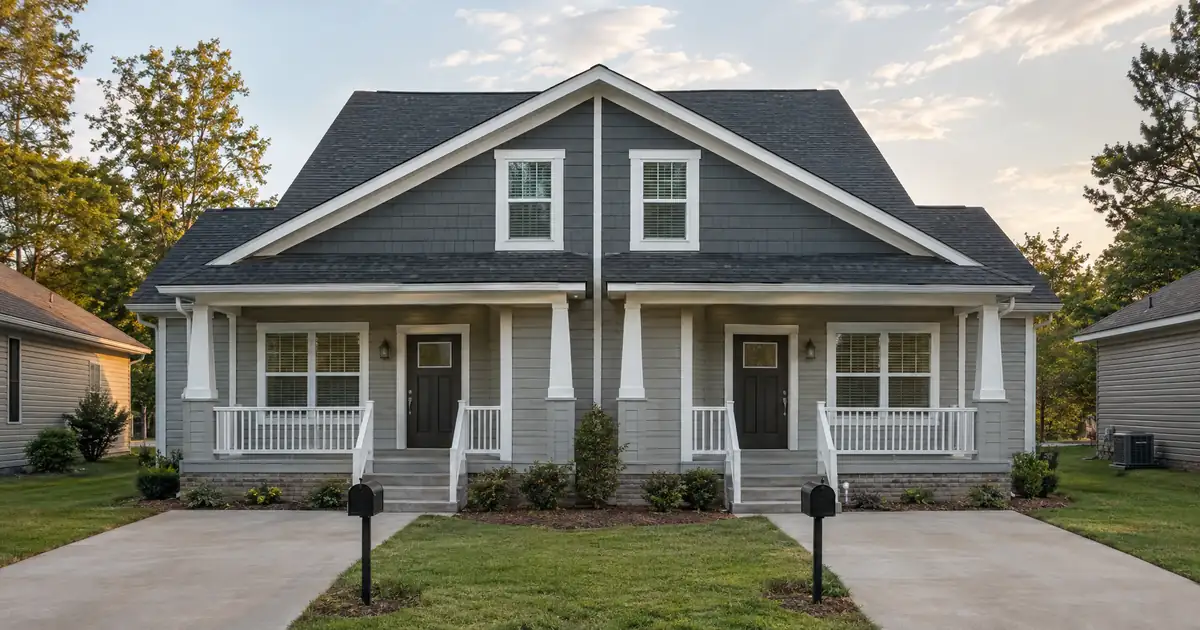
The Quick Read: Yes, in principle, as long as you live in one of the units. VA’s rule lets a cash-out loan reach 100% of the appraised value, and that ceiling is not lower for a duplex, triplex or fourplex. The financed funding fee counts inside that 100%, though, and the appraisal, your underwriting and the individual lender’s limits decide where a real file lands.
The distinction that matters is “allowed” versus “delivered.” VA sets the ceiling. It does not guarantee that any borrower, on any building, gets to it. This article walks through how that ceiling is measured, where the funding fee fits, how rent from the other units is treated, and where full value tends to fall short.
What Does VA Actually Allow on a 2-4 Unit Home?
VA allows a cash-out refinance up to 100% of the home’s VA-determined reasonable value, with no lower cap for two-to-four-unit properties. The federal regulation, 38 CFR 36.4306, says the new loan may not exceed 100 percent of the reasonable value of the dwelling that secures it.
VA’s benefits site describes the product as refinancing a home you own and occupy, up to 100 percent of appraised value. Three conditions apply: a Certificate of Eligibility, credit and income that meet VA and lender standards, and living in the home.
Across the wholesale programs Lendmire places VA files with, the structure matches: the cash-out reaches 100% of the appraised value including the financed funding fee. It can refinance any loan type into a VA loan. It carries seasoning and a net tangible benefit test. For a larger-balance fourplex, how entitlement works can matter, so speak with a loan officer about your own situation. Lendmire’s VA cash-out refinance program page covers the basics for any property type.
Why “Allowed” Isn’t the Same as “Delivered”
Four things decide the outcome: the appraised value, your credit and residual income, whether rental income is usable with documented reserves, and the lender’s own rules. Any one can pull a file below 100%.
Some lenders set a tighter internal limit than VA does. VA’s ceiling is not a lender requirement. A lender’s appetite for multi-unit files can differ from what the VA rulebook permits, which is why the question to ask any lender is not “does VA allow it?” but “will you lend to the full ceiling on a 2-4 unit, and what do you need from me?”
How Is Value Determined on a Multi-Unit Home?
Value is the appraiser’s figure, not your estimate and not what the building cost. The regulation defines reasonable value as what a qualified appraiser, unaffected by personal interest, would recommend as a proper price under prevailing conditions.
On a small multi-unit, appraisers typically look at sales of similar buildings with the same unit count. When comparable sales are scarce, they may lean on income-based methods. A low appraisal changes everything downstream, because every percentage here is measured against that number. A building that appraises lower than expected shrinks the ceiling and the cash.
Legal configuration matters too. An unpermitted unit or a nonconforming unit count can reduce the value used, or raise eligibility questions. Confirm the legal unit count before you apply.
How Do the Funding Fee and the 100% Cap Interact?
The funding fee sits inside the cap. The regulation lets the fee be financed, but any portion that would push the loan above 100% of reasonable value must be paid in cash at closing. It is not “100% plus the fee.”
The fee figures on the wholesale programs Lendmire works with: cash-out refinance is 2.15% for first use and 3.3% for subsequent use. Veterans receiving compensation for a service-connected disability, and the other exempt groups, have the fee waived.
Here is the walk, in words. Start with the appraised value. Subtract the payoff of your existing loan and any other liens being paid. Subtract closing costs funded from proceeds and the financed funding fee. What remains under the 100% ceiling is the cash you can receive. If those items already reach the ceiling, there is no cash, and any fee excess comes out of your pocket.
That is why the headline and the take-home differ. A “100% cash-out” sounds like all your equity. After the payoff, fee and costs, it is less. VA’s own page notes closing costs can add up to thousands of dollars. Leverage, reserves, and pricing vary by lender and program; the final terms follow the full file review.
How Is This Different From Conventional and FHA on the Same Building?
The VA ceiling does not shrink for 2-4 unit owner-occupied homes. Many generic multi-unit guides describe conventional limits that do shrink as unit count rises, so most search results mislead on this question.
| Factor | VA cash-out | Other common paths |
|---|---|---|
| Occupancy | Must live in one unit | Varies by program |
| Value basis | VA reasonable value | Appraised value |
| Ceiling | 100% of value, fee inside | Often lower on multi-unit |
| Lender overlays | Common below 100% | Common |
Treat the right column as general. Each lender’s limits differ.
Occupancy and Unit-Count Rules on a Refinance
You must live in one of the units. VA’s cash-out page is plain that a rental, vacant or second home does not fit the program. If a property is a pure rental, the occupancy requirement decides the leverage, and this is not the right program.
Other units can already be tenant-occupied. What matters is that you occupy one as your residence. VA’s handbook says the borrower must occupy one unit. If you are on active duty, ask a loan officer how a spouse’s certification is handled.
An IRRRL is a different product. It is for existing VA loans only and does not put cash in your pocket. Cash from equity is a cash-out.
How Is Rent From the Other Units Treated?
Rent can help you qualify, but only if two tests are met. VA Pamphlet 26-7, Chapter 4 says prospective rental income on the subject multi-unit counts only when the borrower has a reasonable likelihood of success as a landlord and has verified cash reserves of six months of housing payments. Lenders look for prior rental management experience or a property management company.
Two points surprise people. Equity cannot count as reserves. And an older VA handbook version states that cash-out proceeds cannot serve as those reserves either. The reserves must be your own money.
Residual income is the controlling test in VA underwriting. The 41% debt-to-income figure is a guideline, not a cap. A ratio above it needs residual income well above the table.
Where the Full-Value Rule Breaks
- Low appraisal. The ceiling drops with the value.
- Fee overflow. Any financed fee that pushes past 100% is paid in cash.
- Lender overlays. Some lenders cap cash-out below VA’s maximum, and some set a higher credit floor. The wholesale programs Lendmire places with start at a 580 decision score, subject to lender guidelines.
- State rules. Some states restrict cash-out on homesteads. Ask a loan officer about yours.
- Occupancy lapses. If you no longer live there, the program does not fit.
- Entitlement. On a high-value building, remaining entitlement can affect how much you can borrow without a down payment.
There is also the equity question. A loan at 100% leaves no cushion. The regulation requires the lender to estimate the equity you are removing, and the net tangible benefit test applies. If your new loan is at or below the payoff of an existing VA loan, extra recoupment tests apply.
Be careful with payment comparisons. Compare full housing payments on both sides, taxes and insurance included. The CFPB has taken action against a lender for misleading cost comparisons in VA cash-out marketing.
Key Terms Defined
Reasonable value: The figure a qualified, independent appraiser would recommend as a proper price in current conditions.
Certificate of Eligibility (COE): The VA document that confirms you have earned the benefit.
Funding fee: A one-time VA charge that can be financed into the loan unless you are exempt.
Net tangible benefit: A test showing the refinance improves your position, such as a shorter term or a lower payment.
Residual income: The money left each month after major obligations, which VA treats as the controlling test.
Entitlement: The amount of VA guaranty available to you, which can affect borrowing on larger loans.
Documents to Gather Before You Apply
- Certificate of Eligibility
- Your current mortgage statement
- Proof of the legal unit count and any permits
- Current leases and rent history for the other units
- Evidence of landlord experience or a management agreement
- Statements showing your own cash reserves
Frequently Asked Questions
Does VA cap cash-out at 90% on a fourplex?
No. VA’s rule says 100% of reasonable value. A 90% figure shows up in some lender overlays and as one way to pass the net tangible benefit test. Whether a given lender stops short of 100% is that lender’s choice. Terms vary by lender guidelines, property type, leverage, credit profile, and full file review.
Can I take cash out of a fourplex I rent to others?
No. You must live in the home. VA’s cash-out program is for a home you own and occupy. A building held purely as a rental does not fit.
Does the funding fee come on top of 100%?
No. The financed fee is part of the 100% cap. Any amount that would exceed the cap is paid in cash at closing. Veterans who are exempt do not owe it.
Will the other units’ rent count toward qualifying?
Only if you show a reasonable likelihood of success as a landlord and six months of documented reserves from your own funds. Equity does not count, and neither do cash-out proceeds. Each lender applies these tests to its own file.
Does a refinance into VA require an existing loan?
Yes. Cash-out is a refinance of existing debt, and it can pay off a non-VA loan and move it into a VA loan. All terms are subject to lender guidelines and full file review.
Tax treatment can depend on your situation; borrowers should speak with a qualified tax professional before relying on any deduction or credit.
If you are weighing a cash-out refinance against keeping the loan you have, Lendmire can help you compare the programs and the equity each one reaches. Nothing here is a commitment to lend.
For your own numbers, request a scenario review with Lendmire.
About Lendmire
Lendmire, NMLS# 2371349, is a mortgage brokerage with consumer lending licenses in 16 states. FHA, VA, conventional and jumbo purchase and refinance loans are arranged through wholesale lending partners, and each application is reviewed individually by the lender. Scotsman Guide named Lendmire a Top Mortgage Workplace in both 2025 and 2026.
Get Started
Ready to find the right loan for you?
In about 30 seconds you can review financing options available for your home or investment property. No commitment required.
Informational only. Not a Loan Estimate, approval, or commitment to lend. Program availability and eligibility are subject to lender guidelines, credit approval, property review, and underwriting.
References
2. VA Home Loans, Purchase & Cash-Out
3. VA.gov Cash-Out Refinance Loan
4. VA Pamphlet 26-7, Chapter 4 Credit Underwriting
This article is part of Lendmire’s VA Loans series — every loan program’s qualification details, guidelines, and scenarios live on the loan options page.
Related reading: Can a Surviving Spouse Do a VA Cash-Out on a Home Now Rented Out? · How Much a VA Cash-Out Releases After Big Home Value Gains · VA Cash-Out vs Conventional Cash-Out When the Home Is Worth Far More
Brandon Miller
Founder & CEO, Mortgage Loan Originator, Lendmire LLC
- Mortgage Loan Originator · NMLS# 1129696 · Verify on NMLS Consumer Access
- North Carolina Real Estate Broker · License# 343312 · Verify on NCREC
- North Carolina Insurance Producer · License# 19053198 · Property, Casualty, Life, Health · Verify on NAIC SBS
- Lendmire LLC · Firm NMLS# 2371349 · Verify firm licensure
Legal disclosures. Lendmire (NMLS# 2371349) is a state-licensed mortgage brokerage that arranges financing through wholesale lender relationships. Lendmire is not a direct lender, depository institution, or registered financial advisor. The discussion above is general informational content about real estate financing — it is not financial, legal, or tax advice, and readers should consult licensed professionals for guidance on their individual circumstances. Loan inquiries are subject to lender underwriting; this article does not represent a commitment to lend. Loan terms, rates, and qualification standards vary by borrower, property, and state, and are subject to change at any time. Equal Housing Opportunity. NMLS Consumer Access: nmlsconsumeraccess.org.