
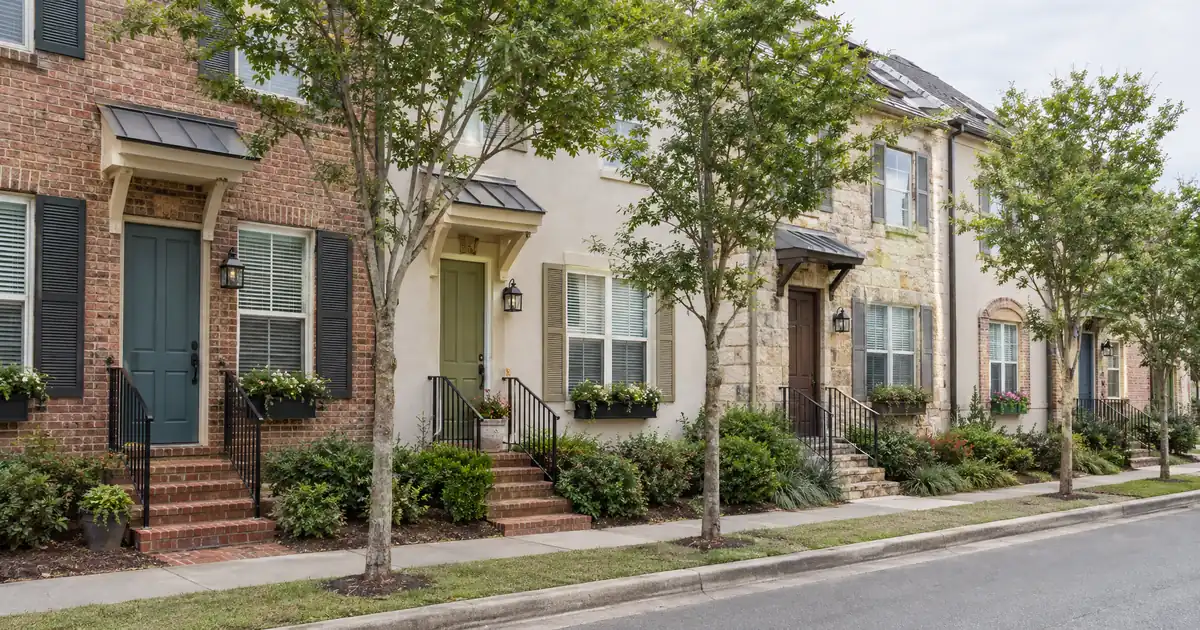
The Quick Read: A paid-off Texas home can carry a cash-out refinance, and the loan counts as cash-out even though there is no old mortgage to pay off. The Texas Constitution caps the new loan at 80% of the home’s value. It also adds notice, signing and closing-location rules that a standard refinance does not have. Most of the work on these files is procedural, and the borrower should know the sequence before applying.
Key Takeaways
- A new first mortgage on a home with no existing lien is treated as a cash-out refinance.
- In Texas, 80% of appraised value is a constitutional ceiling, not a lender preference.
- Every owner and each owner’s spouse must consent, even if the spouse is not on the loan.
- The lender-side fee cap, the waiting period and the closing location all come from state law.
- Only one of these home equity loans can sit on the homestead at a time.
Why Does a Paid-Off Home Still Count as Cash-Out?
A paid-off home is a cash-out refinance by definition. Fannie Mae’s Selling Guide treats a new first mortgage on a property with no existing mortgage lien as a cash-out transaction. There is nothing to pay off, so the cash-out label follows the loan, and the limited cash-out category (the rate-and-term lane) does not apply to a free-and-clear home.
That also settles a common question. The government streamlines, the FHA Streamline and the VA streamline refinance, refinance an existing FHA or VA loan. A free-and-clear home has neither, so those programs are not available here. Lendmire’s cash-out refinance programs are built around conventional cash-out for exactly this situation.
Texas adds a second layer. The homestead provision in Article XVI, Section 50 of the Texas Constitution lists the only liens a Texas homestead can carry. One of them is the extension of credit under subsection (a)(6). Lenders call these “Texas 50(a)(6)” loans, or “A6” loans. The Texas Property Code repeats the same limit on homestead encumbrances.
What Is the 80% Limit, and Where Does It Come From?
The 80% limit is state law. The new loan plus every other lien on the homestead cannot exceed 80% of fair market value. Fannie Mae’s Texas 50(a)(6) underwriting section says 80% is the maximum for both LTV and combined LTV on these loans, regardless of what an automated finding says.
Nationally, the conventional cash-out cap on a one-unit principal residence is also 80%, per the Fannie Mae Eligibility Matrix. Two- to four-unit principal residences, second homes and investment property sit at 75%. So Texas does not lower the one-unit number. It makes 80% unwaivable and attaches procedure.
Here is what that means in practice. At least 20% of the appraised value stays untouched, and every dollar of debt secured by the home counts toward the cap. A paid-off home has no other liens, so the full 80% is available in principle. What the borrower actually receives still depends on credit, income, reserves and the appraisal.
One more point on leverage. Across the wholesale programs that place Texas files, the lane that reaches 89.99% LTV with no mortgage insurance is not written on a Texas homestead. The state ceiling governs. Terms vary by lender guidelines, property type, leverage, credit profile, and full file review.
How the Loan Is Underwritten, Step by Step
The underwriting follows a fixed order. Here is the sequence on a paid-off Texas homestead.
1. Homestead and occupancy check. The home must be the borrower’s primary residence and qualify as a homestead. Acreage limits apply. A borrower who owns adjacent land generally has to show by survey that the homestead is a separate parcel.
2. The lender decides whether it is an (a)(6) loan. Automated underwriting has no Texas 50(a)(6) rules. An “Eligible” finding does not mean the loan complies with Texas law, and the lender must determine that on its own.
3. Notice and waiting period. The borrower gets the state’s “Notice Concerning Extensions of Credit” as a separate document. The loan cannot close before the 12th day after the later of the application date or the date the notice is provided. A final itemized disclosure of fees, points, interest and charges is also required.
4. Credit, income and reserves. Standard cash-out rules apply. The wholesale conventional programs start at a 620 decision score, and the automated finding governs most files, with a total ratio ceiling of 50%. Manually underwritten loans run 36% or 45% with the reserve and score factors of the Eligibility Matrix. Fannie Mae also requires reserves on automated cash-out loans when the debt-to-income ratio exceeds 45%. All of this is subject to lender guidelines and full file review.
5. Property status. The home must not be listed for sale. If it was listed, it must come off the market on or before the disbursement date.
6. Full appraisal. A new interior and exterior appraisal is required, even if the automated system offers an appraisal waiver. The appraisal is attached to a written acknowledgment of fair market value, signed at closing.
7. Texas documents. Texas home equity uniform instruments are used instead of the standard forms. EMortgage delivery is not permitted.
8. Closing. It happens only at the office of the lender, an attorney or a title company. The first payment must be due no later than two months after closing.
9. After closing. The federal right of rescission applies to a refinance of a primary home. Proceeds also cannot be used to buy or improve the homestead if a loan for that purpose could have been made under a different provision of the Texas Constitution.
Most files that stall do so at steps 1 through 3. A spouse who has not signed, an adjacent-land survey question, or an application date that pushes the 12-day clock all show up here, and they are cleaner to fix before the file goes in.
What Does the Fee Cap Cover?
The cap covers the lender-side charges, not every closing cost. Required fees to originate, evaluate, maintain, record, insure or service the loan cannot exceed 2% of the original principal, per the Texas Credit Union Department’s interpretation of the rule. Per-diem interest is treated as interest, not as a fee.
Three items sit outside the cap: a third-party appraisal, a licensed surveyor’s property survey, and the state base premium for the mortgagee title policy with endorsements. So a borrower still sees third-party costs on top of the capped fees.
Cash-out loans also carry loan-level price adjustments, which Fannie Mae discusses in its cash-out section. Those are built into the pricing the lender offers. The Loan Estimate and Closing Disclosure show the actual figures for a specific file.
Who and What Qualifies?
Qualifying comes down to a handful of tests, and the property type matters as much as the borrower.
| Factor | What the rule means |
|---|---|
| Occupancy | Primary-residence homestead only |
| Owners | All owners and each owner’s spouse must consent |
| Property type | One-unit leverage is 80%; other types lower |
| Manufactured home | Eligible only if real property under Texas law |
| Ownership history | A borrower on title for 6 months, with exceptions |
Second homes and investment properties cannot use the (a)(6) route. Occupancy decides the leverage, and those property types fall under lower national caps.
On ownership history, the conventional program wants a borrower on title for 6 months before disbursement. Exceptions exist for inheritance and for property awarded in a legal proceeding such as a divorce. Delayed financing is another path: a borrower who bought with cash can cash out without the usual wait if the purchase was arm’s length and the source of funds is documented. Texas still caps that at 80%.
A long-held paid-off home has no seasoning problem. A recently inherited one usually does not either, but the title paperwork has to show the transfer clearly.
Which Edge Cases Break the General Rule?
Several situations change the answer, and a few of them surprise borrowers.
Refinancing out of an existing (a)(6) loan. Section 50(f) restricts this. A refinance of debt that includes any part of an (a)(6) loan can be a non-equity refinance only if specific conditions are met. These include no closing before the first anniversary of the equity loan, no funds advanced beyond the old debt and actual costs, and the 80% limit. Fannie Mae calls the result a “Texas 50(a)(4)” loan. A prior (a)(6) loan still requires requalification, even with the same servicer.
A “no-cash” refinance can still be an (a)(6). Texas law, not the agency’s loan label, decides whether the equity rules apply.
Government cash-out. Cash-out on a Texas homestead is generally conventional only. Borrowers who hear a VA or FHA cash-out number from another state should have it confirmed for a Texas homestead before relying on it.
Adjustable-rate and subordinate financing. A HELOC behind a Texas 50(a)(6) loan is not permitted under Fannie Mae’s section, and only one such lien can sit on the home at a time.
Listed or recently listed homes. The listing has to come off the market by disbursement.
Temporary buydowns. These are listed as ineligible on a cash-out.
What Does the Loan Lock In?
An (a)(6) loan leaves lasting limits. The 80% cap follows the homestead, and so do the fee cap on later refinances and the 50(f) conditions for refinancing out of it. Think of it as a trade-off, not a warning. Borrowers who expect to want a HELOC later should know that this loan blocks it while the lien exists.
The constitution also makes these loans non-recourse for personal liability, barring actual fraud, and they can be foreclosed only by court order. The lender also forfeits principal and interest if it fails to comply and does not cure. That is why lenders are strict about the process. Texas’ Office of Consumer Credit Commissioner handles complaints about the non-depository home equity lenders it regulates.
Cash-Out Refinance or Another Way to Borrow?
A mortgage-free owner has choices.
The short version: a cash-out refinance gives a lump sum and a new first mortgage. A home equity loan or line adds a second lien. Each has a different cost and flexibility profile, and Texas rules shape each one. The Consumer Financial Protection Bureau’s guide to using home equity notes that a cash-out refinance can raise the payment, lengthen the term and reset the terms, and that lenders typically require the borrower to keep some equity.
When Not to Do It
Skip it when the cash is not needed. A paid-off home has no payment today. A cash-out loan creates one, on top of taxes and insurance. Think about the monthly budget first.
Also be careful about the use of funds. A CFPB report found that paying off other debts is the most common reason for cash-out refinancing. It cautions that swapping non-mortgage debt for debt secured by the home can raise foreclosure risk.
Tax treatment can depend on your situation; borrowers should speak with a qualified tax professional before relying on any deduction or credit.
Key Terms Defined
Homestead. The home a Texas owner lives in, protected by special constitutional limits on what liens it can carry.
50(a)(6) loan. The Texas home equity loan type, also called an “A6” loan, that lets a homestead carry cash-out debt.
Combined loan-to-value (CLTV). All debt secured by the home, added together, divided by its appraised value.
Delayed financing. A cash-out refinance on a home bought recently with cash, allowed without the usual title wait when conditions are met.
Non-recourse. The lender’s remedy is limited to the home, absent actual fraud.
Seasoning. The time a borrower has been on title or a loan has been in place before a refinance is allowed.
What Does the Decision Look Like in Practice?
Consider a homeowner who has held a Texas home outright for years and wants to fund a renovation or consolidate debt. The first question is whether the borrower needs a lump sum at all. If yes, the order of work is simple. Confirm that every owner and spouse will sign. Check the survey and acreage. Pick a start date with the 12-day clock in mind. Then compare programs on the equity each one reaches, within the 80% ceiling.
If you are weighing a cash-out refinance on a home you own outright, Lendmire can help you compare the programs and the equity each one reaches.
Frequently Asked Questions
Can I get a cash-out refinance on a Texas home with no mortgage?
Yes, if it is your primary residence and you meet the credit, income and reserve tests. The loan is treated as a cash-out refinance, and Texas limits it to 80% of the home’s value. Approval is subject to lender guidelines and full file review.
Why is there a waiting period before closing in Texas?
The state constitution requires it. The loan cannot close until a set waiting period has passed after the later of the application or the date the borrower receives the state notice. A separate itemized disclosure of actual costs is also required. Overall timing varies by file and lender.
Does my spouse have to sign if they are not on the loan?
Yes. The constitution requires the consent of every owner and each owner’s spouse. A missing signature is one of the more common reasons a Texas file stalls.
Is the appraisal required?
Yes. A new full interior and exterior appraisal is needed, and the automated appraisal waiver does not apply to a Texas 50(a)(6) loan. The appraisal can cover only the homestead.
Can I add a HELOC after closing?
Not behind this loan. Fannie Mae’s Texas section does not permit HELOC subordinate financing on these loans, and only one 50(a)(6) lien can secure the home at a time.
For your own numbers, request a scenario review with Lendmire.
For current guidelines and terms, see Lendmire’s refinance programs page.
About Lendmire
Lendmire, NMLS# 2371349, is a mortgage brokerage with consumer lending licenses in 16 states. FHA, VA, conventional and jumbo purchase and refinance loans are arranged through wholesale lending partners, and each application is reviewed individually by the lender. Scotsman Guide named Lendmire a Top Mortgage Workplace in both 2025 and 2026.
Get Started
Ready to find the right loan for you?
In about 30 seconds you can review financing options available for your home or investment property. No commitment required.
Informational only. Not a Loan Estimate, approval, or commitment to lend. Program availability and eligibility are subject to lender guidelines, credit approval, property review, and underwriting.
References
1. Fannie Mae Selling Guide B2-1.3-03, Cash-Out Refinance Transactions
2. Texas Constitution, Article XVI, Section 50
4. Fannie Mae Selling Guide B5-4.1-03, Texas Section 50(a)(6) Underwriting
5. Fannie Mae Eligibility Matrix
6. Texas Credit Union Department, Administrative Interpretation 153.5
7. Texas’ Office of Consumer Credit Commissioner
8. Consumer Financial Protection Bureau’s guide to using home equity
9. CFPB: CFPB Report Finds Cash Out Mortgage Refinance Borrowers Improve Credit Scores
This article is part of Lendmire’s Refinance series — every loan program’s qualification details, guidelines, and scenarios live on the loan options page.
Related reading: Delayed Financing Cash-Out Refinance Rules for a Primary Home · Can a Cash-Out Refinance on Your Primary Home Fund a Second Home? · Cash-Out Refinance Appraisal Requirements for a Paid-Off Home
Brandon Miller
Founder & CEO, Mortgage Loan Originator, Lendmire LLC
- Mortgage Loan Originator · NMLS# 1129696 · Verify on NMLS Consumer Access
- North Carolina Real Estate Broker · License# 343312 · Verify on NCREC
- North Carolina Insurance Producer · License# 19053198 · Property, Casualty, Life, Health · Verify on NAIC SBS
- Lendmire LLC · Firm NMLS# 2371349 · Verify firm licensure
Important disclosures. Lendmire (NMLS# 2371349) is a licensed mortgage brokerage. Lendmire is not a direct lender, depository institution, or financial advisor. All loan inquiries are subject to lender underwriting; this article does not constitute a commitment to lend. Rates, terms, and program guidelines are subject to change without notice and vary by borrower profile, property type, and state. Information in this article is general in nature and is not financial, legal, or tax advice. Equal Housing Opportunity. NMLS Consumer Access: nmlsconsumeraccess.org.