
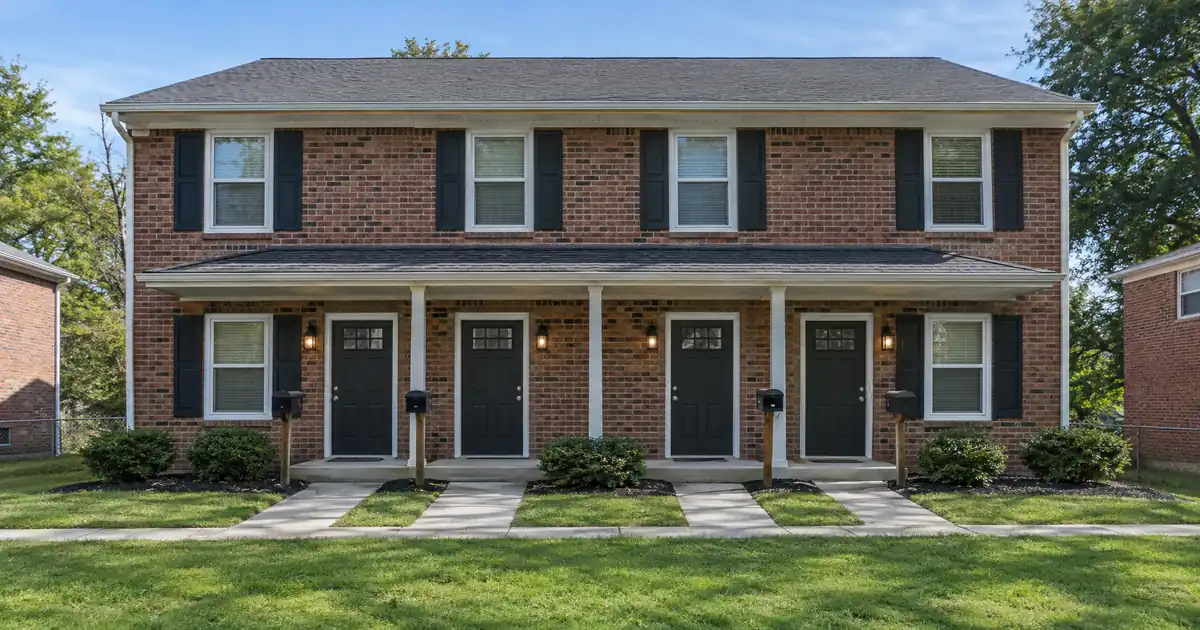
The Quick Read: Generally no. A VA cash-out is an owner-occupant loan, and once you move out of the building, the occupancy basis for the loan is gone. Tenants in the other units don’t fix that. A duplex, triplex, or fourplex does qualify while you still live in one unit. The VA option for a home you’ve left is the VA streamline refinance, and it pays no cash.
Does the VA Allow a Cash-Out on a 2-4 Unit Home at All?
Yes, while you live there. VA-guaranteed loans cover a “dwelling,” and the Congressional Research Service describes that as a home with up to four units. Five or more units fall outside it.
The catch is occupancy. VA’s cash-out page lists three conditions that all have to be true: you have a Certificate of Eligibility, you meet VA and lender credit and income standards, and you live in the home you’re refinancing.
So a fourplex where you live in unit A and rent B through D is a normal VA file. The same fourplex after you’ve moved across town is not.
The Occupancy Rule: Current vs. Intended
The refinance rule is about present occupancy. Under 38 CFR § 36.4303, guaranty evidence isn’t issued on a refinancing loan unless the veteran certifies that he or she presently occupies the property as a home. A spouse can make that certification for an active-duty servicemember.
Present means present. A borrower who has moved out and rented the building can’t truthfully sign that certification. That’s the whole decision point on these files.
Two things get blurred online:
- The 12-month rule. Many pages talk about a required stay of a year. VA’s handbook sets no universal minimum stay for a refinance. If someone quotes one, it’s a lender policy or an unsourced claim. What matters is that the certification is true when you sign it.
- “I’ll move out right after closing.” Don’t build a plan around that. The certification has to be true at application and at closing, and a move planned from the start makes the signed statement a problem.
Your Situation → Does a VA Cash-Out Fit?
| Your situation | Cash-out fit? | What to do next |
|---|---|---|
| Living in one unit now | Yes, if the file qualifies | Full underwriting |
| Active-duty spouse living there | Possibly | Spouse certifies occupancy |
| Moved out, building rented | No | Look at the VA streamline refinance or other options |
| Moved out, vacant | No | Occupancy still isn’t met |
| Out for major repairs, will return | Narrow exception | Lender must confirm facts |
| Five or more units | No | Outside the dwelling definition |
The repairs exception is real but small. The regulation covers work that prevents occupancy during construction, and the borrower must certify an intent to occupy or reoccupy the home when it’s done. It is not a path to cash out a building you’ve rented to tenants.
Streamline vs. Cash-Out After Moving Out
This is where most of the confusion comes from. Pages that say VA lets you refinance a home you’ve left are describing the VA streamline refinance, not the cash-out.
| Factor | VA streamline refinance | VA cash-out |
|---|---|---|
| Occupancy | Prior occupancy only | Present occupancy |
| Cash to borrower | None | Yes |
| Existing loan | Must be VA | Any loan type |
| Appraisal | None required | VA appraisal |
| Funding fee | 0.5% unless exempt | 2.15% first use, 3.3% after |
For a VA streamline refinance you certify that you previously lived in the home. You can’t take cash from the proceeds. It also only works on a property where you already used your VA entitlement. A homeowner with a conventional or FHA loan on a rented former home can’t use it. Moving that loan into VA through a cash-out brings the occupancy test right back.
The IRRRL needs a net tangible benefit and seasoning: the later of 210 days from the first payment and the sixth payment. These figures are subject to lender guidelines and full file review.
Sequencing: What to Do Before You Move
If a move is coming and you want cash from the equity, order matters. Across the wholesale programs Lendmire places VA files with, the clean sequence is cash-out first, move second. Here’s how that plays out.
1. Decide on the cash early. Don’t wait until the moving truck is booked. Once you’re out, the occupancy test fails.
2. Confirm entitlement. Get your Certificate of Eligibility from your lender, VA.gov, or by mail. Check how much entitlement is tied up in the current loan.
3. Be honest about your plans with the loan officer. The signed certification is a representation to VA and the lender. It has to be true on the dates you sign.
4. Expect full underwriting. A cash-out isn’t a streamline. Credit, income, residual income, and a VA appraisal all apply.
5. Plan the next loan. If the cash is meant to fund a purchase elsewhere, see Lendmire’s piece Can a Veteran Use a VA Cash-Out to Fund the Next Home After a PCS?.
Only after closing does your plan to move out become a separate question. If your facts change after the loan closes, talk to a licensed loan officer and a legal professional about your situation. This article doesn’t give advice on penalties.
How Does Rental Income Work on a 2-4 Unit Refinance?
If you live in one unit and want rent from the others to help you qualify, VA’s handbook has conditions. Prospective rental income counts only if you have a reasonable likelihood of success as a landlord. The handbook counts 75 percent of the amount on the lease unless a higher percentage can be documented. The lender also verifies reserves of at least six months of PITI and documents your rental-management experience or use of a property manager.
If rent can’t or won’t be used, the full mortgage payment is considered and the reserve test isn’t applied.
Two points for the file:
- Only a discounted share of rent counts. Rent doesn’t fully offset the payment.
- That handbook is older. Treat it as a guide and confirm current guidance with your lender.
Residual income is the controlling test on the underwriting side. The 41% debt-to-income figure is a guideline, not a cap. A ratio above it needs residual income well above the table.
Entitlement and the Next Home
A cash-out doesn’t “use up” the fact that you served, but it does change how your entitlement is tied to the property. The new loan replaces the old one, and the entitlement attached to it stays in play until the loan is paid off or the property is sold.
The funding fee matters here. On a cash-out it’s 2.15% for first use and 3.3% for subsequent use, and it’s reviewable. Veterans receiving compensation for a service-connected disability and other exempt groups don’t pay it. The VA cash-out can reach 100% of the appraised value including the financed fee. Closing costs on these loans can add up to thousands of dollars, as VA’s own page warns.
Buying the next home is a separate file. With full entitlement there’s no VA loan limit and no down payment as long as the price isn’t above appraised value. With remaining entitlement a down payment may be required, so speak with a loan officer. Most wholesale programs start at a 580 decision score, and some lenders set a higher floor.
For anyone planning to hold the old building as a rental, keeping entitlement tied up affects that second purchase. Plan the two loans together, not one at a time.
Honest Intent and What the Certification Means
The occupancy certification is a signed statement to VA and the lender. It’s not a formality. It describes a fact: you live in this home today.
Practical guidance:
- Don’t sign if it isn’t true.
- Don’t treat “intent to occupy” as a loophole on a refinance. The rule is about present occupancy, with the narrow repairs exception.
- If your facts are unclear, such as a partly vacant building or a short overlap between two homes, bring it to the loan officer before you apply, not after.
Options When a VA Cash-Out Doesn’t Fit
| Situation | What may apply |
|---|---|
| Moved out, existing VA loan | IRRRL, no cash |
| Moved out, non-VA loan | VA doesn’t offer a path for cash |
| Want cash and haven’t moved yet | VA cash-out before the move |
| Equity needed after moving out | Speak with a licensed professional |
If you’ve already moved out and need the cash, a VA product isn’t the answer. A licensed loan officer can walk through non-VA options for a non-owner-occupied property. Rental use and cost-basis questions go to a tax pro. Tax treatment can depend on your situation; borrowers should speak with a qualified tax professional before relying on any deduction or credit.
Lendmire’s VA cash-out refinance program page covers how the product works for owner-occupants who still live in the home.
Key Terms Defined
- Occupancy: Living in the home as your primary residence at the time you certify.
- Certificate of Eligibility (COE): The VA document that confirms your service qualifies you for the program.
- IRRRL: VA’s streamline refinance for an existing VA loan, with no cash back.
- Entitlement: The amount of VA guaranty available to you, which affects your next VA loan.
- Residual income: The money left each month after major obligations, which is VA’s controlling test.
- Net tangible benefit: A required test showing the new loan benefits the borrower.
Frequently Asked Questions
Can I rent out the other units on a 2-4 unit home and still get a VA cash-out?
Yes, as long as you live in one unit. The handbook counts a discounted share of documented rent, and the lender may require reserves and proof you can manage the property.
Does a PCS move let me keep cash-out eligibility?
Only the spouse of an active-duty servicemember can certify occupancy, and only if the spouse actually lives in the home. A move by the borrower alone doesn’t preserve eligibility.
Is there a required number of months I must live there before a cash-out?
VA’s handbook sets no universal minimum stay. Some lenders add their own rules, so confirm with yours. The certification must be true when you sign.
Can an IRRRL pull cash out of a home I’ve moved out of?
No. The IRRRL pays no cash, and it only refinances an existing VA loan. You certify prior occupancy, not present occupancy.
Is the cash-out limited to what I can use it for?
No, proceeds can be used for any purpose. The condition is on the property securing the loan: you have to live in it.
For your own numbers, request a scenario review with Lendmire.
About Lendmire
As a mortgage broker (NMLS# 2371349), Lendmire helps homeowners and home buyers in 16 states with FHA, VA, conventional and jumbo purchase and refinance loans arranged through wholesale lenders. Lendmire is never the lender; program terms are set by the lender and the agency guidelines. Scotsman Guide named Lendmire a Top Mortgage Workplace in both 2025 and 2026.
Get Started
Ready to find the right loan for you?
In about 30 seconds you can review financing options available for your home or investment property. No commitment required.
Informational only. Not a Loan Estimate, approval, or commitment to lend. Program availability and eligibility are subject to lender guidelines, credit approval, property review, and underwriting.
References
1. Congressional Research Service, VA Home Loan Programs
2. VA.gov, Cash-out refinance loan
This article is part of Lendmire’s VA Loans series — every loan program’s qualification details, guidelines, and scenarios live on the loan options page.
Related reading: How Much a Low VA Appraisal Cuts Cash-Out on a Home With Big Equity · Can a VA Cash-Out Skip the Appraisal When Your Home Is Worth Far More? · VA Cash-Out Cap Rules When Your Home Is Worth Far More Than the Loan
Brandon Miller
Founder & CEO, Mortgage Loan Originator, Lendmire LLC
- Mortgage Loan Originator · NMLS# 1129696 · Verify on NMLS Consumer Access
- North Carolina Real Estate Broker · License# 343312 · Verify on NCREC
- North Carolina Insurance Producer · License# 19053198 · Property, Casualty, Life, Health · Verify on NAIC SBS
- Lendmire LLC · Firm NMLS# 2371349 · Verify firm licensure
Legal disclosures. Lendmire (NMLS# 2371349) is a state-licensed mortgage brokerage that arranges financing through wholesale lender relationships. Lendmire is not a direct lender, depository institution, or registered financial advisor. The discussion above is general informational content about real estate financing — it is not financial, legal, or tax advice, and readers should consult licensed professionals for guidance on their individual circumstances. Loan inquiries are subject to lender underwriting; this article does not represent a commitment to lend. Loan terms, rates, and qualification standards vary by borrower, property, and state, and are subject to change at any time. Equal Housing Opportunity. NMLS Consumer Access: nmlsconsumeraccess.org.