
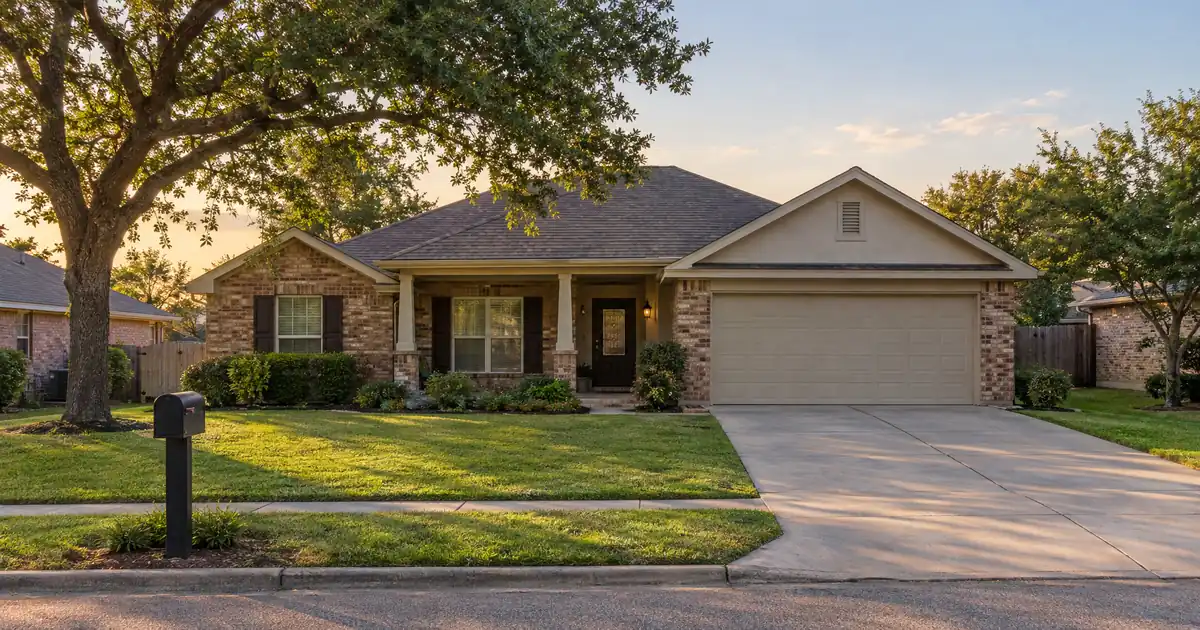
The Quick Read: An FHA cash-out refinance is not available on a true second home, in Texas or anywhere else. FHA loans are built for the home you live in, so the cash-out has to come from your primary residence. Texas adds its own limits if that home is your homestead. The workable path is to pull equity from the home you live in, or to look at non-FHA financing for the second one.
Key Takeaways
- FHA cash-out refinancing is for a principal residence, the home you live in most of the year.
- A vacation home or weekend place does not count as your principal residence, no matter where it sits.
- The FHA cash-out reaches 80% LTV (loan-to-value, the loan as a share of the home’s appraised value) on a home you have owned and occupied for 12 months.
- Texas homestead rules cap the combined liens at 80% of value too, so a second loan on top does not get you past it.
- Subject to lender guidelines and full file review, you can still use equity from your primary home to help fund a second one.
Why Doesn’t FHA Allow Cash-Out on a Second Home?
FHA insures loans on owner-occupied homes. That is the program’s purpose, and it has not changed.
The rule is not a Texas quirk. It applies in every state. HUD’s Handbook 4000.1 limits FHA single-family programs to one- to four-unit properties that the borrower occupies as a principal residence, unless the Handbook names an exception.
A principal residence is where you keep your permanent home and live for most of the calendar year. You can have only one at a time. HUD’s glossary describes a secondary residence as a home you occupy in addition to your primary one, for less than most of the year, and it carves out vacation homes.
Here’s the catch for most Texans asking this question. A lake house near Canyon Lake, a place on the coast, or a hunting cabin in the Hill Country is a second home. FHA won’t do a cash-out on it.
Some sources describe narrow cases where a secondary residence can be approved. Treat that as an HUD-approval matter, not something to plan around, and talk to a licensed loan officer before assuming it applies to you.
What Are the Two Layers of Rules?
Two separate rule sets sit on top of each other. Keep them apart in your head, because people blur them constantly.
Layer one is FHA’s occupancy rule. It decides whether the property can be financed at all. A second home fails here.
Layer two is the Texas homestead rule. It decides how a cash-out on your primary home must be structured. A second home fails here too, but for a different reason: it isn’t a homestead, so the Texas cash-out rules don’t govern it.
That second point surprises people. The Texas limits protect your homestead. They don’t reach a second home or a rental. But since FHA won’t lend on that second home, the Texas layer never comes into play for it.
Where Does This Leave a Second-Home Owner?
You have three realistic options. Which one fits depends on what you own and what you want the cash for.
1. Cash out on the home you live in. This is where FHA fits. You use the equity in your primary residence and put the money toward the second home.
2. Use non-FHA financing on the second home. Conventional second-home loans exist. They follow different rules, and some lenders set tighter requirements on them.
3. Change how the home is occupied. If you truly move in and make it your principal residence, the picture changes. But the 12-month occupancy clock applies, and claiming residence you don’t have is a serious problem.
Lendmire’s FHA cash-out refinance program page covers the primary-residence path in more detail. Lendmire is a mortgage broker, so it arranges these loans through wholesale lenders. It does not lend itself.
How Does an FHA Cash-Out Work on the Home You Live In?
Across the wholesale programs we place FHA files with, the cash-out is built around four tests: occupancy, leverage, documentation, and the appraisal.
Occupancy and ownership. For a standard cash-out, at least one borrower must have owned and lived in the home as a principal residence for 12 months before the FHA case number is assigned. A case number is the identifier FHA gives a loan file. An inheritance exception exists, but it can be lost if the property was ever treated as a rental. Confirm the details against the HUD Handbook before you rely on it.
Leverage. The FHA cash-out reaches 80% LTV on a home you’ve owned and occupied for 12 months. HUD cut the cash-out limit to 80% in its October 2019 Handbook transmittal, consistent with Mortgagee Letter 2019-11. Older claims of 85% or more are out of date. Final terms depend on the lender’s guidelines, the property type, and the borrower’s complete credit picture.
Documentation. The lender collects payoff statements for every existing mortgage, plus your credit, income, and payment history. Pricing and available terms vary by lender, borrower profile, property type, and full underwriting review. Some lenders set a higher credit-score floor than HUD does.
Appraisal. An FHA appraisal sets the home’s value and checks the property against FHA condition standards. The value drives how much cash is available. A lower appraisal means less cash.
County loan limits also apply to FHA loans. They change every year, so check the current limit for your county before you plan.
How Do the Ratios and Mortgage Insurance Fit In?
FHA looks at two ratios. The first is housing costs against income. The second is all monthly debts against income. The base pair is 31/43 with no compensating factors. Documented compensating factors, such as strong reserves or a clean payment history, can stretch that to 40/50 at the top tier. The automated underwriting finding governs most files.
Mortgage insurance is part of every FHA loan. There is an upfront premium of 1.75% of the base loan, which is usually financed into the balance. There is also an annual premium between 0.15% and 0.75% of the balance, depending on term, loan amount, and LTV.
Duration matters too. On a 30-year loan above 90% LTV, the annual premium lasts for the full term. At or below 90% LTV, it ends after 11 years. A cash-out at 80% LTV sits below that line. Each figure is subject to lender guidelines and a complete review of property type, leverage, and credit.
Cash-out also raises your loan balance and resets your term. That means a bigger payment obligation than you may have now. Your Loan Estimate will show the actual numbers.
What Do Texas Homestead Rules Change?
If the home you live in is your Texas homestead, a cash-out on it is a Texas home equity loan. The Texas Attorney General’s office describes the “Texas Cash Out” as a home equity loan under Section 50(a)(6) of the Texas Constitution.
Three features matter most:
- An 80% combined cap. The new loan plus every other lien on the homestead can’t exceed 80% of fair market value when the loan is made.
- A non-recourse structure. With limited exceptions, the lender can look to the home, not to your other assets.
- A written fee disclosure. You must receive it before closing, per the constitutional text. Exact timing varies by file and lender.
There are other Texas timing and fee limits. They are in the constitutional text, and your lender will walk you through them. Check them there rather than trusting a number from a blog.
One more risk to know about. Once a home has an (a)(6) loan, that treatment can follow it into later refinances. Ask your loan officer how it would affect your future options.
How Does the 80% Math Work in Practice?
Say the appraisal comes in at 100% of the home’s value. The cap on combined liens is 80% of that. If your current mortgage balance is 55% of value, the most you can add is the gap, 25%, before closing costs and the financed upfront premium come out.
That is the whole calculation. Cap, minus what you already owe, minus costs, equals the cash available.
Now the common trap. Say you also have a HELOC (a home equity line of credit) that stays in place. It counts against the same cap. A second lien does not get you above the line. The FHA rule and the Texas rule both look at combined liens, not just the first mortgage.
If you already carry a HELOC on the same property, it is worth checking whether it can stay in place alongside a cash-out lien before you plan around it.
Who Is Eligible, by Property Type?
| Property type | FHA cash-out | Texas homestead rules |
|---|---|---|
| Principal residence | Yes, with 12 months’ occupancy | Apply if it’s your homestead |
| Second or vacation home | No | Don’t apply |
| Rental property | No | Don’t apply |
| Inherited home | Conditional | Depends on use |
A related point trips people up. FHA streamlines are a different product. A streamline refinances an existing FHA loan with no appraisal and a limited credit review, and it must show a net tangible benefit (a real gain for you). It does not pay you cash. Being able to streamline an FHA loan is not the same as qualifying for a cash-out.
Where Does the General Rule Bend?
A few named edge cases come up often enough to cover.
You bought the home less than 12 months ago. The standard cash-out is restricted. Lenders typically apply lower leverage, often tied to the lesser of price or appraised value. The 12-month clock is the thing to count.
Your home was ever a rental. An inherited home loses the occupancy exception if it was treated as an investment property. Past use matters, not just current use.
You’re on active military duty. A service member who can’t live in the home may still count as an owner-occupant in some situations, such as a family member living there or a plan to move in after discharge. The Handbook sets the conditions, so verify them with HUD before relying on this.
You’ve had a credit event. HUD’s waiting periods are two years from a chapter 7 discharge and three years from a foreclosure. Those are HUD rules, not a promise from any lender.
You already have another FHA loan. FHA generally limits borrowers to one principal-residence loan at a time. There are exceptions, such as a growing family. Don’t assume one applies to you.
What Happens If You Misstate Occupancy?
Don’t. Occupancy is the foundation of an FHA file. Calling a vacation home your primary residence to get FHA terms is misrepresentation, and the consequences land on you.
Lenders check. They look at your tax records, where your mail goes, your driver’s license, and where you work. A home you don’t live in rarely passes that review.
What Does a Decision Look Like?
Walk through this in order:
1. Where do you live most of the year? That home is your principal residence.
2. Have you owned and lived in it for 12 months? If not, the cash-out is restricted.
3. What do you owe, counting any HELOC? Compare the total to the 80% cap.
4. What did the appraisal say? It sets the ceiling.
5. Do your credit, income, and payment history clear the lender’s review? Ratios and decision score both matter.
6. Is it Texas homestead? If so, the (a)(6) rules apply on top.
7. Is the money going to the second home? That’s fine, as a use of cash from the primary home. The second home itself isn’t what FHA lends against.
If you’d rather put money into a second home without touching your primary, ask about conventional second-home financing. Its rules differ, and some lenders set tighter terms.
What Does the Closing Process Look Like?
Under federal consumer rules, you receive a Loan Estimate after applying, and the timing of the rest of the process varies by file and lender. You also get the Closing Disclosure ahead of closing, per the CFPB’s guidance on documents before closing.
A refinance on your principal residence also carries a three-business-day right of rescission. That’s a window after signing when you can cancel. If you rescind, the original loan stays in place. The window doesn’t erase your old mortgage.
Read each disclosure line by line. Compare the numbers to what you were told.
Key Terms Defined
Principal residence: the home where you live most of the calendar year. You can have only one.
Second home: a home you use part of the year in addition to your primary residence. FHA does not treat it as eligible for a cash-out.
Combined LTV (CLTV): all liens on the home added together, divided by its appraised value. Both FHA and Texas apply an 80% cap to it on a cash-out.
Homestead: the Texas home you live in, which carries special legal protections and special loan rules.
Seasoning: the waiting period a lender wants before you can refinance or cash out, here 12 months of ownership and occupancy.
Non-recourse: a loan where the lender’s remedy is limited to the home, not your other assets.
Tax treatment can depend on your situation; borrowers should speak with a qualified tax professional before relying on any deduction or credit.
Frequently Asked Questions
Can I use FHA to cash out on a vacation home in Texas?
No. FHA is a primary-residence program, and HUD’s definitions exclude vacation homes from secondary-residence treatment. You can still use equity from your primary home to help fund a vacation home, or ask about non-FHA financing.
Do the Texas cash-out rules apply to my second home?
They apply to your homestead only. A second home sits outside those rules, but that doesn’t make it FHA-eligible. FHA’s occupancy rule still blocks it.
Can I turn my second home into my primary residence?
Only if you truly make it your principal residence. The 12-month occupancy and ownership clock applies, and lenders verify where you live. Claiming residence you don’t have creates real risk.
Does a HELOC let me borrow above the 80% cap?
No. Both the FHA cap and the Texas cap count combined liens, so a HELOC that stays in place reduces how much cash-out room you have.
Is an FHA streamline the same as a cash-out?
No. A streamline refinances an existing FHA loan with no cash to you, and it comes with its own rules. Eligibility for one doesn’t mean you qualify for the other.
If you are weighing a cash-out refinance against keeping the loan you have, Lendmire can help you compare the programs and the equity each one reaches. Subject to lender guidelines and full file review, nothing here is a commitment to lend.
For your own numbers, request a scenario review with Lendmire.
About Lendmire
Lendmire (NMLS# 2371349) is a mortgage brokerage serving homeowners and home buyers in 16 states. FHA, VA, conventional and jumbo purchase and refinance loans are arranged through wholesale lending channels; Lendmire brokers the financing and the lender underwrites each application. Scotsman Guide named Lendmire a Top Mortgage Workplace in both 2025 and 2026.
Get Started
Ready to find the right loan for you?
In about 30 seconds you can review financing options available for your home or investment property. No commitment required.
Informational only. Not a Loan Estimate, approval, or commitment to lend. Program availability and eligibility are subject to lender guidelines, credit approval, property review, and underwriting.
References
1. HUD Handbook 4000.1 property type eligibility
2. HUD Handbook 4000.1 glossary
3. HUD Handbook 4000.1 transmittal (cash-out LTV)
4. Texas Attorney General Opinion KP-0183
5. Texas Constitution Article XVI (Ballotpedia)
6. CFPB’s guidance on documents before closing
This article is part of Lendmire’s FHA Loan series — every loan program’s qualification details, guidelines, and scenarios live on the loan options page.
Related reading: Is an FHA Cash-Out Easier to Get on a Texas Homestead? · FHA Cash-Out Rules for a Texas Second Home That Isn’t a Homestead · Can You Get an FHA Cash-Out on a Home in an Irrevocable Trust?
Brandon Miller
Founder & CEO, Mortgage Loan Originator, Lendmire LLC
- Mortgage Loan Originator · NMLS# 1129696 · Verify on NMLS Consumer Access
- North Carolina Real Estate Broker · License# 343312 · Verify on NCREC
- North Carolina Insurance Producer · License# 19053198 · Property, Casualty, Life, Health · Verify on NAIC SBS
- Lendmire LLC · Firm NMLS# 2371349 · Verify firm licensure
Required disclosures. Lendmire (NMLS# 2371349) operates as a licensed mortgage broker, not a direct lender or depository. The discussion in this article is general in nature and should not be relied upon as financial, legal, or tax advice — every investment scenario is unique and should be reviewed by a qualified professional. Any loan inquiry is subject to lender underwriting, and this article is not a commitment to lend or a guarantee of approval. Mortgage rates, loan terms, and program guidelines vary by borrower, property, and state, and may change without notice. Equal Housing Opportunity. Verify licensure at NMLS Consumer Access.