
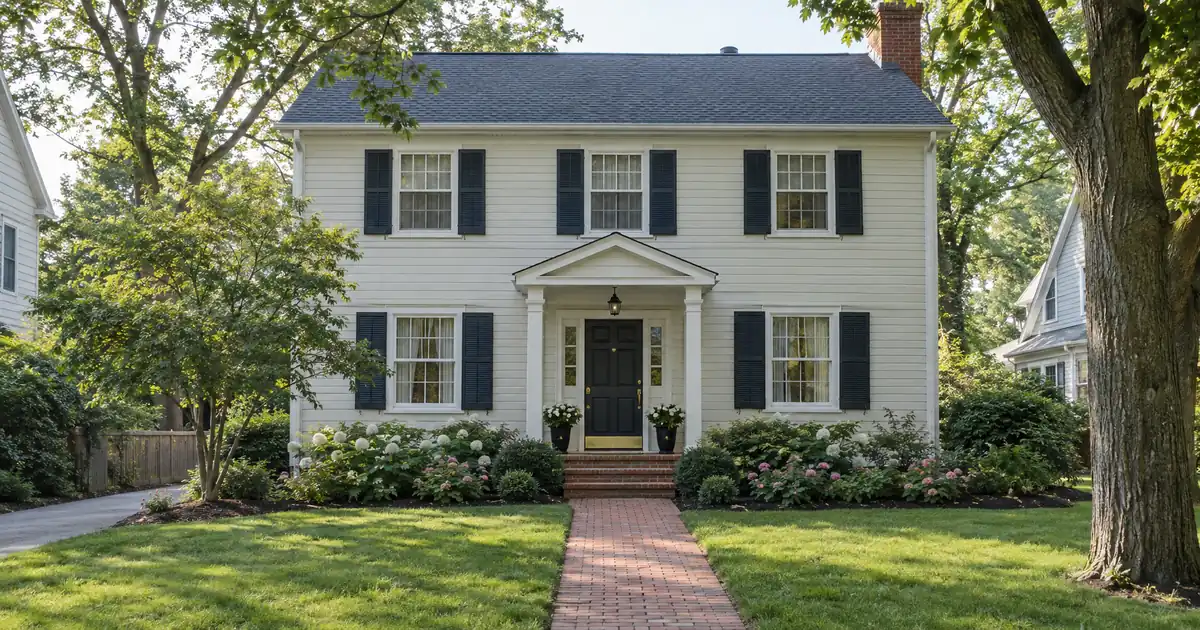
The Quick Read: Yes, when the retirement income is documented and expected to continue. Retirement itself is not a bar, and age cannot be the reason for a denial. The catch is the property type. A conventional cash-out on a second home is capped at 75% LTV, five points below the 80% cap on a primary residence. Income, reserves, credit, and appraised value decide the rest, subject to lender guidelines and full file review.
Does Retirement Stop You From Qualifying?
No. The CFPB says federal credit law bars lenders from discriminating on age. A lender can still weigh income, debts, and credit history. It can also look at how much income you receive and how likely it is to continue. That is a different question from how old you are.
In practice, the file is judged on the same things as any other file: documented income, debt-to-income ratio (DTI), credit, and equity. A retiree with a pension, Social Security, and steady account distributions can build a clean file. A retiree whose income can’t be shown to last will have a harder time.
Across the wholesale programs Lendmire places files with, the retirement files that stall are rarely about age. They stall on paperwork: a benefit letter that doesn’t show the start date, or distributions with no history behind them.
Which Cash-Out Do You Mean?
The phrase covers two different loans, and the answer changes depending on which one you want.
| Option | What it does | Property that carries the loan |
|---|---|---|
| Refinance the home you live in | Pulls equity from your primary home | Primary residence |
| Refinance the second home | Pulls equity from the second home itself | Second home |
Because it is a second home, leverage is lower than on a primary residence. If you only need cash and your primary home has more equity, a primary-residence cash-out may reach further. Lendmire arranges both through its cash-out refinance programs, and the comparison is worth running before you choose.
What Counts as a Second Home?
Occupancy decides the leverage, so the classification matters first. Under Fannie Mae’s occupancy rules, a second home must meet these conditions:
- You occupy it for some part of the year.
- It is a one-unit dwelling.
- It is suitable for year-round use.
- You have exclusive control of it.
- It is not a timeshare or part of a rental pool.
- No management firm controls who occupies it.
Rental income from the property cannot be used to qualify. A property run as a short-term rental through a management company can be reclassified and underwritten under different rules. If that describes your home, say so up front. A wrong occupancy label on the application is a preventable problem.
How Much Equity Can You Reach?
On a one-unit second home, the conventional cash-out cap is 75% of appraised value. On a one-unit primary residence it is 80%. That gap comes from the Fannie Mae Eligibility Matrix, and it applies across the wholesale programs Lendmire works with.
The cap is measured against the appraised value, not what you paid or what you think the home is worth. A full cash-out needs an appraisal. If the value comes in low, the available cash shrinks with it.
Two seasoning rules also apply. The first mortgage being paid off generally must be at least 12 months old, and you must have been on title for six months, with exceptions for delayed financing, inheritance, and legal awards. Fannie Mae’s cash-out refinance rules cover the details.
A paid-off home still counts as cash-out. No existing loan does not turn it into a rate-and-term deal. Retirees who own free and clear are often surprised by this.
How Lenders Read Retirement Income
Retirement income is an accepted source. Fannie Mae’s Selling Guide has a dedicated section for pension, annuity, and retirement income. What the lender needs depends on the income type.
| Income type | Typical proof | History or continuance |
|---|---|---|
| Pension or fixed annuity | Award letter, benefit statement | No minimum history if the payment is fixed |
| Social Security | Award letter, bank statement | Must be expected to continue |
| Variable distributions | Account statements, 1099 | 12 months of receipt |
| Personal annuity, account distributions | Statements, tax return | Expected to last at least three years |
If a pension or annuity starts on or before the first payment date, a benefit statement is required. It must show the income type, amount, frequency, and start date.
For a 401(k), IRA, or Keogh, you need unrestricted access to the funds without penalty. Fannie Mae’s retirement-asset income FAQ states no minimum age for using this income. Inherited IRAs are reviewed case by case.
Some of this income is not taxed. Lenders can add the non-taxable portion back when calculating cash flow. Tax treatment can depend on your situation; borrowers should speak with a qualified tax professional before relying on any deduction or credit.
The Trap: Big Balances, No Paycheck
Here is an edge case that can catch retirees off guard. Qualifying on account balances is limited to purchases and limited cash-out refinances. It does not work for a full cash-out.
A retiree who qualifies only on account balances, with no pension, Social Security, or actual distributions, can’t use that method for a full cash-out. If the loan doesn’t fit those parameters, the lender falls back on standard income: pensions, Social Security, interest and dividends, or documented distributions.
A retiree with a large portfolio and little regular income has two realistic paths. Start taking documented distributions so there is a history, or look at a limited cash-out, which is a different loan. Limited cash-out on a second home reaches 90% LTV on the same matrix, but it only pays off the existing loan and costs, with just incidental cash back. Exact terms depend on the lender’s guidelines, property type, leverage, and a full review of the borrower’s file.
What About FHA and VA Streamlines?
They are not cash-out tools. The FHA Streamline and the VA IRRRL exist to refinance an existing government-backed loan into a better one.
- The FDIC’s summary of the FHA Streamline says it requires an existing FHA mortgage, needs no appraisal, and sets the maximum from the existing balance.
- The FDIC’s summary of the VA rate-reduction loan says it lowers the interest rate on an existing VA loan or moves an adjustable loan to a fixed one.
Neither pulls cash out of a conventional second home. Both need the government loan to already exist.
A Retiree Scenario, in Percentages
Picture a retiree with a one-unit second home, a pension, Social Security, and steady IRA distributions that are documented and unrestricted. The appraisal sets the value. The cash-out loan can reach up to 75% of that value, counting the existing loan being paid off. Every dollar of existing balance comes out of that 75% first. What remains is the cash.
Now check the other limits. DTI must fit the file. Credit must meet the program floor, which starts at a 620 decision score on the wholesale conventional programs. Reserves matter too: automated cash-out files with DTI above 45% need minimum reserves. The new loan replaces the old one, so the monthly payment is likely higher and the term resets.
What decides the outcome is a short list: occupancy classification, appraised value against the 75% cap, DTI, reserves, documented income that will continue, and credit. All of it is subject to lender guidelines and file review, and none of it is a commitment to lend.
Cash-Out Refinance or Another Route?
A cash-out replaces your first mortgage. A home equity loan or HELOC leaves the first mortgage in place. For a retiree with a first mortgage they like, that difference can matter. For a retiree with a paid-off home, a new first mortgage resets everything, and a second lien may be worth comparing.
Lendmire has written on HELOC vs cash-out refinance for a retiree on a second home.
Weigh these before choosing:
- A cash-out resets the amortization clock and likely raises the payment.
- Pricing adjustments apply to cash-out loans. Costs can be rolled into the new balance, which raises what you owe.
- You now carry costs on two properties on fixed income. Stress-test the combined budget.
- Think about heirs. A larger loan means less equity left behind.
What to Gather Before You Apply
- Award letters and benefit statements for Social Security, pension, and annuities
- Account statements showing distributions and access to the funds
- The last tax return, 1099s, or W-2s that report the income
- Proof the second home is not in a rental pool or managed by a firm
- Payoff information on the existing mortgage, with its note date
- Records of when you took title
Clean paper prevents most of the back-and-forth.
Key Terms Defined
DTI (debt-to-income ratio): Your monthly debts divided by your monthly income, which lenders use to judge whether a new payment fits.
LTV (loan-to-value): The loan balance divided by the appraised value of the home.
Cash-out refinance: A new loan larger than the one it replaces, with the difference paid to you.
Limited cash-out (rate-and-term) refinance: A new loan that pays off the old loan and costs, with only incidental cash back.
Seasoning: The minimum time you have held the loan or the title before a cash-out is allowed.
Second home: A one-unit property you occupy part of the year, with no rental pool or management firm controlling occupancy.
Frequently Asked Questions
Does age affect approval?
No. Federal law bars lenders from denying credit because of age. A lender can review the amount of your income and whether it is likely to continue, which is a different test.
Can I qualify with only Social Security and a pension?
Yes, if both are documented and expected to continue. Award letters or benefit statements are the usual proof. DTI, credit, appraised value, and reserves still have to work.
Can I count my IRA or 401(k)?
Documented distributions can count, provided you have unrestricted access without penalty. Variable distributions need a 12-month history. Balances alone do not qualify you for a full cash-out.
Does a paid-off home count as cash-out?
Yes. Taking cash against a home with no mortgage is a cash-out refinance, and the cash-out leverage cap applies. A second home is capped at 75% LTV. Every figure here varies by lender and program — guidelines, property type, leverage, and credit profile all apply.
Can I rent out the second home and count that income?
No. Rental income from a second home can’t be used to qualify. Renting through a pool or management firm can also change the property’s classification.
For your own numbers, request a scenario review with Lendmire.
For current guidelines and terms, see Lendmire’s refinance programs page.
About Lendmire
Lendmire (NMLS# 2371349) is a mortgage brokerage serving homeowners and home buyers in 16 states. FHA, VA, conventional and jumbo purchase and refinance loans are arranged through wholesale lending channels; Lendmire brokers the financing and the lender underwrites each application. Scotsman Guide named Lendmire a Top Mortgage Workplace in both 2025 and 2026.
Get Started
Ready to find the right loan for you?
In about 30 seconds you can review financing options available for your home or investment property. No commitment required.
Informational only. Not a Loan Estimate, approval, or commitment to lend. Program availability and eligibility are subject to lender guidelines, credit approval, property review, and underwriting.
References
1. CFPB: Credit discrimination is illegal
2. Fannie Mae Selling Guide B2-1.1-01, occupancy types
3. Fannie Mae Eligibility Matrix
4. Fannie Mae Selling Guide B2-1.3-03, cash-out refinance transactions
5. Fannie Mae Selling Guide B3-3.4-03, annuity, pension, or retirement income
6. Fannie Mae FAQ on retirement-asset income
7. FDIC’s summary of the FHA Streamline
8. FDIC’s summary of the VA rate-reduction loan
This article is part of Lendmire’s Refinance series — every loan program’s qualification details, guidelines, and scenarios live on the loan options page.
Related reading: How to Buy a Second Home by Cash-Out Refinance With a Low First Mortgage · Cash-Out Refinance DTI for a Retiree Using Assets as Income · How to Qualify for a Cash-Out Refinance as a Retiree on Asset Income
Brandon Miller
Founder & CEO, Mortgage Loan Originator, Lendmire LLC
- Mortgage Loan Originator · NMLS# 1129696 · Verify on NMLS Consumer Access
- North Carolina Real Estate Broker · License# 343312 · Verify on NCREC
- North Carolina Insurance Producer · License# 19053198 · Property, Casualty, Life, Health · Verify on NAIC SBS
- Lendmire LLC · Firm NMLS# 2371349 · Verify firm licensure
Disclosures. The information presented in this article is general market commentary, not financial, legal, or tax advice. Lendmire is a mortgage brokerage (NMLS# 2371349) — not a direct lender or depository institution — and loan placement is subject to lender underwriting. Nothing in this content represents a commitment to lend. Loan terms, pricing, and program availability vary based on borrower qualifications, property characteristics, and state of subject property, and are subject to change at any time. Lendmire complies with Equal Housing Opportunity requirements. Consumer access: nmlsconsumeraccess.org.