
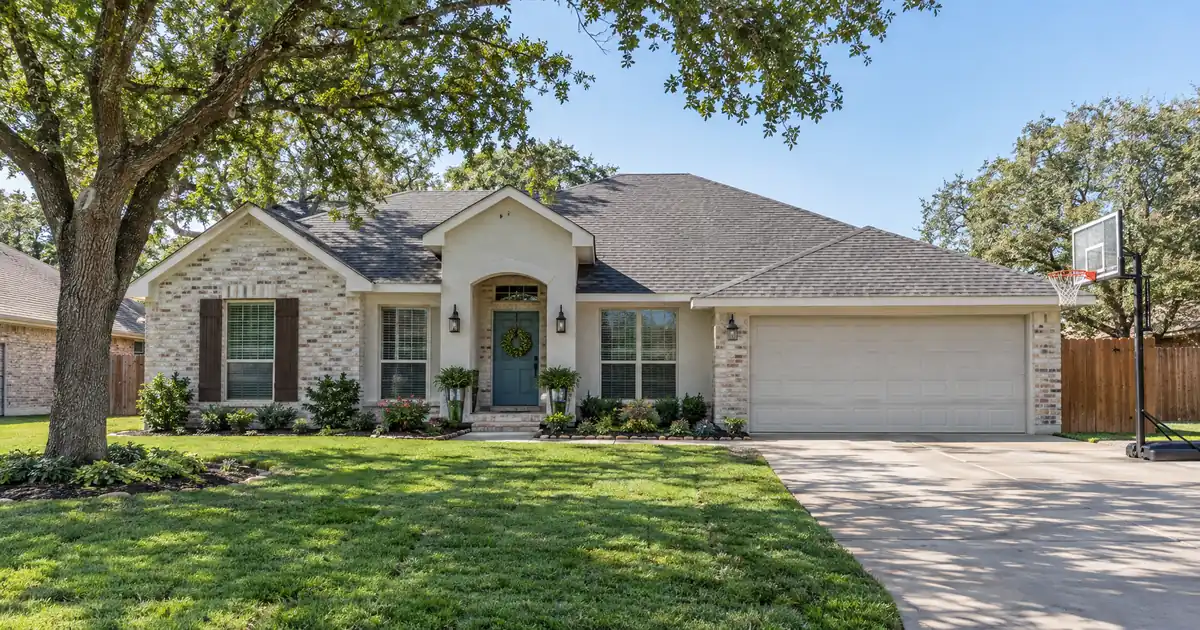
The Quick Read: FHA does not offer a cash-out refinance on a true second home, even when that home is not a Texas homestead. Texas’ home-equity limits attach only to homestead property, so the state rules fall away. FHA has its own gate, though, and it requires the home to be your principal residence. Occupancy decides the answer, not the Texas label.
Why Two Different Questions Get Two Different Answers
Two separate rulebooks are in play, and people blend them. One is Texas law. The other is FHA’s program rules.
Texas law protects a homestead, which is the home where you actually live. The Texas Constitution’s home-equity provision, Section 50(a)(6), sets the limits on cash-out loans against that homestead. A lake house or hill-country cabin that you use part of the year is not your homestead, so those limits do not govern a loan on it. That part of the common belief is correct.
The second half of the belief is where people go wrong: “Texas’ tough rules don’t apply, so FHA will do it.” FHA does not care whether Texas calls the property a homestead. FHA cares whether you live there. HUD’s Handbook 4000.1 limits FHA programs to one- to four-unit properties that are owner-occupied principal residences, except as otherwise stated. A second home fails that test before Texas law ever comes up.
Here is a plain way to hold it. Texas homestead rules are a set of extra limits on one kind of home. FHA occupancy rules are a door that only one kind of home can walk through. Skipping the Texas limits does not get a second home through the FHA door.
Key Terms Defined
Principal residence: the home where you keep your permanent place of abode and typically live most of the calendar year. HUD’s glossary adds that a person can have only one at a time.
Second home: a home you own and use part of the year, in addition to your main home. It is not your principal residence.
Homestead: the home protected under the Texas Constitution, generally the home of a family or single adult. Texas’ home-equity limits attach to it.
Cash-out refinance: a new, larger mortgage that pays off your current loan and hands you the difference in cash.
LTV (loan-to-value): the loan balance divided by the home’s appraised value. An 80% LTV leaves you with 20% equity.
Seasoning: the time you must own and occupy a home before a specific loan type is open to you.
How FHA Underwrites a Cash-Out, Step by Step
Across the wholesale programs Lendmire places FHA files with, the sequence is consistent. Each step can end the conversation, so the order matters.
Step 1: Occupancy classification. The first question is whether the property is your principal residence. For a true second home, the answer is no, and the FHA cash-out path closes. This comes first because nothing else on the file can fix it.
Step 2: Ownership and occupancy history. Where the home is your principal residence, the FHA cash-out reaches 80% LTV on a home you have owned and occupied for 12 months before the case number. The case number is the FHA identifier assigned when the loan is set up. Lenders typically look for evidence of occupancy, such as utility bills or employment records tied to the address.
Step 3: Payment history. Lenders review how you have paid the mortgage you are refinancing. A clean recent record helps. Late payments can raise questions or stop a file.
Step 4: Appraisal and the 80% test. An FHA appraisal sets the home’s value. The new loan, plus any other lien that stays on the home, must fit within 80% of that value. HUD cut the cash-out limit from 85% to 80% for case numbers assigned on or after September 1, 2019, to leave more equity in the home and align FHA with the government-sponsored enterprises. Anyone quoting 85% is working from old information.
Step 5: Credit and income. Credit, income, and debt ratios then run through automated or manual underwriting. The base pair of ratios is 31/43 (housing cost and total debt as a share of income) with no compensating factors. Documented compensating factors can reach 40/50 at the top tier, and the automated finding governs most files. Pricing and available terms vary by lender, borrower profile, property type, and full underwriting review.
Step 6: Mortgage insurance. FHA charges an upfront premium of 1.75% of the base loan, which is financed, plus an annual premium between 0.15% and 0.75% of the balance. The annual figure depends on term, loan amount, and LTV. On a thirty-year loan above 90% LTV, the annual premium lasts for the term. At or below 90%, it ends after eleven years. A cash-out loan is a new, larger loan, so the premiums apply to the whole new balance. County loan limits also apply and change each year. Terms depend on the lender’s guidelines, the property type, the leverage, and a full review of the credit profile.
Everything above is subject to lender guidelines and full file review.
What Decides the Outcome
Five questions settle an FHA cash-out. They run in this order:
1. Is the property your principal residence?
2. Have you owned and occupied it for 12 months?
3. Is your payment history clean?
4. Does the new loan stay within 80% of appraised value?
5. Do your credit and income qualify?
A “no” on the first question ends the FHA path. It does not matter whether Texas treats the property as a homestead. It does not matter how much equity you have.
Homestead vs. Non-Homestead: Side by Side
| Question | Texas homestead | Non-homestead second home |
|---|---|---|
| Texas home-equity limits apply? | Yes | No |
| Does FHA cash-out fit? | Only if it’s your principal residence | No, occupancy fails |
| Typical path | Rules of Section 50(a)(6) | Conventional lender guidelines |
| Who sets the occupancy test? | Texas law and the lender | The lender and the loan program |
Texas homestead law is its own world. Freddie Mac’s Guide describes a Texas Equity Section 50(a)(6) mortgage as a first-lien home-equity refinance secured by homestead property located in Texas. That definition is why the state rules and a second home never overlap. The Texas Constitution’s homestead text sits in Article XVI, Section 50 for anyone who wants to read it.
Where the General Rule Breaks
The rule is simple. The edges are where borrowers get tripped up.
“Not eligible” versus “not subject to.” Some sources say a second home is “not eligible” for cash-out. That is loose. Texas homestead rules simply don’t govern it. Cash-out loans on second homes exist in the conventional market. What does not exist is an FHA cash-out on that property.
The one-principal-residence limit. HUD’s FHA Resource Center lists the narrow cases where someone with an existing FHA mortgage can get another FHA loan on a new principal residence. One example is an employment-related move to a new principal residence more than 100 miles away. Another is an increase in family size. Notice the wording: these are about a new principal residence. They do not make a retained second home eligible for FHA cash-out.
A former principal residence. Say you lived in a house for years, then moved and kept it as a second home. The 12-month occupancy test looks back from the case number. If the house has stopped being your principal residence, it no longer meets the owner-occupied requirement.
HUD’s “Secondary Residence” term. The handbook’s glossary names a Secondary Residence concept. It is narrow, needs HUD approval, and is not meant for vacation or recreational homes. Do not assume it opens cash-out on a getaway property.
Military and inherited homes. The handbook has occupancy accommodations for some of these situations. They are specific, so a lender must review your facts. Treat them as a conversation to have, not a loophole to plan around.
Investment properties. Non-owner-occupied investment properties are outside FHA entirely.
Texas “homestead” is not the property-tax exemption. The constitutional forced-sale protection and the property-tax homestead exemption use different tests, as a Texas law firm’s glossary notes. Having one does not prove the other. Tax treatment can depend on your situation; borrowers should speak with a qualified tax professional before relying on any deduction or credit.
A Straight Word on Occupancy Honesty
Some borrowers are tempted to call a second home their principal residence to reach FHA terms. Skip it. Misstating how you will use a property is treated as mortgage fraud, as Nolo’s legal guide explains. The consequences can be serious, and the lender will ask you to sign an occupancy statement.
Be accurate about the label. If a property is a second home, the right question is which loan type fits that property, not how to make it look like something else.
What a Texas Second-Home Owner Can Actually Do
Occupancy decides the leverage a lender will offer. FHA is built for the home you live in. A second home belongs to a different set of loan types.
Consider three owners.
Owner one has a lake house only used on weekends. FHA cash-out is closed. The lender will treat it as a second home under conventional guidelines. Texas’ homestead limits do not apply to it, but the lender’s own occupancy-based limits do. Those vary by lender.
Owner two lives in a Texas house and also owns a second home. If the owner wants cash from the home they live in, an FHA cash-out may be possible, subject to the 12-month occupancy test and the 80% LTV cap. Texas homestead rules then apply to that main home. The second home stays out of it. The cash can go wherever the owner chooses. The collateral is what matters, and the collateral must be the principal residence.
Owner three used to live in the home. After moving, the owner turned it into a second home. The FHA cash-out path has closed because the home is no longer the principal residence.
If the loan on your main home is the one you want to tap, the Texas rules shape the structure.
What the Decision Looks Like in Practice
Start with classification, not products. A homeowner who thinks “FHA cash-out on my hill-country house” is available may build a plan around a loan that does not exist for that property. Spend the first conversation on which bucket the home sits in: principal residence, second home, or investment.
Then weigh the cost of the equity you want. An FHA cash-out is a new, larger loan with mortgage insurance on the whole balance. The 80% cap leaves at least 20% equity in the home. On your actual homestead, Texas adds its own cost and timing limits on top. On a second home, those Texas limits do not apply, but that does not make FHA available. It only means a conventional lender faces no homestead rules on that property.
If your primary home is the better source of equity, the FHA cash-out refinance program is the place to compare it. If you are really looking at funding something on a second home, you will want to compare conventional options instead. Lendmire brokers FHA, VA, conventional, and jumbo loans through wholesale lenders, so the comparison can run across programs.
Common Mistakes
- Assuming “not a homestead” means FHA works. It does not. FHA’s occupancy gate is separate.
- Quoting 85%. The cash-out cap is 80%.
- Counting on a second FHA loan. HUD allows another FHA loan only for a new principal residence, under listed exceptions.
- Treating ownership as enough. The 12-month test is about owning and living there.
- Mixing up tax and lending labels. Your tax filing does not set your occupancy for the lender.
Frequently Asked Questions
Can I get an FHA cash-out refinance on a Texas vacation home?
No. FHA programs are limited to owner-occupied principal residences, and a vacation home is a second home. Texas homestead status does not change that. A conventional lender is the usual route for cash from a second home.
Do Texas home-equity rules apply to a second home that isn’t a homestead?
No. The Texas Constitution’s home-equity provision, Section 50(a)(6), governs homestead property. A non-homestead second home sits outside it. A lender will still apply its own guidelines for that occupancy type.
How much equity does an FHA cash-out leave in my home?
At least 20%. The FHA cash-out reaches 80% LTV on a principal residence you have owned and occupied for 12 months before the case number. Any other lien that stays on the home counts toward that limit. The exact numbers vary by lender and program and follow a full review of property, leverage, and credit.
Can I keep my FHA loan and take a second FHA loan on a vacation home?
Not in the ordinary case. HUD allows another FHA loan only on a new principal residence, under specific circumstances like a job-related move more than 100 miles away. A vacation home does not fit those exceptions.
What if my second home used to be my main home?
The occupancy test looks back from the FHA case number. If the home has stopped being your principal residence, it no longer meets the owner-occupied requirement. A lender will review your facts to confirm.
If you are weighing a cash-out refinance against keeping the loan you have, Lendmire can help you compare the programs and the equity each one reaches. Every program figure here is subject to lender guidelines and full file review, and nothing in this piece is a commitment to lend.
For your own numbers, request a scenario review with Lendmire.
About Lendmire
Lendmire (NMLS# 2371349) is a mortgage brokerage serving homeowners and home buyers in 16 states. FHA, VA, conventional and jumbo purchase and refinance loans are arranged through wholesale lending channels; Lendmire brokers the financing and the lender underwrites each application. Scotsman Guide named Lendmire a Top Mortgage Workplace in both 2025 and 2026.
For the program’s current guidelines, see FHA loan programs.
Get Started
Ready to find the right loan for you?
In about 30 seconds you can review financing options available for your home or investment property. No commitment required.
Informational only. Not a Loan Estimate, approval, or commitment to lend. Program availability and eligibility are subject to lender guidelines, credit approval, property review, and underwriting.
References
1. HUD Handbook 4000.1 (drafting table extract)
2. HUD press release on the FHA cash-out LTV change
3. Freddie Mac Guide: Texas Equity Section 50(a)(6) Mortgage
4. Texas Constitution, Article XVI, Section 50
5. HUD FHA Resource Center: more than one FHA loan
6. Kraus Law homestead glossary
This article is part of Lendmire’s FHA Loan series — every loan program’s qualification details, guidelines, and scenarios live on the loan options page.
Related reading: How to Get an FHA Cash-Out on an Inherited Home After Probate · How to Close a Texas FHA Cash-Out on an Existing FHA Loan · FHA Cash-Out Annual MIP Rules With an Existing FHA Loan
Brandon Miller
Founder & CEO, Mortgage Loan Originator, Lendmire LLC
- Mortgage Loan Originator · NMLS# 1129696 · Verify on NMLS Consumer Access
- North Carolina Real Estate Broker · License# 343312 · Verify on NCREC
- North Carolina Insurance Producer · License# 19053198 · Property, Casualty, Life, Health · Verify on NAIC SBS
- Lendmire LLC · Firm NMLS# 2371349 · Verify firm licensure
Important disclosures. Lendmire (NMLS# 2371349) is a licensed mortgage brokerage. Lendmire is not a direct lender, depository institution, or financial advisor. All loan inquiries are subject to lender underwriting; this article does not constitute a commitment to lend. Rates, terms, and program guidelines are subject to change without notice and vary by borrower profile, property type, and state. Information in this article is general in nature and is not financial, legal, or tax advice. Equal Housing Opportunity. NMLS Consumer Access: nmlsconsumeraccess.org.