
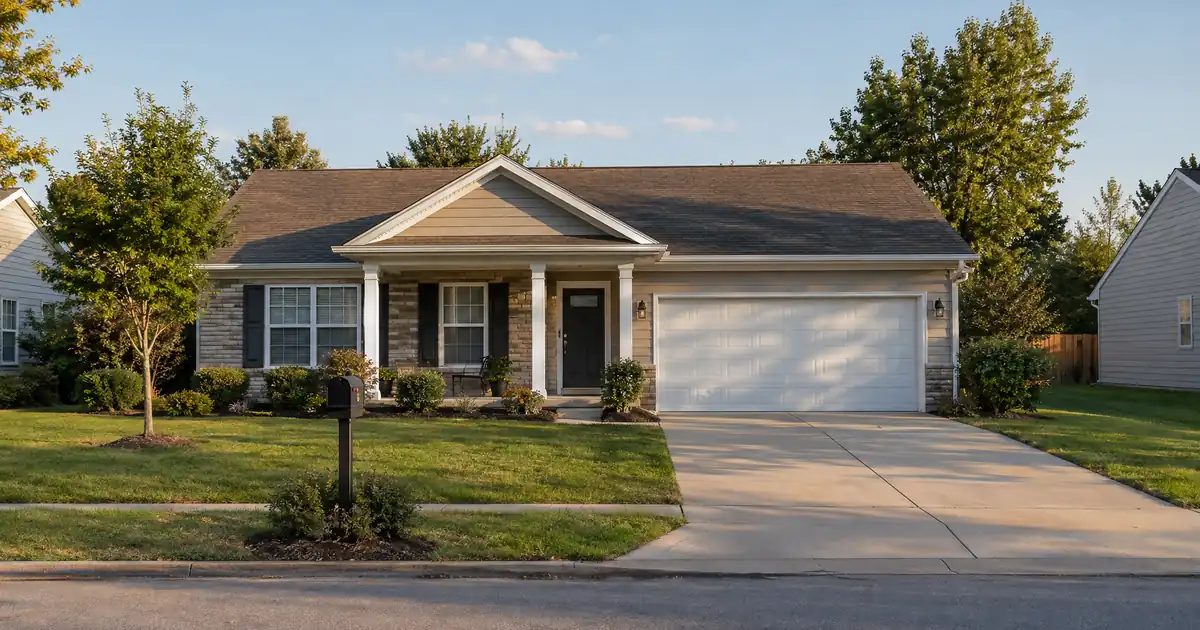
The Quick Read: one sibling takes a new loan on the shared home and uses it to pay off the old mortgage and the other siblings’ equity shares. The keeping sibling must qualify alone, on their own income, credit and debts. A signed written agreement, clean title, and an appraisal that supports the buyout number complete the file. The keeper gets no cash back for themselves, and the agencies label the loan differently depending on which one buys it.
What a Sibling Buyout Refinance Actually Is
Picture three siblings who inherited a house, or bought one together. One wants to keep it. The other two want their share in cash.
The keeper can’t just write checks. So they take a new mortgage on the house. That loan pays off whatever is owed, covers closing costs, and sends the buyout money to the departing siblings. Afterward, one name is on the title and one name is on the loan.
Lenders see this as a refinance, not a purchase. Lendmire’s cash-out refinance programs are one place buyers start. But the label on the loan matters more than the product name, and that label is where most confusion begins.
Some websites claim conventional lenders can’t do this at all. That’s wrong. The agencies that set conventional rules wrote specific provisions for buying out a co-owner. What’s true is that the rules are narrow, the paperwork is strict, and the appraisal can cap what you can pay out.
Key Terms Defined
Cash-out refinance: a new mortgage larger than the old one, with the difference paid out as cash. On a one-unit primary residence, conventional leverage tops out at 80% of the home’s value.
Limited cash-out refinance: a refinance that pays off the old loan and closing costs, with little or no cash to the borrower. Leverage can run higher than on a standard cash-out. On a one-unit primary residence it is 95%, or 97% in the narrow case where the existing loan is agency-owned and the first-time-buyer program allows it.
Seasoning: the waiting period the rules require before a loan or ownership counts as established. For a standard cash-out, the loan being paid off must be at least 12 months old and a borrower must have been on title for 6 months. There are exceptions for inheritance and legal awards.
Buyout agreement: the written document, signed by everyone with an ownership interest. It states what is being transferred and where the loan proceeds go.
Equity share: each owner’s slice of the home’s value after the mortgage is subtracted. The appraisal sets the value that the shares come from.
Debt-to-income ratio (DTI): your monthly debts divided by your monthly income. On most automated files the ceiling is 50%.
How the Loan Is Underwritten, Step by Step
Underwriting is the lender’s review of whether you qualify. Here is the order it follows on a buyout.
Step 1: Title and ownership are proven
Everyone on title is identified. If the home is inherited, the estate must be settled enough that title is clear. Lenders need to see how title was acquired, such as a will, trust document or court order.
This is a common stall point. If probate isn’t finished, nobody can sign a deed, and a lender can’t take a first lien. Fixing that comes before any loan work.
Step 2: The buyout agreement is signed
All parties sign a written agreement. Fannie Mae’s Selling Guide says it must state the terms of the transfer and how the refinance proceeds will be paid out. Freddie Mac’s guide also wants a copy in the file.
A handshake deal won’t work. Neither will a text thread that says “$X sounds fair.” The agreement is the lender’s proof that the money leaving at closing is going where everyone agreed.
Step 3: The program path is chosen
The two agencies handle a buyout differently.
- Fannie Mae treats it as a limited cash-out refinance. The guide requires a period of joint ownership before the new loan funds, and it excuses that proof for a recent inheritance. Read the live guide for the exact length.
- Freddie Mac calls it a special purpose cash-out refinance. It must meet the leverage limits for cash-out loans, with the special provisions applied on top.
The practical gap is leverage. Limited cash-out treatment can allow more than the 80% one-unit cap on a standard cash-out. Freddie Mac’s version is held to the cash-out limits. The agencies update their guides, so the live version should be checked before anyone relies on a detail.
Step 4: The appraisal sets the ceiling
A new appraisal is part of the process. Freddie Mac’s cash-out product page says a new appraisal and inspection report are required. That value decides the largest loan the lender can offer, which decides how much equity can be paid out.
An online estimate doesn’t count here. Nor does a number the siblings picked over dinner.
Step 5: You qualify alone
The buyer’s income, assets, credit and debts are verified. The agencies’ guidance is plain that the buyer must qualify for the mortgage on their own. The federal ability-to-repay rule works the same way: lenders must make a good-faith determination that you can repay, and they document income, assets, employment, credit history and monthly expenses (CFPB).
Across the wholesale conventional programs Lendmire places files with, the entry point is a 620 decision score. Most automated approvals cap total debt ratio at 50%. Manually underwritten files run tighter, at 36% or 45% depending on score and reserves. All of it is subject to lender guidelines and full file review.
Two things people assume wrongly:
- Your sibling’s equity share isn’t your income.
- Your inheritance isn’t automatically assets the lender can count toward the loan.
Step 6: Closing moves the money
The settlement statement shows the payoff of existing liens, the closing costs, and the buyout payment to the departing sibling. The departing sibling’s interest is conveyed to the keeper at or before closing. The keeper receives no cash.
What Decides the Outcome
Four things decide most buyouts:
1. The appraised value against the buyout amount.
2. The buyer’s income and debt ratio on one paycheck.
3. Whether the ownership history fits the program being used.
4. Whether the agreement and title are clean.
Credit scores matter, but the appraisal and the shortfall can derail a buyout just as easily as credit does. If a shared home appraises for less than the family hoped, the math can stop working.
The Requirements at a Glance
| Requirement | Why the lender wants it | Common sibling snag |
|---|---|---|
| Clear title | Lender needs a first lien | Probate not finished |
| Signed agreement | Proves where proceeds go | Siblings disagree on the number |
| Joint-ownership history | Program test for a buyout | Owned together under the minimum period |
| New appraisal | Sets maximum loan | Value comes in low |
| Solo qualification | Buyer repays the loan | Counting on a sibling’s share as income |
| Occupancy fit | Decides leverage | Home is not the buyer’s primary residence |
On occupancy, one sentence settles it: leverage depends on how the home is used, so a second home or rental runs at 75% on a cash-out, not the primary-residence figures above.
A Three-Sibling Example in Percentages
These are illustrative assumptions, not market data. Say three siblings own a one-unit home equally, and one wants to keep it as a primary residence. The appraised value is 100%.
Scenario A: a small mortgage. The existing loan is 30% of the value. That leaves 70% in equity. Two siblings each own a third of that, so the buyout is about 46.7% of value. The new loan is roughly 76.7%, plus closing costs. Against the 80% cap on a standard one-unit cash-out, that fits with about three points of room for costs.
Scenario B: a larger mortgage. The existing loan is 50% of value. Equity is 50%, so the buyout is about 33.3%. The new loan is about 83.3%, plus closing costs. That’s over the 80% cap by more than three points.
The gap is real. Here are the ways people close it:
- A sibling accepts a slightly smaller payout, or part of it as a promissory note.
- The siblings do a partial buyout, with one staying on title.
- The keeper brings cash to closing from savings.
- The appraisal is reviewed with the lender if the value looks off.
- The program path changes, if the guideline treatment allows higher leverage.
Which of these applies depends on the file. Higher leverage may bring mortgage insurance, which is required above 80% loan-to-value. You can ask to cancel it at 80% of the original value with a good payment history. The servicer must end it automatically at 78%.
Where the General Rule Breaks
Inherited homes
Heirs get relief from the usual waiting periods. Fannie Mae excuses the joint-ownership proof for a recent inheritance, and its cash-out topic carries inheritance and legal-award exceptions for the ownership rules. Freddie Mac says its cash-out product has no seasoning requirement for inherited properties.
Relief on seasoning doesn’t excuse a missing deed. Clear title still gates the loan.
Siblings who didn’t inherit and haven’t co-owned long enough
If the buyout doesn’t meet the joint-ownership test and nobody inherited, limited cash-out treatment may not be available. The loan may then fall back to standard cash-out, with the 6-month title and 12-month loan-age rules. Confirm with the lender before anyone commits to a number.
The 12-month loan-age rule
This one trips people up. The 12-month rule on the age of the loan being paid off doesn’t apply when you buy out a co-owner under a legal agreement. Fannie Mae’s cash-out topic says so, and so does Freddie Mac’s bulletin for special purpose loans. It’s a different test from the joint-ownership period, so don’t mix them up.
Occupancy and “jointly lived there”
Freddie Mac asks for documentation that the borrower and co-owner lived there together as a primary residence, “if applicable.” Fannie Mae’s buyout text speaks of joint ownership rather than occupancy. Don’t assume either way. Ask the lender how the occupancy history on your file will be read.
Higher debt ratios and reserves
Fannie Mae’s cash-out topic adds a reserves requirement on certain higher-ratio automated files. It’s unclear whether that applies to a buyout classed as limited cash-out. That’s a question for the lender, not a reason to panic.
Existing second liens and manufactured homes
Freddie Mac allows paying off junior liens as part of this loan. Manufactured homes follow separate leverage rules.
A free-and-clear home
If the house has no mortgage, a new loan on it is generally treated as cash-out under Freddie Mac. How a buyout fits within that depends on the special purpose provisions, so ask.
Mistakes That Sink Buyouts
Offering your siblings a number before you know what you can borrow. Get the appraisal and a pre-approval first. A figure you can’t finance becomes a family argument.
Assuming a quitclaim deed fixes everything. A quitclaim changes title, not the loan. The departing sibling usually stays liable on the old note until it’s paid off. This is general broker knowledge, not an agency rule, but it’s why the lender needs to be in the room.
Planning to pull repair money out of the same loan. The borrower who takes sole ownership can’t receive proceeds on the buyout. Budget for repairs separately.
Counting a share or inheritance as income. It isn’t. Underwriting looks at verified income.
Before You Offer Your Siblings a Number
- Get a pre-approval based on your income alone.
- Order the appraisal and read the value honestly.
- Gather the existing loan statement and a payoff figure.
- Confirm title status with the estate attorney or title company.
- Draft the written agreement with every sibling’s name and share.
- Ask whether a tax professional should weigh in. Tax treatment can depend on your situation; borrowers should speak with a qualified tax professional before relying on any deduction or credit.
Documents lenders usually ask for
- Death certificate, will, trust paperwork or court order for an inherited home.
- The signed buyout agreement.
- Pay stubs, traditional personal-income documentation or other income proof, and bank statements.
- The current mortgage statement and homeowners insurance.
- Government ID for each person signing.
Other Ways to Fund a Buyout
Cash-out refinance isn’t the only road. Here’s how the options compare.
| Option | Best fit | Catch |
|---|---|---|
| Cash-out refinance | You have equity and qualify alone | Leverage cap and appraisal limit it |
| Purchase with gift of equity | Siblings want to sell part of equity as a gift | Needs a sale structure and its own rules |
| Estate or probate loan | Title isn’t settled yet | Short-term, often a second loan later |
| Note from siblings | Siblings agree to be paid over time | Siblings stay creditors on the house |
The decision rule is simple. If title is clean and you qualify alone with enough equity, a refinance is usually the cleanest path. If title is stuck or the numbers fall short, one of the others may fit better.
Closing Day: What Happens in What Order
1. The lender and title company confirm payoff amounts and the buyout agreement.
2. Everyone signs the loan documents, and the departing siblings sign the deed.
3. The new loan funds and pays off the old mortgage.
4. Closing costs are paid from the proceeds or by the buyer.
5. The buyout payments go to the departing siblings.
6. The new deed is recorded, and title insurance reflects the new owner.
On a consumer mortgage like this, you’ll receive a Loan Estimate after applying and a Closing Disclosure before closing. Compare them line by line.
Frequently Asked Questions
Can I do this before probate closes?
Usually not directly. A lender needs clear title and the authority to place a lien, so probate or trust administration generally has to reach the point where you hold title. An estate or probate loan is sometimes used in the gap, which means a second loan and a second set of costs.
Is a sibling buyout treated as a purchase or a refinance?
A refinance, in most cases. The existing owner stays an owner and takes a new loan, so it isn’t a sale to a stranger. The label under Fannie Mae is limited cash-out, and under Freddie Mac it’s special purpose cash-out. The label changes the leverage you can reach.
What if my credit or income can’t carry the loan alone?
The buyer must qualify on their own, and a sibling’s share doesn’t count as income. Some borrowers add a qualified co-borrower, build the file over time, or restructure the deal with a partial buyout or a note. A lender can tell you which of these fits your file, subject to lender guidelines.
Can I take extra cash for repairs in the same loan?
No. The borrower taking sole ownership can’t receive proceeds from the buyout loan. The money goes to the payoff, closing costs and the buyout. Plan repair money separately.
Does a low appraisal kill the deal?
It can shrink it. A lower value cuts the maximum loan, and that can leave the buyout short of what the siblings agreed. The fixes are a smaller payout, a note, a partial buyout, or cash at closing.
If You’re Weighing Your Options
If you are weighing a cash-out refinance against keeping the loan you have, Lendmire can help you compare the programs and the equity each one reaches. For the leverage numbers behind your file, see Lendmire’s piece What Is The Maximum LTV For A Conventional Cash Out Refinance?. Every figure here is subject to lender guidelines and full file review, and nothing here is a commitment to lend.
For your own numbers, request a scenario review with Lendmire.
About Lendmire
Lendmire is a mortgage brokerage (NMLS# 2371349) licensed for consumer mortgage lending in 16 states, arranging FHA, VA, conventional and jumbo purchase and refinance loans through a wholesale lending network. Eligibility is determined by the lender on each file. Scotsman Guide named Lendmire a Top Mortgage Workplace in both 2025 and 2026.
For the program’s current guidelines, see conventional loan programs.
Get Started
Ready to find the right loan for you?
In about 30 seconds you can review financing options available for your home or investment property. No commitment required.
Informational only. Not a Loan Estimate, approval, or commitment to lend. Program availability and eligibility are subject to lender guidelines, credit approval, property review, and underwriting.
References
1. Fannie Mae Selling Guide: Limited Cash-Out Refinance Transactions
2. Freddie Mac Guide: Special Purpose Cash-Out Refinance Mortgages
3. Freddie Mac: Cash-Out Refinance Product Page
4. CFPB: What Is the Ability-to-Repay Rule?
5. Fannie Mae Selling Guide: Cash-Out Refinance Transactions
This article is part of Lendmire’s Conventional Loans series — every loan program’s qualification details, guidelines, and scenarios live on the loan options page.
Related reading: Can a Homeowner Do a Conventional Cash-Out Refinance in Six Months? · Conventional Cash-Out Refinance Requirements for Buying Out Your Spouse · Conventional Cash-Out Refinance for the Lock-in Homeowner
Brandon Miller
Founder & CEO, Mortgage Loan Originator, Lendmire LLC
- Mortgage Loan Originator · NMLS# 1129696 · Verify on NMLS Consumer Access
- North Carolina Real Estate Broker · License# 343312 · Verify on NCREC
- North Carolina Insurance Producer · License# 19053198 · Property, Casualty, Life, Health · Verify on NAIC SBS
- Lendmire LLC · Firm NMLS# 2371349 · Verify firm licensure
Legal disclosures. Lendmire (NMLS# 2371349) is a state-licensed mortgage brokerage that arranges financing through wholesale lender relationships. Lendmire is not a direct lender, depository institution, or registered financial advisor. The discussion above is general informational content about real estate financing — it is not financial, legal, or tax advice, and readers should consult licensed professionals for guidance on their individual circumstances. Loan inquiries are subject to lender underwriting; this article does not represent a commitment to lend. Loan terms, rates, and qualification standards vary by borrower, property, and state, and are subject to change at any time. Equal Housing Opportunity. NMLS Consumer Access: nmlsconsumeraccess.org.