
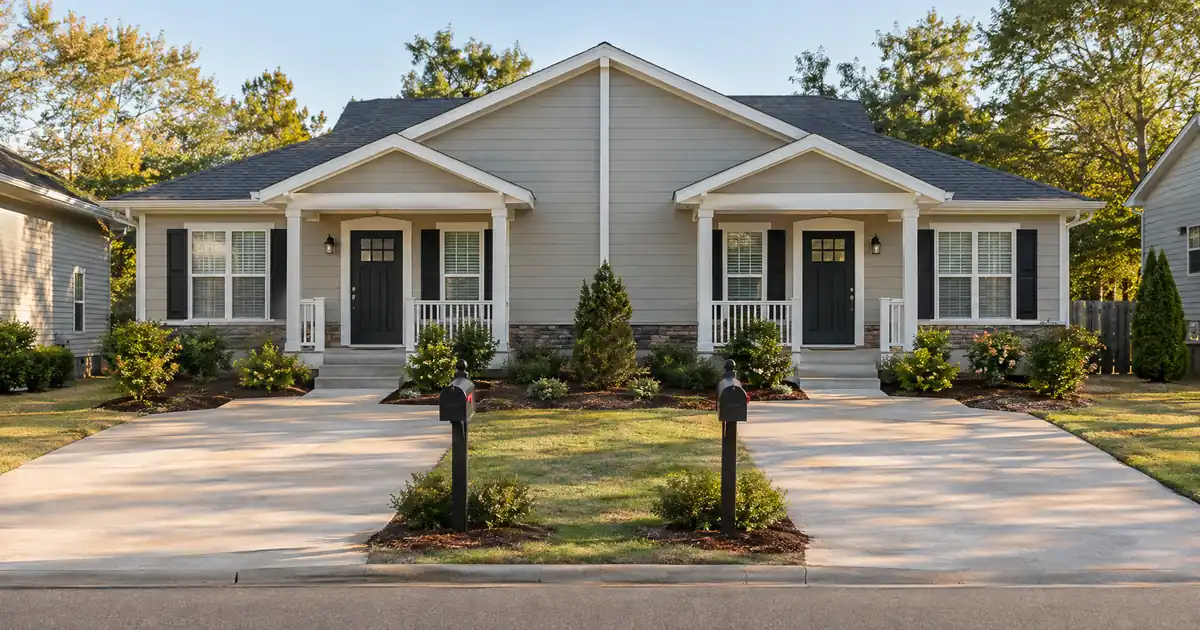
The Quick Read: On a conventional cash-out refinance of a duplex you live in, plan on six months of reserves. The unit count triggers that requirement on its own, even with a low debt-to-income ratio. A one-unit home you live in usually needs none unless DTI is above 45%. Reserves are measured in months of the full new housing payment, and the cash you pull out in the refinance generally does not count toward them. All of this is subject to lender guidelines and full file review.
Why Does a Duplex Need Reserves When a Single-Family Home Often Doesn’t?
A duplex you live in carries a six-month reserve requirement because of the number of units, not because of anything in your credit file. Fannie Mae’s Selling Guide on minimum reserves says required reserves vary with the transaction, occupancy, unit count and the number of other financed properties. It requires six months for a two- to four-unit principal residence. It also requires six months for an investment property and for a cash-out refinance with DTI above 45%. The same guide says there is no minimum reserve for a one-unit principal residence. The exact numbers vary by lender and program and follow a full review of property, leverage, and credit.
That contrast is the core of this topic. Two borrowers can have the same credit, income and equity. One owns a single-family home and one owns a duplex. They can face very different post-closing cash requirements.
The logic is simple. A lender sees a two-unit property as carrying more operating risk. There are two sets of systems, and one unit may sit empty. Reserves are the lender’s cushion against that. This can come as a surprise to duplex owners who have only heard “primary homes don’t need reserves.”
Lendmire is a mortgage broker licensed for consumer lending in 16 states. It arranges conventional loans through wholesale lenders and does not lend directly. The mechanics below apply to the cash-out refinance programs it works with, and every figure is subject to lender guidelines.
What Are Reserves in Plain Terms?
Reserves are the liquid assets you still own after the loan closes. Freddie Mac’s Guide defines them as the borrower’s assets remaining after the mortgage closes. They are counted in months of the new monthly housing payment.
That payment includes:
- principal and interest
- hazard insurance
- real estate taxes
- mortgage insurance, where it applies
- HOA dues, where they apply
- payments on any secondary financing
So “six months” means six times the full new payment on the duplex, taxes and insurance included. It does not mean a fixed dollar amount. A bigger cash-out loan creates a bigger payment, which creates a bigger reserve target.
Reserves are separate from the funds you need to close. Funds to close come out of your assets first. What is left is what gets measured as reserves. Keep that order in mind when you check your balances.
Key Terms Defined
Reserves: Verified liquid or near-liquid assets left over after closing, measured in months of the new housing payment.
Cash-out refinance: A new, larger mortgage that pays off the current one and gives you the difference as cash.
DTI (debt-to-income ratio): Your monthly debts, including the new housing payment, divided by your gross monthly income.
AUS (automated underwriting system): The software, Desktop Underwriter at Fannie Mae or Loan Product Advisor at Freddie Mac, that issues findings stating required reserves and DTI.
Seasoning: The minimum time you have held the property or the existing mortgage before a cash-out is allowed.
Principal residence: The home you occupy as your main address. In a duplex, that means you live in one of the units.
How Is a Duplex Cash-Out Underwritten, Step by Step?
The process runs in a set order, and reserves show up in the middle of it.
1. Place the transaction. You live in one unit of a two-unit property and take cash out. That puts the file in the two- to four-unit principal residence row, which has its own leverage and reserve treatment.
2. Check seasoning. The first mortgage being paid off must be at least 12 months old, measured note date to note date. At least one borrower must have been on title for six months before the new loan is disbursed. Fannie Mae’s cash-out rules list exceptions for inherited property and for property legally awarded in a divorce, separation or dissolution of a domestic partnership. Freddie Mac’s cash-out section also requires every borrower to occupy a primary residence on a cash-out.
3. Order the right appraisal. A two-unit property you live in is normally appraised on the small residential income property form, Form 1025. Fannie Mae’s appraisal guidance allows the single-family Form 1004 for a two-unit only in narrow cases. One is where each unit is occupied by a co-borrower as a principal residence. The other is where the legal second unit’s value is relatively insignificant.
4. Let value set the leverage. For a conventional cash-out, the cap is 80% LTV on a one-unit principal residence and 75% on a two- to four-unit principal residence. The duplex cap is lower, so it limits how much cash you can take regardless of reserves. The Fannie Mae Eligibility Matrix carries these caps and the manual-underwriting reserve rows. Final terms depend on the lender’s guidelines, the property type, and the borrower’s complete credit picture.
5. Run the AUS. The findings state required reserves and DTI. For Freddie Mac’s Loan Product Advisor path, the lender must verify the reserves the system requires, as stated on the Feedback Certificate. The AUS sets that amount, so there is no single published number for the automated path.
6. Compute and document reserves. Months of the new payment, taxes and insurance included, are tested against your verified assets after funds to close.
7. Final decision. Underwriting weighs the AUS findings, DTI, LTV, credit, reserves and the appraisal together.
Where Is the Duplex Cash-Out Different From a One-Unit Cash-Out?
The table below sets the two side by side for a principal residence. Both are subject to lender guidelines and file review.
| Factor | One-unit home you live in | Duplex you live in |
|---|---|---|
| Cash-out LTV cap | 80% | 75% |
| Reserves on a manual file | None | Six months |
| Reserves on an AUS file | Six months only if DTI is above 45% | Six months by unit count |
| Typical appraisal form | Form 1004 | Form 1025 |
| Seasoning | 12-month first mortgage; six months on title | Same |
Two things stand out. First, the DTI trigger and the unit-count trigger overlap on a duplex. If your DTI is above 45%, you owe six months either way. Second, the lower LTV cap means the duplex owner takes less cash out of the same equity, so the reserve target tends to be smaller for the same value. You still have to hold it.
What Counts as Reserves, and What Doesn’t?
Most ordinary savings and investment accounts count. Fannie Mae’s depository accounts section allows checking, savings, money market, CDs and other depository accounts for down payment, closing costs and reserves. Vested funds in an IRA, SEP, Keogh or 401(k) are acceptable for reserves, and Fannie Mae does not require you to liquidate them. Stocks and mutual funds need the most recent monthly or quarterly statement. Non-vested stock options do not count.
Fannie Mae’s guide also lets eligible gift funds satisfy reserve requirements. Gifts of equity do not. Each figure is subject to lender guidelines and a complete review of property type, leverage, and credit.
On value, Fannie Mae allows 100% of a retirement or investment asset’s verified value when determining available reserves, based on a Selling Guide announcement. Freddie Mac’s treatment of stocks and funds may differ, so confirm the figure with your lender. Ask your loan officer which number the lender will use.
Can I Use the Cash-Out Proceeds as My Reserves?
Usually not. Borrowers see a large check coming from the loan and assume it covers the six months. Mortgage-insurer training material describes proceeds from a cash-out on the subject property as unacceptable for reserves. Fannie Mae’s guide also has an unacceptable-sources list, so confirm the exact wording with your loan officer before you count on it.
The practical read: reserves need to come from money you already hold. Plan for them to be in your accounts, with statements, before you apply.
Think of a borrower who plans to take cash out to pay off a credit card and a car loan. The new payment is larger than the old one. If every dollar of her savings is already earmarked for closing costs, the funds-to-close step eats assets first. She may find nothing left to measure as reserves. That is how a file that looked clean at application ends up short.
Does Rent From the Other Unit Change the Reserve Number?
No. Rent from the second unit can help your DTI, but it does not remove the six-month requirement. The guide ties that requirement to the unit count and does not exempt a duplex that produces income.
Here is how it plays out. If you use rental income to qualify, the appraisal on Form 1025 has to support the property’s income-earning potential. Under the Fannie Mae rental income section as published in an earlier version, a borrower with less than a year of rental history can add rental income to gross income only up to the subject property’s full housing payment. That version is dated, so treat the rule as possibly changed and ask your loan officer for the current text.
There is an indirect effect worth knowing. A DTI above 45% on a cash-out run through the AUS triggers six months of reserves. How rental income is counted can move your DTI, and DTI feeds the reserve trigger. On a duplex the six months already applies, so this matters most when you are weighing a duplex against a one-unit home.
Also, the reserves are measured against the whole new payment on the property. They are not cut in half because a tenant pays toward the other unit.
Where Does the General Rule Break?
Several edge cases change the answer.
One unit at DTI above 45%. A one-unit cash-out on an AUS file needs six months of reserves when DTI exceeds 45%. The word is “exceeds.” Exactly 45% does not trigger it.
Other financed properties. Extra reserves for multiple financed properties apply when the subject loan is a second home or investment property. They do not apply when the subject loan is a principal residence. A duplex you live in is the principal residence case.
Manual versus automated. On a manually underwritten loan, the six months for a two- to four-unit principal residence is a stated rule at both agencies. On an automated file, the AUS decides, and Fannie Mae’s guide still lists six months for the unit count. Wholesale lenders may also add their own requirements on top. Lendmire’s programs are subject to lender guidelines and any added requirements.
Texas. A cash-out on a homestead is capped by the state constitution at the agency figure. The wholesale 89.99% lane described below is not written there.
Higher-leverage lane. A wholesale lane reaches 89.99% LTV with no mortgage insurance at a 680 score and a 50% ratio on a thirty-year fixed, conforming balance primary residence. It carries its own six months of seasoning. It is described for primary residences on the standard program terms, so ask your loan officer whether a two-unit property fits it. Do not assume it does. Leverage, reserves, and pricing vary by lender and program; the final terms follow the full file review.
Credit events. Agency waiting periods apply after a chapter 7 discharge (four years), a foreclosure (seven years), and a short sale or deed-in-lieu (four years). Documented extenuating circumstances can shorten them. These are the agencies’ rules.
What Does the Borrower Decision Look Like in Practice?
Most borrowers decide with four questions.
How much cash do I actually need? A smaller cash-out means a smaller new payment and a smaller reserve target. The CFPB’s guide for older Americans on home equity notes that none of the home equity options converts 100% of your equity into cash. The same guide notes the monthly payment may rise because the old loan is replaced by a larger one.
What will I use it for? The CFPB found that borrowers often use cash-out refinance money to pay down other debts, particularly credit card and auto loan debt. It also cautions that paying non-mortgage debts with mortgage debt can raise the risk of foreclosure. Think that through before you commit.
Do I have six months of the new payment left after closing costs? Tally the reserve target first. Then subtract funds to close from your verified assets. If the result is short, you have options: take less cash out, leave more cash in the account, pay down a debt to lower DTI, or hold off until balances are higher. A lower DTI also helps on the one-unit side by avoiding the 45% trigger.
Do I have the paper? Gather two months of statements for deposit accounts, the latest monthly or quarterly statement for stocks and funds, and the retirement account statement showing vested balance.
Tax treatment can depend on your situation; borrowers should speak with a qualified tax professional before relying on any deduction or credit.
Frequently Asked Questions
Do I need reserves for a conventional cash-out refinance on a duplex I live in?
Yes, plan on six months. Fannie Mae requires six months for a two- to four-unit principal residence, and Freddie Mac requires the same on manually underwritten loans. On automated files, the findings state the amount. Wholesale lenders may add their own requirements.
Is it six months of the whole duplex payment or just my half?
It is measured against the full new payment on the subject property. That includes principal, interest, taxes, insurance, and mortgage insurance or HOA dues where they apply. Having a tenant in the other unit does not cut the figure.
Can the cash I take out count as reserves?
Generally no. Proceeds from a cash-out on the property are described as unacceptable for reserves in insurer training material, and Fannie Mae’s guide has an unacceptable-sources list. Count only assets you already hold and can document.
Do retirement accounts count?
Yes. Fannie Mae accepts vested IRA, SEP, Keogh and 401(k) funds for reserves and does not require you to withdraw them. Non-vested stock options do not count. Gift funds can count, but gifts of equity cannot.
How is this different from the rule on a one-unit home?
A one-unit principal residence has no minimum reserve requirement on its own. A one-unit cash-out only picks up six months if DTI exceeds 45% on an automated file. The duplex picks up six months from the unit count alone. Terms vary by lender guidelines, property type, leverage, credit profile, and full file review.
Next Step
If you are weighing a cash-out refinance against keeping the loan you have, Lendmire can help you compare the programs and the equity each one reaches. Reach the team at 828-256-2183, or request a quote through Lendmire’s quote page.
About Lendmire
Lendmire (NMLS# 2371349) is a mortgage brokerage serving homeowners and home buyers in 16 states. FHA, VA, conventional and jumbo purchase and refinance loans are arranged through wholesale lending channels; Lendmire brokers the financing and the lender underwrites each application. Scotsman Guide named Lendmire a Top Mortgage Workplace in both 2025 and 2026.
For the program’s current guidelines, see conventional loan programs.
Get Started
Ready to find the right loan for you?
In about 30 seconds you can review financing options available for your home or investment property. No commitment required.
Informational only. Not a Loan Estimate, approval, or commitment to lend. Program availability and eligibility are subject to lender guidelines, credit approval, property review, and underwriting.
References
1. Fannie Mae Selling Guide B3-4.1-01, Minimum Reserve Requirements
2. Freddie Mac Guide §5501.2, Reserves
3. Fannie Mae Selling Guide B2-1.3-03, Cash-Out Refinance Transactions
4. Freddie Mac Guide §4301.5, Cash-Out Refinance Mortgages
5. Fannie Mae’s appraisal guidance
6. Fannie Mae Eligibility Matrix
7. Fannie Mae’s depository accounts section
8. CFPB, Using Home Equity guide
9. CFPB: CFPB Report Finds Cash Out Mortgage Refinance Borrowers Improve Credit Scores
This article is part of Lendmire’s Conventional Loans series — every loan program’s qualification details, guidelines, and scenarios live on the loan options page.
Related reading: Conventional Cash-Out Refinance for the Lock-in Homeowner · How to Do a Conventional Loan Refinance Without Taking Cash Out · Conventional Loan Limited Cash-Out Refinance Requirements
Brandon Miller
Founder & CEO, Mortgage Loan Originator, Lendmire LLC
- Mortgage Loan Originator · NMLS# 1129696 · Verify on NMLS Consumer Access
- North Carolina Real Estate Broker · License# 343312 · Verify on NCREC
- North Carolina Insurance Producer · License# 19053198 · Property, Casualty, Life, Health · Verify on NAIC SBS
- Lendmire LLC · Firm NMLS# 2371349 · Verify firm licensure
Required disclosures. Lendmire (NMLS# 2371349) operates as a licensed mortgage broker, not a direct lender or depository. The discussion in this article is general in nature and should not be relied upon as financial, legal, or tax advice — every investment scenario is unique and should be reviewed by a qualified professional. Any loan inquiry is subject to lender underwriting, and this article is not a commitment to lend or a guarantee of approval. Mortgage rates, loan terms, and program guidelines vary by borrower, property, and state, and may change without notice. Equal Housing Opportunity. Verify licensure at NMLS Consumer Access.